
FedEx Text Scam: How To Spot, Avoid, And Report
Learn how to recognize fake package texts, avoid smishing scams, and safely check real FedEx delivery updates without risking your money or data.
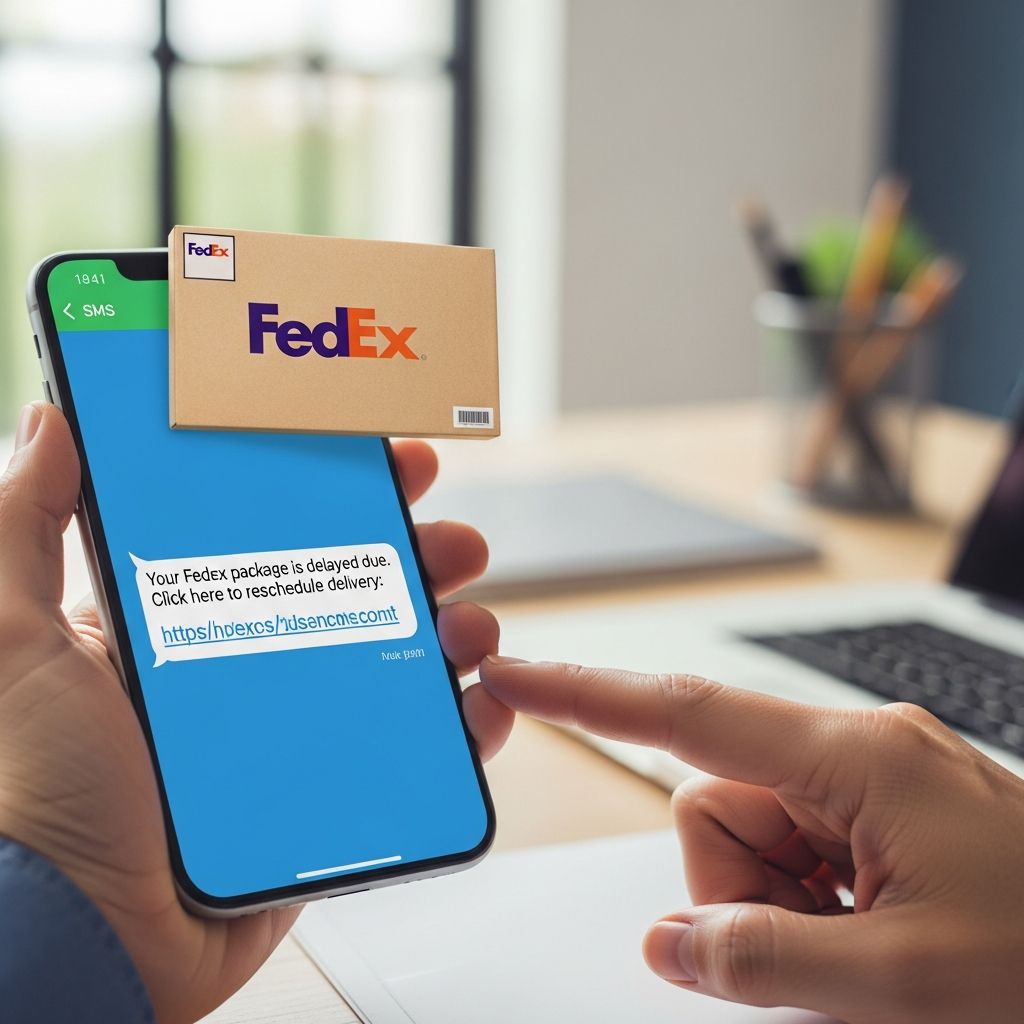
Getting a text about a package delivery can feel routine, especially if you shop online often. But scammers are sending fake delivery messages that look like they come from companies such as FedEx to steal your money and personal information. Understanding how these schemes work is the best way to stay safe.
What Is a FedEx Text Message Scam?
A FedEx text scam is a type of smishing – text-message phishing – where criminals pretend to be FedEx or another delivery service and ask you to click a link, enter personal details, or pay a small fee. The goal is usually to:
- Capture your personal information (name, address, date of birth)
- Steal payment card or bank details
- Install malware or spyware on your phone
- Gain access to your online accounts through passwords or codes
These scams take advantage of the fact that many people are expecting a package and will react quickly to avoid missing a delivery.
How Fake Delivery Texts Typically Work
Scammers follow a fairly predictable pattern, even if the exact wording of the message changes. Here is a common flow:
- You receive an unexpected text that looks like it is from FedEx and mentions a package, shipment, or delivery issue.
- The text includes a link and urges you to click it to track a package, pay a fee, confirm your address, or set delivery preferences.
- The link leads to a fake website designed to look similar to an official tracking or account page, sometimes even copying logos and colors.
- The fake site asks for information such as your full name, address, phone number, credit card details, or login credentials.
- Once you submit the information, the scammers can steal your identity, access your accounts, or attempt unauthorized charges.
In some versions, scammers offer a “free gift” or a prize, but insist you pay a small shipping or handling fee by card – a tactic often used to capture card numbers and security codes.
Common Red Flags in Fake FedEx Texts
Legitimate shipping notifications tend to be short, informative, and not pushy. Scam texts, on the other hand, often show a cluster of warning signs. Key red flags include:
- Unexpected contact about a package you were not tracking or do not recognize
- Generic greetings like “Dear customer” instead of your name
- Urgent or threatening language (e.g., “final notice,” “account will be suspended,” “package will be destroyed”)
- Links to unfamiliar domains that do not clearly belong to the official FedEx website
- Requests for sensitive information such as full card numbers, passwords, or Social Security numbers
- Spelling mistakes and odd phrasing that do not sound professional
- Offers of prizes or gifts connected to taking a survey or paying a small fee
Legitimate vs. Fake: Quick Comparison
The table below highlights the practical differences between a typical legitimate delivery text and a likely scam message.
| Feature | Likely Legitimate Message | Likely Scam Message |
|---|---|---|
| Who it is from | Recognizable short code or official app notification | Unknown mobile number, odd sender name, or email-style address |
| Reason for contact | Simple status update for a shipment you already expect | Surprise package, contest, or vague “important delivery issue” |
| Type of link | Short link or official domain you can independently verify | Strange domain, misspelled brand name, or cluttered URL |
| Information requested | Usually none; may direct you to sign in through official app or website | Requests for card numbers, passwords, or full personal data |
| Urgency | Neutral or matter-of-fact tone | High-pressure wording and warnings of severe consequences |
What FedEx Says About Suspicious Messages
FedEx advises customers that it does not send unsolicited texts or emails asking for money, personal details, or payment information in exchange for releasing a package. Official guidance from FedEx includes:
- Do not provide personal or financial information in response to unsolicited messages.
- Watch for misspelled web addresses or lookalike domains that closely resemble the real one.
- Be suspicious of any message that demands urgent payment for a delivery.
- Delete suspicious texts and emails without clicking links or opening attachments.
FedEx provides instructions on its official website for reporting fraud attempts so security teams can investigate and take action.
How to Safely Check a Real Package Status
You never need to rely on a text link to confirm whether a package is on its way. To verify a shipment without exposing yourself to a scam, use these safer methods:
- Go directly to the official website. Open your browser and type the official FedEx address yourself instead of clicking on any link from a text or email.
- Use the carrier’s official app. Download apps only from trusted app stores and sign in through the app you installed yourself, not via a link.
- Check your order history with the retailer. If you recently purchased something online, sign in to the store’s website to see if it lists a tracking number.
- Contact customer service using published numbers. Use phone numbers or chat options listed on a company’s official site – never those provided only in a suspicious message.
What to Do If You Get a Suspicious FedEx Text
If a message looks even slightly questionable, it is safest to treat it as a potential scam. Recommended steps include:
- Do not click any links or call phone numbers contained in the text.
- Do not reply to the message – answering can confirm that your number is active.
- Take a screenshot if you plan to report the message.
- Delete the text after you have recorded any needed information.
- Manually check your package status through official channels, as described above.
Steps to Take If You Already Clicked the Link
If you clicked a suspicious link or entered information into a fake site, acting quickly can reduce damage.
- Disconnect from the site immediately. Close the browser tab and avoid interacting with pop-ups or prompts.
- Change your passwords for any accounts that may be affected, especially if you entered login information.
- Contact your bank or card issuer if you shared card details. Ask about blocking the card and monitoring for fraudulent charges.
- Run a security scan with reputable mobile security software to check for malware.
- Monitor your accounts and credit reports for signs of unusual activity, such as new accounts or unauthorized transactions.
How to Report FedEx Text Scams
Reporting scam attempts helps law enforcement and companies identify patterns and warn others. You can:
- Report to FedEx using the fraud-reporting instructions on the official FedEx website.
- Forward the message to your mobile carrier’s spam-reporting number if available (often 7726 in some regions).
- File a complaint with a consumer protection authority in your country if you lost money or provided information.
Officials use these reports to improve public warnings and may work with companies to shut down fraudulent sites more quickly.
Reducing Your Risk of Future Smishing Attacks
While no single step can completely eliminate scam attempts, you can reduce your exposure and make yourself a harder target.
- Limit where you share your phone number. Providing your number on public sites or in unnecessary forms increases your risk of being targeted.
- Enable spam filters and security features available through your phone or carrier.
- Keep your operating system and apps up to date so known security vulnerabilities are patched.
- Use multi-factor authentication for important accounts, such as email and banking, to make it harder for scammers to break in even if they capture a password.
- Educate family members, especially teens and older adults, about smishing and how package scams work, so they recognize the same red flags.
Frequently Asked Questions (FAQs)
How can I tell if a FedEx text about my package is real?
A genuine message usually relates to a shipment you already know about and will not ask for sensitive personal or financial information. If in doubt, independently visit the official FedEx website or app and check your tracking number there instead of using any link in the text.
Is it ever safe to click a tracking link in a text?
Even real companies sometimes include links, but scammers rely heavily on this behavior. The safest approach is to ignore links and visit the official carrier or retailer website by typing the address yourself or using a trusted app.
What should I do if I gave my card number to a fake delivery site?
Immediately contact your card issuer or bank, explain that your details may have been exposed in a scam, and ask them to cancel the card or add extra monitoring. Then watch your statements closely for unauthorized charges and consider placing alerts on your accounts.
Can a scam text install malware on my phone?
A text alone cannot install malware, but clicking a malicious link can lead you to pages that attempt to download harmful apps or trick you into granting dangerous permissions. Keeping your phone updated and only installing apps from trusted stores reduces this risk.
Why do scammers use delivery companies like FedEx as a cover?
Delivery brands are familiar and widely used, and many people are often waiting on packages. That makes text messages about shipments more believable, which increases the chance that someone will click quickly without verifying whether the message is real.
References
- How to Recognize and Help Prevent Fraud and Scams — FedEx. 2024-03-19. https://www.fedex.com/en-us/report-fraud.html
- FedEx Texting Scam — City of Takoma Park, Maryland. 2020-02-21. https://takomaparkmd.gov/2078/FedEx-Texting-Scam
- Scam Alert: FedEx Delivery Text Scam — Identity Theft Resource Center. 2020-02-12. https://www.idtheftcenter.org/post/scam-alert-fedex-delivery-text-scam/
- Watch Out: FedEx Ground Text Scam — Trend Micro News. 2025-08-27. https://news.trendmicro.com/2025/08/27/fedex-ground-text-scam/
- Don’t Fall Victim to a Package Delivery Scam — Security National Bank. 2023-11-30. https://www.snbonline.com/about/news/usps-and-fedex-package-tracking-scam
Similar Articles








Read full bio of Sneha Tete


