
Unmasking the Federal Facial Recognition Surveillance Surge
Federal agencies track our faces in secret. Discover why transparency matters.
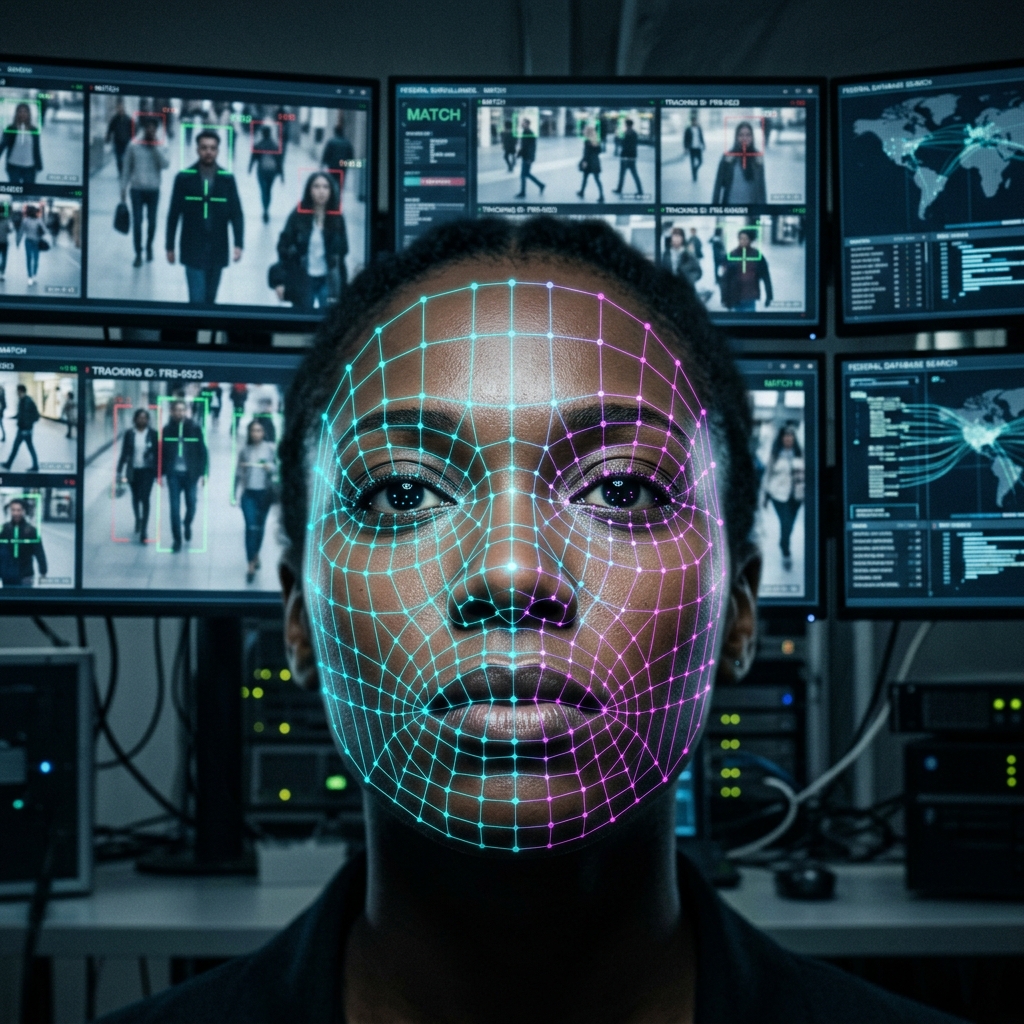
Imagine walking down a public street, attending a peaceful political rally, or simply renewing your state driver’s license, completely unaware that your face is being actively cataloged, analyzed, and permanently stored in a vast, interconnected web of federal surveillance. For decades, the concept of a society monitored by an invisible, omnipresent technological apparatus was firmly confined to the realm of dystopian science fiction and cautionary tales. Today, it is an operational reality. The rapid proliferation of facial recognition technology (FRT) across federal law enforcement agencies—including the Federal Bureau of Investigation (FBI), the Drug Enforcement Administration (DEA), and the Department of Homeland Security (DHS)—has quietly but fundamentally transformed the landscape of personal privacy in the United States.
Without widespread public consent, explicit legislative approval from Congress, or comprehensive regulatory frameworks, these powerful agencies have integrated highly invasive biometric tracking into their daily investigative operations. The extreme secrecy surrounding these surveillance programs has ignited fierce legal battles, with prominent civil liberties organizations and privacy advocates stepping forward to demand immediate transparency. At the very heart of this conflict lies a profound democratic question: can a society remain truly free when its government possesses the unchecked, unregulated ability to instantly identify, track, and monitor its citizens from a distance?
The Mechanics and Scale of Biometric Surveillance
To fully understand the gravity of this constitutional crisis, one must first understand how facial recognition technology operates at a technical level. Unlike traditional surveillance cameras that merely record passive video footage for later human review, FRT systems utilize complex artificial intelligence, deep learning, and advanced neural networks to map the unique geometric physical features of a human face. The software analyzes dozens of specific nodal points—such as the exact distance between the eyes, the depth of the eye sockets, the shape of the cheekbones, and the precise contour of the jawline—to create a mathematical formula known as a “faceprint.” This digital signature is then rapidly compared against massive, centralized databases containing millions, or even billions, of reference images to find a match.
Historically, law enforcement agencies relied solely on tightly controlled, internal databases consisting strictly of criminal mugshots and booking photos. However, the modern era of biometric surveillance has entirely obliterated those strict boundaries. Today, federal agencies frequently tap into comprehensive state driver’s license repositories, passport photo databases, and international visa applications. Furthermore, the government routinely contracts with private, third-party technology vendors who have aggressively scraped billions of images from public social media profiles, professional networking sites, and personal blogs without the knowledge, authorization, or consent of the everyday internet users who posted them. This unholy alliance between federal policing power and private corporate data harvesting has created an inescapable, nationwide dragnet, effectively placing innocent civilians in a perpetual, virtual police lineup without any probable cause.
The Silent Expansion Across Federal Agencies
The sheer scale of the federal government’s reliance on facial recognition is staggering, yet much of it continues to operate completely in the shadows, shielded from public scrutiny. A landmark 2021 report published by the U.S. Government Accountability Office (GAO) provided a rare, highly disturbing glimpse into this clandestine expansion . The comprehensive watchdog report revealed the pervasive nature of biometric surveillance across the federal apparatus, highlighting how rapidly the technology has been adopted without any robust internal oversight mechanisms or standardized guidelines.
Below is a summary of the most alarming findings regarding federal law enforcement’s use of FRT, as documented by government investigators:
| Scope of GAO Investigation | Key Findings on Facial Recognition Deployment |
|---|---|
| Federal Agencies Surveyed | The GAO surveyed 42 federal agencies that employ active law enforcement officers to determine the extent of biometric technology usage across the government. |
| Widespread Adoption Rate | 20 out of the 42 surveyed agencies explicitly reported owning facial recognition systems or utilizing systems owned by third-party, commercial entities. |
| Usage in Criminal Investigations | 14 federal agencies reported actively using facial recognition technology to support domestic criminal investigations on a regular basis. |
| First Amendment Protest Surveillance | At least 6 federal agencies admitted to deploying facial recognition software to actively identify individuals participating in civil unrest, riots, or protests, raising severe First Amendment concerns regarding the chilling of free speech. |
| Dangerous Third-Party Blind Spots | Only 1 single agency out of the 14 using commercial tools had a comprehensive, formal mechanism in place to actively track which non-federal facial recognition systems were being utilized by its employees in the field. |
This uncontrolled, haphazard expansion means that thousands of federal agents currently have access to highly advanced biometric tools with virtually no internal tracking or accountability. The alarming fact that commercial surveillance tools are being utilized informally by agents on their personal or work devices without centralized, agency-wide logging represents a massive security and civil rights vulnerability.
Algorithmic Inequities and the Threat of Demographic Bias
Beyond the inherent and obvious privacy concerns, facial recognition technology is deeply, fundamentally flawed, exhibiting well-documented racial and gender biases that disproportionately harm marginalized communities. The artificial intelligence algorithms that power these tracking systems are only as objective and accurate as the underlying data used to train them. Because many of the foundational datasets developed by tech companies skew heavily toward white, male faces, the software is notoriously less accurate when analyzing the faces of women, people of color, and non-binary individuals.
The National Institute of Standards and Technology (NIST) conducted a massive, comprehensive empirical study on demographic effects in contemporary face recognition algorithms, publishing its definitive findings in a highly cited 2019 report . The rigorous NIST evaluation discovered that false positive rates—instances where the software incorrectly matches a completely innocent person’s face to a criminal suspect’s image—were significantly higher for West African, East African, and East Asian faces compared to Eastern European faces. In some of the tested algorithms, the false positive rate was up to a staggering 100 times higher for minority demographics. Furthermore, the software struggled significantly more with accurately identifying women compared to men, with the absolute highest error rates persistently occurring among darker-skinned females.
In the high-stakes context of federal law enforcement, a “false positive” is not merely a benign technical glitch or a software bug; it is a catastrophic event that can permanently destroy a life. An algorithmic error can directly lead to a wrongful arrest, an extended unlawful detention, highly traumatic encounters with heavily armed police officers, and severe, lasting reputational damage. When federal agencies deploy this inaccurate technology in secret, the victims of algorithmic bias are entirely stripped of their ability to challenge the technological evidence used against them, largely because they are rarely, if ever, informed that facial recognition was the primary tool used to identify them in the first place.
The Erosion of Constitutional Protections
The covert, widespread deployment of facial recognition by federal agencies poses an unprecedented, existential threat to the constitutional rights of American citizens, particularly those sacred protections guaranteed by the First and Fourth Amendments. The Fourth Amendment protects individuals against unreasonable, warrantless searches and seizures by the state. Historically, the judicial system has held that people do not possess a reasonable expectation of privacy regarding their physical movements on open public streets. However, the sheer, unimaginable scale and automated nature of modern facial recognition completely upend this outdated legal paradigm. It is one thing for a human police officer to casually observe a suspect standing on a street corner; it is an entirely different constitutional matter for an artificial intelligence network to simultaneously track the identities, interpersonal associations, and daily movements of tens of thousands of innocent people across a major city in real-time.
Furthermore, this pervasive biometric surveillance creates a profound and undeniable chilling effect on the First Amendment rights to free speech, political expression, and peaceful assembly. When everyday citizens know that simply attending a political protest, visiting a specific marginalized place of worship, or openly associating with certain vocal activist groups will result in their faces being permanently scanned, logged, and categorized in a federal law enforcement database, they are far less likely to exercise their democratic rights. According to a comprehensive 2024 briefing report issued by the U.S. Commission on Civil Rights, meaningful federal guidelines for the responsible use of this incredibly powerful technology have severely lagged behind its real-world application, leaving a dangerous, gaping regulatory void .
The most profound civil liberties concerns include:
- Retrospective Tracking: The terrifying ability of law enforcement to feed years of old, archived surveillance footage into new facial recognition systems, effectively tracking an individual’s historical movements backward in time without ever securing a judicial warrant.
- Guilt by Algorithmic Association: The practice of mapping the complex social networks of political activists by aggressively analyzing who they are photographed with at public events or in scraped social media posts.
- The Complete Lack of Due Process: Criminal defendants are routinely and systematically denied access to the underlying source code, vendor training data, or historical error rates of the specific facial recognition systems used to accuse them, fundamentally undermining their constitutional right to a fair and impartial trial.
The Critical Need for Transparency and FOIA Litigation
Given the profound, society-altering risks associated with facial recognition, operational transparency is not merely a bureaucratic preference or a political talking point; it is a fundamental democratic necessity. The American public has an absolute, unalienable right to know exactly what cutting-edge technologies are being utilized to police their communities, exactly how much taxpayer money is being spent to secretly acquire these tools, and what specific safeguards—if any at all—are firmly in place to prevent severe abuse. Unfortunately, federal law enforcement agencies have actively adopted a hostile posture of extreme opacity regarding their biometric surveillance capabilities, routinely ignoring public inquiries.
This deliberate, calculated stonewalling has forced civil rights organizations and digital privacy advocates to weaponize the Freedom of Information Act (FOIA) as a vital tool for public accountability. FOIA is a crucial federal law that grants the general public the legal right to request access to internal records from any federal agency. When agencies like the FBI, DEA, or Customs and Border Protection blatantly refuse to comply with lawful FOIA requests regarding their facial recognition vendor contracts, internal operational policies, and field training manuals, these advocacy groups are left with absolutely no choice but to file aggressive lawsuits in federal court to legally compel the disclosure of these hidden documents.
These protracted legal battles are absolutely vital to uncovering the truth. Through relentless FOIA litigation, privacy advocates seek to publicly expose the highly classified internal guidelines governing exactly when and how federal agents are permitted to deploy facial recognition against the public. They seek to uncover the internal auditing processes (or lack thereof) used to detect agent misuse, the precise error rates deemed “acceptable” by the government, and the disturbing nature of the government’s lucrative partnerships with secretive, unregulated data-mining corporations. Without this critical information, lawmakers cannot possibly draft effective regulations, and the public cannot hold their elected officials or law enforcement agencies accountable for their actions.
Legislative Action and the Path Forward
As the federal government continues to drag its feet on implementing any meaningful national guardrails, the fierce battle for biometric privacy has rapidly shifted to state and municipal governments. Recognizing the imminent danger, several progressive cities and a growing handful of states have proactively enacted complete legislative moratoriums or strict, unyielding limitations on the use of facial recognition by local and state police departments, directly citing the technology’s inherent algorithmic biases and obvious threat to fundamental civil liberties.
However, a fragmented patchwork of local city ordinances is completely insufficient to constrain massive federal agencies operating globally with multi-billion-dollar budgets. The U.S. Commission on Civil Rights explicitly noted in its findings that there are currently absolutely no federal laws expressly regulating the use of facial recognition by the United States government . To genuinely protect the fundamental constitutional rights of all citizens, the United States Congress must intervene decisively. Digital privacy advocates are urgently calling for a comprehensive federal moratorium on the use of all biometric surveillance technologies by law enforcement until rigorous, independent testing can definitively prove their accuracy across all demographic groups, and until strict, constitutionally sound regulations are permanently enshrined in federal law. Until this invasive digital panopticon is brought firmly under democratic control, the unblinking, algorithmic eye of the state will continue to operate entirely in the dark.
Frequently Asked Questions (FAQs)
What exactly is biometric surveillance?
Biometric surveillance refers to the deployment of technology that automatically measures, analyzes, and catalogs unique human physical or behavioral characteristics for the purpose of identification and tracking. The most common form utilized by modern law enforcement is facial recognition, but the broader category also includes aggressive voice analysis, iris scanning, fingerprinting, and even gait recognition (analyzing the unique way a person walks).
Why is facial recognition technology widely considered to be biased?
Extensive studies conducted by independent, authoritative bodies, such as the National Institute of Standards and Technology (NIST), have conclusively proven that many leading commercial facial recognition algorithms are significantly less accurate when tasked with identifying people of color, women, and non-binary individuals . This dangerous discrepancy is largely due to the software being initially trained on flawed datasets that severely lack demographic diversity, inevitably leading to much higher rates of false positives for marginalized demographic groups.
How does the use of facial recognition impact First Amendment rights?
The indiscriminate use of facial recognition by law enforcement agencies creates a severe “chilling effect” on free speech, political dissent, and the fundamental right to assemble peaceably. If everyday individuals legitimately fear that attending a public protest or political rally will automatically result in their face being permanently logged in a centralized government database, they may ultimately choose to stay home out of fear of retaliation, thereby deeply stifling vital democratic participation.
What is a FOIA lawsuit and why is it necessary?
The Freedom of Information Act (FOIA) is a law that allows citizens and organizations to legally request internal records from federal government agencies. If an agency unlawfully withholds this public information, ignores the formal request, or heavily redacts the documents without proper legal justification, the requester has the right to file a FOIA lawsuit in federal court. This forces a federal judge to review the case and potentially compel the agency to release the requested records to the public, ensuring government transparency.
References
- Facial Recognition Technology: Federal Law Enforcement Agencies Should Better Assess Privacy and Other Risks (GAO-21-518) — U.S. Government Accountability Office (GAO). 2021-06-29. https://www.gao.gov/products/gao-21-518
- Face Recognition Vendor Test (FRVT) Part 3: Demographic Effects (NIST IR 8280) — National Institute of Standards and Technology (NIST). 2019-12-19. https://www.nist.gov/publications/face-recognition-vendor-test-part-3-demographic-effects
- The Civil Rights Implications of the Federal Use of Facial Recognition Technology — U.S. Commission on Civil Rights. 2024-09-19. https://www.usccr.gov/reports/2024/civil-rights-implications-federal-use-facial-recognition-technology
Similar Articles








Read full bio of Sneha Tete


