
Fanfiction and Copyright: Legal Boundaries
Navigate the complex world of fanfiction legality: Understand copyright risks, fair use protections, and strategies for creators.
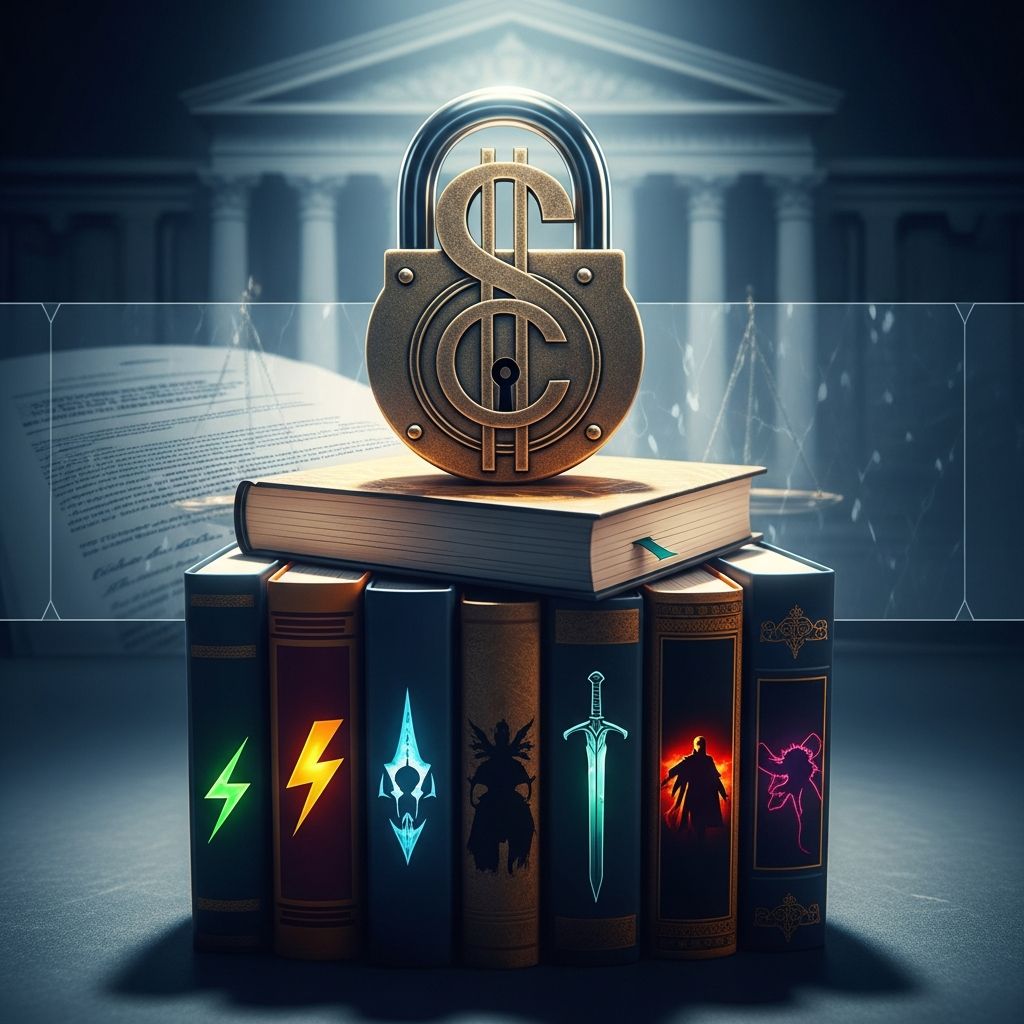
Fanfiction thrives in online communities, where enthusiasts reimagine beloved stories, characters, and worlds from books, films, TV shows, and games. Yet, this creative passion often collides with copyright law, raising questions about legality and potential infringement. Under U.S. law, fanfiction typically qualifies as a derivative work, requiring caution to avoid violating exclusive rights held by original creators.
Understanding Derivative Works in Creative Expression
Copyright protection automatically applies to original literary works fixed in a tangible form, such as writing or digital files, without needing registration—though registration is required for federal lawsuits. Owners enjoy exclusive rights, including creating derivative works, which are new creations based on preexisting ones, like fan stories expanding on canon events or character arcs.
Fanfiction inherently builds upon protected elements: plots, characters, settings, and dialogues. Courts recognize that sufficiently developed characters can hold independent copyright, as seen in cases where iconic figures like Rocky were deemed protectable due to their detailed delineation. Reproducing substantial portions without permission risks infringement claims, potentially leading to injunctions or damages.
- Key Elements Often Borrowed: Character personalities, relationships, iconic scenes, and universe lore.
- Risk Level: Higher when copying verbatim text or core plotlines; lower with heavy transformation.
- Duration of Protection: Life of author plus 70 years, or 95/120 years for works for hire.
The Fair Use Doctrine: Fanfiction’s Primary Defense
The fair use exception, codified in 17 U.S.C. § 107, permits limited use of copyrighted material without permission for purposes like criticism, comment, or scholarship. No court has ruled noncommercial, transformative fanfiction as infringing, providing de facto tolerance for many works. Courts weigh four factors:
| Factor | Description | Fanfiction Application |
|---|---|---|
| 1. Purpose and Character | Commercial vs. nonprofit; transformative nature. | Nonprofit fanfic adding new insights (e.g., alternate universes) strongly favors fair use. |
| 2. Nature of Work | Fictional vs. factual; published status. | Fiction is highly creative, weighing against fair use, but transformation mitigates. |
| 3. Amount and Substantiality | Quantity and quality of borrowed elements. | Minimal or non-core excerpts improve defense; avoid “heart of the work”. |
| 4. Market Effect | Impact on original’s sales or value. | Fanfic often promotes originals, acting as free advertising. |
Transformative use, per Supreme Court precedent in Campbell v. Acuff-Rose Music, protects works adding new meaning or message. Fanfiction exploring backstories, gender swaps, or social critiques exemplifies this.
Real-World Court Cases Shaping Fanfiction Precedent
Judicial outcomes illustrate boundaries. In Dr. Seuss Enterprises v. Penguin Books USA, a book mimicking Dr. Seuss’s style for the O.J. Simpson trial infringed by copying specific stylistic elements beyond general themes. Conversely, Mattel, Inc. v. MCA Records allowed “Barbie Girl” under parody fair use, as it was artistically relevant and non-misleading.
Anne Rice’s Saint-Germain series owners aggressively pursued fanfiction takedowns, highlighting creator intolerance. No major losses for fan authors exist, but platforms like Archive of Our Own (run by Organization for Transformative Works) advocate fair use, arguing fanworks add value.
- Pro-Fanfic Rulings: Parodies and transformative commentaries often prevail.
- Anti-Fanfic Actions: Direct copies or commercial exploits face shutdowns.
Public Domain: The Safest Path for Fan Creators
Works entering public domain—post-copyright expiration—offer unrestricted use. Classics like Sherlock Holmes (U.S. public domain since 2023 for later stories) enable free adaptation. Check status via official resources; avoid conflating U.S. and international rules.
Trademark Concerns Beyond Copyright
Characters or titles may carry trademarks, protecting against consumer confusion. First Amendment defenses apply to expressive uses, but commercial fanfic risks dilution claims.
Practical Strategies to Minimize Legal Risks
Aspiring writers can safeguard creativity:
- Post on nonprofit platforms with fair use policies, like AO3.
- Transform heavily: New plots, pairings, AUs over straight retellings.
- Avoid monetization unless licensed (e.g., some creators permit it).
- Disclaim non-affiliation with originals.
- Monitor creator stances; some welcome fic, others DMCA it.
International variances exist—EU moral rights emphasize author integrity—but U.S. fair use dominates online discourse.
Frequently Asked Questions
Is all fanfiction illegal?
No, transformative, noncommercial works often qualify as fair use; courts assess case-by-case.
Can I sell my fanfiction?
Rarely without permission; commercialization weakens fair use, harming market factor.
What if the original is public domain?
Freely usable—no infringement risk.
Do I need to register my fanfic?
Not for protection, but helpful for defense; originals need it for suits.
What platforms are safest?
AO3 and FanFiction.net, with legal advocacy and takedown resistance.
Future Trends in Fan Works and IP Law
As AI tools generate fan-like content, doctrines may evolve. OTW pushes for recognition of fan labor as promotional. Creators increasingly embrace communities, but vigilance remains key.
Fanfiction embodies passion’s clash with property rights. By prioritizing transformation and fair use, writers sustain vibrant ecosystems without court battles.
References
- The Role of Copyright Law in Fanfiction — VLAA. 2023. https://vlaa.org/the-role-of-copyright-law-in-fanfiction/
- Legal issues with fan fiction — Wikipedia (citing U.S. Copyright law). 2024-01-15. https://en.wikipedia.org/wiki/Legal_issues_with_fan_fiction
- The Legal Status of Fanfiction: A Comprehensive Guide for Writers — Lyric Winter. 2023. https://lyricwinter.com/blog/legal-status-fanfiction-comprehensive-guide
- A Brief Overview of the Fair Use Analysis in the Fanfiction Context — Cardozo Arts & Entertainment Law Journal. 2023-10-31. https://cardozoaelj.com/2023/10/31/a-brief-overview-of-the-fair-use-analysis-in-the-fanfiction-context/
- Copyright and Fanfiction: A Primer — Office for Intellectual Freedom, ALA. 2023. https://www.oif.ala.org/copyright-and-fanfiction-a-primer/
Similar Articles








Read full bio of medha deb


