
From Paper Tests to AI: The Evolution of Hiring Bias
Tracing the evolution of hiring bias from paper tests to modern AI algorithms.
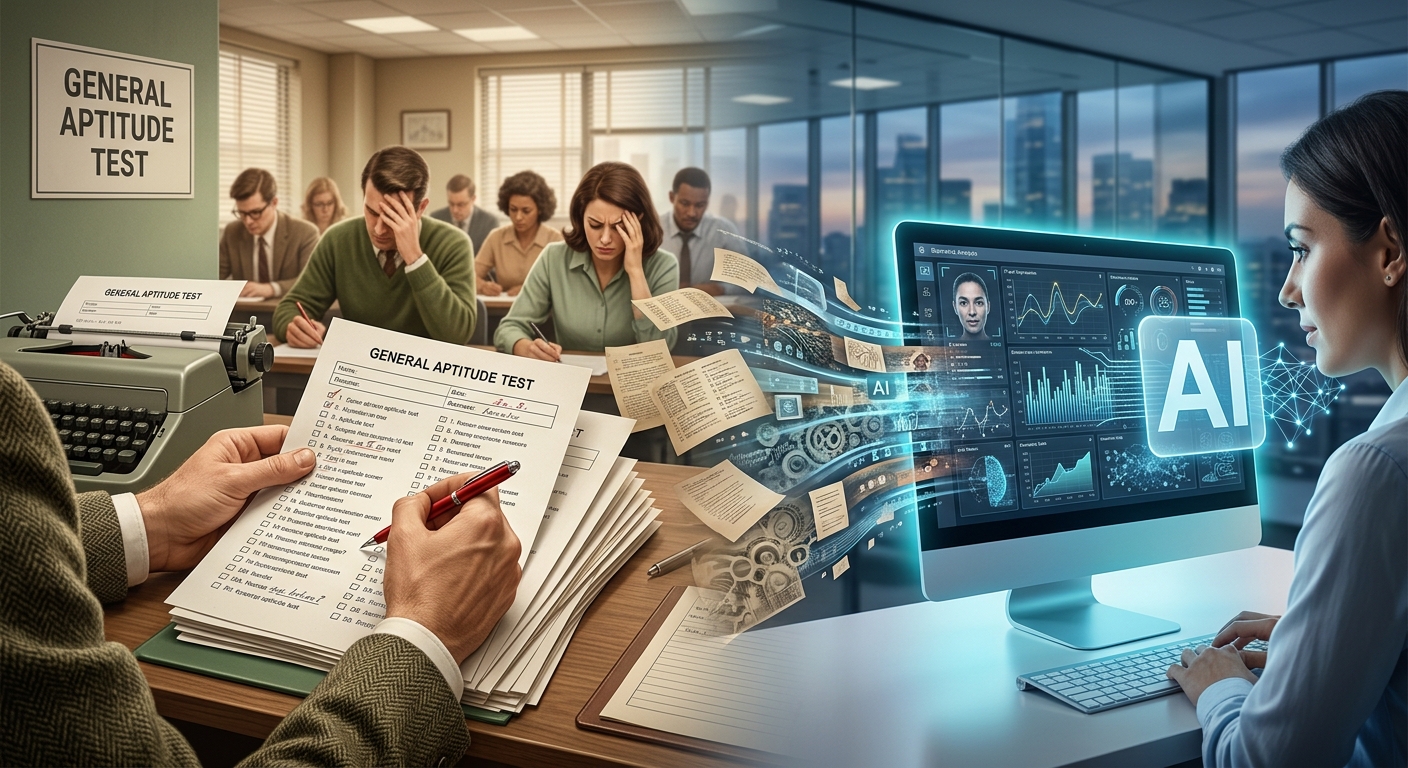
Throughout the landscape of modern enterprise, the recruitment process represents the critical gateway to economic mobility. Organizations are perpetually inundated with applications, prompting a continuous search for efficient filtering mechanisms to manage the immense volume of candidates. Historically, this relentless drive for corporate efficiency led to the widespread adoption of standardized hiring assessments. While ostensibly designed to measure a candidate’s aptitude, intelligence, or cultural fit in an objective manner, these tools have consistently functioned as silent gatekeepers, disproportionately filtering out candidates from marginalized communities.
From the mid-20th-century paper-and-pencil intelligence tests to contemporary predictive algorithms powered by machine learning, the methodologies of employment screening have evolved drastically. However, the underlying consequences—systemic exclusion and the perpetuation of structural socioeconomic inequalities—remain alarmingly persistent. This article explores the historical trajectory of job screening tools, the transition from analogue to digital discrimination, the landmark legal battles fought to establish fair hiring precedents, and the modern regulatory efforts striving to hold artificial intelligence accountable in the contemporary workplace.
The Roots of Exclusion: A Historical Perspective on Aptitude Testing
To fully understand the complexities of modern algorithmic bias, one must first critically examine the historical foundations of employment testing in the United States. In the post-World War II era, the burgeoning field of industrial-organizational psychology popularized the use of standardized testing in corporate America. Intelligence quotients (IQ), extensive personality assessments, and mechanical aptitude tests became ubiquitous hurdles for job seekers. Employers confidently argued that these instruments provided objective, scientifically backed metrics to identify the most capable and reliable workers.
Yet, these tests were deeply embedded with systemic cultural biases. They frequently reflected the vernacular, specialized educational experiences, and specific social norms of the predominantly white, middle-class individuals who designed them. Prior to the sweeping civil rights legislation of the 1960s, explicit employment discrimination was legally permissible and socially widespread across numerous industries.
When the Civil Rights Act of 1964 officially banned employment discrimination on the basis of race, color, religion, sex, or national origin, many organizations did not simply abandon exclusionary practices; instead, they pivoted their strategies. Rather than overtly excluding minority candidates, some employers instituted aggressively stringent testing requirements. Because marginalized communities historically faced profound, state-sponsored barriers to quality education and resources, they frequently scored lower on these culturally biased exams. Consequently, employment tests became a legally ambiguous loophole. They functioned as a proxy for race or class, effectively maintaining the homogeneity of the workforce without explicitly violating the textual mandates of the newly established civil rights legislation.
Landmark Legal Shifts: Defining the Concept of Disparate Impact
The legal landscape surrounding hiring assessments shifted fundamentally in 1971 with the landmark United States Supreme Court decision in Griggs v. Duke Power Co. The case centered on a power plant in North Carolina that, immediately following the passage of the Civil Rights Act, introduced a sudden requirement for a high school diploma and passing scores on two general intelligence tests for any employee seeking a transfer to a higher-paying, non-labor department. These new requirements disproportionately disqualified African American employees. More importantly, the tests were entirely disconnected from the actual physical and mechanical skills required to perform the manual jobs in question.
The Supreme Court unanimously ruled against the company, establishing the foundational legal doctrine known as “disparate impact.” The ruling articulated that employment practices, including the use of standardized tests, are inherently unlawful if they have a discriminatory effect on a protected class and are not strictly related to job performance or explicit business necessity.
Crucially, the Court determined that an employer’s intent was entirely irrelevant to the legality of the practice. Even if an employer did not harbor malicious intent, if the outcome of the test was discriminatory and unrelated to the job’s core functions, the practice violated Title VII of the Civil Rights Act. This watershed moment meant that employers could no longer hide behind the veil of “objective” testing if those tests continuously disadvantaged minority applicants without a rigorously proven business justification. The burden of proof aggressively shifted to employers to empirically validate their screening tools against actual, documented job requirements.
The Digital Transition: Automated Employment Decision Tools (AEDTs)
As the digital revolution radically reshaped global commerce in the late 20th and early 21st centuries, the volume of job applications submitted electronically skyrocketed. Faced with the daunting, resource-intensive task of reviewing thousands of digital resumes for a single opening, corporate human resources departments enthusiastically turned to technology for salvation. Enter Automated Employment Decision Tools (AEDTs) and artificial intelligence.
The modern hiring funnel is now heavily intermediated by proprietary software. Applicant Tracking Systems (ATS) utilize natural language processing (NLP) to parse resumes for specific keywords and formatting structures. Beyond simple keyword matching, highly sophisticated predictive algorithms attempt to gauge a candidate’s overall likelihood of success, longevity at the company, and potential cultural fit. Gamified psychometric assessments require applicants to play short video games, while the software meticulously monitors their reaction times, risk-taking behavior, and spatial problem-solving strategies in real-time.
Furthermore, video interviewing platforms have begun deploying computer vision and vocal analysis to aggressively scrutinize an applicant’s facial expressions, eye contact, and tone of voice, purportedly to assess their personality traits and emotional stability. Vendors of these cutting-edge technologies have heavily marketed them to corporate executives as the ultimate, foolproof solution to human bias, arguing that a machine cannot hold inherent prejudice. However, this techno-utopian narrative ignores a fundamental reality of computer science: algorithms are not autonomous, objective entities. They are mathematical models constructed by humans, trained on historical data generated by humans, and strictly optimized for outcomes defined by human biases.
Replicating Bias in Code: How Modern Systems Exclude
The most significant and insidious danger of artificial intelligence in hiring is its profound capacity to encode, scale, and obfuscate existing societal biases under the deceptive guise of mathematical objectivity. This phenomenon occurs primarily through the historical data used to train the machine learning models. If a technology company trains its cutting-edge hiring algorithm strictly on the resumes of its historically successful employees—a demographic that may be overwhelmingly male and white—the algorithm will inherently learn to identify the characteristics associated with those specific resumes as the primary indicators of success.
Consequently, the AI might systematically downgrade resumes featuring terms culturally associated with women (such as participation in a “women’s debate club”) or penalize graduates of Historically Black Colleges and Universities (HBCUs) simply because they do not match the historical training set. The algorithm isn’t explicitly instructed to discriminate based on gender or race; rather, it rapidly identifies proxy variables—seemingly neutral data points that correlate incredibly closely with protected characteristics—and uses them to mercilessly filter candidates.
Furthermore, the rapid proliferation of AI screening tools presents profound, unprecedented barriers for individuals with disabilities. Video analysis algorithms trained to reward “standard” neurotypical patterns of eye contact and facial mimicry can aggressively penalize neurodivergent candidates, such as those on the autism spectrum. Similarly, applicants with speech impediments, severe visual impairments, or physical mobility differences may receive inexplicably low scores from vocal analysis software or gamified assessments because their physical interactions deviate from the extremely narrow parameters the AI was trained to recognize as “normal.” The ultimate result is a high-tech iteration of the historical exclusionary testing, operating silently inside a proprietary black box where the exact mechanisms of discrimination are legally protected as corporate trade secrets.
The Regulatory Landscape and the Push for Accountability
Recognizing the profound civil rights implications of algorithmic hiring, global regulators and lawmakers have cautiously begun to formulate legislative frameworks to address AI bias. At the federal level in the United States, the Equal Employment Opportunity Commission (EEOC) launched a comprehensive, agency-wide initiative to aggressively ensure that AI and algorithmic tools comply with existing federal civil rights laws. The EEOC has issued critical technical assistance guidelines clarifying that the Americans with Disabilities Act (ADA) and Title VII of the Civil Rights Act fully apply to employers’ use of software, algorithms, and AI. A core tenet of this guidance is that if an algorithmic tool results in a disparate impact, the employer deploying the tool—not the software vendor who created it—bears the ultimate legal liability.
Simultaneously, local jurisdictions are pioneering legislative guardrails. New York City’s Local Law 144, which officially went into effect in 2023, requires employers using automated employment decision tools within the city to subject these systems to rigorous, independent bias audits. The groundbreaking law mandates baseline transparency, requiring employers to explicitly notify candidates when an AI tool is being used to evaluate them and to publish the aggregate results of the required bias audits publicly on their corporate websites.
Despite these critical legislative advancements, the regulatory landscape remains dangerously fragmented. Auditing artificial intelligence is still a nascent scientific discipline, and fierce debates continue regarding what exactly constitutes a genuinely rigorous and independent audit. Furthermore, pioneer laws like NYC’s Local Law 144 have been heavily criticized by civil rights advocates for having overly narrow definitions of AI and containing easily exploitable loopholes, highlighting the ongoing, monumental struggle to adapt 20th-century legal frameworks to rapidly evolving 21st-century technologies.
Building Equitable Hiring Practices for the Future
As the deployment of artificial intelligence in corporate recruitment continues to accelerate at an unprecedented pace, organizations must proactively dismantle the architecture of exclusion. Building genuinely equitable hiring pipelines requires moving significantly beyond mere legal compliance and adopting holistic, human-centric recruitment strategies.
- Mandate Transparency: Employers must fiercely demand clear, comprehensive documentation from HR technology vendors regarding precisely how their models are trained, what specific variables they utilize, and how they define “success.”
- Continuous Auditing: Companies should implement continuous, internal statistical monitoring of their hiring outcomes to detect disparate impacts early. If a tool disproportionately screens out specific demographics, its use must be immediately suspended until the underlying bias is fully rectified.
- Maintain Human Oversight: Organizations must forcefully maintain a “human in the loop.” AI should be strictly utilized to gently augment human decision-making, not replace it entirely.
- Focus on Work Samples: Shifting the recruitment focus away from predictive algorithms and towards highly practical, work-sample tests—where candidates physically perform tasks directly related to the open role—can provide a far more accurate and equitable measure of a candidate’s actual capabilities.
Comparing Hiring Assessments Across Eras
To visualize how these tools have transformed, consider the following breakdown of employment screening methodologies across different decades, highlighting the persistent challenges of workplace equity.
| Assessment Era | Primary Tools Used | Stated Purpose | Mechanism of Bias | Regulatory Framework |
|---|---|---|---|---|
| Mid-20th Century | Paper-and-pencil IQ tests, mechanical aptitude tests | Objective measurement of baseline cognitive ability | Cultural and educational biases favoring white, middle-class norms | Title VII of the Civil Rights Act (1964), Griggs v. Duke Power |
| Late 20th Century | Standardized personality inventories (e.g., Myers-Briggs) | Assessing cultural fit and team dynamics | Penalizing neurodiversity and non-traditional working styles | Americans with Disabilities Act (ADA) of 1990 |
| 21st Century | Automated Employment Decision Tools (AEDTs), Resume scraping | Efficiency, processing extremely high volumes of digital applications | Proxy variables, historical data replication embedded in code | EEOC Algorithmic Fairness Guidelines, NYC Local Law 144 |
| Future Landscape | Biometric video analysis, vocal tone assessment, gamified testing | Predictive behavioral modeling and emotional intelligence tracking | Systemic discrimination against atypical physical and verbal traits | Emerging state laws, comprehensive frameworks like the EU AI Act |
Frequently Asked Questions (FAQ) Regarding Hiring Assessments
What exactly is “disparate impact” in the context of employment law?
Disparate impact refers to corporate policies, practices, or operational rules that appear to be completely neutral on the surface but have a disproportionately negative effect on a legally protected group. In the specific realm of employment testing, this means if a mandatory cognitive test screens out a significantly higher percentage of minority applicants than white applicants, and that specific test is not demonstrably required for the daily functions of the job, it constitutes disparate impact, making it strictly illegal regardless of the employer’s original intent.
Can artificial intelligence ever be completely unbiased?
No artificial intelligence currently in existence can be entirely free of bias because it is inherently designed by humans and strictly trained on historical data generated by a historically flawed society. While conscientious developers can take substantial steps to rigorously mitigate bias—such as carefully curating training data, intentionally removing proxy variables, and conducting regular algorithmic audits—it is mathematically impossible to guarantee absolute, flawless neutrality. Continuous, skeptical monitoring is absolutely essential.
If a third-party software vendor created the discriminatory AI tool, who is legally responsible?
According to comprehensive guidelines established by the Equal Employment Opportunity Commission (EEOC) and the United States Department of Justice, the employer physically using the tool to make hiring decisions is ultimately legally responsible for ensuring it comprehensively complies with civil rights and disability laws. Employers cannot legally delegate or contract away their fundamental liability to third-party software vendors.
What should a candidate do if they suspect an AI hiring tool discriminated against them?
Candidates who reasonably believe they have faced direct discrimination through an automated corporate system can legally request alternative testing accommodations (especially concerning documented disabilities) or formally file a charge of discrimination with the EEOC. As public awareness of these black-box systems grows, candidates and advocacy groups are increasingly demanding strict legislative transparency regarding exactly how candidate data will be mathematically processed and evaluated.
References
- Select Issues: Assessing Adverse Impact in Software, Algorithms, and Artificial Intelligence Used in Employment Selection Procedures Under Title VII of the Civil Rights Act of 1964 — U.S. Equal Employment Opportunity Commission (EEOC). 2023-05-18. https://www.eeoc.gov/laws/guidance/select-issues-assessing-adverse-impact-software-algorithms-and-artificial
- Algorithms, Artificial Intelligence, and Disability Discrimination in Hiring — U.S. Department of Justice & EEOC. 2022-05-12. https://www.ada.gov/resources/ai-guidance/
- Griggs v. Duke Power Co., 401 U.S. 424 (1971) — United States Supreme Court (via Justia). 1971-03-08. https://supreme.justia.com/cases/federal/us/401/424/
- Towards a Standard for Identifying and Managing Bias in Artificial Intelligence (NIST SP 1270) — National Institute of Standards and Technology (NIST). 2022-03-16. https://nvlpubs.nist.gov/nistpubs/SpecialPublications/NIST.SP.1270.pdf
Similar Articles








Read full bio of Sneha Tete


