
The Algorithmic Era: Eradicating Racial Bias from Automated Decision-Making
As algorithms increasingly shape our lives, protecting civil rights requires urgent action to eliminate hidden bias in automated systems.
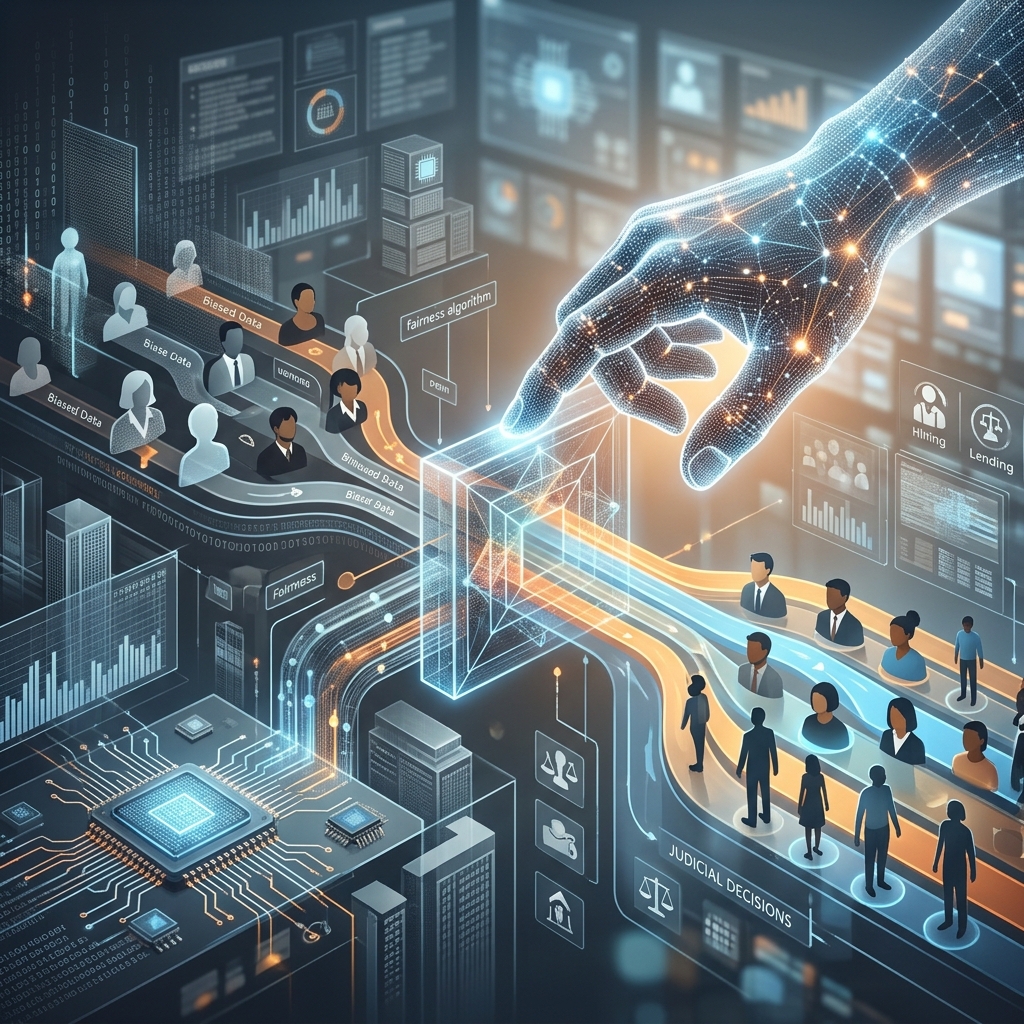
The Invisible Architects of Modern Society
In an era defined by rapid technological advancement, algorithms have become the invisible architects of our modern society. From the moment we wake up to the time we go to sleep, automated decision-making (ADM) systems are working behind the scenes. They filter our emails, curate our newsfeeds, and suggest what media we consume. However, their influence extends far beyond mere convenience. Today, these computational processes act as powerful gatekeepers, determining who gets hired for a job, who is approved for a mortgage, and even who receives life-saving medical care.
While these systems are often marketed as models of efficiency and mathematical objectivity, a growing body of evidence reveals a troubling reality: automated decision-making is deeply susceptible to racial bias. The digital revolution, rather than eradicating human prejudice, threatens to encode it into the very infrastructure of our future. Addressing this invisible discrimination is one of the most pressing civil rights challenges of the twenty-first century.
The Myth of the Objective Machine
At the heart of the algorithmic bias issue is a fundamental societal misunderstanding of how artificial intelligence (AI) and machine learning operate. It is a widespread misconception that machines are inherently neutral. Because algorithms rely on raw code and data rather than human emotion, they are often presumed to be free from the cognitive biases that plague human decision-makers. This assumption, however, completely ignores the origin of the data powering these tools.
Machine learning models are trained on vast datasets drawn from historical records. If the society that generated those records is scarred by systemic racism, inequality, and discrimination, the algorithm will inevitably learn, replicate, and often exacerbate those very patterns . An algorithm optimizing for “successful” employees, for instance, might look at a company’s past hires. If that company historically favored white, male applicants, the AI will identify those demographics—or proxies for them—as indicators of success, systematically down-ranking diverse candidates.
In this way, artificial intelligence operates essentially as a mirror reflecting our historical flaws. When we deploy ADMs without rigorous auditing and civil rights safeguards, we are not eliminating bias; we are simply laundering it through a black box of complex mathematics, making it harder to detect and even harder to challenge in a court of law.
Real-World Consequences: Where Algorithmic Bias Strikes
The impact of algorithmic discrimination is not a theoretical warning for the distant future; it is actively shaping lives today. Automated systems are increasingly deployed in high-stakes sectors where fundamental human rights and economic mobility are on the line.
Discriminatory Hiring and Employment
In the modern job market, human resources departments are frequently overwhelmed by the sheer volume of applications. To cope, companies turn to automated screening software to filter resumes, analyze video interviews, and predict a candidate’s future performance. Unfortunately, these systems often disproportionately reject candidates from marginalized backgrounds. For example, algorithms might penalize applicants who attended historically Black colleges and universities (HBCUs) or down-rank resumes that include certain extracurricular activities associated with minority groups. The California Civil Rights Council recently approved regulations to protect against employment discrimination caused by AI, highlighting the severity of this issue in the labor market .
Digital Redlining in Housing and Finance
For decades, the practice of redlining—denying financial services to residents of specific, often minority-populated neighborhoods—was a visible and overt form of racism. Today, redlining has gone digital. Tenant screening algorithms and credit scoring systems utilize thousands of data points to assess risk. Even if they are explicitly programmed to ignore race, they heavily weigh “proxy variables” such as zip codes, purchasing habits, or even social media connections . Because wealth and geography are intricately tied to race in the United States, these algorithms inadvertently penalize people of color, denying them mortgages, loans, and rental housing at significantly higher rates than their white counterparts.
Inequities in Healthcare Access
Perhaps the most alarming manifestation of algorithmic bias is found in the healthcare sector. Hospitals and insurance companies use algorithms to determine which patients require complex care management programs. A landmark study revealed that a widely used healthcare algorithm systematically prioritized healthier white patients over sicker Black patients. The algorithm used past healthcare spending as a proxy for healthcare needs. Because marginalized communities historically faced barriers to accessing healthcare and thus spent less on medical services, the AI falsely concluded they were healthier and needed less intervention .
Summary of Algorithmic Impact
| Sector | Automated System Used | Mechanism of Discrimination |
|---|---|---|
| Employment | Resume scanners, automated video interviews | Penalizes linguistic variations, educational backgrounds, or facial recognition failures on darker skin. |
| Housing & Finance | Credit scoring, tenant screening software | Utilizes zip codes and alternative data as proxy variables for race, leading to digital redlining. |
| Healthcare | Risk assessment and resource allocation AI | Uses historical medical spending to gauge illness severity, ignoring systemic barriers to care access. |
The Threat to Civil Rights and the Legal Challenge
Traditional civil rights laws, enacted in the mid-twentieth century, were designed to combat explicit, intentional discrimination. However, algorithmic discrimination rarely operates with stated malice. The threat lies in “disparate impact”—a legal doctrine referring to practices that are neutral on their face but disproportionately harm a protected class in practice. Proving disparate impact in the context of a proprietary, opaque algorithm is notoriously difficult.
Technology companies often claim that their algorithms are trade secrets, preventing independent researchers and civil rights advocates from examining the code. This “black box” nature of automated decision-making leaves victims of algorithmic bias without clear legal recourse. If an applicant is denied a job by a human manager, they might uncover evidence of racial animus. If they are denied by an algorithm, they simply receive a generic rejection email, completely unaware that a biased computational process sealed their fate. Modernizing civil rights law to force algorithmic transparency is a critical step in restoring equity.
Regulatory Horizons: Catching Up to the Code
The growing awareness of algorithmic discrimination has catalyzed a response from government agencies and regulators seeking to bring civil rights into the digital age. At the federal level, the White House Office of Science and Technology Policy released the “Blueprint for an AI Bill of Rights,” which explicitly identifies protection against algorithmic discrimination as a core democratic principle . This framework emphasizes that systems should be designed equitably and that citizens should be protected from abusive data practices.
Furthermore, a coalition of federal agencies, including the Department of Justice (DOJ), has issued joint statements affirming that existing civil rights and consumer protection laws apply to automated systems . They warned that responsible innovation is not incompatible with the law, and that companies cannot hide behind complex algorithms to evade liability for discriminatory outcomes.
Action is also accelerating at the state level. The New Jersey Division on Civil Rights issued comprehensive guidance clarifying how state anti-discrimination laws apply to AI technologies . Similarly, state legislatures across the country are introducing bills to hold businesses accountable for auditing their automated decision-making systems for bias. These legislative efforts aim to mandate regular impact assessments, ensuring that companies proactively hunt for discriminatory patterns before the technology is unleashed on the public.
Actionable Steps for Algorithmic Fairness
Eradicating racism from automated decision-making requires a multifaceted approach involving technologists, policymakers, and civil society. Building equitable AI is not a passive endeavor; it demands intentional, structural reform.
- Mandatory Bias Auditing: Companies deploying high-stakes algorithms must be required by law to conduct independent, third-party audits. These audits should evaluate the system’s impact on different demographic groups and be made available to regulators.
- Diverse Development Teams: The technology industry suffers from a severe lack of diversity. When the teams building AI systems are homogeneous, they are less likely to spot potential biases or understand how a system might harm marginalized communities. Diversifying the workforce is a crucial step in building safer technology.
- De-biasing Training Data: Data scientists must proactively identify and mitigate historical inequalities present in training datasets. If the data reflects a biased reality, techniques must be applied to balance the outcomes and prevent the algorithm from replicating past injustices.
- Transparent Explainability: Individuals subjected to automated decisions have a right to know how that decision was made. Systems should be designed with “explainability” in mind, providing clear, accessible reasons for a denial of service, housing, or employment.
Frequently Asked Questions (FAQ)
What exactly is algorithmic discrimination?
Algorithmic discrimination occurs when automated systems, such as artificial intelligence or machine learning models, produce outcomes that disproportionately harm or disadvantage specific groups of people based on protected characteristics like race, gender, or disability. This often happens unintentionally because the systems are trained on biased historical data.
How do machines learn racial bias if they don’t have emotions?
Machines learn from data. If an AI is fed historical data from a society with systemic racism, it identifies the historical patterns of inequality and uses them as rules for future decisions. The machine isn’t consciously prejudiced; it is simply optimizing for the discriminatory patterns it was taught to recognize.
What are “proxy variables” in data science?
A proxy variable is a piece of data that is not explicitly a protected characteristic (like race) but is highly correlated with it. For example, because of historical segregation, a zip code can often serve as a proxy for race. If an algorithm penalizes certain zip codes, it is effectively engaging in racial discrimination, even if the word “race” is nowhere in the code.
Can existing civil rights laws protect us from AI bias?
Yes, but it is challenging. Agencies like the DOJ have affirmed that current civil rights laws apply to digital discrimination . However, the opaque nature of algorithms makes it difficult to prove “disparate impact” in court. Regulators are currently working to update frameworks to require more transparency and accountability from tech companies.
Conclusion
The integration of automated decision-making into the core functions of our society offers remarkable potential for innovation and efficiency. However, we cannot allow the allure of technological progress to blind us to the severe risks it poses to civil rights. Racism and discrimination do not disappear simply because they are executed by a computer program rather than a human being. In fact, algorithmic bias threatens to automate inequality at an unprecedented scale, locking marginalized communities out of economic and social opportunities with chilling efficiency.
To prevent a future where historical prejudices are permanently hardcoded into our digital infrastructure, we must act decisively. This requires robust federal and state legislation, transparent auditing processes, and a fundamental shift in how the tech industry approaches development. Technology should be a tool for empowerment and equity, not a digital barrier. By modernizing our civil rights frameworks and holding automated systems accountable, we can ensure that the algorithms of tomorrow serve to dismantle, rather than reinforce, the inequities of the past.
References
- Blueprint for an AI Bill of Rights: Making Automated Systems Work for the American People — The White House. 2022-10-04. https://www.whitehouse.gov/ostp/ai-bill-of-rights/
- Joint Statement on Enforcement of Civil Rights, Fair Competition, Consumer Protection, and Equal Opportunity Laws in Automated Systems — Department of Justice. 2024-04-04. https://www.justice.gov/opa/pr/justice-department-and-federal-partners-issue-joint-statement-enforcement-civil-rights-fair
- Civil Rights Council Secures Approval for Regulations to Protect Against Employment Discrimination Related to Artificial Intelligence — California Civil Rights Department. 2025-06-30. https://calcivilrights.ca.gov/
- Guidance on Algorithmic Discrimination and the New Jersey Law Against Discrimination — New Jersey Office of the Attorney General. 2025-01-08. https://www.nj.gov/oag/dcr/downloads/DCR-Guidance-on-Algorithmic-Discrimination.pdf
- Algorithmic discrimination and health equity — National Center for Biotechnology Information (NCBI). 2024-07-29. https://www.ncbi.nlm.nih.gov/pmc/articles/PMC11285435/
Similar Articles








Read full bio of medha deb


