
Unseen Eyes in the Classroom: The EdTech Surveillance Crisis
How digital monitoring tools in schools compromise student privacy and civil rights in the name of safety.
The Digital Panopticon: Redefining School Safety
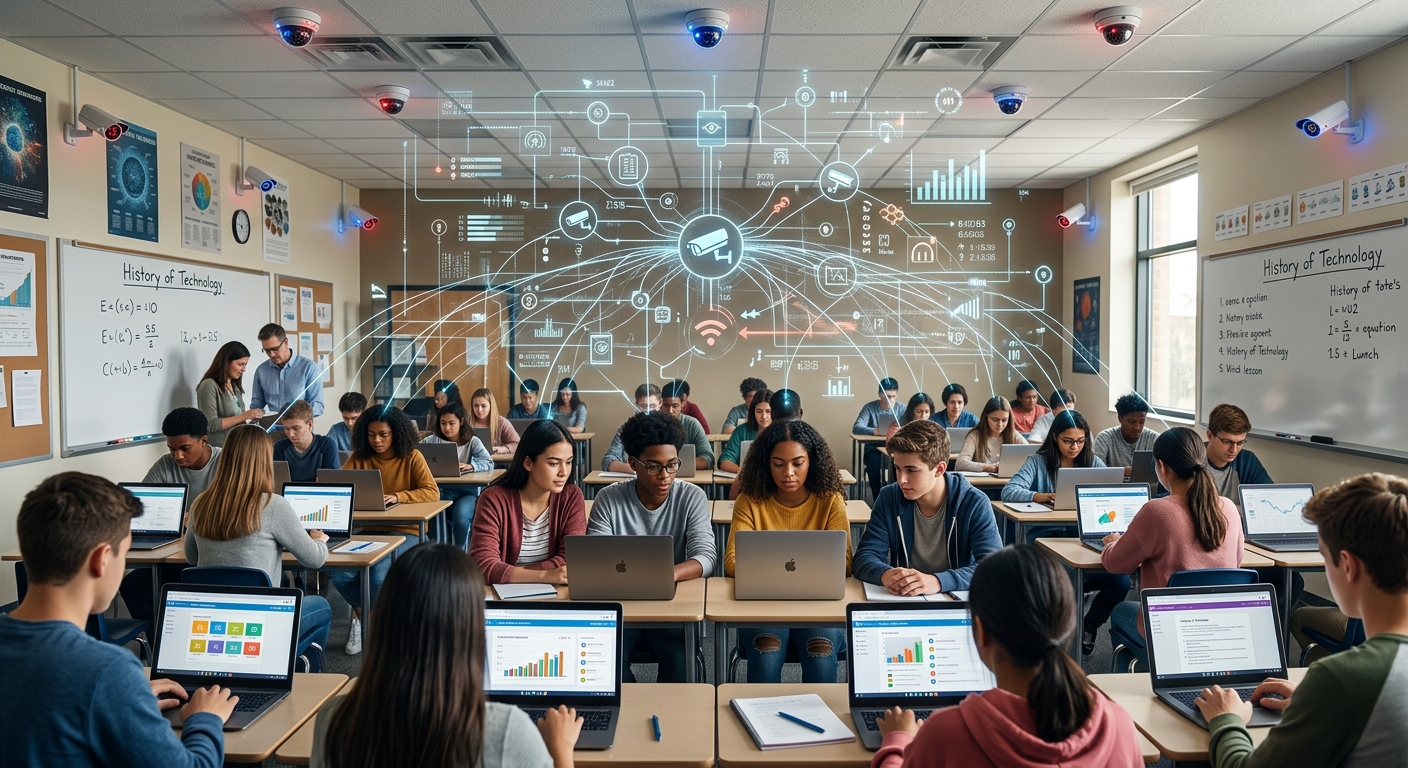
In the era of interconnected classrooms, the definition of student safety has drastically evolved. For decades, keeping children safe meant securing physical perimeters, conducting routine fire drills, and ensuring playground equipment met basic community standards. Today, however, the digital revolution has ushered in an entirely new frontier of school security: the Education Technology (EdTech) surveillance industry. Ostensibly designed to protect students from cyberbullying, self-harm, and violence, a rapidly expanding network of digital monitoring software now tracks millions of students across the nation. But as automated algorithms silently sift through private messages, web searches, and homework assignments, a critical debate has emerged among educators, parents, and privacy advocates.
Are these omnipresent digital eyes actually keeping our children safe, or are they quietly eroding fundamental civil liberties and exposing vulnerable youth to unprecedented privacy risks? The shift toward ubiquitous school surveillance accelerated immensely with the transition to remote learning, a period that fundamentally blurred the lines between the classroom and the private home. Now, even as students have returned to physical desks, this deeply embedded digital monitoring infrastructure remains firmly in place. This complex web of tracking tools has sparked widespread concern, forcing communities to question whether the normalization of constant observation is too steep a price to pay for what may simply be an illusion of security.
The Architecture of EdTech Surveillance
To fully grasp the scope of this privacy issue, it is essential to distinguish between basic internet filtering and active EdTech surveillance. Standard web filtering, which is often mandated by federal guidelines like the Children’s Internet Protection Act (CIPA), simply blocks access to known inappropriate or harmful content on school networks. Active surveillance, however, operates on a much more invasive level.
Modern digital monitoring platforms utilize advanced natural language processing (NLP), keystroke logging, and background screen-capturing technology to proactively scan every aspect of a student’s digital footprint. The data collected is vast and deeply personal, often including:
- Real-time browser activity and search engine queries.
- Private communications, including emails and direct messages exchanged with peers.
- Draft documents, creative writing assignments, and personal notes stored on cloud drives.
- Location data tied to school-issued devices, tracking students long after the final bell rings.
Because many districts distribute school-issued laptops and tablets—or require students to log into cloud-based educational suites like Google Workspace or Microsoft 365 on their personal devices—the surveillance extends deep into their private lives. Software operates continuously in the background, analyzing late-night search queries and off-hours communications. When an algorithm flags a piece of content as “concerning,” it generates an automated alert that is sent directly to school administrators, third-party content moderators, or, in severe instances, local law enforcement agencies.
The Illusion of Efficacy and the Erosion of Trust
This multi-billion-dollar industry markets itself as an indispensable safety net. Vendors frequently claim their products can predict and prevent school shootings, disrupt complex bullying networks, and identify students experiencing mental health crises before a tragedy occurs. However, independent audits and civil rights organizations characterize the industry’s marketing tactics as heavily reliant on fear, pointing out that efficacy claims are largely unsubstantiated by peer-reviewed research.
Despite the exorbitant financial costs and invasive nature of these platforms, there is a glaring lack of independent evidence proving that EdTech surveillance actually prevents school violence or self-harm. In reality, the machine-learning algorithms powering these tools are notoriously blunt instruments. They frequently lack contextual and cultural understanding, leading to a staggering volume of false positives. Common benign activities that trigger severe disciplinary alerts include:
- Students conducting historical research on wars or global conflicts.
- Creative writing assignments exploring themes of depression or personal struggle.
- Sarcastic banter or the quoting of popular song lyrics in private chats.
These false alarms force educators to waste valuable administrative time triaging non-issues, potentially missing genuine cries for help in the noise. Furthermore, constant surveillance fundamentally alters the psychological environment of the classroom. When students know their every digital move is being monitored, it creates a profound chilling effect. The classroom should be a safe space for intellectual exploration, where young people can ask difficult questions and develop their identities without fear of retribution. Instead, the hyper-monitored student learns to self-censor, degrading the foundational trust between students, counselors, and educators.
Disproportionate Harm and Algorithmic Bias
The negative consequences of EdTech surveillance are not distributed equally across the student population. Extensive investigations indicate that these digital tools disproportionately harm historically marginalized groups, including students of color, LGBTQ+ youth, and children from low-income families.
For low-income students, a school-issued device is often their only gateway to the internet. While wealthier peers can easily bypass school surveillance by switching to personal, unmonitored smartphones or home computers, economically disadvantaged students are forced to conduct their entire digital lives under the watchful eye of their school district. This dynamic creates a troubling two-tiered system of privacy, where the basic right to digital anonymity is a luxury reserved solely for those who can afford it.
Furthermore, algorithmic bias plays a significant role in how these monitoring systems flag content. Language processing models have been shown to disproportionately penalize dialects, slang, and cultural expressions common among minority students, misinterpreting them as aggressive or policy-violating. Similarly, the software frequently flags terminology related to sexual orientation and gender identity. This poses a severe physical and emotional risk to LGBTQ+ youth, as automated alerts can inadvertently “out” a student to conservative administrators or unsupportive parents before the student is ready, potentially exposing them to unsafe domestic situations.
When these alerts escalate, they often trigger punitive disciplinary action rather than therapeutic intervention. Instead of connecting a struggling student with a trained psychological counselor, surveillance platforms are increasingly integrated directly with school resource officers or local police departments. This dynamic threatens to transform minor behavioral or mental health issues into law enforcement matters, funneling vulnerable youth into the school-to-prison pipeline.
A Looming Cybersecurity Crisis
Beyond civil rights concerns, the mass accumulation of student data presents an extraordinary and growing cybersecurity risk. EdTech surveillance companies ingest vast troves of highly sensitive information, including personally identifiable information (PII), behavioral profiles, disciplinary records, and individualized education programs (IEPs).
By centralizing this sensitive data, vendors create highly lucrative targets for cybercriminals and ransomware syndicates. A breach in a major EdTech platform can expose the private lives of millions of minors, leading to identity theft, extortion, and long-term reputational damage. Unlike a compromised credit card, which can be canceled and reissued within days, leaked psychological profiles and behavioral records are permanent and irrevocable.
Recent years have seen a massive surge in sophisticated cyberattacks targeting K-12 educational institutions and their third-party software vendors. The lack of stringent, uniform cybersecurity standards across the entire EdTech sector only exacerbates this vulnerability. Many platforms fail to implement basic modern security protocols, such as mandatory multi-factor authentication or strict end-to-end encryption for stored data, leaving student records precariously exposed to underground data markets.
Federal Oversight and the Path to Reform
As the severe risks associated with EdTech surveillance become increasingly apparent, momentum is building at the federal level for stronger regulatory oversight. Advocacy groups, including the Center for Democracy and Technology (CDT), have repeatedly warned that the rapid, unchecked adoption of monitoring tools and artificial intelligence in educational settings is far outpacing the policy frameworks required to protect children.
Federal agencies are beginning to take decisive action. The Federal Communications Commission (FCC) and the National Telecommunications and Information Administration (NTIA) have initiated deep reviews of programs like E-Rate, which provides billions in annual funding for school broadband and technological devices. Recent 2026 evaluations of the E-Rate program heavily emphasize the need to address excessive screen time, digital distractions, and the unintended consequences of forcing students into constant digital environments. Additionally, the FCC’s recent initiatives, such as the Schools and Libraries Cybersecurity Pilot Program, underscore a vital shift toward securing school networks against external data exfiltration rather than merely surveilling the students within them.
To navigate the digital age responsibly, school districts must actively prioritize data minimization and operational transparency. Administrators should critically evaluate whether continuous, around-the-clock surveillance is genuinely necessary. Often, investing in human infrastructure—such as hiring more school counselors, expanding peer-support programs, and prioritizing digital literacy education—yields far better outcomes for student safety than any algorithm can provide.
Conclusion
The collective impulse to protect children is universal and deeply necessary, but society must not allow fear to justify the widespread erosion of student privacy. The EdTech surveillance industry has capitalized on the genuine anxieties of educators and parents, selling a vision of safety that is heavily reliant on continuous digital intrusion. Yet, as the evidence mounts regarding severe algorithmic bias, the chilling of free expression, and catastrophic cybersecurity vulnerabilities, it is undeniably clear that these tools frequently introduce more risks than they mitigate.
Safeguarding the next generation requires significantly more than installing software that transforms classrooms into digital panopticons. It requires fostering educational environments built on mutual trust, respect, and human connection. By prioritizing civil liberties alongside physical safety, communities can ensure that educational institutions remain safe spaces where young minds are completely free to learn, grow, and thrive without living under the shadow of constant surveillance.
Frequently Asked Questions (FAQs)
What exactly is EdTech surveillance?
EdTech surveillance refers to specialized software and cloud-based platforms used by schools to actively monitor students’ digital activities. Unlike basic web filters that simply block inappropriate content, these tools utilize artificial intelligence to analyze private emails, search queries, and document drafts in real-time to flag content related to self-harm, violence, or school policy violations.
How does constant digital monitoring affect student mental health?
Continuous surveillance can create a profound “chilling effect,” where students self-censor and experience heightened anxiety about their private thoughts being scrutinized. Instead of feeling supported, many students feel a loss of trust in their educators, which can heavily discourage them from seeking necessary help for genuine mental health struggles.
Are marginalized students disproportionately impacted by these tools?
Yes. Extensive research shows that students of color, LGBTQ+ youth, and low-income students bear the brunt of surveillance harms. Algorithmic bias often falsely flags cultural slang, and monitoring tools can inadvertently “out” LGBTQ+ students to administrators by flagging terms related to sexual orientation. Furthermore, low-income students relying solely on school-issued devices cannot opt out of this surveillance by using personal technology.
Can parents opt their children out of school surveillance programs?
The ability to opt out varies significantly by school district and local state law. In many cases, if a student uses a school-issued device or required educational software to complete assignments, opting out of surveillance is incredibly difficult without severely impacting their academic participation. Parents are encouraged to review their district’s specific technology use policies and advocate for stringent data minimization practices.
References
- Digital Dystopia: The Danger in Buying What the EdTech Surveillance Industry is Selling — American Civil Liberties Union. 2023-10-03. https://www.aclu.org/press-releases/new-aclu-report-shines-light-on-shadowy-edtech-surveillance-industry-and-the-dangerous-consequences-of-surveillance-in-schools
- Assistant Secretary Roth Applauds FCC NPRM on E-Rate, Addressing Children’s Excessive Screen Use in Schools — National Telecommunications and Information Administration. 2026-06-03. https://www.ntia.gov/
- CDT: Growing AI Use in Schools Brings Benefits and New Risks — GovTech. 2025-10-10. https://www.govtech.com/education/k-12/cdt-growing-ai-use-in-schools-brings-benefits-and-new-risks
- Schools and Libraries Cybersecurity Pilot Program — Federal Communications Commission. 2025-02-25. https://www.fcc.gov/schools-and-libraries-cybersecurity-pilot-program
Similar Articles








Read full bio of medha deb


