
E-Verify Expansion: A Threat to Privacy and Civil Liberties
E-Verify's biometric shift threatens worker privacy and civil liberties.
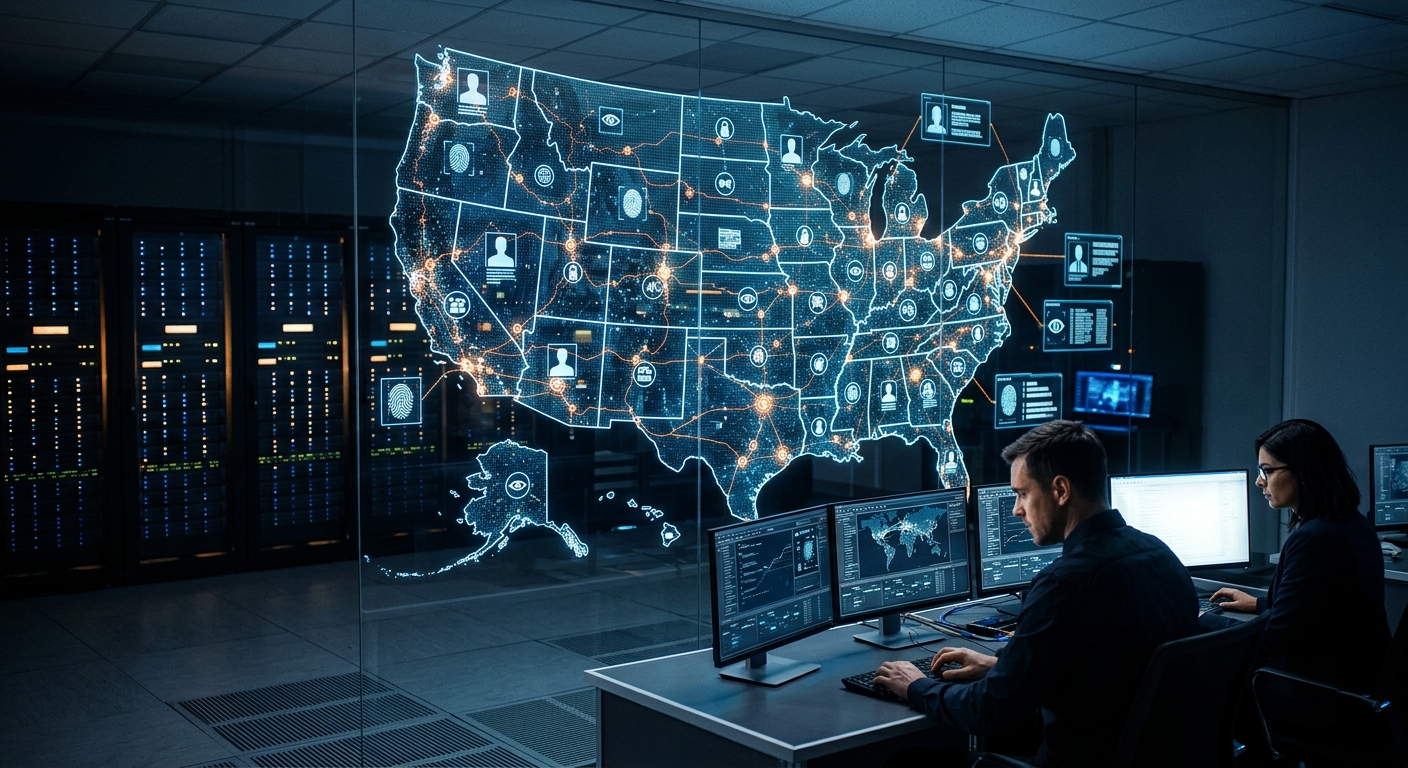
Introduction to the Digital Verification Era
The landscape of employment verification in the United States is undergoing a profound transformation. What began as a relatively straightforward administrative procedure—ensuring that newly hired personnel are legally authorized to work—has steadily evolved into a vast digital dragnet. At the center of this shift is E-Verify, the web-based system operated jointly by the Department of Homeland Security (DHS) and the Social Security Administration (SSA). Originally designed to cross-reference biographical data submitted on a standard I-9 form with federal databases, the system is now expanding its capabilities in ways that alarm privacy advocates, civil rights organizations, and cybersecurity experts.
As lawmakers debate the merits of making E-Verify mandatory nationwide, a parallel effort to integrate biometric data and facial recognition technology into the system is quietly advancing. This pivot from paper-based checks to biometric surveillance raises fundamental questions about the balance of power between the state and the individual. If left unchecked, the modernization of employment verification could inadvertently construct the most comprehensive domestic surveillance infrastructure in American history, turning the right to earn a living into a gateway for persistent government monitoring.
The Evolution of E-Verify: From Biographics to Biometrics
At its inception in 1996 as the Basic Pilot Program, E-Verify was pitched to the American public and lawmakers as a voluntary, narrowly tailored tool. Employers would submit an employee’s name, date of birth, and Social Security number into an internet portal, and the system would instantly bounce that data against government records to confirm employment eligibility. For years, this biographical matching was the extent of the system’s reach. However, driven by concerns over identity theft and document fraud, federal agencies began augmenting the system’s capabilities.
The introduction of the photo-matching tool marked a significant turning point. Under this protocol, if a new hire presents a U.S. passport, Permanent Resident Card, or Employment Authorization Document, E-Verify displays the photograph on file for that individual. The employer must then visually confirm that the image on the screen matches the person standing in front of them and the document provided. While proponents argue this deters the use of stolen documents, it effectively established the infrastructure for transmitting and storing visual identity markers across a massive network of private employers. Over time, federal agencies have sought to expand this repository, transitioning the program from a simple cross-reference tool into an expansive gallery of the American workforce.
The Threat of Facial Recognition and State Data Mining
Perhaps the most alarming development in the E-Verify ecosystem is the aggressive push toward incorporating automated facial recognition technologies and mining state-level data. The DHS has actively explored and tested capabilities that would replace manual photo matching with algorithmic facial recognition. This transition fundamentally alters the nature of the system. Facial recognition technology is notoriously plagued by accuracy issues, particularly concerning people of color, women, and older individuals. Integrating a flawed biometric algorithm into the gateway of American employment introduces a systemic risk of algorithmic discrimination.
Furthermore, federal agencies have been systematically attempting to link E-Verify with state Department of Motor Vehicles (DMV) databases. By tapping into the National Law Enforcement Telecommunications System (NLETS), E-Verify aims to pull driver’s license photos into its verification nexus. Because the vast majority of American citizens use a driver’s license as their primary form of identification, connecting DMVs to E-Verify effectively pulls millions of native-born citizens who have no interaction with the immigration system into a federal biometric dragnet. This state-to-federal data pipeline bypasses traditional privacy firewalls, allowing federal authorities to harvest local civilian data under the guise of workplace compliance.
The Specter of a De Facto National Identification System
As E-Verify expands its biometric capabilities and interconnects with state databases, civil liberties organizations are raising the alarm over the creation of a de facto national identification system. The United States has historically resisted the implementation of a compulsory national ID, viewing it as anathema to a free society and a dangerous consolidation of federal power. Yet, an enhanced, mandatory E-Verify program accomplishes exactly this by stealth.
If every worker in the United States is required to submit their biometric identifiers to a centralized federal portal just to hold a job, the government effectively possesses a comprehensive, continuously updated registry of the entire adult population. Privacy advocates argue that there is no meaningful distinction between a mandatory national ID card and a mandatory national biometric database required for participation in the economy. This centralized registry forces citizens to seek constant, algorithmic permission from the government to engage in the basic act of working, fundamentally inverting the presumption of liberty that underpins American society.
Mission Creep: When Employment Checks Become Mass Surveillance
This brings us to the concept of mission creep—the tendency for a government program to expand its operations far beyond its original mandate. The data aggregated by E-Verify is not stored in a vacuum. It sits within the sprawling digital architecture of the Department of Homeland Security, an agency with a broad mandate encompassing immigration enforcement, counterterrorism, and border security.
The fear among civil rights advocates is that the E-Verify database, enriched with facial recognition profiles and state DMV records, will inevitably be repurposed for secondary objectives. Once a comprehensive biometric database of the American workforce exists, the temptation for law enforcement and intelligence agencies to query it for investigations will be immense. Routine use exemptions in privacy policies could allow E-Verify data to be shared with federal, state, and local law enforcement without a warrant. What is justified today as a tool to prevent undocumented employment could easily be weaponized tomorrow to track political dissidents, monitor marginalized communities, or conduct dragnet surveillance across the civilian population.
The Real-World Cost: Database Errors and Tentative Nonconfirmations
Beyond the existential threats to privacy, the expansion of E-Verify poses immediate, tangible risks to the livelihoods of legally authorized workers. The system relies on vast, fragmented databases that are notorious for typographical errors, outdated information, and bureaucratic discrepancies. When E-Verify detects a mismatch, it issues a Tentative Nonconfirmation (TNC).
A TNC places the burden of proof entirely on the employee. The worker is typically given just eight federal working days to contact the SSA or DHS, navigate complex bureaucratic phone trees, and correct the government’s records. If they fail to resolve the issue within this tight window, the TNC converts into a Final Nonconfirmation, and the employer is legally obligated to terminate the employee. Government Accountability Office (GAO) and Office of Inspector General (OIG) reports have repeatedly highlighted that error rates disproportionately impact naturalized citizens, foreign-born legal workers, and individuals who have recently changed their names due to marriage or divorce. Injecting complex biometric algorithms into this already flawed process threatens to lock thousands of legally authorized individuals out of the workforce based on a computer error.
Cybersecurity Vulnerabilities and Data Honeypots
Centralizing the biometric and biographical data of millions of American workers creates an unprecedented cybersecurity vulnerability. In an era defined by massive data breaches targeting both private corporations and federal agencies, E-Verify represents the ultimate honeypot for state-sponsored hackers, cybercriminals, and identity thieves.
Unlike a compromised credit card number or even a Social Security number, biometric data cannot be changed. If a malicious actor breaches the databases interconnected with E-Verify, the compromised facial recognition profiles and identity markers are permanently exposed. The DHS Office of Inspector General has previously identified deficiencies in the system’s internal controls and its ability to securely manage the vast influx of data. By requiring employers—ranging from massive multinational corporations to small, independent contractors with limited IT security—to act as nodes in this network, the system dramatically increases its attack surface, placing the identities of millions at severe risk.
The Role of Employers as Unwitting Enforcers
Mandating a biometric E-Verify system fundamentally alters the relationship between businesses and employees. Employers are effectively conscripted into acting as frontline agents for federal surveillance enforcement. Small business owners, already navigating complex labor laws, must assume the responsibility of operating biometric verification portals. If a system glitch occurs, the employer is placed in the hostile position of interrogating a hire’s legal status or terminating a potentially eligible worker to remain compliant. Furthermore, expecting private companies to securely transmit sensitive visual data to the government introduces massive compliance liabilities. Critics argue that shifting this enforcement burden onto the private sector suffocates enterprises with red tape and deteriorates workplace trust.
The Pushback: What Civil Liberties Organizations Demand
In response to these escalating threats, a broad coalition of civil rights groups, privacy advocates, and legal experts are petitioning lawmakers for immediate intervention. They argue that any legislative attempt to mandate or expand E-Verify must be paired with ironclad, statutory privacy safeguards. Core demands include:
- Prohibition of Facial Recognition: Banning the use of automated biometric algorithms and algorithmic sorting in standard employment checks to prevent technological discrimination.
- Strict Data Compartmentalization: Ensuring information collected for workplace authorization is walled off and cannot be shared with intelligence agencies or local police without a probable cause warrant.
- State-Level Protections: Prohibiting state DMVs from sharing drivers’ license data with the federal E-Verify network, protecting citizens who have no interaction with the immigration system.
Without these robust legal firewalls, civil liberties advocates warn that the expansion of E-Verify will proceed unchecked, sacrificing fundamental privacy rights on the altar of administrative convenience.
Balancing National Security with Individual Privacy
Navigating the future of employment verification requires a delicate balancing act. While maintaining a legal workforce is a legitimate policy objective, it cannot supersede the fundamental constitutional rights of the American people. The rapid integration of biometric surveillance tools into administrative systems demonstrates a dangerous trajectory toward an automated, monitored society. Lawmakers must critically evaluate whether the marginal benefits of enhanced document verification are worth the massive erosion of personal privacy. As technology continues to outpace legislation, the fight over E-Verify serves as a critical battleground for the future of civil liberties, testing whether society can implement necessary regulations without building a turnkey surveillance state.
Frequently Asked Questions (FAQ)
What exactly is E-Verify?
E-Verify is a web-based system operated by the U.S. Department of Homeland Security and the Social Security Administration. It allows enrolled employers to confirm the employment eligibility of their new hires by comparing information from an employee’s Form I-9 against federal records.
Why are civil liberties groups concerned about its expansion?
Advocacy groups are concerned because E-Verify is increasingly incorporating biometric data, such as photo matching and proposals for facial recognition. This expansion, combined with efforts to link the system to state DMV databases, risks turning a workplace compliance tool into a massive federal surveillance network.
What is a Tentative Nonconfirmation (TNC)?
A TNC occurs when the information an employer enters into E-Verify does not immediately match DHS or SSA records. Employees must contest the TNC and resolve the data discrepancy within eight federal working days, or risk losing their job due to a Final Nonconfirmation.
Does E-Verify act as a national ID system?
Privacy advocates argue that if E-Verify becomes mandatory nationwide and requires biometric data (like photos or facial recognition) from every worker, it functionally operates as a national ID system. It would force all citizens to seek algorithmic clearance from a central government database to hold employment.
Can E-Verify data be hacked?
Yes. Like any centralized digital repository, the databases powering E-Verify are vulnerable to cyberattacks. Centralizing the sensitive biographical and biometric data of the entire American workforce creates a highly attractive target for identity thieves and state-sponsored hackers.
References
- Verify Employment Eligibility (E-Verify) — Department of Homeland Security. 2022-10-05. https://www.dhs.gov/verify-employment-eligibility-e-verify
- Biometrics — Department of Homeland Security. 2025-08-28. https://www.dhs.gov/biometrics
- USCIS Needs to Improve Its Electronic Employment Eligibility Verification Process (OIG-21-56) — Department of Homeland Security, Office of Inspector General. 2021-08-23. https://www.oig.dhs.gov/
- Employment Verification: Federal Agencies Have Taken Steps to Improve E-Verify, but Significant Challenges Remain (GAO-11-146) — U.S. Government Accountability Office. 2010-12-30. https://www.gao.gov/products/gao-11-146
Similar Articles








Read full bio of Sneha Tete


