Many people assume that driving under the influence (DUI) laws only apply when a vehicle is moving on the road. In reality, you can face DUI or related charges even when your car is parked, the engine is off, and you never left the spot where officers found you. Understanding how this is possible—and how to reduce your risk—is critical for anyone who may consider “sleeping it off” in their vehicle after drinking.
Why a Parked Car Can Still Lead to a DUI Charge
Most state DUI statutes cover not only active driving but also being in actual physical control or “operating” a motor vehicle while impaired by alcohol or drugs. Courts and legislatures have adopted this broader language to prevent dangerous situations before a car is actually moving on the roadway.
In plain terms, if you are impaired and in a position where you reasonably could start and operate the vehicle, you may fall under the scope of DUI laws—even if officers never see you drive.
- Purpose of the law: Prevent impaired people from taking control of vehicles, not just punish those already driving.
- Key concept: The legal focus is on control and potential to drive, not only motion.
- Result: Sitting, sleeping, or waiting in a parked car can sometimes be enough for a DUI charge.
The Legal Concept of “Actual Physical Control”
The phrase “actual physical control” appears in many state statutes and court decisions addressing parked-vehicle DUI cases. While exact definitions differ by jurisdiction, courts commonly look at whether the person had the immediate ability to operate the vehicle.
Typical factors used to decide whether someone was in actual physical control include:
- Where the person was seated in the vehicle (driver’s seat vs. passenger or back seat)
- Whether the engine was running or the ignition was on
- Where the keys were located (in the ignition, in hand, or far away)
- Whether the vehicle was parked legally or in a traffic lane
- Indications the car had recently been driven (warm engine, position on roadway, tire marks)
- What the person told officers about driving or future plans to drive
Courts may weigh these circumstances together to determine whether the person realistically could have driven away while impaired. In some states, simply being intoxicated in the driver’s seat with the keys accessible has been enough to support a DUI conviction.
Common Scenarios That Can Trigger Parked Vehicle DUI Cases
Parked-car DUI cases often arise from everyday situations where someone believes they are doing the responsible thing by avoiding driving. Unfortunately, the law sometimes treats these scenarios harshly.
Sleeping in the Driver’s Seat
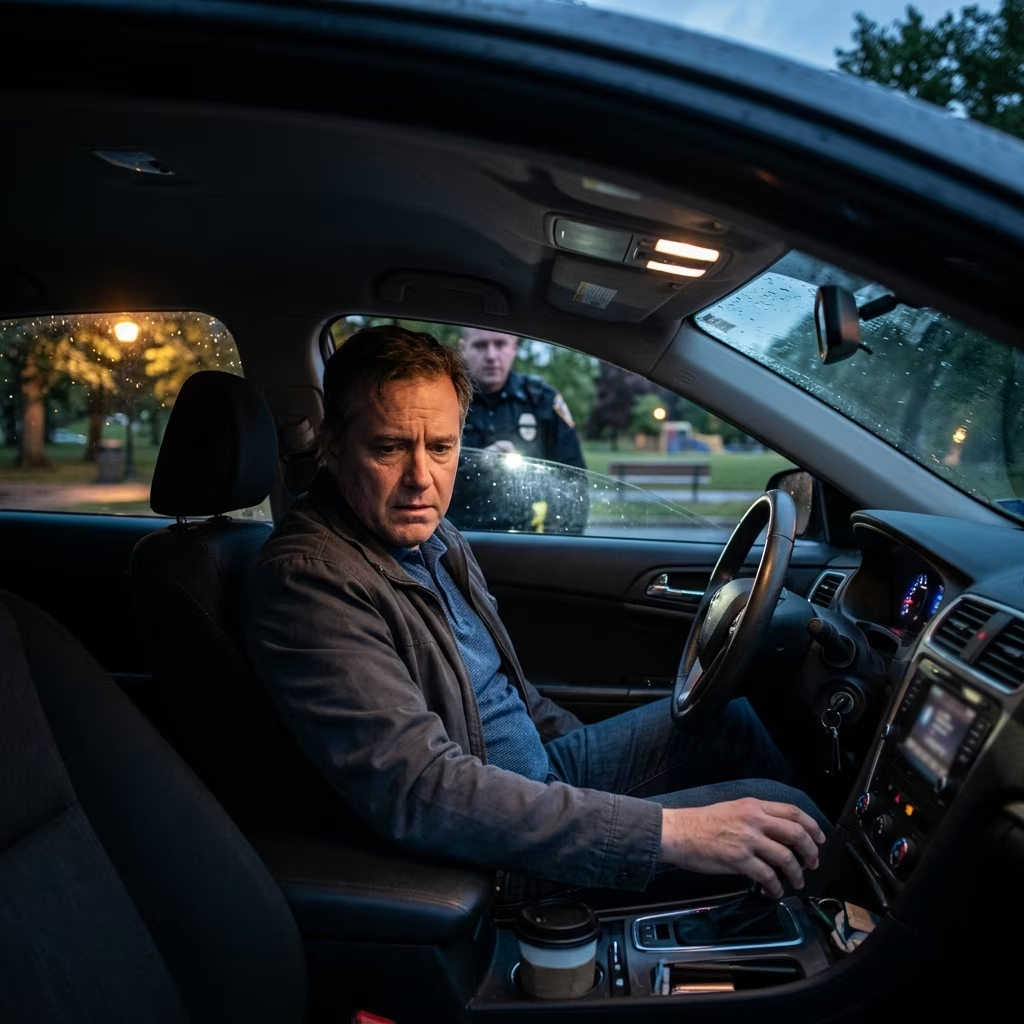
One of the most frequent scenarios involves a person falling asleep in the driver’s seat after drinking. Courts and officers often view this as evidence of actual control because the person is literally behind the wheel, often with keys nearby.
- If the engine is running to provide heat or air conditioning, officers may infer intent or readiness to drive.
- Even with the engine off, the individual’s position may suggest they could start the car at any moment.
Waiting in the Car to “Sober Up”
It is common for people to sit in their car after a party or bar visit, intending to wait until they feel more sober. In several states, however, being intoxicated and seated in a position of control can still qualify as a DUI or similar offense.
- Statements such as “I’m waiting to sober up and then I’ll drive home” can be used against you as evidence of planned driving while impaired.
- Parking in unusual locations, like the shoulder or a traffic lane, can further support a charge.
Sitting in the Car on Private Property
Some people assume DUI laws apply only on public roads, but this is not universal. In certain jurisdictions, DUI statutes apply to both public and private property, meaning you can be charged even if your vehicle is in a driveway or private lot.
- Law enforcement may investigate based on complaints, visible impairment, or safety concerns.
- Courts will still analyze control and impairment, not just the location of the car.
Key Elements the Prosecution Must Prove
Even in a parked-car case, prosecutors must establish the same basic elements required in a standard DUI case.
| Element | What It Means in a Parked Car Case |
|---|---|
| Impairment or Illegal BAC | Evidence that the person was under the influence of alcohol or drugs, or had a blood alcohol concentration (BAC) at or above the legal limit, usually 0.08%. |
| Operation or Control | Proof that the person drove the vehicle or was in actual physical control of its movement, even if it was stationary when officers arrived. |
| Timing Connection | Evidence suggesting that the impairment and control occurred at the same time, such as recent driving, warm engine, or statements about driving. |
Because officers frequently arrive after the vehicle has stopped, prosecutors often rely on circumstantial evidence—what you say, where you are seated, and physical clues from the scene—to connect you to recent or potential driving.
Potential Penalties for Parked Car DUI
In many states, a DUI charge arising from a parked car is treated similarly to one based on driving on the roadway. Penalties can range widely depending on the jurisdiction, prior record, and presence of aggravating factors.
- Fines: Monetary penalties that increase for repeat offenses.
- Jail time: Some states allow up to several months of incarceration for first offenses, with longer terms for subsequent convictions.
- License suspension: Temporary loss of driving privileges, sometimes for months or years, depending on the offense level.
- Ignition interlock devices: Court-ordered devices that require a breath test before the vehicle can start.
- Probation or community service: Supervision, treatment requirements, and service obligations.
Because consequences can be severe and long-lasting—affecting employment, insurance, and professional licenses—it is important to treat a parked-vehicle DUI charge as seriously as any other.
Common Defenses in Parked Vehicle DUI Cases
Although parked-car DUI cases can be serious, they sometimes present unique defense opportunities. Defense strategies focus on undermining the prosecution’s evidence of control, driving, or impairment.
Challenging “Actual Physical Control”
One core defense is to argue that you were not in actual physical control of the vehicle at the time of the alleged offense.
- You were seated in the back seat or passenger seat, away from the controls.
- The keys were not in the ignition and were stored in a location you could not easily access.
- The engine was off and there was no intention to drive until sober or until another driver arrived.
Questioning Probable Cause for the Arrest
Officers must have a lawful basis to detain and arrest someone for DUI. In some parked-vehicle cases, defense lawyers argue that police lacked sufficient probable cause to believe a crime occurred, especially where there is no evidence of driving.
- Absence of driving behavior (no witness, no movement observed)
- Car legally parked without creating a hazard
- No clear indicators connecting impairment to vehicle operation
Challenging Chemical Test Results
Like any DUI case, parked-car prosecutions often rely on breath or blood test results to prove impairment. Defense strategies may include showing that the testing device was not properly calibrated or that procedures were not followed.
- Improper administration of the breath test
- Malfunction or poor maintenance of testing equipment
- Medical or physiological factors affecting test accuracy
Because these defenses require detailed legal and technical analysis, consulting experienced counsel is essential.
Practical Tips to Reduce the Risk of a Parked Car DUI
While the safest choice is to avoid driving after consuming alcohol or impairing drugs, many people find themselves in situations where they consider staying in their car. Certain steps may reduce—but not eliminate—the risk of a DUI charge.
- Avoid the driver’s seat: If you must be in the vehicle, sit in the back seat to distance yourself from the controls.
- Keep the engine off: Do not run the engine for heat or air conditioning, as this can suggest operation or intent to drive.
- Store keys away: Place keys in the trunk, glove compartment, or give them to a sober person, instead of keeping them in the ignition or near your hands.
- Park safely and legally: Choose a legal parking spot away from traffic lanes or shoulders to avoid suspicion and safety hazards.
- Limit statements to police: Be polite but avoid making admissions about past or intended driving, or how much you drank.
- Plan ahead: Use ride-sharing services, designated drivers, or public transit whenever you anticipate drinking.
These measures cannot guarantee you will avoid charges, since laws differ by state and police have discretion. However, they may reduce the likelihood that a court finds you were in actual physical control of the vehicle while impaired.
Frequently Asked Questions (FAQs)
1. Is it always illegal to sit in a parked car after drinking?
No. Simply being inside a vehicle after consuming alcohol is not automatically a crime. The legal issue is whether you are impaired and in actual physical control or operating the vehicle. Factors like where you sit, where the keys are, and whether the engine is running are crucial.
2. Can I get a DUI on private property if my car never left the driveway?
In some states, yes. Certain DUI statutes apply on both public and private property, meaning officers can arrest you in a driveway or parking lot if they believe you were impaired and in control of the vehicle. You should consult local law to understand how your state treats this situation.
3. If I move to the back seat and turn off the car, am I safe from DUI charges?
Moving to the back seat, turning off the engine, and storing the keys away may help show that you were not in actual physical control of the vehicle. However, these steps do not guarantee immunity from charges, because officers and courts evaluate the entire situation.
4. How do police decide to arrest someone for DUI in a parked car?
Officers consider observable impairment—such as slurred speech or difficulty standing—and the person’s position in the car, engine status, key location, and surroundings. They may also rely on statements about driving or plans to drive. If they believe you were or could imminently be operating the vehicle while impaired, they may proceed with a DUI arrest.
5. Should I talk to a lawyer if I am charged with DUI in a parked car?
Yes. Parked-vehicle DUI cases can raise complex questions about control, probable cause, and test accuracy. A qualified criminal defense attorney can evaluate the evidence, explain your options, and develop a strategy tailored to your jurisdiction and circumstances.
References
- Texas Penal Code & DWI While Parked? What You Need to Know — Bryan Fagan Law. 2024-03-01. https://texasduilawfirm.com/can-you-get-a-dwi-while-parked/
- New Jersey Statutes Annotated 39:4-50 & Parked Car DWI in New Jersey — LLF Law Firm. 2023-06-15. https://www.njcriminaldefensellc.com/parked-car-dwi
- Can I Be Arrested for DUI if I’m Asleep in My Parked Car? — Carey Law Office. 2022-02-07. https://www.careylawoffice.com/2022/02/07/can-i-be-arrested-for-dui-if-im-asleep-in-my-parked-car/
- DUI in a Parked Car Defense Lawyer — Benjamin Law Firm, LLC (Missouri & Georgia). 2024-06-10. https://www.dwicriminallawcenter.com/blog/2024/june/dui-in-a-parked-car-defense-in-missouri/
- Can You Get a DUI in Pennsylvania If Your Car Is Parked? — Jameson Stone LLC. 2023-09-20. https://www.jamesonstonelaw.com/pa-criminal-defense-lawyer/parked-dui-pa/
- If Your Car Is Parked, Can You Still Get a DUI in Pennsylvania? — The Town Law LLC. 2023-11-01. https://www.thetownlaw.com/the-town-law-article/if-your-car-is-parked-can-you-still-get-a-dui-in-pennsylvania/
- Can You Get a DUI in Maryland for Sitting in a Parked Car? — Maronick Law LLC. 2022-12-05. https://www.maronicklaw.com/blog/can-you-get-a-dui-in-maryland-for-sitting-in-your-car-to-sober-up-after-a-holiday-party/