
Pros and Cons of DUI Field Sobriety Tests
A clear look at how roadside sobriety testing works, why it is used, and what it can mean for a DUI case.
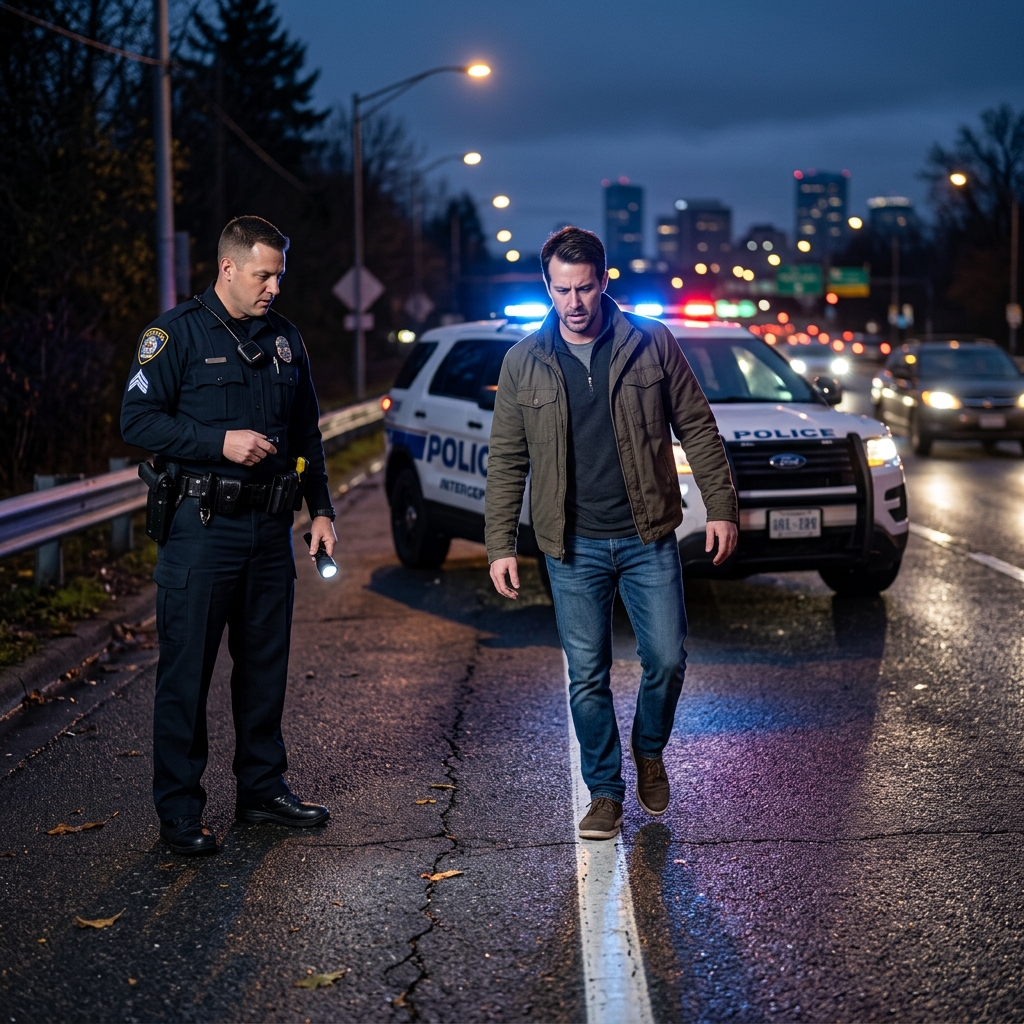
Field sobriety tests are often the first formal tool police use when they suspect a driver may be impaired. These roadside exercises can help an officer look for signs of alcohol or drug use, but they are also controversial because they rely heavily on observation, instruction-following, and physical coordination. In a DUI investigation, they may help law enforcement build probable cause, yet they can also produce misleading results for sober drivers.
What these tests are designed to do
Field sobriety tests are used before an arrest to help officers decide whether a driver may be impaired. In practice, they are not medical tests and do not directly measure blood alcohol concentration. Instead, they look for physical or mental cues such as balance problems, divided attention issues, or unusual eye movement that officers associate with impairment.
Because these tests are performed on the side of the road, they are affected by conditions that do not exist in a controlled laboratory setting. Lighting, weather, traffic, footwear, nerves, age, injury, and even uneven pavement may influence performance. That is one reason they remain useful to police but frequently challenged in court.
The main roadside tests officers use
In many DUI investigations, officers rely on three commonly used standardized tests. These tests are intended to give law enforcement a consistent method for observing possible impairment, although they still depend on the officer’s interpretation.
- Horizontal gaze nystagmus: The officer asks the driver to follow a moving object with the eyes while watching for involuntary jerking.
- Walk-and-turn: The driver is instructed to take a series of heel-to-toe steps, turn in a specific way, and return along the same path.
- One-leg stand: The driver must balance on one leg for a short period while following the officer’s directions.
Officers may also use informal exercises such as reciting part of the alphabet, touching the nose, counting, or answering a series of questions. These additional tasks are not always standardized, but they are often used to form a broader impression of impairment.
Why law enforcement relies on them
From the prosecution’s perspective, field sobriety tests offer immediate, observable evidence. They can help an officer explain why a stop escalated from a traffic matter to a DUI arrest. They also require no laboratory equipment, no waiting period, and no specialized facilities.
Another advantage is that these tests may support probable cause when paired with other observations such as slurred speech, bloodshot eyes, the odor of alcohol, erratic driving, or inconsistent answers. In that sense, the tests can function as one piece of a larger investigative picture rather than as the sole basis for a DUI charge.
Strengths of field sobriety testing
When administered properly, roadside tests can provide useful information to police. Their value comes from the fact that impairment often affects coordination, balance, and the ability to follow instructions. If several indicators point in the same direction, officers may reasonably conclude that further testing or arrest is warranted.
- Fast screening: The tests can be conducted quickly during a traffic stop.
- Low cost: They do not require lab equipment or complicated setup.
- Useful for probable cause: They can help justify a DUI arrest when combined with other signs.
- Can capture physical impairment: A driver who is visibly unsteady or unable to follow directions may reveal genuine impairment.
These benefits explain why police departments continue to use field sobriety testing even though the results are often contested. The tests are not perfect, but they can be helpful when the suspect is visibly affected and the officer follows the proper procedure.
Where the weaknesses begin
The biggest criticism of field sobriety tests is that they are highly subjective. The officer must decide whether a stumble, pause, or mistake is meaningful. Two officers can watch the same performance and reach different conclusions. That subjectivity gives the defense room to argue that the observations were overstated or misinterpreted.
There is also the issue of reliability. A person may fail for reasons unrelated to intoxication, such as a medical condition, anxiety, fatigue, poor balance, age, injury, or distracting roadside conditions. Even a completely sober driver can struggle with a task that is unfamiliar, stressful, and performed under pressure.
Common reasons sober drivers may perform poorly
Field sobriety testing often assumes that a person can stand still, walk a straight line, and split attention while an armed officer watches and records every move. That assumption does not always match reality.
- Medical limitations: Back pain, knee problems, vertigo, neuropathy, or balance disorders may affect performance.
- Environmental factors: Uneven shoulders, wet pavement, bright headlights, wind, rain, or traffic can interfere.
- Nervousness: Stress during a stop can cause a person to freeze, rush, or misunderstand directions.
- Footwear and clothing: High heels, boots, slippery soles, or restrictive clothes can make the exercises harder.
- Language and hearing issues: A driver who cannot clearly hear or understand the instructions may appear noncompliant.
These factors matter because the tests are often treated as evidence of impairment even when the underlying reason may be unrelated. A defense attorney may later use these facts to argue that the results should be given little weight.
How refusal can affect the case
In many jurisdictions, drivers are not legally required to perform field sobriety tests. That means a motorist may decline before the officer begins the exercises. However, the consequences of refusal vary by state, and the decision should be understood carefully because police may interpret refusal as a sign of consciousness of guilt.
Refusing the tests may reduce the amount of evidence the officer can collect on the spot. At the same time, it may increase suspicion and encourage the officer to rely on other signs of impairment or request a chemical test later. In some places, refusal may also influence how the prosecution presents the case, even if the refusal itself is not a separate offense.
| Option | Possible benefit | Possible drawback |
|---|---|---|
| Take the tests | May show that you can follow directions and maintain coordination | A poor performance can become evidence against you |
| Refuse the tests | Prevents the officer from collecting roadside performance evidence | May raise suspicion or be used by the prosecution as a negative fact |
How these tests compare with chemical testing
Field sobriety tests are not the same as breath, blood, or urine tests. Chemical tests are designed to estimate or measure alcohol or drug presence more directly, while roadside exercises are observational. That difference is important because a person may fail a field test without being over the legal limit, and a person may pass a field test while still having an unlawful blood alcohol concentration.
Chemical tests also have their own limitations, but they usually carry more scientific weight than roadside exercises. Field sobriety tests are often best understood as screening tools, not definitive proof. Their main function is to help an officer decide whether to make an arrest or request further testing.
How prosecutors and defense lawyers use the results
In court, prosecutors may point to poor performance on the tests as evidence that the driver was impaired. They may combine that evidence with dashcam footage, officer testimony, chemical results, and driving behavior to argue that the arrest was justified.
Defense lawyers, on the other hand, often look for flaws in the testing process. They may argue that the officer gave unclear instructions, failed to account for medical issues, chose an unsuitable location, or relied too much on subjective impressions. If the test was administered poorly, the defense may ask the court to discount the results or exclude them altogether.
Practical advantages and disadvantages at a glance
The value of field sobriety testing depends on which side is using it. The same test that supports an arrest can also create an opening for a defense challenge.
- For police: It gives immediate evidence and helps establish probable cause.
- For prosecutors: It can support a larger DUI narrative when paired with other facts.
- For drivers: It may offer a chance to show sobriety if the performance is strong.
- For the defense: It creates multiple opportunities to challenge reliability and procedure.
What drivers should keep in mind during a stop
A DUI stop is stressful, and people often make decisions quickly. The most important point is that roadside tests are not always mandatory, but the rules depend on the state and the type of test involved. Drivers should understand that refusing or submitting can both have consequences. If an arrest occurs, the roadside performance may become part of the evidence used later.
Because the legal consequences can be serious, anyone facing a DUI investigation should focus on the specific laws of the state where the stop happened. State rules may differ on whether refusal is allowed, whether administrative penalties apply, and what happens after arrest.
Frequently asked questions
Are field sobriety tests accurate?
They can be useful as screening tools, but they are not perfectly accurate. Their reliability depends on the officer, the environment, and the driver’s physical condition.
Can a sober person fail a field sobriety test?
Yes. Injury, nerves, weather, poor instructions, and other non-alcohol-related factors can lead to poor performance.
Do I have to take a field sobriety test?
In many states, drivers may refuse roadside sobriety exercises. However, refusal can still affect how the officer and prosecutor view the case.
Are field sobriety tests the same as a breath test?
No. Field sobriety tests are physical and mental exercises, while breath tests are chemical tests that estimate alcohol concentration.
Can these tests be challenged in court?
Yes. A defense may challenge the officer’s instructions, the testing conditions, the driver’s medical condition, or the overall fairness of the roadside procedure.
Why these tests remain important in DUI cases
Field sobriety tests continue to matter because they sit at the intersection of police investigation and courtroom proof. They are useful to officers because they can be performed immediately, but they are also vulnerable because they depend on human judgment. That tension is exactly why these tests remain such a central issue in DUI law.
For motorists, the key takeaway is that a roadside performance can shape the entire case that follows. For prosecutors, the tests can help build a narrative of impairment. For defense lawyers, they are often one of the first places to look for weaknesses in the state’s evidence.
References
- Field Sobriety Tests — National Highway Traffic Safety Administration. 2024-01-01. https://www.nhtsa.gov/risky-driving/drunk-driving
- Drunk Driving — National Institute on Alcohol Abuse and Alcoholism. 2024-01-01. https://www.niaaa.nih.gov/alcohols-effects-health/drinking-and-your-health/drunk-driving
- Impaired Driving — Centers for Disease Control and Prevention. 2024-01-01. https://www.cdc.gov/transportationsafety/impaired_driving/index.html
- Drinking and Driving — National Highway Traffic Safety Administration. 2024-01-01. https://www.nhtsa.gov/risky-driving/drinking-and-driving
- Alcohol and Public Health — Centers for Disease Control and Prevention. 2024-01-01. https://www.cdc.gov/alcohol/index.htm
Similar Articles








Read full bio of medha deb




