
Understanding Restitution in Criminal Cases
A detailed guide to how criminal restitution works, who it protects, and what victims and defendants should expect from restitution orders.
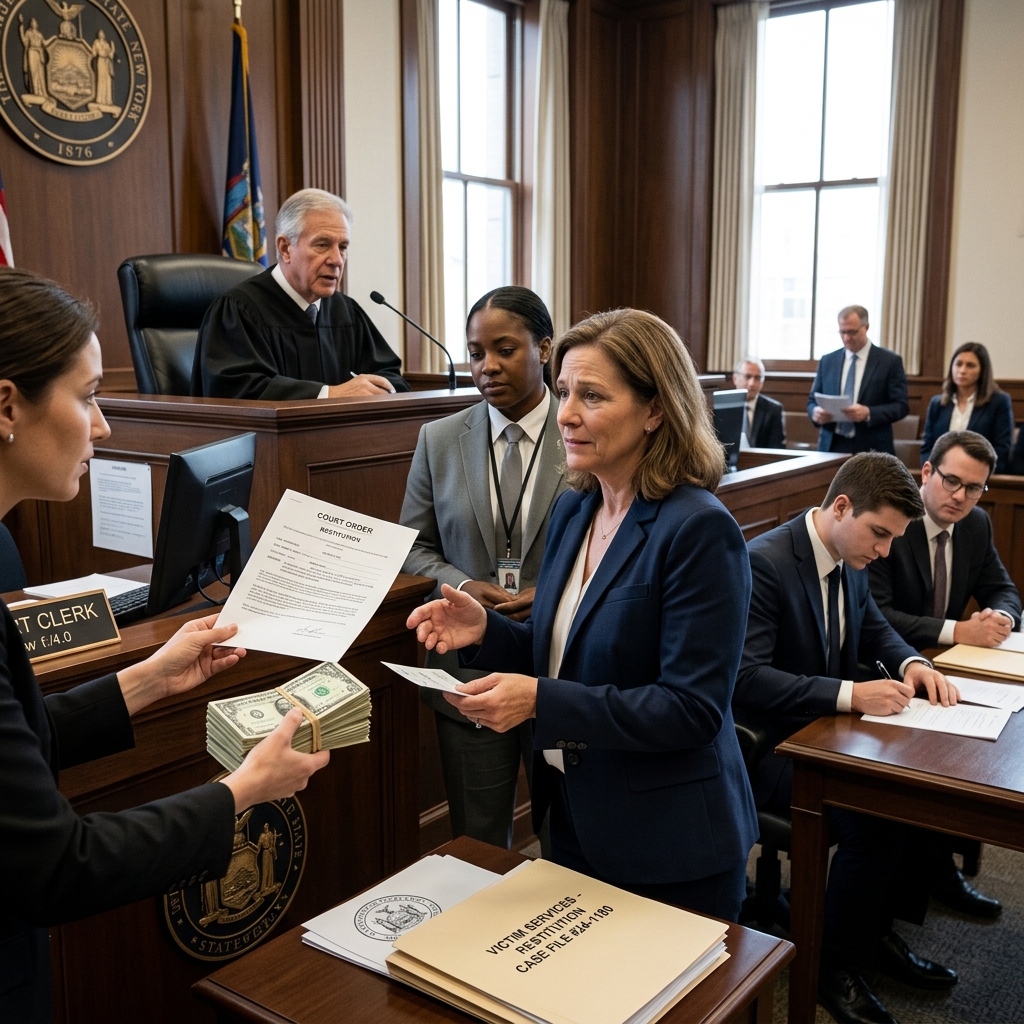
When a person is convicted of a crime, the consequences often go beyond fines and imprisonment. One of the most important tools courts use to address the harm caused to victims is restitution — a legal order requiring the offender to repay economic losses directly linked to the offense. Restitution is designed to help victims regain financial stability while reinforcing the offender’s responsibility for the damage they caused.
Restitution in Criminal Law: Core Purpose and Legal Nature
In criminal law, restitution is a monetary obligation imposed on a convicted defendant to compensate victims for measurable financial losses resulting from the crime. Unlike fines, which are primarily punitive and paid to the government, restitution is fundamentally compensatory and is paid to victims or to entities that have reimbursed them.
- Compensatory focus: Restitution aims to make victims as financially whole as possible by covering expenses such as medical care, counseling, lost wages, funeral costs, and property damage.
- Part of the criminal sentence: Restitution is usually ordered at sentencing or as a condition of probation, parole, or supervised release.
- Distinct from civil damages: Although victims can also bring civil lawsuits, criminal restitution is governed by statutory rules and focuses on documented economic loss rather than broader categories like pain and suffering.
Many jurisdictions in the United States — both federal and state — treat restitution as a standard component of sentencing, especially in cases involving identifiable financial harm.
Restitution Versus Fines and Other Financial Penalties
Criminal sentences often involve multiple financial obligations. Understanding the difference between restitution and other penalties is crucial for both victims and defendants.
| Feature | Restitution | Criminal Fines |
|---|---|---|
| Primary purpose | Compensate victims for crime-related economic loss. | Punish the offender, deter crime, and fund government programs. |
| Recipient | Victim, insurer, restitution fund, or other entity that covered the victim’s loss. | Government or court system. |
| Basis for amount | Documented financial losses directly caused by the offense. | Statutory ranges and sentencing guidelines, regardless of victim loss. |
| Enforcement priority | Often prioritized over fines when resources are limited, to maximize victim recovery. | Typically paid after restitution in many systems. |
Some states also require restitution fines, a hybrid concept in which every adult offender must pay a statutory fine that supports a state restitution fund, separate from case-specific victim payments.
Who Can Receive Restitution?
Restitution orders are designed to reach those who have suffered identifiable financial harm from the defendant’s conduct. In practice, recipients can include:
- Direct victims: Individuals or organizations that endured direct losses such as stolen property, damaged assets, or medical costs.
- Family members of victims: In serious offenses like homicide, courts may order restitution for funeral expenses or lost support to the victim’s family.
- Insurers and compensation programs: Government victim compensation funds or private insurers that reimbursed victims for their losses may be reimbursed through restitution orders.
- Government agencies: Agencies that provided services or compensation related to the crime, such as state victim compensation boards or law enforcement property recovery programs.
In most jurisdictions, restitution is ordered only when there is a discernible victim or compensating entity. If a crime does not produce a direct economic loss to an identifiable party, restitution may not be appropriate.
What Losses Can Restitution Cover?
Courts focus on economic losses that can be traced directly to the crime. Common categories include:
- Medical expenses: Hospital care, surgery, medications, physical therapy, and related health costs.
- Mental health treatment: Counseling or therapy needed as a result of trauma from the offense.
- Lost income: Wages or salary lost because the victim could not work due to injury, court appearances, or other crime-related reasons.
- Property damage and loss: Repair or replacement of damaged or stolen property, including vehicles, electronics, and household items.
- Funeral and burial costs: In cases involving death, funeral services and burial or cremation expenses.
- Other necessary expenses: Travel for medical treatment, relocation costs, or crime-related childcare, when directly linked to the offense.
By contrast, non-economic harms such as emotional distress or pain and suffering are typically addressed, if at all, in civil litigation rather than through criminal restitution.
How Courts Determine Restitution Amounts
Determining the appropriate restitution amount involves both legal standards and practical documentation. Courts generally follow a structured approach:
- Evidence of loss: Victims or prosecutors present bills, receipts, estimates, pay stubs, insurance documents, and other records showing financial impact.
- Causation: The court must find that the loss was directly caused by the defendant’s conduct and is closely related to the offense of conviction.
- Legal standard: In many jurisdictions, the amount need only be supported by a preponderance of the evidence (more likely than not), which is lower than the standard for criminal guilt.
- Judicial discretion: Judges have latitude to estimate damages when exact figures are difficult to obtain, so long as there is a reasonable factual basis.
Disputes often arise over what counts as “direct” loss or whether certain costs are sufficiently connected to the crime. Courts may hold restitution hearings to resolve contested issues before issuing a final order.
When and How Restitution Is Ordered
Restitution is typically addressed at the sentencing stage. The process often follows these steps:
- Conviction: The defendant pleads guilty or is found guilty after trial.
- Information gathering: Probation officers, prosecutors, or victim advocates collect documentation of economic losses and submit it to the court.
- Sentencing hearing: The judge considers restitution along with other sentencing factors such as imprisonment, fines, and probation.
- Order for restitution: The court issues a formal restitution order specifying who is to be paid, how much, and under what payment schedule.
- Integration with supervision: Restitution may be a condition of probation, parole, or supervised release, allowing courts to extend or modify supervision to promote payment.
In some jurisdictions and for certain offenses, restitution is mandatory, while in others it is largely left to the court’s discretion. Statutory schemes often emphasize full compensation for victims’ economic loss.
Enforcement of Restitution Orders
Once a restitution order is entered, it is more than a moral obligation; it functions like a legal debt that can be enforced for many years. In U.S. federal court, for example, restitution orders are generally enforceable for 20 years from the date of judgment, plus any period of incarceration.
Common enforcement mechanisms include:
- Payment schedules: Courts may establish monthly or periodic payments based on the defendant’s financial capacity, monitored by probation officers or financial litigation units.
- Wage garnishment: Government agencies can garnish wages, including prison employment income, to collect restitution.
- Asset seizure: Authorities may seize bank accounts, real property, or other assets to satisfy unpaid restitution.
- Liens: Courts or agencies can place liens on property, ensuring that restitution is paid from sale proceeds or refinances.
- Extended supervision: Probation or parole may be extended to maintain leverage over the defendant until substantial efforts to pay are made.
- Civil enforcement: Restitution orders can often be enforced similarly to civil judgments, giving victims access to additional collection tools.
Failure to make a good faith effort to pay can lead to sanctions, including contempt proceedings or additional penalties, especially when the court determines the non-payment is willful rather than due to genuine inability.
Restitution, Victim Compensation Funds, and Insurance
Restitution interacts closely with other forms of victim financial support. Many states operate victim compensation programs financed in part by restitution-related fines and fees. These programs help cover eligible crime-related expenses even when the offender cannot or does not immediately pay.
Key relationships include:
- State compensation boards: Agencies may pay victims for medical bills, counseling, or funeral costs and then recover those amounts from offenders through restitution orders.
- Insurance reimbursements: Private insurers that cover stolen or damaged property may be entitled to restitution for the amounts they paid, reducing direct loss to the victim while shifting recovery to the insurer.
- Residual victim loss: Courts still focus on ensuring the victim’s uncompensated losses are covered, even when insurers or funds have paid part of the costs.
This layered system can be confusing, but the overall goal is to maximize victim recovery while avoiding double payment for the same loss.
Rights and Practical Steps for Victims Seeking Restitution
Victims generally have procedural rights to participate in the restitution process, though they may not need to make a formal request for restitution to be considered. To protect their interests, victims can take several practical steps:
- Document all expenses: Keep detailed records of medical bills, wage loss, property repair or replacement costs, and related expenses.
- Communicate with prosecutors: Provide documentation to the prosecutor or victim advocate before sentencing, so they can present it to the court.
- Monitor case information: Stay informed about court dates and orders, and ask how restitution will be collected and disbursed.
- Use compensation programs: Where available, apply to state victim compensation funds for timely assistance, particularly when the offender has limited resources.
- Follow up on payments: Contact the relevant court finance office or enforcement unit if payments do not arrive as expected.
Even with a restitution order, full recovery can be challenging when defendants have limited income or assets. Victim support services can help manage expectations and explore additional civil or administrative remedies.
Consequences and Considerations for Defendants
For defendants, restitution represents a long-term financial obligation that can significantly shape life after conviction. Important considerations include:
- Duration of liability: Restitution can remain enforceable for decades, and may survive completion of incarceration or supervision.
- Impact on employment and finances: Wage garnishment, asset seizures, and credit implications can affect job prospects, housing, and family finances.
- Modification possibilities: Some jurisdictions permit changes to payment schedules or, in rare circumstances, adjustments to the total amount if circumstances change significantly, though the underlying loss remains a priority.
- Compliance during imprisonment: Even while incarcerated, defendants may be required to contribute from prison wages and other funds.
- Legal guidance: Defense counsel can help challenge improper loss calculations, propose realistic payment plans, and explain long-term enforcement consequences.
Responsible engagement with restitution — including honest disclosure of financial resources and cooperative payment — can be viewed favorably by courts and parole authorities, while willful non-compliance can generate additional legal problems.
Frequently Asked Questions about Criminal Restitution
Is restitution always ordered when there is a conviction?
No. While many jurisdictions strongly favor restitution, especially for crimes involving economic loss, the decision depends on applicable statutes and the presence of identifiable victims and documented losses. Some offenses have mandatory restitution rules; others leave it to judicial discretion.
Can restitution cover emotional harm or pain and suffering?
Generally, criminal restitution focuses on measurable economic losses like medical costs, lost wages, and property damage. Non-economic harms, such as emotional distress or diminished quality of life, are usually pursued through civil lawsuits rather than criminal restitution.
What happens if the defendant cannot afford to pay?
Courts may tailor payment schedules to the defendant’s financial situation, but the obligation itself typically remains in place. Enforcement tools such as wage garnishment, asset seizure, and extended supervision can be used over time, and the order may remain enforceable for many years.
Does the victim have to ask for restitution?
In many systems, victims do not have to formally request restitution for it to be considered. Prosecutors and probation officers often identify losses and present them to the court. However, proactively providing documentation to authorities increases the chance that all losses are properly included.
Can restitution be changed after sentencing?
Some jurisdictions allow modification of payment terms or, in limited cases, adjustments to restitution when new information or changed circumstances arise. Nonetheless, courts remain focused on ensuring victims are compensated for the full amount of their economic loss.
References
- Restitution Process — U.S. Department of Justice, Criminal Division. 2020-03-10. https://www.justice.gov/criminal/criminal-vns/restitution-process
- Restitution for Victims in Criminal Law — Justia. 2021-06-01. https://www.justia.com/criminal/restitution-for-crime-victims/
- Restitution — Legal Information Institute, Cornell Law School. 2019-09-15. https://www.law.cornell.edu/wex/restitution
- Restitution — California Victim Compensation Board. 2022-05-12. https://victims.ca.gov/restitution/
- Legal Series Bulletin #5: Restitution: Making It Work — Office for Victims of Crime, U.S. Department of Justice. 2001-01-01. https://ovc.ojp.gov/sites/g/files/xyckuh226/files/pubs/OVC_Archives/bulletins/legalseries/bulletin5/ncj189193.pdf
- The Reality of Federal Restitution — Evergreen Attorneys. 2023-04-05. https://evergreenattorneys.com/restitution/the-reality-of-restitution/
- Criminal Debts – Receiving Payments — U.S. District Court, District of New Jersey. 2020-11-19. https://www.njd.uscourts.gov/criminal-debts-receiving-payments
Similar Articles








Read full bio of Sneha Tete




