
Officer Conduct In DUI Stops: When Police Errors Hurt Evidence
How police conduct affects DUI stops, testing, and arrest decisions.
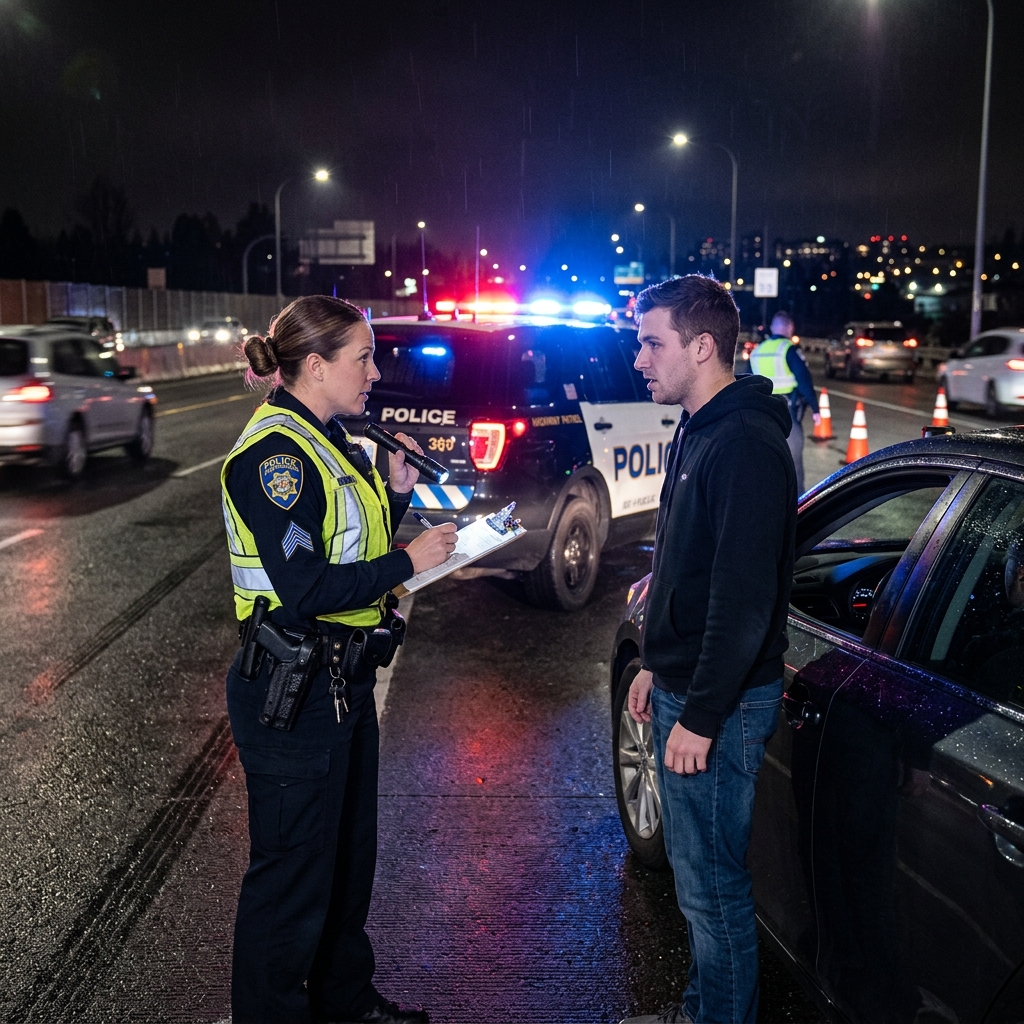
When a driver is suspected of impaired driving, the police officer’s conduct shapes every stage of the case. From the first decision to stop a vehicle through roadside questioning, sobriety testing, and arrest, officers must follow legal rules and departmental procedures. Those rules matter because mistakes can affect whether evidence is used in court and whether a DUI charge is sustainable.
This article explains the main stages of a DUI stop, the expectations placed on officers, and the kinds of errors that may weaken the prosecution’s case. It also covers what drivers should understand about the process so they can recognize when a stop or arrest may have been improper.
Why officer conduct matters in a DUI case
DUI investigations are not based only on what an officer believes happened. They depend on whether the officer had a lawful reason to stop the vehicle, whether the investigation was conducted properly, and whether the arrest was supported by enough facts. Courts generally examine the officer’s actions step by step to decide whether constitutional and statutory standards were met.
If an officer ignores required procedures, the defense may challenge the stop, the field observations, the testing process, or the arrest itself. In some cases, a violation may lead to evidence being limited or excluded. In other cases, it may support a plea negotiation or dismissal strategy.
The first decision: whether the traffic stop was justified
A DUI case often begins with a traffic stop. The officer must have a lawful basis to pull the vehicle over, usually described as reasonable suspicion. That means the officer must be able to point to specific facts suggesting that the driver may have broken the law. A hunch alone is not enough.
Common reasons for a stop may include:
- Weaving within a lane or drifting across lane markings
- Speeding or driving unusually slowly
- Failing to obey a traffic signal or sign
- Equipment problems such as a broken light or expired registration
- Driving in a way that creates a safety concern
If the stop was not supported by articulable facts, the defense may argue that the stop was unlawful. That argument can be important because evidence obtained after an improper stop may be challenged in court.
What officers look for after the vehicle is stopped
Once the vehicle is stopped, the officer begins gathering observations. This stage is often used to decide whether the driver should be investigated further. Officers typically watch for signs that may suggest alcohol or drug impairment, such as unusual speech, confusion, poor coordination, or the smell of alcohol.
During this phase, officers may ask routine questions and observe how the driver responds. They may note whether the driver searches for documents slowly, gives inconsistent answers, or appears disoriented. These observations may later become part of the officer’s report and testimony.
Typical warning signs may include:
- Slurred or unusually slow speech
- Red, watery, or glassy eyes
- Difficulty handling a license, registration, or insurance card
- Delays in responding to simple questions
- Odor of alcohol or an odor associated with drugs
- Visible containers, paraphernalia, or open drinks in the car
These observations do not automatically prove impairment, but they may be used to justify a deeper DUI investigation.
Officer professionalism during the encounter
Police officers are expected to remain calm, respectful, and controlled during the stop. Professional conduct helps ensure that the investigation stays focused and that the officer’s own behavior does not create unnecessary conflict. Excessive force, rude language, or aggressive conduct can complicate the encounter and may become relevant later.
In many departments, officers are also expected to follow internal rules about punctuality, obedience to lawful orders, proper documentation, and appropriate use of force. While these workplace standards are not the same as constitutional rules, they can still matter when evaluating whether an officer acted reliably and credibly.
When the officer expands the investigation
If the officer believes the driver may be impaired, the investigation may move beyond the initial traffic stop. The officer may ask the driver to step out of the car and may begin a roadside impairment assessment. At this point, the officer is trying to build enough facts to support probable cause for arrest.
Probable cause is a higher standard than reasonable suspicion. It means the facts and circumstances, taken together, would lead a reasonable person to believe the driver was operating under the influence. Courts usually consider the total picture rather than one fact in isolation.
Field sobriety tests and the risk of error
Roadside field sobriety tests are commonly used to evaluate balance, coordination, and divided attention. These tests can be helpful to law enforcement, but they also create opportunities for mistakes. A driver may perform poorly because of medical conditions, age, fatigue, footwear, nervousness, uneven pavement, wind, lighting, or a disability that affects balance.
Common roadside tests may include:
| Test type | What the officer is looking for |
|---|---|
| Horizontal gaze examination | Eye movement patterns that may indicate impairment |
| Walk-and-turn | Balance, listening ability, and ability to follow instructions |
| One-leg stand | Stability, concentration, and coordination |
| Other divided-attention tasks | Whether the driver can process multiple instructions at once |
If the officer gives unclear instructions, does not follow standardized procedures, or conducts the test in poor conditions, the results may be less reliable. A defense attorney may use those weaknesses to argue that the officer’s conclusions were overstated.
Breath, blood, and other chemical testing
After a DUI arrest, police may seek chemical testing to measure alcohol or drug levels. Breath testing is common in alcohol cases, while blood or urine testing may be used in other situations. These tests can be strong evidence, but they are only persuasive if the collection and testing process is handled correctly.
Problems can arise when equipment is not maintained, the operator is not properly trained, required waiting periods are ignored, or the sample is handled improperly. For blood testing, chain-of-custody issues and contamination concerns may also become important.
Potential testing issues include:
- Unreliable or uncalibrated equipment
- Improper administration of the test
- Failure to observe required procedures before testing
- Documentation errors in the test record
- Questions about who handled the sample and when
When testing procedures are flawed, the defense may argue that the results should be given little weight or excluded entirely.
Arrest decisions and why timing matters
An officer does not need proof beyond a reasonable doubt to make an arrest. However, there must be enough facts to support probable cause at the time the arrest is made. If the officer arrests too early, before collecting enough facts, the arrest may be vulnerable to challenge.
Courts often review whether the officer made a reasonable judgment based on the totality of the circumstances. That review can include driving behavior, physical appearance, statements made by the driver, field test performance, and any chemical screening results available before arrest.
How an officer’s mistakes can affect the defense
Not every police error will destroy a DUI case, but significant mistakes can help the defense. Some errors go to the legality of the stop, while others affect the quality of the evidence. A careful defense strategy may focus on both.
Examples of potentially important errors include:
- Stopping a car without a lawful basis
- Failing to observe or document actual impairment indicators
- Giving unclear or inconsistent instructions during tests
- Using testing methods incorrectly
- Failing to preserve evidence or maintain proper records
- Making assumptions that are not supported by objective facts
Sometimes the issue is not whether the officer acted in bad faith, but whether the evidence is reliable enough to support a charge. That distinction can matter greatly in court.
What drivers should keep in mind during a DUI stop
The driver’s behavior also affects the encounter. Remaining calm and polite can prevent a minor stop from escalating. Drivers generally must provide identification and other required documents, but they do not need to create new evidence against themselves by volunteering unnecessary details.
Practical points to remember include:
- Keep hands visible and follow basic safety instructions
- Provide required documents when asked
- Answer only what is legally required
- Avoid arguing at the roadside
- Ask for a lawyer as soon as formal questioning begins
Even if a driver believes the stop is unfair, the roadside is usually not the best place to debate the issue. The more effective forum is often the courtroom, where the legality of the officer’s conduct can be reviewed in detail.
Possible legal challenges after the arrest
A defense attorney may challenge the stop, the detention, the field tests, the chemical tests, or the arrest report. In some cases, video footage from the patrol car or body camera may conflict with the officer’s written narrative. That inconsistency can raise credibility concerns and support a suppression motion or trial defense.
Attorneys may also examine whether the officer was properly trained, whether standardized methods were followed, and whether the report accurately records what happened. A case built on careful documentation is generally stronger than one based on vague conclusions.
Frequently asked questions
Can an officer stop a car just because the driver seems suspicious?
No. An officer needs a lawful basis for the stop, usually tied to observable facts suggesting a traffic or criminal violation. A mere suspicion or feeling is not enough.
Do field sobriety tests always prove impairment?
No. Field sobriety tests can be influenced by many factors unrelated to intoxication, including health conditions, road conditions, fatigue, and nervousness. They are only one part of the evidence.
Can police mistakes lead to a DUI case being dismissed?
Sometimes. If the error is serious enough to undermine the legality of the stop or the reliability of the evidence, the defense may be able to challenge the charge successfully.
Is chemical testing always reliable?
Not automatically. Breath, blood, and urine testing depend on proper equipment, trained operators, and correct procedures. Defects in the process can create valid defense arguments.
What should a driver do during the stop?
The safest approach is usually to stay calm, provide required documents, avoid arguments, and speak carefully. Any deeper legal issues can be addressed later with counsel.
References
- Handling a DUI or DWI Stop & Legal Implications — Justia. 2024-03-15. https://www.justia.com/criminal/drunk-driving-dui-dwi/handling-a-dui-stop/
- Phase 1: Cops and Traffic Stops — Responsibility.org. 2024-01-10. https://www.responsibility.org/high-risk-impaired-driving/high-risk-impaired-driving-phase1/
- Driving Under the Influence of Alcohol and Drugs — Virginia Department of Criminal Justice Services. 2023-08-01. https://www.dcjs.virginia.gov/sites/dcjs.virginia.gov/files/law-enforcement/files/model-policy/driving_under_the_influence_of_alcohol-drugs.doc
- What Are Some of the Most Common DUI Mistakes Made by Police? — Gaw Lawyers. 2023-11-20. https://www.gawlawyers.com/what-are-some-of-the-most-common-dui-mistakes-made-by-police/
- DWI Stop and Arrest Procedures — Hiltzheimer Law Office. 2022-05-09. https://www.hiltzheimer.com/dwi-stop-and-arrest-procedures/
Similar Articles








Read full bio of Sneha Tete




