
Police Wiretaps: Law, Limits, and Civil Liberties
An in-depth guide to how U.S. law regulates police wiretaps, privacy protections, and your rights when communications are intercepted.
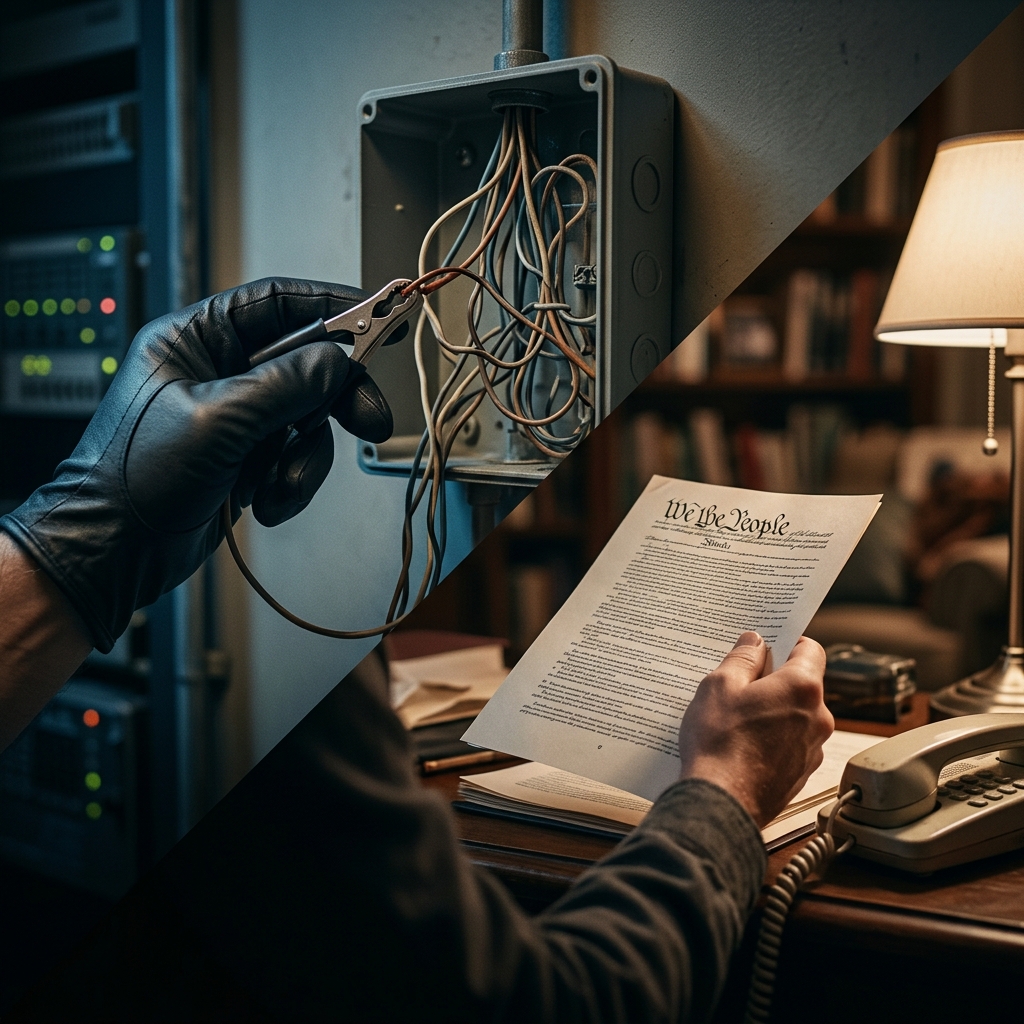
Wiretapping has evolved from agents physically attaching devices to copper phone lines to sophisticated digital interception of calls, emails, and online messages. Yet despite the technology shift, U.S. law continues to treat wiretaps as one of the most intrusive tools available to police, subject to strict rules, judicial oversight, and serious penalties for abuse.
This article explains how police wiretaps work legally in the United States, the major federal statutes that govern them, the warrant and probable cause requirements, key privacy safeguards, and what can happen when authorities misuse electronic surveillance.
What Is a Wiretap in Modern Policing?
A wiretap is generally understood as the intentional interception and recording of communications between people using electronic or mechanical devices. Historically, that meant secretly listening to telephone calls. Today, the concept extends to a wide range of communications, including:
- Traditional phone calls carried over landlines or cellular networks
- Voice-over-IP calls made through internet-based applications
- Real-time electronic messages, such as certain types of online chat or messaging services
- Other electronic communications that may be intercepted while in transit, depending on applicable law
U.S. law distinguishes between communications in transit and those stored on servers (for example, emails sitting in your inbox). Different parts of federal law apply to each type of access.
Key Federal Laws Governing Police Wiretaps
The legal framework for police wiretapping is built on several major federal statutes. These laws restrict unauthorized interception, create detailed warrant procedures, and establish remedies when rules are violated.
Title III: The Wiretap Act
Title III of the Omnibus Crime Control and Safe Streets Act of 1968—often called the Wiretap Act—is the core federal law regulating government interception of wire, oral, and electronic communications.
Among other things, Title III:
- Prohibits unauthorized interception of wire, oral, or electronic communications by government agencies and private individuals
- Requires judicial authorization (a court order) for law enforcement to intercept communications, with limited emergency exceptions
- Sets procedures for applying for and issuing wiretap warrants, including detailed affidavits and time limits
- Regulates use and disclosure of lawfully intercepted communications by investigators and in court proceedings
Title III reflects Congress’s judgment that wiretaps are uniquely intrusive and should be used only in serious cases and under tight judicial supervision.
Electronic Communications Privacy Act (ECPA)
The Electronic Communications Privacy Act (ECPA) of 1986 expanded and updated federal wiretap and electronic eavesdropping rules to cover newer forms of communication.
ECPA includes three main components:
- Wiretap Act (Title I) – Governs interception of communications in transit, including wire, oral, and electronic communications.
- Stored Communications provisions (Title II) – Regulate access to communications stored on servers, such as emails not actively in transit.
- Pen Register and Trap and Trace rules – Address devices that capture dialing, routing, and addressing information, rather than content.
Under ECPA, intentional interception of communications with an electronic or mechanical device is generally illegal unless an exception applies, such as a valid warrant, consent from a party, or certain law enforcement circumstances.
Other Relevant Statutes and State Laws
In addition to Title III and ECPA, other laws influence how police may use wiretaps:
- Federal surveillance statutes related to national security and terrorism investigations (for example, provisions expanded by later legislation) can adjust thresholds and procedures in specific contexts.
- State wiretap laws often add further requirements, such as stricter consent rules or additional judicial safeguards, so standards can vary significantly among states.
- State privacy acts and constitutions sometimes provide higher privacy protection than the federal baseline, especially regarding digital data.
Police departments must navigate both federal and state rules, and a wiretap ordered in state court may operate under different criteria than one authorized by a federal judge.
When Can Police Use a Wiretap?
Law enforcement agencies cannot install or use wiretaps at will. Federal law treats wiretapping as a sensitive technique reserved for serious criminal investigations and requires substantial justification.
Probable Cause and Serious Offenses
Before a wiretap order can be issued, investigators must establish probable cause that monitoring communications will reveal evidence of a qualifying offense.
In practice, this generally means:
- Showing that an individual is committing, has committed, or is about to commit a particular serious crime specifically listed in the statute
- Demonstrating a factual basis for suspecting that the communications to be intercepted are linked to that offense
- Presenting evidence and investigative information that supports the warrant request, not mere speculation
Federal law enforcement agencies frequently seek wiretaps in investigations involving organized crime, drug trafficking, corruption, and terrorism, where traditional investigative tools may be less effective.
Necessity: Why Other Methods Are Not Enough
Title III also requires a showing that other investigative techniques have been tried and failed or reasonably appear unlikely to succeed or too dangerous.
This necessity requirement forces investigators to explain:
- What non-electronic surveillance methods have been attempted (such as physical surveillance, informants, or traditional searches)
- Why those methods did not produce sufficient evidence or would not be adequate on their own
- Why a wiretap is proportionate, given the privacy impact involved
Wiretaps are resource-intensive and require ongoing oversight, so courts typically scrutinize necessity arguments closely.
Judicial Authorization and Time Limits
If the probable cause and necessity requirements are met, a judge may issue a wiretap order authorizing interception for a limited duration.
| Requirement | Typical Standard Under Federal Law |
|---|---|
| Probable cause | Evidence that the target is committing, has committed, or is about to commit a specified serious offense and that communications will contain relevant evidence. |
| Judicial review | Order must be approved by an impartial judge; federal judges review and either approve or deny applications. |
| Duration | Wiretap orders typically authorize interception for up to 30 days, with extensions only upon further judicial approval. |
| Monitoring | Judges are expected to oversee execution of the wiretap to ensure compliance with statutory limits. |
Law enforcement agencies must follow these time limits and may need to regularly report back to the judge regarding the progress and necessity of continued interception.
Emergency Situations
In limited emergency circumstances—such as an immediate threat to life or national security—federal law allows the government to begin intercepting communications before a full court order is obtained, provided strict conditions are met.
Under Title III, federal authorities may commence interception if an application for judicial approval is filed within 48 hours after interception begins. If the court later denies the application, continued monitoring would be unlawful and the intercepted communications may be unusable in court.
Police Wiretap Procedures and Safeguards
Once a wiretap order is granted, law enforcement must comply with detailed procedures designed to limit monitoring to relevant communications and reduce unnecessary intrusion into privacy.
Scope of Interception
Wiretap orders typically specify:
- The offense under investigation
- The targeted person, phone line, or account
- The type of communications that may be intercepted
- The time period during which interception is authorized
Investigators are expected to minimize interception of conversations not relevant to the investigation, sometimes employing techniques like spot monitoring and ceasing listening when irrelevant topics arise.
Use and Disclosure of Intercepted Communications
Federal law tightly regulates how lawfully intercepted communications may be used and shared.
- Investigative officers may use and disclose intercepted information to other officers if doing so is appropriate to the performance of their official duties.
- Intercepted communications may be introduced as evidence in court, provided they were obtained in compliance with statutory and constitutional requirements.
- Unauthorized disclosure or use of intercepted communications can itself be a criminal offense or basis for civil liability.
These rules aim to ensure that wiretap-derived information is handled in a controlled way and not used for unrelated purposes, such as personal advantage or political gain.
Privacy, Civil Liberties, and Controversies
Wiretaps can be powerful investigative tools, but they also raise significant privacy and civil liberties concerns, especially as more of daily life moves onto digital platforms.
Benefits to Criminal Investigations
Research indicates that wiretaps are often used in serious criminal cases and can be crucial in uncovering complex conspiracies.
- Organized crime and narcotics cases: Wiretaps help reveal networks, supply chains, and decision-makers who may otherwise remain hidden.
- Corruption and fraud investigations: Intercepted communications can provide direct evidence of agreements and intent.
- Terrorism and national security: In some circumstances, law enforcement uses wiretaps to monitor suspected plots and prevent attacks.
However, these benefits come with trade-offs in individual privacy and potential for misuse.
Risks and Historical Misuse
History includes instances of illegal or improper wiretapping, including monitoring of political activists, journalists, or individuals without adequate legal basis. Such misuse undermines public trust and can chill free expression.
Concerns often focus on:
- Overbroad surveillance: Wiretaps capturing large volumes of conversations, including those of people not suspected of wrongdoing
- Inadequate minimization: Failure to limit listening to relevant communications
- Mission creep: Using wiretap-derived information for purposes beyond the original investigation
- Long-term data retention: Storing intercepted communications without clear limits
These issues motivate ongoing debates about reform, transparency, and the balance between security and privacy.
Penalties for Illegal Wiretapping
Both federal and state law impose significant penalties for unauthorized wiretapping or improper use of intercepted communications.
Criminal Liability
Under ECPA and related statutes, individuals who unlawfully intercept or disclose communications can face criminal charges.
- Violations of ECPA may carry up to five years in prison and substantial fines, which can reach hundreds of thousands of dollars for individuals.
- Unauthorized wiretapping by law enforcement officers can constitute a serious felony under federal law.
- Possession of illegal wiretapping or electronic eavesdropping equipment itself can be criminalized when coupled with other unlawful acts.
These penalties are intended to deter misuse of surveillance technologies by both government agents and private actors.
Civil Lawsuits and Remedies
Victims of illegal wiretapping may also bring civil suits to seek monetary and injunctive relief.
- Actual damages: Compensation for demonstrable harm caused by unlawful interception or disclosure
- Punitive damages: Additional sums meant to punish egregious conduct and deter future violations
- Attorney’s fees: Recovery of legal costs in successful suits, which helps make litigation feasible for individuals
- Suppression of evidence: Courts can exclude illegally intercepted communications from criminal trials, undermining prosecutions based on unlawful surveillance
Civil remedies reinforce criminal sanctions and provide an avenue for victims to hold violators accountable.
How Often Are Wiretaps Used?
Despite the public attention they receive, wiretaps represent a relatively small fraction of overall investigative activity and are typically used only when other methods prove insufficient.
Recent data illustrate their scope:
- In 2024, 2,297 wiretaps were authorized in the United States, an increase of around 9% from the previous year.
- Of these, 1,007 were authorized by state judges and 1,290 by federal judges, reflecting a mix of state and federal investigations.
- Many orders involve narcotics cases and organized crime, where wiretaps are considered particularly valuable.
Because wiretaps are closely monitored and require substantial resources, agencies often reserve them for investigations with significant stakes.
Practical FAQs About Police Wiretaps
Can police wiretap a phone without a warrant?
In general, no. Federal law requires judicial authorization for intentional interception of wire, oral, or electronic communications by government agents, except in narrow emergency situations where an application must follow within a short time (such as 48 hours).
Do all parties have to consent to recording a call?
Consent rules depend on both federal and state law. Some states require all-party consent for recording conversations, while others allow recording with the consent of just one party. These rules apply differently when police operate under a wiretap order, which can supersede usual consent requirements. State-specific statutes must be consulted.
What if illegally intercepted communications are used in court?
If a court finds that communications were intercepted in violation of federal or state law, it may suppress that evidence, meaning it cannot be used against a defendant at trial. Illegal interception can also expose responsible parties to criminal prosecution and civil liability.
Are internet communications protected like phone calls?
Yes, many forms of electronic communication—including emails, online messages, and certain real-time internet-based conversations—are protected under the Wiretap Act and ECPA, though different provisions apply to data in transit versus stored communications.
Can I sue if my communications were illegally wiretapped?
Victims of unlawful interception or disclosure generally have the right to bring civil actions under ECPA and related statutes, seeking damages, punitive awards, and attorney’s fees. However, such cases can be complex and often require specialized legal counsel.
Key Takeaways for Individuals and Businesses
Understanding the rules around police wiretaps is important not only for criminal defendants but also for everyday citizens and organizations that handle sensitive communications.
- Police must obtain judicial authorization and show probable cause before wiretapping, with limited emergency exceptions.
- Title III and ECPA form the backbone of U.S. law governing interception and use of wire, oral, and electronic communications.
- Privacy protections include necessity requirements, minimization obligations, and limits on disclosure and use of intercepted data.
- Illegal wiretapping can result in criminal charges, civil lawsuits, suppression of evidence, and significant financial penalties.
- State laws may provide additional safeguards, especially around consent and digital privacy, leading to variation across jurisdictions.
Given the complexity and consequences of wiretap law, individuals who believe their communications have been unlawfully intercepted should consider seeking advice from an attorney experienced in criminal procedure and privacy law.
References
- Title III of The Omnibus Crime Control and Safe Streets Act of 1968 — Bureau of Justice Assistance, Office of Justice Programs. 2023-05-10. https://bja.ojp.gov/program/it/privacy-civil-liberties/authorities/statutes/1284
- Electronic Communications Privacy Act (ECPA) — Electronic Privacy Information Center. 2023-02-01. https://epic.org/ecpa/
- Wiretapping – Wex Legal Dictionary — Legal Information Institute, Cornell Law School. 2022-09-15. https://www.law.cornell.edu/wex/wiretapping
- Wiretaps and Criminal Justice — EBSCO Research Starters. 2024-01-10. https://www.ebsco.com/research-starters/law/wiretaps-and-criminal-justice
- Are FBI Special Agents Permitted to Install Wiretaps at Their Own Discretion? — Federal Bureau of Investigation. 2020-06-30. https://www.fbi.gov/about/faqs/are-fbi-special-agents-permitted-to-install-wiretaps-at-their-own-discretion
- Chapter 57, Title 18 – Crimes and Offenses — Pennsylvania General Assembly. 2021-08-01. https://www.palegis.us/statutes/consolidated/view-statute?txtType=HTM&ttl=18&div=0&chpt=57
- State versus federal wiretap orders: A look at the data — Journal of Policy Modeling, Elsevier. 2022-04-01. https://www.sciencedirect.com/science/article/abs/pii/S0144818822000205
Similar Articles








Read full bio of medha deb




