
Landlord Liability for Criminal Acts on Rental Property
Understanding when landlords can be held liable for crimes committed by strangers, guests, or tenants and how to reduce legal risk.
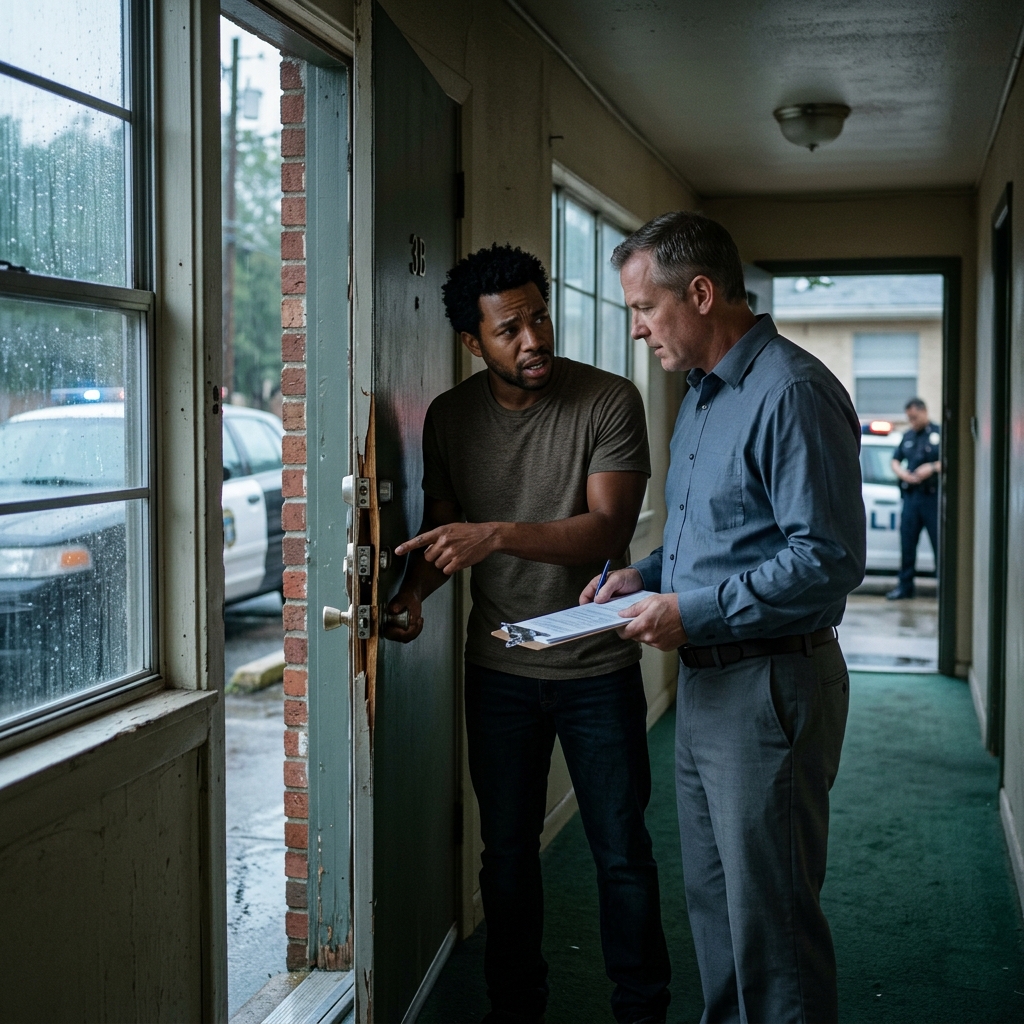
Criminal activity on or around rental property raises complicated legal questions. A landlord is not automatically responsible every time a crime occurs, but under certain circumstances they can be held liable for injuries or damages resulting from criminal acts committed by strangers, non-tenants, tenants, or their guests.
This article explains the core legal concepts behind landlord liability for criminal acts, highlights common scenarios, and outlines practical steps landlords can take to reduce risk while protecting tenants and the surrounding community.
Why Criminal Activity Matters for Landlords
Criminal acts on rental property can lead to serious consequences for landlords beyond the immediate harm to victims. Potential outcomes include:
- Personal injury lawsuits alleging negligent security or premises liability.
- Claims that the property constitutes a public nuisance due to ongoing criminal activity.
- Increased insurance premiums or policy cancellations.
- Damage to reputation, tenant turnover, and reduced property value.
Modern courts increasingly recognize that landlords have some duty to take reasonable security measures in light of foreseeable crime risks, especially in multi-unit residential buildings and commercial complexes.
Core Legal Concepts: Duty, Breach, and Causation
Liability for criminal acts typically arises under negligence or premises liability principles. To succeed in a negligence claim, an injured person usually must show:
- Duty – The landlord had a legal duty to take reasonable steps to protect the plaintiff from foreseeable criminal acts on the premises.
- Breach – The landlord failed to act as a reasonably prudent property owner under the circumstances (for example, by ignoring known security problems).
- Causation – The landlord’s failure to provide reasonable security measures was a substantial factor in allowing the criminal act to occur and cause harm.
- Damages – The plaintiff suffered actual injury or loss, such as bodily harm or property damage.
The existence and scope of a landlord’s duty depend heavily on the concept of foreseeability and the relationship between the landlord and the injured person.
Foreseeability: When Crime Becomes Legally Predictable
Foreseeability is often the central issue in cases involving criminal acts. Courts ask whether, in light of past events and known facts, a reasonable landlord should have anticipated the risk of a particular type of criminal conduct.
Factors that may support a finding of foreseeability include:
- A history of similar crimes at or near the property (e.g., prior assaults or break-ins).
- Knowledge of security problems, such as broken locks or dark common areas, that could facilitate criminal acts.
- Reports or complaints from tenants about suspicious activity or specific threats.
- High local crime rates documented in police or municipal statistics.
When crimes are deemed foreseeable and the landlord fails to adopt reasonable precautions, courts are more likely to impose liability if an injury occurs.
Special Relationships and Landlord-Tenant Duties
In many jurisdictions, the landlord-tenant relationship is recognized as a type of special relationship that can give rise to a duty to take reasonable measures to protect tenants from third-party criminal acts under certain conditions.
Key principles include:
- Landlords generally control common areas such as hallways, parking lots, stairwells, and entryways, which can be vulnerable to criminal activity.
- Tenants often rely on landlords for basic building security, including locks, lighting, and access control.
- When a landlord has superior knowledge of security problems or crime risks, there may be a heightened expectation to act reasonably in response.
However, the mere existence of the landlord-tenant relationship does not make landlords guarantors of safety. Liability usually arises only when there is a foreseeable risk and the landlord’s response falls below the standard of reasonable care.
Common Situations Giving Rise to Liability
Landlords can face potential liability in several recurring situations involving criminal behavior. The following scenarios are frequently discussed in case law and legal commentary:
Crimes by Strangers or Non-Tenants
Strangers or non-tenants may enter the property and commit crimes such as robbery, assault, or sexual violence. Courts examining landlord responsibility often look at:
- Whether exterior and interior doors have functioning locks and deadbolts that meet local safety codes.
- Adequate lighting in parking lots, hallways, stairwells, and building entrances.
- Whether the landlord responded appropriately to prior crimes or security incidents, such as by improving lighting or upgrading locks.
Failure to maintain basic security features can lead to claims of negligent security if a crime by a non-tenant occurs and could reasonably have been prevented.
Criminal Acts by Tenants or Their Guests
Landlords also face risk from criminal acts committed by tenants or visitors they invite. Examples include:
- Violent assaults between tenants or against neighbors.
- Ongoing drug distribution or prostitution operations within units.
- Property damage, theft, or harassment affecting other residents.
Landlords may be exposed to liability when they know or reasonably should know that a tenant is engaging in dangerous or illegal behavior and fail to take steps such as contacting law enforcement or beginning eviction proceedings.
Domestic Violence and Tenant Disputes
Incidents of domestic violence or intense disputes between tenants can involve serious safety risks. In many jurisdictions, landlords are expected to respond promptly when they become aware of credible threats. Reasonable measures may include:
- Calling law enforcement when physical violence or threats of violence occur.
- Cooperating with protective orders and adjusting access control if necessary.
- Warning a tenant who appears to be an intended victim, where legally required or advisable.
While landlords are not required to act as police, failing to respond in any meaningful way to known violent disputes can strengthen negligence claims if someone is later harmed.
Reasonable Security Measures: What Courts Expect
Most legal standards focus on whether a landlord adopted reasonable and practical measures to reduce predictable crime risks. These expectations vary by jurisdiction and property type, but common examples include:
| Security Measure | Purpose | Illustrative Examples |
|---|---|---|
| Locks and Hardware | Prevent unauthorized entry | Deadbolt locks on unit doors; secure common-area doors; window locks. |
| Lighting | Deter crime and increase visibility | Well-lit parking lots, entrances, walkways, and stairwells. |
| Monitoring and Surveillance | Detect suspicious activity and provide evidence | Cameras in common areas; periodic site inspections. |
| Tenant Communication | Encourage reporting and awareness | Policies for reporting suspicious activity; notices about local crime trends. |
| Response Procedures | Address crime promptly | Contacting police; starting eviction; repairing damaged security features. |
The exact level of security required depends on crime levels, property type, and prior incidents. A high-crime area or a building with a history of assaults may justify stricter measures than a low-crime neighborhood with no prior incidents.
Legal Duties Vary by Jurisdiction
While the general themes of foreseeability and reasonableness are widespread, state law can differ significantly in how it defines and limits landlord liability for criminal acts.
- Some states have case law emphasizing broad landlord duties to prevent foreseeable criminal intrusions in multi-unit buildings.
- Other jurisdictions are more cautious, limiting liability to situations where the landlord clearly ignored known and serious risks.
- Many states have building codes and housing regulations that indirectly influence liability by setting minimum standards for locks, lighting, and other security features.
Landlords should consult local statutes, regulations, and legal counsel to understand specific obligations and how courts in their region approach negligent security and premises liability claims.
Practical Risk-Reduction Strategies for Landlords
Although no landlord can guarantee safety or completely prevent crime, they can significantly reduce legal exposure and improve tenant protection by adopting proactive strategies.
1. Comply with Safety Codes and Best Practices
- Ensure all rental units meet or exceed local safety and building code requirements for locks, doors, windows, and lighting.
- Regularly inspect common areas for broken locks, burned-out lights, unsecured access points, or other vulnerabilities.
- Promptly repair security-related defects, documenting work performed.
2. Stay Informed About Crime in the Area
- Monitor publicly available crime statistics and police reports for neighborhoods where properties are located.
- Adjust security measures when crime patterns indicate increasing risk.
- Share relevant information with tenants when appropriate, focusing on safety tips and building procedures.
3. Encourage Tenant Reporting and Communication
- Establish clear policies for tenants to report suspicious activity, threats, or safety concerns.
- Respond quickly to reports of security issues or criminal behavior, even if they initially appear minor.
- Maintain records of complaints and the steps taken to address them.
4. Screen Tenants Consistently and Lawfully
- Use written rental applications and, where permitted, background checks to identify significant risk factors, while complying with anti-discrimination and privacy laws.
- Avoid arbitrary or discriminatory screening practices; apply criteria consistently.
- Consider lease provisions allowing eviction for serious illegal activity on the premises.
5. Address Ongoing Criminal Activity Promptly
- Contact law enforcement when aware of drug dealing, violent behavior, or other serious crimes on the property.
- Use available legal remedies, such as eviction or restraining orders, when tenants or guests threaten others.
- Consider physical changes to the property, such as access control, improved lighting, or surveillance, where ongoing crime suggests vulnerabilities.
Balancing Safety Obligations and Legal Limits
Although landlords have responsibilities, there are important limits to their liability:
- Landlords are not insurers of tenant safety. Even with reasonable precautions, some crimes cannot be prevented.
- Liability generally requires evidence that the landlord’s failure to act reasonably was closely connected to the harm, not merely that a crime occurred on the property.
- Courts often distinguish between unforeseeable, sudden criminal acts and those that could be anticipated based on prior events or obvious security defects.
Understanding these limits helps landlords focus efforts on areas where they can make a genuine difference and where negligence claims are most likely.
Frequently Asked Questions (FAQs)
Are landlords always responsible for crimes that happen on their property?
No. Landlords are generally responsible only when they fail to take reasonable security measures in the face of foreseeable risks, and that failure contributes to the injury. If a crime occurs despite reasonable precautions, liability is less likely.
Can a landlord be liable for crimes committed by a tenant?
Yes, in some situations. If a landlord knows, or reasonably should know, that a tenant is engaging in dangerous or illegal activity and does nothing, they may face claims from injured tenants, neighbors, or others who suffer harm.
What basic security steps are most important for limiting liability?
At a minimum, landlords should maintain working locks and deadbolts, provide adequate lighting in common areas, respond to tenant complaints about safety, and take action when serious criminal activity occurs. Compliance with local codes is essential.
Do landlords need to warn tenants about crime in the neighborhood?
In many jurisdictions, landlords are expected to remain aware of local crime patterns and may need to warn tenants or adjust security if risks become significant, especially for domestic violence or targeted threats. Specific requirements depend on local law.
What should a landlord do after a serious crime occurs on the property?
Landlords should contact law enforcement, cooperate with any investigation, review existing security measures, consult legal counsel, and consider changes such as improved lighting, locks, or surveillance. Documenting these actions can be important in any later legal dispute.
References
- Providing Property Security as a Landlord & Avoiding Legal Liability — Justia. 2023-03-01. https://www.justia.com/real-estate/landlord-tenant/information-for-landlords/liability-for-criminal-activity/
- FAQ – Landlord Responsibilities: Criminal Activities — FindLaw. 2022-06-15. https://www.findlaw.com/realestate/landlord-tenant-law/faq-landlord-responsibilities-criminal-activities.html
- Landlords may be liable for criminal acts — Hansen & Miller Law Firm. 2020-12-10. https://www.hansenmiller.com/blog/2020/12/landlords-may-be-liable-for-criminal-acts/
- The Landlord’s Liability for Criminal Injuries—The Duty to Protect — Tulsa Law Review. 1979-01-01. https://digitalcommons.law.utulsa.edu/cgi/viewcontent.cgi?article=1839&context=tlr
- California Landlords’ Duty to Protect Tenants from Criminals — San Diego Law Review. 1980-01-01. https://digital.sandiego.edu/cgi/viewcontent.cgi?article=1765&context=sdlr
Similar Articles








Read full bio of Sneha Tete




