
Understanding Late Fees in Residential Lease Agreements
Learn how late rent fees work, what makes them legal or excessive, and how landlords and tenants can handle them fairly under modern rental laws.
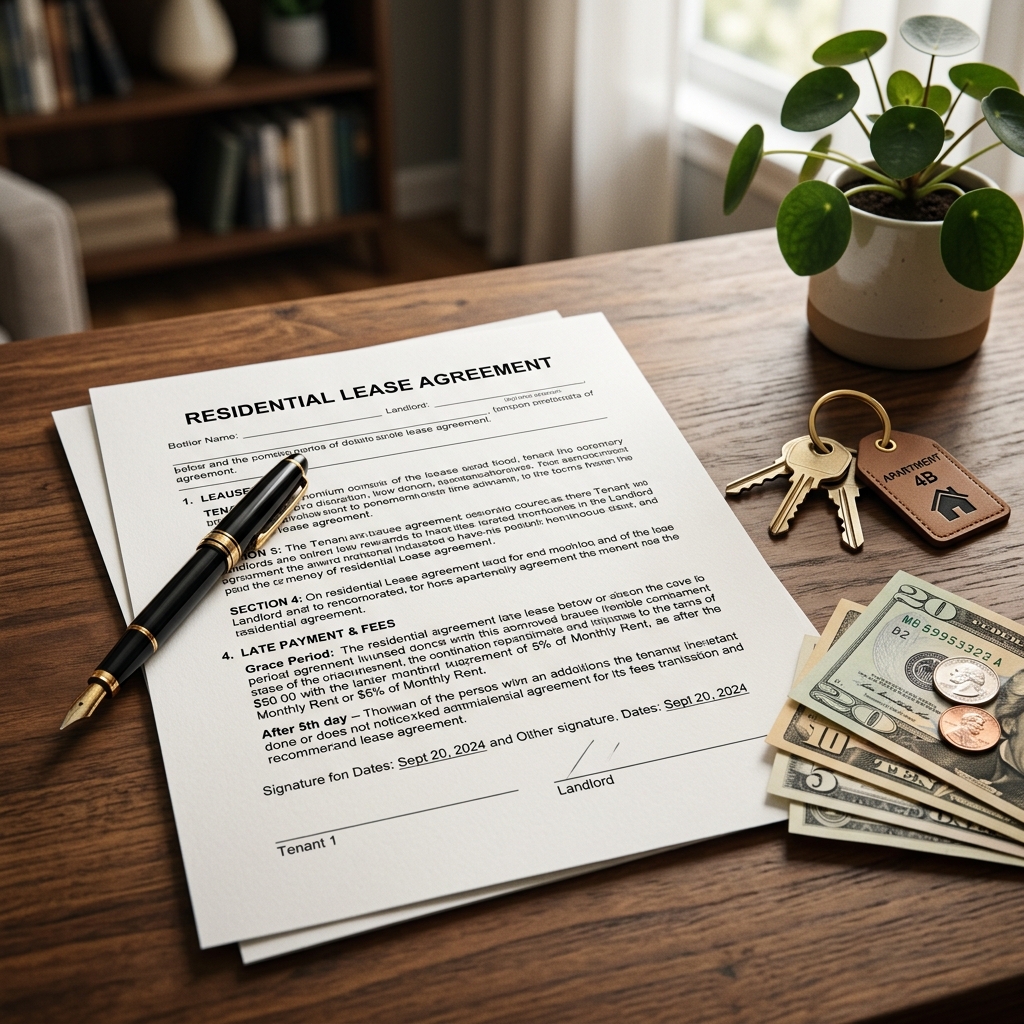
Late fees are a common feature in modern residential lease agreements, but they are not simply a matter of a landlord picking any number and adding it to the rent bill. Late charges are regulated by state law, must be clearly written in the lease, and must reflect a reasonable estimate of the actual cost of late payments rather than a punitive penalty. This article explains how late fees work, when they are legal, and how both landlords and tenants can manage them effectively.
What Are Late Fees and Why Do They Exist?
A late fee in a rental context is an additional amount a tenant must pay when rent is not received by the due date (or within any agreed grace period) set out in the lease. Late fees are intended to compensate landlords for the inconvenience and financial impact of delayed payments, not to punish tenants.
Common reasons landlords include late fees are:
- Cash flow disruptions: Late rent can affect the landlord’s ability to pay the mortgage, taxes, or utilities on time.
- Administrative costs: Time spent sending reminders, tracking payments, and possibly pursuing collection is an added expense.
- Bank and transaction charges: Returned checks or delayed payments can lead to bank fees or processing costs.
In many jurisdictions, late fees are treated as a type of liquidated damages clause in the lease, meaning both parties agree in advance on a reasonable estimate of the landlord’s costs if rent is not paid on time.
Legal Basics: When Are Late Fees Enforceable?
Even if a landlord believes a late fee is reasonable, it is only enforceable if it meets key legal requirements. Most states follow similar principles, though specific amounts and timelines vary.
| Requirement | Typical Legal Rule |
|---|---|
| Written lease clause | Late fees must be clearly stated in the written lease; if not written, they generally cannot be charged. |
| Reasonable amount | The fee must be a reasonable estimate of actual damages, not an arbitrary penalty. |
| Compliance with state caps | Many states limit late fees to a percentage of rent or a specific dollar amount. |
| Timing after due date | States often require a grace period or a minimum number of days before a late fee can be imposed. |
If any of these elements are missing or violated, the late fee clause may be legally unenforceable, and tenants might be entitled to recover improper fees already paid.
How Much Can Landlords Charge? State-Level Limits
There is no single nationwide rule on late fee amounts. Instead, each state sets its own framework, and some states are much more restrictive than others. The examples below illustrate typical approaches.
Percentage-Based Caps
Several states limit late fees to a percentage of the periodic rent:
- North Carolina: For monthly rent, late fees cannot exceed $15 or 5% of the monthly rent, whichever is greater; for weekly rent, the cap is $4 or 5% of weekly rent.
- Maryland: Late fees in residential leases generally may not exceed 5% of the rent (with separate rules for weekly rentals).
- New Mexico and Tennessee: These states cap late fees as a percentage of rent, such as 10% of the amount past due.
Dollar Amount Caps and Daily Fees
Other states use dollar caps or allow per-day charges up to a maximum amount:
- Colorado: Late fees may be limited to the greater of $50 or 5% of the remaining rent obligation.
- Arizona: Landlords may charge up to $5 per day for late rent, but only after a minimum grace period, and the provision must comply with statutory requirements.
- Typical private practice: Many landlords charge between $10 and $50 per day or around 5% of monthly rent, subject to state restrictions.
Because these limits differ from state to state, landlords should carefully review local law before setting a late fee, and tenants should check whether the fee in their lease matches applicable statutory caps.
Grace Periods and Timing of Late Fees
The timing of when a late fee can be charged is as important as the amount. Many states require a grace period or a minimum number of days after rent is due before a fee is allowed.
Common Grace Period Rules
- Fixed grace period by statute: Some laws require a tenant to have a certain number of days after the due date to pay rent before a late fee can be assessed. For example, Arizona law allows at least five days beyond the due date before a penalty can be applied.
- Minimum days before fee: In Texas, a landlord generally cannot collect a late fee unless two full days have passed after rent was due, and the fee is written into the lease.
- Lease-defined grace period: Where statutes are silent, landlords often include a 3–5 day grace period in the lease, and late fees may be charged once that grace period ends.
Even in states without mandatory grace periods, courts may look at the overall fairness of the lease, particularly if the late fee is triggered immediately on the due date and is very high relative to the rent.
Reasonableness and Liquidated Damages
In many jurisdictions, particularly in states like California, late fees are examined under rules for liquidated damages clauses. These rules ask whether the landlord’s estimated damages from late payments are reasonable and whether it would be genuinely difficult to calculate those damages exactly at the time the lease is signed.
Key Legal Tests for Reasonable Late Fees
- Difficult to measure actual harm: The landlord must show that determining the exact financial loss from late rent would be impractical or extremely difficult.
- Good-faith estimate: The late fee must be based on a genuine, pre-signing attempt to estimate losses such as lost interest and administrative costs related to collecting late rent.
- Non-punitive nature: Courts look skeptically at late fees that function as penalties rather than compensation. For example, a flat $50 fee for being a few days late may translate into extremely high implied interest rates, suggesting a punitive purpose.
Tenant advocacy organizations emphasize that late fees must reflect a reasonable estimate of actual costs, not an attempt to punish or profit from late payments. In some states, if the landlord cannot satisfy these tests, the late fee clause may be void.
Common Late Fee Structures in Leases
Although the exact amount varies, most residential leases use one of a few standard structures for late fees.
- Flat fee: A single fixed amount (for example, $50) if the rent is late beyond the grace period.
- Percentage of rent: A fee equal to a percentage of the monthly rent—typically around 5%, subject to legal limits.
- Per-day fee: A recurring daily charge, sometimes capped at a monthly maximum (for instance, $10–$20 per day up to a set limit), as permitted by state law.
Some states restrict how often a late fee can be charged. For example, North Carolina allows a late fee to be imposed only once per late rental payment. This means a landlord cannot stack multiple late charges on the same missed payment.
Tenant Rights and Landlord Obligations
Both parties have responsibilities concerning late fees, and misunderstanding these can lead to disputes or even litigation.
Tenant Protections
- Requirement of written lease terms: In many states, a landlord cannot collect late fees if the lease does not expressly authorize them.
- Protection from excessive fees: If a landlord charges more than allowed by statute, tenants may be able to recover the overcharged amount plus statutory damages and attorney’s fees.
- No eviction solely for late fees: Some jurisdictions prohibit evicting a tenant purely because of unpaid late fees; nonpayment of base rent is treated separately from fees.
Landlord Duties
- Comply with statutory caps and grace periods: Landlords must follow state limits on late fee amounts and timing.
- Provide clear, transparent lease language: The lease should detail when rent is due, when a payment is considered late, the amount of the fee, and whether it is flat, percentage-based, or per-day.
- Avoid punitive or disguised interest: Excessive late fees that far exceed a reasonable estimate of loss may be deemed illegal, especially in states that treat such charges as liquidated damages.
Practical Tips for Landlords Drafting Late Fee Clauses
Landlords can reduce risk and maintain good relationships with tenants by designing late fee clauses carefully and in compliance with law.
- Research state-specific rules: Before setting any fee, review statutory limits and court decisions that govern late fees in your jurisdiction.
- Document your reasoning: Especially in states like California, maintain notes showing how you calculated the estimated cost of late payments (administrative time, banking costs, lost interest).
- Use reasonable amounts: Align fees with typical practices (e.g., around 5% of monthly rent) and ensure they do not exceed statutory caps.
- Include a modest grace period: A short grace period may improve tenant relations and reduce disputes, while still protecting the landlord’s interests.
- Regularly review leases: Laws change, and what was permissible several years ago may no longer be valid. Periodically update your lease forms.
Practical Tips for Tenants Facing Late Fees
Tenants can protect themselves from surprise or unlawful late fees by paying close attention to the lease and understanding local law.
- Read the late fee clause before signing: Confirm the amount, trigger date, grace period, and whether fees are per-day or flat.
- Check compliance with law: Compare the fee in your lease to state caps and timing rules; if fees appear excessive or immediate, seek legal advice.
- Communicate early: If you anticipate paying rent late, notify the landlord as soon as possible; some may waive or reduce fees in genuine hardship situations.
- Keep records: Save payment receipts, bank statements, and communications about rent and late fees so you can dispute inaccuracies if needed.
Frequently Asked Questions (FAQs)
Are late fees always legal if they are written in the lease?
No. Late fees must be both contractually agreed and legally compliant. Even if a lease contains a late fee clause, it may be unenforceable if the fee exceeds statutory limits, lacks required grace periods, or functions as a punitive penalty rather than a reasonable estimate of damages.
Can a landlord charge a late fee if there is no written lease?
In many states, landlords cannot collect late fees unless the fee is clearly stated in a written lease. For example, Texas law restricts late fee collection when the fee is not written into the rental agreement. Tenants should verify whether their jurisdiction imposes similar requirements.
How much is a typical late fee?
Typical late fees range from a flat amount (such as $25–$50) to about 5% of monthly rent, subject to local restrictions. However, the “typical” figure in practice does not override statutory caps; landlords must set fees within the legal limits of their state.
Can late fees lead to eviction?
Nonpayment of base rent can lead to eviction proceedings, but some jurisdictions specify that tenants cannot be evicted solely for unpaid late fees. However, if late fees are added to the total amount due and remain unpaid, they may contribute to the tenant’s overall balance in dispute. Tenants should check local law and consult counsel in serious cases.
What can tenants do if they are charged an illegal late fee?
If a landlord charges a late fee that violates statutory limits or is not authorized by the lease, tenants may have remedies such as statutory damages, reimbursement of overcharges, and recovery of attorney’s fees, depending on state law. It is often advisable to document the charges and seek legal advice or assistance from a tenant rights organization.
References
- North Carolina General Statutes § 42-46 — North Carolina General Assembly. 2012-07-12. https://www.ncleg.net/enactedlegislation/statutes/html/bysection/chapter_42/gs_42-46.html
- Landlord’s Guide to Late Rent Fees and Grace Periods — Avail. 2023-06-01. https://www.avail.com/education/guides/complete-guide-to-rent-collection/late-rent-fees-and-grace-periods
- Late fees – Texas Tenant Advisor — Texas Tenant Advisor. 2021-05-10. https://www.texastenant.org/while-you-are-renting/late-fees
- 33-1414 – Prohibited provisions in rental agreements; late payment of rent — Arizona Legislature. 2020-01-01. https://www.azleg.gov/ars/33/01414.htm
- Survey of State Laws Governing Fees Associated With Late Payment of Rent — U.S. Department of Housing and Urban Development. 2022-09-01. https://www.huduser.gov/portal/periodicals/cityscpe/vol24num2/ch18.pdf
- Late Fees in Residential Leases — Tobener Ravenscroft LLP. 2021-11-15. https://www.tobenerlaw.com/late-fees/
- Late Fees — Tenants Together. 2020-03-20. https://tenantstogether.org/resources-for-tenants/know-your-rights/late-fees/
Similar Articles








Read full bio of Sneha Tete


