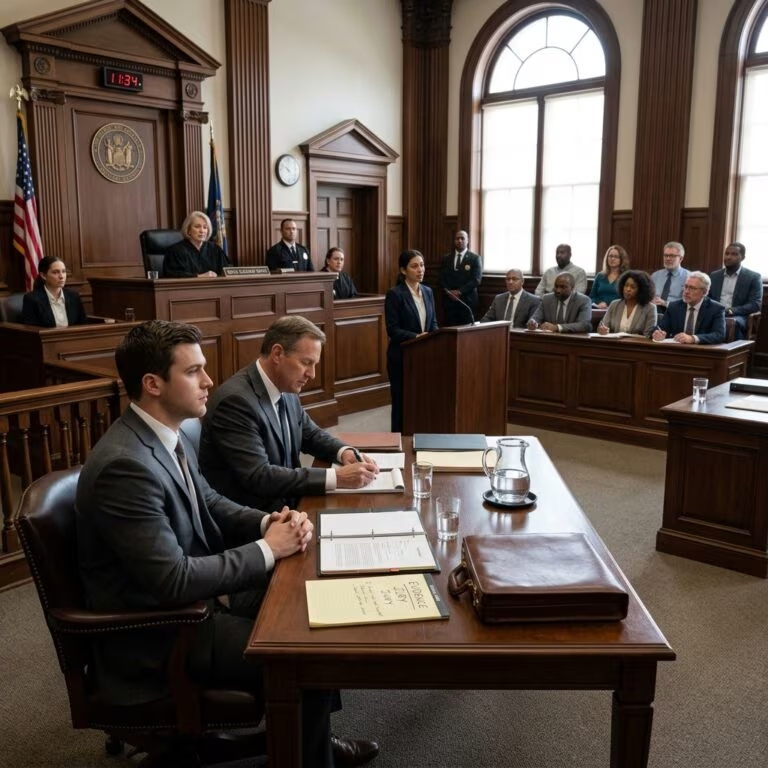
When someone is charged with a crime, the outcome rarely depends on a single moment in court. Instead, it turns on the strength of a carefully planned defense strategy that starts long before trial and may resolve the case without a jury ever being seated. A well-designed strategy weaves together legal analysis, factual investigation, negotiation, and courtroom advocacy to protect the accused and uphold due process.
Understanding the Nature of Criminal Charges
The first step in any defense plan is to understand exactly what the government is alleging. Criminal statutes define specific elements—such as intent, conduct, and circumstances—that prosecutors must prove beyond a reasonable doubt. Without a clear grasp of these elements, it is impossible to evaluate the strength of the case or identify viable defenses.
- Elements of the offense: Each crime has defined components, like intent, act, and causation. The prosecution must establish every element to secure a conviction.
- Potential penalties: Prison terms, fines, probation, collateral consequences (such as loss of professional licenses or immigration impacts) all shape how aggressively a defendant may wish to contest the charges.
- Jurisdiction and procedure: Rules differ between states and the federal system; knowing the applicable procedural protections is crucial.
Defense attorneys analyze charging documents, police reports, and relevant statutes to identify gaps in the prosecution’s theory and opportunities to narrow or dismiss the allegations at an early stage.
Evaluating the Case and Investigating the Facts
A robust defense strategy relies on a thorough review of all available information and independent investigation. The lawyer should not assume that the government’s version of events is complete or accurate.
Core Components of Case Evaluation
- Reviewing discovery: Police reports, witness statements, forensic lab results, recordings, and digital data are examined for inconsistencies, errors, or omissions.
- Reconstructing the timeline: Establishing a detailed chronology of events often reveals gaps or contradictions in the prosecution’s narrative.
- Identifying legal issues early: Possible constitutional violations, unlawful searches, or coerced statements should be spotted quickly to preserve rights and support motions to suppress evidence.
Independent investigation may include interviewing defense witnesses, hiring private investigators, consulting forensic experts, and gathering physical or digital evidence that supports the defense theory. Effective lawyers treat the government’s file as only one version of the story, not the definitive record of what occurred.
Building a Defense Theory and Plan
A defense theory is a coherent explanation of what happened and why the defendant should not be found guilty of the charged crime. It guides every strategic decision, from motions practice to trial advocacy.
Key Features of a Strong Defense Theory
- Legally grounded: The theory must align with recognized defenses, burdens of proof, and applicable statutes.
- Factually plausible: It should be supported by evidence, credible witnesses, or reasonable inferences from the available data.
- Simple and memorable: Jurors should be able to grasp and repeat the core idea in a sentence or two, such as “They arrested the wrong person” or “He acted in self-defense.”
Once the theory is in place, attorneys design a plan that prioritizes actions with the greatest impact: litigating suppression motions, negotiating potential plea deals, subpoenaing records, or preparing for trial. The strategy remains flexible, adjusting as new evidence emerges.
Common Substantive Criminal Defense Strategies
Substantive defenses focus on the underlying facts and legal standards, seeking acquittal or dismissal by showing that the government cannot prove its case or that the law excuses the conduct.
| Defense Type | Core Idea | Typical Use |
|---|---|---|
| Alibi | The defendant was elsewhere when the crime occurred. | Cases dependent on eyewitness identification or timing. |
| Mistaken identity | Witnesses or surveillance misidentified the defendant. | Offenses with limited physical evidence and heavily disputed identification. |
| Lack of intent | The defendant lacked the mental state required for the offense. | Fraud, theft, and other crimes with specific intent elements. |
| Self-defense / defense of others | Force was used reasonably to respond to an imminent threat. | Violent crime charges, including assault or homicide accusations. |
| Entrapment, duress, necessity | The defendant acted under government pressure, coercion, or to avoid greater harm. | Cases involving undercover operations, threats, or emergencies. |
These defenses are often framed as affirmative defenses, meaning the defendant acknowledges certain conduct but argues that a legal justification or excuse applies. When using affirmative defenses, attorneys must weigh carefully the implications of admitting core facts and prepare extensive evidence to support the justification.
Challenging the Prosecution’s Evidence
Even when the defense does not rely on an alternative narrative, attacking the reliability and admissibility of the government’s evidence can be decisive. The goal is to undermine confidence in the prosecution’s case and create reasonable doubt.
Evidence-Based Defense Tactics
- Questioning collection methods: If police lacked probable cause, failed to obtain required warrants, or conducted unlawful searches, key evidence may be excluded under constitutional rules.
- Challenging chain of custody: Breaks or errors in documenting how evidence was handled can raise doubts about tampering or contamination.
- Attacking forensic reliability: Defense experts may dispute lab methods, error rates, or the interpretation of DNA, ballistics, or digital forensics.
- Undermining witness credibility: Prior inconsistent statements, bias, poor memory, or motives to lie are explored through cross-examination.
Modern criminal cases increasingly involve electronic records such as cell phone location data, GPS logs, and online communications. Skillful lawyers scrutinize how these records were obtained and interpreted, recognizing that complex technical evidence is not automatically accurate or conclusive.
Using Pretrial Motions and Procedural Defenses
Procedural defenses focus on how the case was investigated and prosecuted, rather than solely on what happened. They can lead to the suppression of evidence or even full dismissal of charges when authorities violate constitutional or statutory rules.
Examples of Procedural Defense Tools
- Motions to suppress: Requests to exclude illegally obtained evidence, such as evidence seized in violation of the Fourth Amendment or statements taken without required warnings.
- Motions to dismiss: Arguments that the charges are legally defective, unsupported by probable cause, or barred by double jeopardy principles.
- Challenges to confessions: Allegations that admissions were coerced, involuntary, or taken in violation of the right to counsel.
Courts may also impose sanctions or remedies for discovery violations, delays, or other procedural missteps. Effective defense attorneys track deadlines and enforce procedural rights to prevent unfair surprise and imbalance in the adversarial process.
Plea Bargaining and Negotiated Resolutions
Most criminal cases do not go to trial; they are resolved through plea negotiations between defense counsel and prosecutors. A well-considered plea strategy is not a sign of weakness—it is often a rational choice in light of evidence strength, potential penalties, and the defendant’s priorities.
Strategic Considerations in Plea Negotiations
- Assessing trial risk: Attorneys compare likely trial outcomes with offered plea terms, factoring in sentencing ranges and collateral consequences.
- Leveraging case weaknesses: Demonstrating issues with the prosecution’s evidence or procedural problems can encourage more favorable offers.
- Exploring alternative charges: Negotiations may focus on reducing a felony to a misdemeanor or selecting charges with fewer long-term consequences.
- Client-centered decision-making: Ultimately, only the defendant can decide whether to accept a plea, based on informed counsel about risks and benefits.
In some situations, defense lawyers pursue conditional pleas, diversion programs, or deferred adjudications that emphasize rehabilitation over punishment. Negotiated outcomes can be tailored to the defendant’s circumstances while still addressing public safety concerns.
Preparing for Trial: From Jury Selection to Verdict
When a case proceeds to trial, the defense strategy must shift from investigation and negotiation to persuasive presentation. Success at trial depends on meticulous preparation rather than last-minute improvisation.
Critical Elements of Trial Preparation
- Jury selection: Attorneys use questioning to identify bias, explain core defense themes, and select jurors who can fairly evaluate the evidence.
- Opening statements: The defense outlines its theory of the case, previewing why the evidence will fail to prove guilt beyond a reasonable doubt.
- Cross-examination: Skillful questioning of prosecution witnesses exposes inconsistencies, bias, and gaps, often forming the backbone of reasonable doubt.
- Defense evidence and witnesses: When appropriate, the defense calls witnesses or introduces documents and expert testimony that reinforce its theory.
- Closing arguments: The attorney connects the evidence back to legal standards and emphasizes that doubt must be resolved in favor of the accused.
Throughout trial, defense counsel must remain attentive to evidentiary rulings, objection opportunities, and the jury’s reactions. Presenting a clear, humanizing narrative helps jurors see the defendant as more than a set of allegations.
Client Communication and Ethical Considerations
Effective defense strategies also depend on strong communication between attorney and client. Defendants need to understand their options, the likely consequences, and the role they play in advancing the defense.
- Informed consent: Major decisions—such as whether to testify, accept a plea, or go to trial—must be made by the client after receiving candid advice.
- Confidentiality: Lawyers protect client communications to encourage honest discussion of facts and concerns.
- Ethical limits: Defense counsel cannot present false evidence or encourage perjury, even when pressure is high; strategies must stay within professional and legal rules.
A trusting attorney–client relationship not only improves case outcomes but also helps defendants navigate the emotional and practical strain of criminal proceedings.
Frequently Asked Questions About Criminal Defense Strategies
1. Do I need a defense strategy if I am planning to plead guilty?
Yes. Even when a defendant intends to plead guilty, a structured defense strategy is essential to evaluate the strength of the evidence, negotiate fair plea terms, and advocate for a reasonable sentence. Strategy influences which charges are admitted, what facts are stipulated, and how the court views the defendant at sentencing.
2. Can my charges be dismissed based on procedural errors alone?
Sometimes. Serious constitutional violations—such as unlawful searches or coerced confessions—can lead to suppression of critical evidence. If the remaining proof is insufficient, prosecutors may have no choice but to dismiss. However, not every error justifies dismissal, and results depend heavily on the specific facts and jurisdiction.
3. Is it better to claim innocence or use an affirmative defense like self-defense?
There is no universal answer. Claiming innocence focuses on denying involvement, while affirmative defenses acknowledge conduct but argue legal justification or excuse. The choice depends on evidence strength, available witnesses, and how jurors are likely to perceive the case. Experienced attorneys weigh these factors carefully before committing to a theory.
4. What role do experts play in criminal defense?
Experts can analyze forensic evidence, reconstruct events, evaluate mental health, or interpret complex data. Their testimony may reveal limitations in the government’s scientific methods or support defenses such as insanity, lack of intent, or mistaken identity. Using experts effectively requires early planning and adequate resources.
5. How much control does the defendant have over strategy decisions?
Defendants retain ultimate authority over critical decisions, including whether to plead guilty, waive jury trial, or testify. Lawyers generally control technical and tactical choices, such as which motions to file or how to question witnesses, but they must consult clients and explain the rationale behind major actions.
References
- Common Defenses in Criminal Law Cases — Justia. 2024-01-10. https://www.justia.com/criminal/defenses/
- 5 Essential Elements of a Successful Criminal Defense Strategy — Holcomb & Johnson, P.C. 2023-06-15. https://holcombjohnson.com/5-elements-of-criminal-defense-strategy/
- Criminal Defense 101: Building a Strong Defense Strategy — Mitchell & West LLC. 2025-02-05. https://www.mitchellandwest.com/blog/2025/february/criminal-defense-101-building-a-strong-defense-s/
- Criminal Defense Strategies in Texas — Castro Law Office, PLLC. 2024-08-20. https://www.castrocriminallawyer.com/criminal-defense-stratagies-texas/
- Successful Criminal Defense Strategies in California — Easton & Easton, LLP. 2023-11-02. https://www.egattorneys.com/criminal-defense-strategies
- Best Legal Defense for Criminal Charges: Navigating the Legal System — Hines Law Firm. 2024-04-18. https://www.hineslaw.org/blog/best-legal-defense-for-criminal-charges/
- The Best Defense Strategies for Criminal Cases — Greenwood Law. 2023-09-30. https://www.dwg-law.com/the-best-defense-strategies-for-criminal-cases/