
Understanding Criminal Punishments in U.S. Law
A clear guide to how crimes are punished in the United States, from fines and probation to imprisonment and the death penalty.
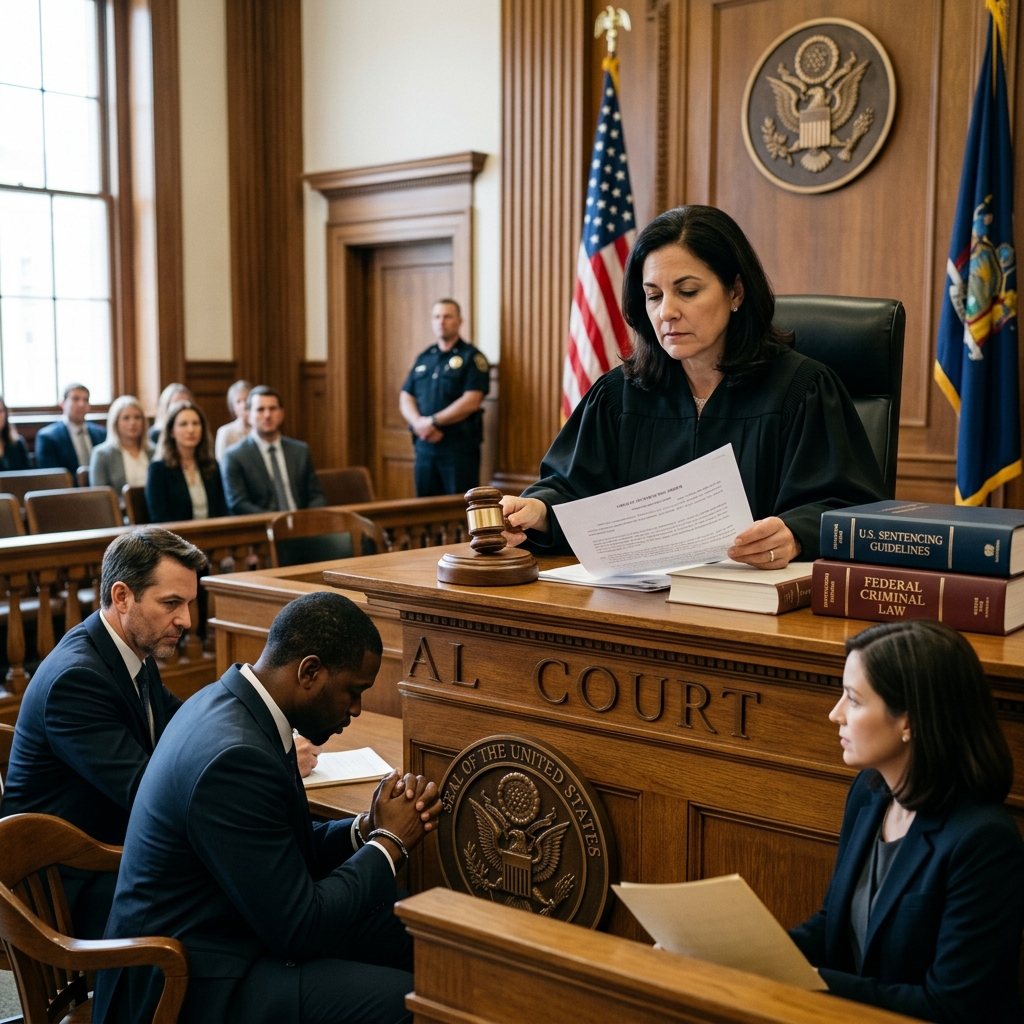
Criminal punishment is the cornerstone of the United States criminal justice system. When a person is convicted of a crime, judges must choose among a range of penalties that serve different goals: deterring future crime, protecting the public, rehabilitating the offender, and expressing society’s moral condemnation of harmful conduct. These penalties can range from community-based sanctions and fines to long prison terms and, in the most serious cases, the death penalty.
Core Purposes Behind Criminal Punishment
Modern sentencing practices in the United States are built around several widely recognized purposes of punishment.
- Retribution – The idea that offenders deserve punishment proportionate to the harm they caused.
- Deterrence – Using penalties to discourage both the individual offender and the broader public from committing crimes.
- Incapacitation – Restricting an offender’s liberty, often through incarceration, to prevent further offenses against the public.
- Rehabilitation – Providing treatment, education, or supervision in hopes of changing the offender’s behavior.
- Restoration – Repairing the harm done to victims and communities, often through restitution or community service.
Judges do not explicitly list these purposes each time they sentence a defendant, but the structure of sentencing laws and the range of available penalties reflect a balance among these goals.
How Sentencing Decisions Are Made
Sentencing is typically a separate phase that occurs after a defendant has either pleaded guilty or been found guilty at trial. At this stage, judges must operate within a framework set by lawmakers and guided by information about the particular offense and offender.
Legal Limits and Sentencing Guidelines
Congress and state legislatures define crimes and establish minimum and maximum punishments for those crimes. Judges cannot impose sentences below or above these limits. At the federal level, the United States Sentencing Commission produces guidelines that recommend sentencing ranges based on factors such as the seriousness of the offense and the defendant’s criminal history. Some offenses also carry mandatory minimum penalties, which require judges to impose at least a specified term of imprisonment.
Information Considered by the Judge
To craft an appropriate sentence, judges typically consider multiple sources of information.
- Statutory sentencing ranges and applicable mandatory minimums.
- Sentencing guidelines (in federal court and some state systems).
- Presentence reports prepared by probation officers, detailing the offender’s background and the circumstances of the crime.
- Victim impact statements describing harm suffered and desired outcomes.
- Statements from the defendant and lawyers during the sentencing hearing.
Judges also weigh aggravating and mitigating factors, such as whether the defendant has a prior record, the level of violence involved, the amount of loss to victims, and whether the defendant shows remorse or potential for rehabilitation.
Common Types of Criminal Punishment
Not every conviction leads to prison. U.S. courts employ a variety of sanctions, often combining several in a single sentence.
Incarceration: Jail and Prison
Incarceration is the most familiar and severe non-capital penalty. It involves confining a defendant in a government-operated facility.
- Jails are typically run by counties or local governments. They house individuals awaiting trial and defendants convicted of misdemeanors, usually for terms of less than one year.
- Prisons are operated by state or federal authorities and hold defendants convicted of felonies for periods longer than one year, up to life sentences or until execution in capital cases.
Imprisonment primarily serves incapacitation and deterrence, but it may also provide opportunities for rehabilitation through education or treatment programs.
Probation and Supervised Release
Probation allows a defendant to remain in the community under court supervision. Instead of serving all or part of a jail or prison term, the sentence is suspended on the condition that the defendant complies with specific rules.
Common probation conditions include:
- Regular meetings with a probation officer.
- Obeying all laws and avoiding new criminal charges.
- Restrictions on alcohol or drug use; sometimes mandatory testing.
- Curfews, geographic limits, or exclusion zones (such as staying away from certain people or places).
- Participation in counseling, treatment, or educational programs.
If a defendant violates probation conditions, the court may revoke probation and impose some or all of the original suspended jail or prison term.
Fines and Financial Penalties
Fines require the defendant to pay money to the government, often a city, county, or state. They may be imposed alone for minor offenses or combined with other penalties.
Key features of fines include:
- They are typically scaled to the severity of the offense and sometimes the defendant’s ability to pay.
- Nonpayment can lead to additional consequences, such as collections actions or, in some circumstances, incarceration.
- They express societal condemnation while generating revenue for public entities.
Restitution to Victims
Restitution is a court-ordered payment to victims to compensate for financial losses or injuries caused by the crime. Unlike fines, restitution is paid directly to victims.
Examples of restitution include paying for:
- Medical expenses and counseling related to injuries.
- Property damage or loss.
- Lost wages due to the crime.
Restitution emphasizes restoration, attempting to make victims whole rather than punish solely on behalf of the state.
Diversion and Deferred Sentencing Programs
For some first-time or low-level offenders, prosecutors or judges may offer diversion or deferred sentencing programs. These programs aim to reduce the long-term impact of a criminal record while promoting rehabilitation.
Typical characteristics of diversion programs include:
- Participation in education or treatment programs, such as drug counseling.
- Community service and restitution.
- Requirements to stay crime-free for a certain period.
If the offender successfully completes the program, charges may be reduced or dismissed, allowing the person to avoid a formal conviction.
Other Community-Based Sanctions
Courts may also impose sanctions designed to keep offenders in the community under structured conditions. These can include:
- Community service, requiring unpaid work for public or nonprofit organizations.
- House arrest or electronic monitoring, limiting movement to home or approved locations.
- Day-reporting centers, where offenders must check in daily and comply with programming.
These penalties seek to balance accountability with the goal of maintaining family ties, employment, and social supports that can reduce reoffending.
Capital Punishment: The Death Penalty
Capital punishment, or the death penalty, is the most severe criminal punishment. It involves a judicial sentence that the state will put a convicted offender to death as a penalty for certain crimes.
Crimes Eligible for the Death Penalty
In the United States, capital punishment is reserved for the most serious offenses, often referred to as capital crimes. These include certain forms of murder and crimes against the state.
- First-degree or aggravated murder with specified aggravating circumstances.
- Treason against the United States.
- Genocide.
- Specific offenses such as killing or kidnapping high-ranking officials (for example, members of Congress or federal judges), under federal law.
Federal law and state statutes detail the exact elements necessary for a crime to be eligible for capital punishment, and these restrictions are subject to constitutional scrutiny.
Where Capital Punishment Is Legal
Capital punishment has been abolished in many jurisdictions but remains legal in a significant number of U.S. states, as well as in the federal system and for certain military offenses. Several states have imposed moratoriums or statutory bans, replacing the death penalty with life imprisonment without parole.[10]
Constitutional Limits on the Death Penalty
The Eighth Amendment to the U.S. Constitution prohibits “cruel and unusual punishments.” The Supreme Court has used this provision to restrict the application of the death penalty.
Notable constitutional limits include:
- The death penalty cannot be imposed for crimes that do not involve homicide, with rare exceptions related to crimes against the state.
- It may not be used against individuals who were under 18 at the time of the offense.
- It is unconstitutional to execute people who are intellectually disabled.
Debates continue over whether capital punishment aligns with contemporary standards of decency, leading some states to abolish the practice altogether.[10]
Procedural Safeguards in Capital Cases
Capital cases involve additional procedural safeguards. Unlike most other punishments, a jury must decide whether to impose the death penalty. Defendants typically go through multiple layers of review, including direct appeals and collateral challenges, before a death sentence can be carried out.
Comparing Major Forms of Punishment
The table below contrasts key features of several common types of punishment used in U.S. criminal courts.
| Type of Punishment | Main Goals | Severity Level | Typical Use |
|---|---|---|---|
| Fines | Retribution, deterrence | Low to moderate | Minor offenses, often combined with other sanctions |
| Restitution | Restoration, rehabilitation | Varies (financial impact can be significant) | Crimes involving economic loss or physical injury |
| Probation | Rehabilitation, deterrence, limited incapacitation | Moderate | First-time or lower-risk offenders; alternative to incarceration |
| Incarceration (jail/prison) | Incapacitation, deterrence, retribution | Moderate to severe | Misdemeanors and felonies, especially serious or repeat offenses |
| Capital punishment | Retribution, deterrence | Most severe | Limited to capital crimes, subject to strict constitutional limits |
Factors That Influence Sentencing Outcomes
Even when two defendants are convicted of the same offense, their sentences can differ significantly. This variation arises from both legal requirements and case-specific factors.
Seriousness of the Crime
The primary driver of sentencing is the seriousness of the offense. More harmful or violent conduct typically leads to harsher penalties. Statutes and guidelines often rank offenses by seriousness, with higher levels associated with longer prison terms or higher fines.
Criminal History
Defendants with prior convictions are generally sentenced more severely than first-time offenders. Sentencing systems often assign points or categories based on criminal history, which directly influence recommended sentencing ranges.
Aggravating and Mitigating Circumstances
Aggravating factors increase the gravity of the offense, while mitigating factors reduce it.
- Aggravating factors might include use of a weapon, targeting vulnerable victims, large financial losses, or leadership in a criminal enterprise.
- Mitigating factors might include a minor role in the offense, cooperation with authorities, genuine remorse, or difficult personal circumstances.
Victim Impact and Community Harm
Courts increasingly consider the impact on victims and the broader community. Victim impact statements can influence sentencing by highlighting emotional, physical, and financial consequences.
Mandatory Minimums and Policy Choices
Mandatory minimum penalties limit judicial discretion and can result in lengthy sentences even for first-time offenders. Policy debates continue over whether such requirements contribute to excessive incarceration compared to other countries.
Frequently Asked Questions About Criminal Punishments
Do all crimes lead to jail or prison time?
No. Many offenses, especially minor ones, can be punished with fines, probation, community service, or diversion programs instead of incarceration. Judges tailor sentences to the seriousness of the offense and the offender’s background.
What is the difference between jail and prison?
Jails are local facilities that hold people awaiting trial or serving short sentences, typically less than one year, often for misdemeanors. Prisons are state or federal institutions that confine people convicted of felonies for more than one year, up to life or death in capital cases.
Can a judge reduce a sentence below a mandatory minimum?
Generally, no. Mandatory minimum penalties require judges to impose at least the specified term, though some laws allow limited exceptions (such as “safety valve” provisions for certain nonviolent offenses). Where no exception applies, judges must follow the statutory minimum.
Is the death penalty still used in the United States?
Yes, but less frequently than in past decades. Capital punishment has been abolished in many states, and several more have imposed moratoriums, yet it remains legal in a number of states and in the federal system.[10] Execution numbers have declined over time.
How does restitution differ from fines?
Restitution is paid to victims to compensate for losses caused by the crime, while fines are paid to the government. Both can be imposed in the same case, but they serve different purposes: restoration for victims versus punishment and deterrence.
Can a criminal record be avoided through diversion?
In some jurisdictions, successfully completing a diversion or deferred sentencing program can lead to dismissal or reduction of charges, allowing the defendant to avoid a formal conviction. Eligibility criteria and program requirements vary by location and offense type.
References
- Punishment of Crime — Lawyers.com. 2022-04-15. https://legal-info.lawyers.com/criminal/criminal-law-basics/punishment-of-crime.html
- Sentencing — U.S. Department of Justice, U.S. Attorneys. 2020-11-19. https://www.justice.gov/usao/justice-101/sentencing
- Mandatory Minimum Penalties — United States Sentencing Commission. 2023-02-01. https://www.ussc.gov/research/quick-facts/mandatory-minimum-penalties
- Capital Punishment — Bureau of Justice Statistics, U.S. Department of Justice. 2022-09-30. https://bjs.ojp.gov/topics/corrections/capital-punishment
- Capital Punishment | Wex — Legal Information Institute, Cornell Law School. 2021-06-10. https://www.law.cornell.edu/wex/capital_punishment
- States and Capital Punishment — National Conference of State Legislatures. 2023-05-16. https://www.ncsl.org/civil-and-criminal-justice/states-and-capital-punishment
- Death Penalty — Equal Justice Initiative. 2022-08-01. https://eji.org/issues/death-penalty/
Similar Articles








Read full bio of medha deb




