
Prison Conditions: Legal Paths To Challenging Unconstitutional Care
A practical legal guide to understanding, documenting, and challenging unconstitutional and unsafe prison and jail conditions in the United States.
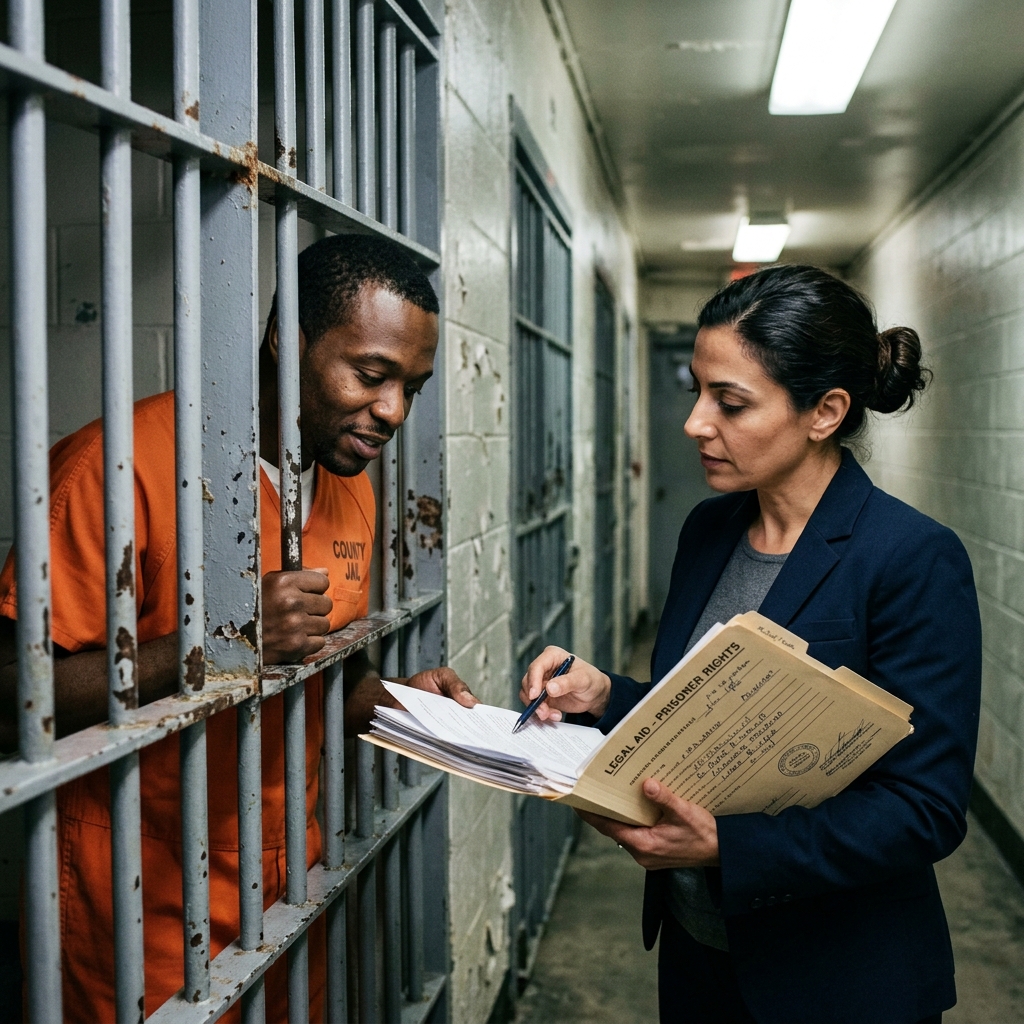
Prisons and jails are legally permitted to be restrictive and even harsh, but they are not allowed to be inhumane or unconstitutional. When conditions cross the line into cruel and unusual punishment or violate other constitutional rights, incarcerated people and their advocates have tools to challenge those conditions in court and through administrative processes.[10]
This article explains how prison conditions are evaluated under U.S. law, what rights incarcerated people retain, and the main legal pathways for challenging unlawful conditions, including claims under the Eighth Amendment, Section 1983, and the Prison Litigation Reform Act (PLRA).
Understanding the Legal Framework for Prison Conditions
Courts recognize that incarceration necessarily involves loss of many freedoms. However, certain constitutional protections continue to apply, particularly the Eighth Amendment’s prohibition on cruel and unusual punishment, due process rights under the Fourteenth Amendment, and protections for religious exercise and access to the courts.
| Legal Source | What It Protects | Typical Prison-Related Claims |
|---|---|---|
| Eighth Amendment | Freedom from cruel and unusual punishment | Unsafe conditions, denial of medical care, extreme isolation, failure to protect from violence[10] |
| Fourteenth Amendment Due Process | Fair procedures when liberty interests are at stake | Disciplinary hearings, segregation placement, loss of good-time credits |
| First Amendment | Religious exercise and access to courts | Denial of religious practice, censorship of legal mail, barriers to law libraries |
| 42 U.S.C. § 1983 | Civil remedy for constitutional violations by state officials | Lawsuits against state prison or jail officials for unlawful conditions |
What Counts as Unconstitutional Prison Conditions?
Not every unpleasant aspect of prison life is unconstitutional. Courts apply a demanding standard before finding that conditions violate the Eighth Amendment. To succeed, incarcerated people generally must show both that the conditions are objectively serious and that officials acted with deliberate indifference.
Basic Human Needs and Safety
The Eighth Amendment requires that prisons and jails meet minimal standards for basic human needs and physical safety.[10]
- Food and water that is nutritionally adequate and not contaminated.
- Shelter that protects from extreme temperatures and exposure.
- Sanitation and hygiene, including toilets, showers, and cleaning supplies.
- Medical and mental health care for serious conditions and disabilities.[10]
- Protection from violence, including sexual assault and assaults by other incarcerated people or staff.[10]
- Exercise and some opportunity for physical activity.
Courts have recognized that conditions involving chronic overcrowding, lack of medical care, unsanitary living spaces, and pervasive violence can collectively amount to cruel and unusual punishment.[10]
The Objective and Subjective Tests
To challenge prison conditions under the Eighth Amendment, courts commonly use a two-part test that looks at both the severity of the conditions and the mindset of prison officials.
- Objective component: The incarcerated person must show that they were deprived of a basic human need or exposed to a substantial risk of serious harm, such as untreated serious illness, extreme temperatures, or pervasive violence.[10]
- Subjective component (deliberate indifference): The person must show that officials knew about the risk and failed to respond reasonably, essentially disregarding the harm.
Evidence can include grievances, medical records, incident reports, witness statements, and expert testimony about the impact of conditions on health and safety.
Common Types of Prison Condition Claims
Prison condition lawsuits often focus on recurring problem areas. Many of these issues are systemic, affecting large numbers of incarcerated people in the same facility or across a prison system.
Overcrowding and Structural Problems
Overcrowding can intensify nearly every other problem in a facility, from violence to disease transmission. Courts have sometimes ordered population caps or other structural remedies when overcrowding results in unconstitutional conditions.
- Dormitories or cells housing far more people than they were designed for.
- Long waits for medical care and limited access to programs due to overcrowding.
- Insufficient staff to supervise and protect incarcerated people safely.
Medical and Mental Health Care
The Constitution requires prisons to provide adequate medical and mental health care for serious needs, including chronic illnesses, disabilities, and psychiatric conditions.[10]
- Failure to provide treatment for serious conditions like diabetes, heart disease, or severe mental illness.
- Delays or refusal to respond to urgent medical requests.
- Use of solitary confinement instead of treatment for people in mental health crisis.[10]
The Supreme Court has warned that failure to provide adequate medical and mental health care can justify major remedies, including reducing prison populations.[10]
Violence, Abuse, and Failure to Protect
Prison and jail officials have a constitutional duty to take reasonable steps to protect incarcerated people from known risks of serious harm, including beatings, stabbings, and sexual assault.[10]
- Known patterns of assaults in particular units or by specific individuals.
- Staff participating in or ignoring violent attacks.
- Retaliation against incarcerated people who report violence or abuse.[10]
Claims based on failure to protect often rely on demonstrating that officials were aware of specific risks or pervasive conditions but failed to act.
Disciplinary Practices and Isolation
Extreme use of solitary confinement, lack of meaningful human contact, and punitive practices can raise constitutional concerns, particularly when applied to people with mental illness or for prolonged periods.
- Long-term isolation with little or no access to programs, visits, or outdoor exercise.
- Disciplinary systems that impose severe sanctions without adequate procedural protections.
- Conditions that significantly depart from ordinary incidents of prison life, triggering due process protections.
Legal Pathways to Challenge Prison Conditions
Incarcerated people and their advocates use several legal mechanisms to challenge unlawful conditions. These pathways differ depending on whether the facility is run by state or federal officials and whether the claim targets individual incidents or systemic problems.
Individual Civil Rights Lawsuits
State prisoners typically use 42 U.S.C. § 1983 to sue state officials in federal court for constitutional violations, including unlawful prison conditions.
- Claims may seek monetary damages, injunctive relief (orders requiring changes), or both.
- Common defendants include wardens, correctional officers, and medical staff.
- Federal prisoners may bring similar claims under what is known as a Bivens action.
These suits are typically filed after the person has exhausted internal grievance procedures, as required by the PLRA.
Class Actions and Systemic Litigation
When conditions affect many people, class action lawsuits and broad injunctive actions can be used to seek facility-wide or system-wide reforms.
- Class actions allow a group of incarcerated people with similar claims to proceed together.
- Courts may impose population caps, appointment of monitors, detailed remedial plans, or consent decrees.
- Litigation may focus on totality of conditions rather than individual incidents.
Judicial interventions have been used to tackle overcrowding, unsafe facilities, and inadequate medical care in several jurisdictions.
Department of Justice and Oversight Actions
The U.S. Department of Justice (DOJ) has authority under federal civil rights laws to investigate and challenge systemic violations in prisons and jails, particularly when state and local oversight fails.
- DOJ investigations can lead to negotiated agreements or consent decrees requiring broad reforms.
- These actions often focus on patterns of excessive force, unsafe conditions, and lack of medical care.
Advocacy organizations and legal aid groups frequently work alongside DOJ or independently to document abuses and push for reforms.[10]
The Prison Litigation Reform Act (PLRA) and Exhaustion
The Prison Litigation Reform Act (PLRA) significantly shapes how incarcerated people can challenge prison conditions. One of its key requirements is that people must exhaust available internal grievance procedures before filing most federal lawsuits about prison conditions.
Exhaustion of Administrative Remedies
Under the PLRA, incarcerated people generally must complete the facility’s grievance process, following all deadlines and procedural rules, before bringing a civil rights claim in federal court.
- The exhaustion requirement applies to all suits about prison life, including claims about excessive force or other wrongs.
- Courts have held that exhaustion is required even if the grievance system cannot provide the type of relief sought, such as money damages.
- Failure to exhaust can lead to dismissal, even if the underlying claim involves serious constitutional issues.
Because grievance procedures can be complex, timely documentation and careful compliance with all steps are critical for preserving legal claims.
Practical Tips for Using Grievance Systems
For incarcerated people considering legal action, using the grievance system effectively can make a significant difference.
- Follow written policies: Obtain and read the facility’s grievance rules, including deadlines and required forms.
- Keep copies: Save copies of all grievances, appeals, and responses, and note the dates of each filing.
- Be specific: Describe the conditions, dates, locations, and people involved as clearly as possible.
- Persist through appeals: If the system has multiple levels (e.g., initial grievance and appeal), complete each level.
Documenting Conditions and Building a Case
Successful challenges to prison conditions often depend on detailed documentation and evidence. Even before legal assistance is available, incarcerated people can take steps to preserve information that may be important later.
Key Forms of Evidence
- Grievances and responses: Written complaints and official replies are central to showing notice and exhaustion.
- Medical records: Records of diagnoses, treatment, and missed appointments help demonstrate harm.
- Incident reports: Documents prepared by staff after fights, assaults, or accidents.
- Witness statements: Notes from other incarcerated people who observed conditions or events.
- Patterns and statistics: Evidence of repeated similar incidents can show systemic issues.
Working with Lawyers and Advocates
Because prison litigation is complex and subject to strict procedural rules, legal assistance is often crucial. Civil rights attorneys, legal aid organizations, and advocacy groups specializing in prisoners’ rights can help evaluate claims, navigate the PLRA, and develop litigation strategies.[10]
- Reviewing whether conditions likely meet the constitutional threshold.
- Determining the best forum and legal theories for the case.
- Coordinating with other impacted people for class or group actions.
- Engaging experts in medicine, psychology, corrections, or public health.[10]
Role of Courts and Judicial Remedies
When courts find that prison conditions are unconstitutional, they have a range of tools to enforce compliance. Judicial interventions have reshaped prison systems in several states over the past decades.[10]
Types of Court Orders
- Injunctions: Orders requiring officials to change specific practices or conditions.
- Population caps: Limits on the number of people who can be held in a facility or system.
- Consent decrees: Negotiated agreements approved and supervised by courts, often with detailed timelines and monitoring provisions.
- Appointment of monitors or receivers: In extreme cases, courts may appoint independent monitors or even remove control of prisons and jails from local authorities.
These remedies aim not only to correct immediate harms but also to prevent future violations by changing policies, training, staffing, and conditions on the ground.
Frequently Asked Questions (FAQs)
Do incarcerated people still have constitutional rights?
Yes. While incarceration limits many freedoms, people in prison and jail retain key constitutional rights, including protection against cruel and unusual punishment, due process in certain disciplinary and classification decisions, and rights related to religious exercise and access to courts.
Is every unpleasant prison condition unconstitutional?
No. Courts allow restrictive and harsh conditions as part of legitimate punishment and security needs. Only conditions that deprive basic human needs or pose serious risks to health and safety, combined with deliberate indifference by officials, typically meet the constitutional standard for Eighth Amendment violations.
What is Section 1983 and why is it important?
Section 1983 is a federal statute that allows people to sue state officials, including prison and jail staff, for violations of constitutional rights in federal court. It is a primary tool for challenging unlawful prison conditions and seeking damages or injunctive relief.
Do I have to use the grievance system before I can sue?
In most cases, yes. The Prison Litigation Reform Act requires incarcerated people to exhaust all available administrative remedies through the facility’s grievance system before filing federal lawsuits about prison conditions, even if the grievance process cannot provide the specific remedy they want.
Can prison conditions be challenged on behalf of many people at once?
Yes. When conditions affect many people in similar ways, class actions and other systemic lawsuits can be used to challenge those conditions collectively, often leading to broader reforms such as population caps, consent decrees, and detailed remedial plans.
References
- Challenging the Conditions of Prisons and Jails — Bureau of Justice Statistics, U.S. Department of Justice. 1984-05-01. https://bjs.ojp.gov/content/pub/pdf/ccpjrs83l.pdf
- Your Rights in Prison — Jailhouse Lawyers Handbook (Columbia Human Rights Law Review & National Lawyers Guild). 2016-03-01. https://www.jailhouselaw.org/your-rights-prison
- Chapter 6: How to Protect Your Rights — Jailhouse Lawyers Manual, Columbia Law School. 2018-03-01. https://jlm.law.columbia.edu/files/2018/03/16.-LA-Ch.-6-FINAL.pdf
- Filing a Lawsuit while Incarcerated — American Civil Liberties Union of Kansas. 2020-08-01. https://www.aclukansas.org/know-your-rights/filing-lawsuit-while-incarcerated/
- The Prison Litigation Reform Act’s Exhaustion Requirement and Section 1983 — Seattle Journal for Social Justice, Seattle University School of Law. 2011-01-01. https://digitalcommons.law.seattleu.edu/cgi/viewcontent.cgi?article=1059&context=sjsj
- Judicial Interventions for Inhumane Prison and Jail Conditions — Brennan Center for Justice. 2021-11-10. https://www.brennancenter.org/our-work/research-reports/judicial-interventions-inhumane-prison-and-jail-conditions
- Prison Conditions — Equal Justice Initiative. 2022-05-01. https://eji.org/issues/prison-conditions/
Similar Articles








Read full bio of medha deb




