
The Dual Edge of Body-Worn Cameras: Accountability vs. Surveillance
The battle to stop body cameras from becoming mass surveillance tools.
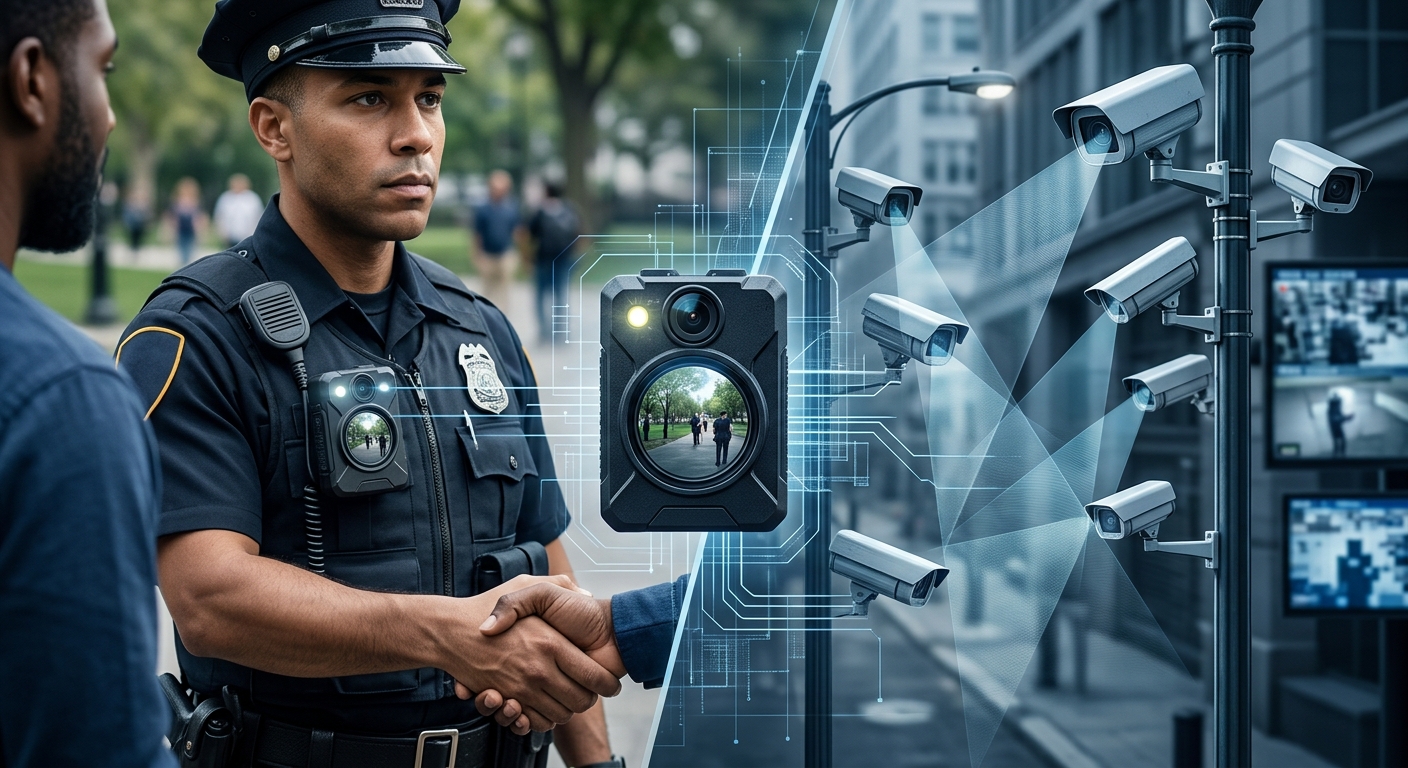
The Promise and Peril of Modern Police Accountability
Law enforcement agencies across the United States have undergone a technological revolution over the last decade. At the forefront of this evolution is the deployment of body-worn cameras (BWCs). Initially heralded as the ultimate tool to rebuild fractured community relations and ensure strict accountability, these small, uniform-mounted devices were supposed to offer an objective lens into the daily interactions between police officers and the public. In the wake of intense national scrutiny over policing practices, citizens and lawmakers alike viewed these cameras as an impartial witness that could bridge the deep divide between law enforcement and the communities they are sworn to protect.
However, as the initial enthusiasm settles into the complex, often frustrating reality of policy implementation and legal interpretation, a drastically different narrative is emerging. We are witnessing an intense, multi-front battle over who controls this powerful technology, how the collected data is utilized, and who truly benefits from the footage captured on a daily basis. From state legislative halls to federal courtrooms, the original, transparency-driven purpose of body-worn cameras is being actively contested, and in some jurisdictions, completely reverse-engineered. Instead of serving as a much-needed window into policing operations, these cameras increasingly risk becoming an expansive apparatus for continuous public surveillance, functioning simultaneously as a shield for internal department use only, effectively blocking the very transparency they were meant to guarantee.
The Original Vision for Body-Worn Cameras
The massive push for body-worn cameras emerged from a distinct societal demand for greater police transparency. Following numerous high-profile incidents involving police use of force, communities demanded a mechanism that could independently verify the events unfolding on the streets. The United States Department of Justice (DOJ) heavily subsidized this technology through extensive grant programs, encouraging local, state, and federal agencies to modernize their accountability infrastructures. In a 2021 memorandum, the DOJ reinforced that transparency in law enforcement operations is foundational to building community trust, mandating comprehensive BWC policies across federal task forces.
At the time of their introduction, civil liberties organizations cautiously supported the rollout, contingent on the implementation of strict oversight. The core assumption was that the footage would inherently become a public record, accessible to civilians, journalists, and independent review boards. It was envisioned as a two-way street where law enforcement could definitively clear officers falsely accused of misconduct, while victims of police overreach would possess the irrefutable evidence required to seek justice in the courts. This initial vision was rooted in the concept of “contagious accountability,” a behavioral shift expected to occur when all parties are acutely aware they are being watched and recorded.
However, the hardware itself is morally neutral. A camera simply records data; it is the policy governing when the camera is activated, who stores the data, and when the public is allowed to view the footage that determines whether the technology serves democracy or undermines it. Without stringent public access rules, the camera loses its power as a tool for civilian oversight.
Legal Roadblocks: When Transparency Meets Resistance
As body-worn cameras became standard issue in metropolitan police departments across the country, the primary battleground rapidly shifted from procurement funding to policy drafting, specifically regarding the public release of the recorded footage. This is where the original promise of transparency faces its most formidable opposition today. Police unions and law enforcement associations have aggressively initiated legal action to restrict public access to BWC videos.
Through closed-door collective bargaining agreements and strategic, high-profile lawsuits, some police unions have attempted to reclassify body camera footage as confidential personnel records or highly sensitive investigative materials. They frequently argue in court that the immediate release of footage violates the due process rights of the officers involved, potentially prejudicing ongoing administrative or criminal investigations. In other troubling instances, unions have cited the privacy rights of the civilians captured on tape as a primary justification for keeping the footage entirely under seal, effectively co-opting a civil liberties argument to actively prevent public oversight.
When police departments or local municipal governments capitulate to these legal pressures, the accountability mechanism is fundamentally broken. If footage of a controversial, high-stakes use-of-force incident is buried in bureaucratic red tape for months or years, or if it is only selectively edited and released when it perfectly corroborates the department’s official narrative, the public trust is not repaired—it is severely damaged. The power dynamic shifts entirely back to the law enforcement agency, which abruptly becomes the sole arbiter of what the public is permitted to see.
Furthermore, lawsuits aiming to block the release of footage under established public records laws or Freedom of Information Act (FOIA) requests create a massive chilling effect on transparency. Journalists, civil rights advocates, and independent watchdog groups find themselves mired in expensive, prolonged legal battles simply to access videos that taxpayers heavily funded to ensure their own safety. The ultimate result is a costly technology that functions not as an objective monitor, but as a highly controlled public relations tool.
The Shift from Oversight to Surveillance
Beyond the bruising legal disputes over public access, there is a rapidly escalating technological threat that threatens to permanently warp the purpose of body-worn cameras: the integration of artificial intelligence and facial recognition technology (FRT). What began just a decade ago as a passive recording device designed to monitor officer conduct is dangerously close to becoming a proactive, automated tool for mass public surveillance.
When facial recognition capabilities are paired directly with body-worn cameras, the entire dynamic of public policing alters radically. An officer walking down a crowded street, entering a public housing complex, or patrolling a peaceful protest is no longer just maintaining public order; they are transformed into a roving biometric scanner. Every face captured in the camera’s wide field of view can potentially be cross-referenced in real-time against vast, interconnected government databases of mugshots, driver’s licenses, and immigration records.
Privacy advocates and civil rights organizations argue vigorously that this constitutes a profound violation of Fourth Amendment rights against unreasonable searches and seizures. The prospect of continuous, untargeted facial surveillance inherently chills free speech, deters individuals from participating in lawful public assemblies, and disproportionately affects marginalized communities that are already subject to systemic over-policing.
Even the corporate tech sector has acknowledged the profound ethical risks associated with this leap. Following extensive internal research and public deliberation, the AI Ethics Board for Axon, one of the largest manufacturers of body-worn cameras in the world, explicitly recommended against the integration of facial recognition technology into their devices. The board cited the unreliability of the technology—particularly its mathematically proven biases and high error rates when identifying women and people of color—and the severe risks it poses to basic civil liberties. This foundational 2019 report remains the authoritative industry standard on why major manufacturers continue to reject facial recognition integration. Despite these stark warnings, the pressure from certain law enforcement sectors to adopt these advanced surveillance capabilities remains intensely high, forcing a critical societal debate on whether the hardware should be heavily regulated by federal legislation before it completely outpaces our constitutional protections.
Evaluating the Efficacy: Does the Footage Change Behavior?
More than a decade into the widespread, multi-billion-dollar deployment of body-worn cameras, researchers have compiled extensive empirical data to evaluate whether the technology actually fulfills its foundational promises. The findings are surprisingly mixed, casting significant doubt on the naive assumption that cameras alone are a guaranteed panacea for police misconduct.
According to comprehensive, multi-year reviews conducted by the National Institute of Justice (NIJ), the measurable impact of body-worn cameras on reducing officer use of force and civilian complaints varies wildly across different jurisdictions. In some mid-sized cities, the introduction of cameras closely correlated with a statistically significant, sustained drop in both use-of-force incidents and public complaints. However, in several other major metropolitan departments, rigorous randomized controlled trials found absolutely no discernible, statistically significant difference in behavior between officers who wore the cameras and those who did not.
Criminologists and policy analysts suggest that these heavily mixed results emphasize the overriding importance of departmental culture and the strictness of the specific BWC policies in place. A camera is rendered entirely useless if an officer is permitted to turn it off or mute the microphone during a critical, escalating encounter without facing severe, immediate disciplinary consequences. Moreover, if officers are routinely allowed to review their own body camera footage in a private setting before drafting their official incident reports—a practice heavily contested by accountability advocates but frequently defended and secured by police unions—the objective nature of the camera is totally compromised. Instead of the police report reflecting the officer’s genuine, unaided recollection of the stressful event, it becomes a carefully crafted narrative engineered to align perfectly with the video evidence. This makes it exceptionally difficult for defense attorneys or oversight boards to identify inconsistencies or challenge the officer’s initial justification for their actions.
Therefore, the sophisticated hardware is only as effective as the administrative framework that governs its daily use. Without robust, community-informed policies that mandate strict recording compliance, outright prohibit pre-report video viewing in use-of-force incidents, and guarantee timely public disclosure, body-worn cameras are effectively stripped of their accountability function.
Formulating Meaningful Policies for the Future
To prevent body-worn cameras from being entirely reverse-engineered into tools of municipal secrecy and mass surveillance, state lawmakers and community leaders must prioritize the establishment of binding, enforceable guidelines. The policy framework must explicitly define the legal purpose of the cameras as an accountability mechanism first and foremost, rather than a general evidence-gathering tool.
Key legislative reforms should focus heavily on standardizing the release of footage. Establishing strict, legally binding timelines for the mandatory public release of unedited video following critical incidents—such as officer-involved shootings, severe uses of force, or in-custody deaths—removes the element of discretion from the police department and places it firmly within the realm of public law. Additionally, complete statutory bans on the integration of biometric surveillance tools, including real-time and post-incident facial recognition, are absolutely necessary to protect citizens’ privacy and prevent the militarization of routine police patrols.
Comparing Body Camera Frameworks
The following table highlights the critical differences in execution between policies designed for genuine public accountability versus those designed primarily for department protection and mass surveillance:
| Policy Element | Accountability-First Approach | Surveillance & Protection Approach |
|---|---|---|
| Footage Release | Mandatory public release within a strict, legally mandated timeframe (e.g., 5-10 days) immediately following a critical incident. | Indefinite withholding at the complete discretion of the department, or perpetually blocked by union litigation and arbitration. |
| Officer Review | Officers must completely write their initial incident reports before viewing BWC footage to ensure uncompromised memory recall. | Officers are explicitly permitted or actively encouraged to review footage before writing reports, allowing for perfect narrative alignment. |
| Activation Rules | Strict legal mandates with severe, predictable disciplinary actions for failing to activate the camera during any public encounter. | Broad officer discretion on when to activate, deactivate, or mute the camera, with little to no meaningful penalties for compliance failures. |
| Biometric Integration | Explicit statutory bans on integrating facial recognition, gait analysis, and other AI-driven biometric tracking technologies. | Active procurement of AI analytics and real-time facial recognition matching against massive local and federal government databases. |
As the technological landscape continues to shift rapidly beneath our feet, municipalities must remain vigilant. Civilian community oversight boards should be granted the legal authority and funding to independently audit BWC usage, data storage, and policy compliance. Without this essential level of external scrutiny, the billions of taxpayer dollars invested in body-worn cameras will serve only to invisibly expand the power of the state, while leaving the communities they actively police further marginalized and monitored.
Frequently Asked Questions (FAQ)
- Why are police unions frequently suing to block the release of body camera footage?
In many jurisdictions across the country, police unions argue in court that publicly releasing body camera footage violates the due process and personal privacy rights of the officers involved in an incident. They often aggressively seek to legally categorize these videos as confidential personnel files rather than public records, aiming to fully control the narrative during controversial incidents and shield officers from immediate, unfiltered public scrutiny. - What is the principle of “contagious accountability”?
Contagious accountability is a well-known behavioral theory suggesting that when all parties involved in an interaction—both the armed police officer and the civilian—are consciously aware they are being actively recorded, they are significantly more likely to behave civilly and follow established rules. The idea is that the mere presence of a body-worn camera ‘infects’ the stressful situation with a heightened sense of mutual responsibility, theoretically leading to a reduction in both police use of force and unfounded civilian complaints. - Does facial recognition technology currently work on body cameras?
While the software technology definitely exists to run facial recognition on BWC footage, it remains highly controversial and often fundamentally unreliable in field conditions. Academic studies have repeatedly shown that facial recognition algorithms suffer from disproportionately high error rates, particularly when identifying people of color and women. Due to these massive ethical, legal, and accuracy concerns, major BWC manufacturers like Axon have thus far refused to integrate it into their body cameras, though strict legislative bans are still required to prevent future adoption by rogue agencies. - Can officers routinely watch their own footage before making a police report?
This depends entirely on the specific local department’s policy. Transparency advocates argue vehemently that officers should write their initial reports before viewing the video footage to ensure an unbiased, wholly accurate account of their subjective experience and state of mind. Conversely, police unions often heavily lobby for policies that allow officers to view the video first, arguing it leads to more comprehensive and accurate reporting. - Have body cameras actually reduced police violence nationwide?
The empirical research presents highly mixed results. While some early, localized studies showed significant reductions in use-of-force incidents, more recent comprehensive national reviews by the National Institute of Justice indicate that BWCs have had limited to no statistically significant effect in several major municipal departments. The overall effectiveness heavily relies on the strictness of departmental policies and uncompromising compliance enforcement by leadership.
Conclusion
Body-worn cameras currently stand at a pivotal, defining crossroads in modern policing. They undeniably possess the inherent technological potential to drastically improve the transparency of law enforcement, offering an objective historical record that protects both the public from gross misconduct and officers from entirely unfounded accusations. However, the aggressive, well-funded legal strategies employed by unions to block public access, coupled with the ever-looming dystopian threat of biometric surveillance integrations, threaten to dismantle this democratic promise entirely. If we passively allow this technology to be legally and functionally reverse-engineered, the cameras will quickly cease to be a transparent window into law enforcement accountability. Instead, they will morph into an unblinking, omnipresent eye focused solely on the public. True systemic reform requires far more than just purchasing sophisticated hardware; it demands unwavering, uncompromising legislative commitment to establishing policies that forcefully prioritize transparency, aggressively protect civil liberties, and legally ensure that the watchers remain the ones who are constantly being watched.
References
- Research on Body-Worn Cameras and Law Enforcement — National Institute of Justice (NIJ). 2023-01-22. https://nij.ojp.gov/topics/articles/research-body-worn-cameras-and-law-enforcement
- Body-Worn Camera Policy — Department of Justice, Office of the Deputy Attorney General. 2021-06-07. https://www.justice.gov/ag/page/file/1402221/download
- Axon AI Ethics Board: Face Recognition — The Policing Project at NYU School of Law. 2019-06-27. (Includes the foundational 2019 report by Axon’s AI Ethics Board, which remains the authoritative industry standard regarding the rejection of facial recognition integration). https://www.policingproject.org/axon-face-recognition
Similar Articles








Read full bio of medha deb


