
Digital Walls: Asylum Seekers Trapped at the Border
Uncovering the human cost of digital border walls and asylum policies.
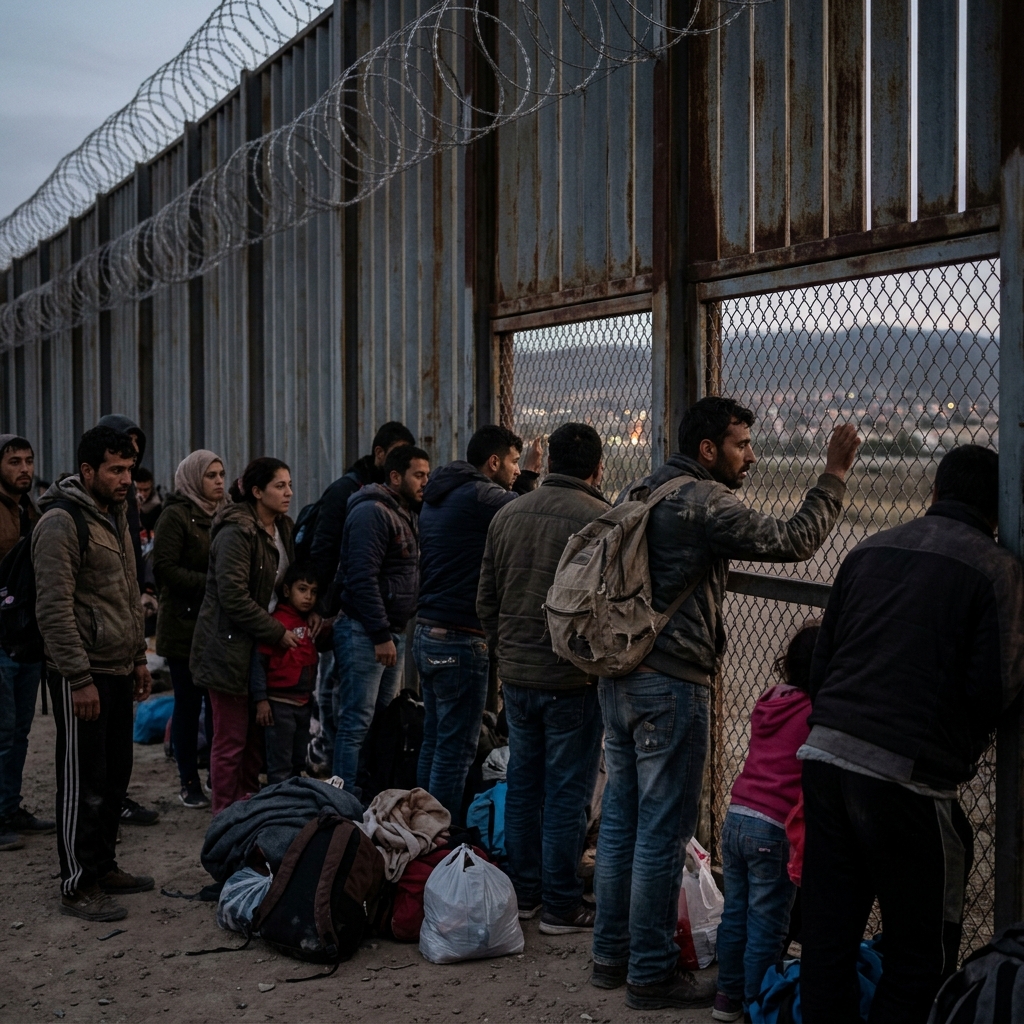
Introduction: The Invisible Border Wall
For decades, the discourse surrounding the United States-Mexico border has been dominated by imagery of physical barriers—towering steel bollards, heavy concrete walls, and miles of concertina wire. However, in recent years, the architecture of border enforcement has rapidly evolved. Today, some of the most formidable barriers preventing vulnerable individuals from seeking refuge in the United States are entirely invisible. They are built from lines of digital code, smartphone applications, and labyrinthine administrative rules. Across towns in northern Mexico, tens of thousands of asylum seekers find themselves trapped in a dangerous legal limbo. Fleeing political persecution, targeted violence, and collapsing nation-states, they arrive at the threshold of the United States only to be told that their safety is contingent on a digital lottery or a narrow set of regulatory exceptions.
The pursuit of asylum is not a legal loophole; it is a fundamental human right recognized under both domestic and international law. Yet, the current ecosystem at the southern border functions less as a gateway for humanitarian protection and more as an apparatus for deterrence and deflection. By examining the lived experiences of those stranded in Mexico, alongside the strict legal frameworks that placed them there, a deeply troubling picture emerges. It is a picture of systematic exclusion, where the burden of U.S. immigration management is effectively outsourced to volatile Mexican border regions, leaving vulnerable people exposed to the very violence they initially fled. The toll of this approach is not merely bureaucratic—it is profoundly human, costing lives and dismantling the foundational principles of international refugee law.
The Digital Bottleneck: Navigating the CBP One App
In early 2023, the Department of Homeland Security significantly expanded the use of the CBP One mobile application, establishing it as the primary mechanism for asylum seekers to schedule an appointment to present themselves at a U.S. Port of Entry. On paper, the app was marketed as a modernization effort—a tool designed to create a “safe, orderly, and humane” process for managing migration flows. In practice, however, it has created a severe digital bottleneck that systematically restricts access to the asylum system for those most in need.
For an asylum seeker fleeing violence in Central America, Venezuela, or Haiti, accessing the CBP One app is fraught with technological and logistical hurdles. The application requires a functional smartphone, a reliable internet connection, and consistent electrical power to keep the device charged—luxuries that are often unavailable in makeshift encampments or overcrowded shelters in Mexico. Even when individuals manage to secure the necessary hardware, the app itself has been plagued by technical glitches, facial recognition failures that disproportionately affect individuals with darker skin tones, and severe language limitations.
Furthermore, the demand for appointments vastly outstrips the supply. The U.S. government releases a strictly limited number of slots each day, effectively turning the fundamental right to seek safety into a daily digital lottery. Migrants wake up before dawn, endlessly refreshing the interface in hopes of securing a life-saving appointment. This system inherently disadvantages the most vulnerable: those who lack digital literacy, those who speak Indigenous languages not initially supported by the software, and those who have had their phones stolen by cartels. The reliance on this app as the exclusive gateway effectively bars those who cannot navigate the digital labyrinth, stranding them in perilous conditions.
The 2024 Policy Overhauls: Tightening the Vise
Compounding the technological barriers are a series of restrictive policy frameworks implemented to strictly curb migration flows. In June 2024, the administration issued a sweeping Presidential Proclamation and an accompanying Interim Final Rule titled “Securing the Border.” This executive action drastically altered the landscape of asylum eligibility in the United States. The core of the rule dictated that whenever the seven-day average of daily unauthorized border encounters exceeded 2,500, the entry of noncitizens across the southern border would be heavily suspended and limited.
Under these stringent restrictions, individuals crossing between designated ports of entry are generally presumed ineligible for asylum unless they can prove exceptionally compelling circumstances, such as an acute medical emergency or an imminent threat to life. Furthermore, the rule lowered the threshold for expedited removals. Migrants are no longer automatically provided a comprehensive credible fear screening upon apprehension; instead, they must proactively manifest a fear of return or explicitly request asylum to even receive an interview with an asylum officer. If they do manage to secure an interview, they face a substantially higher burden of proof to qualify for withholding of removal.
Legal scholars and human rights advocates have vehemently criticized this framework. Analyses have noted that these cumulative measures mark a definitive shift from providing protection to enforcing prevention. This approach effectively punishes asylum seekers based on their manner of entry, leading to rapid deportations. By prioritizing speed over due process, the policy denies thousands a comprehensive asylum hearing and forcibly returns them to the dangers they sought to escape.
Life in Limbo: The Humanitarian Crisis in Northern Mexico
The direct consequence of these digital and administrative barriers is the massive buildup of asylum seekers in Mexican border towns. Cities such as Reynosa, Matamoros, Nogales, and Nuevo Laredo are situated in regions that the U.S. State Department explicitly warns travelers to avoid due to rampant cartel violence and high rates of kidnapping. Yet, these are the exact locations where the U.S. government effectively forces asylum seekers to wait for months on end while trying to secure an appointment or navigate the legal changes.
The living conditions in these border towns are catastrophic. Shelters are chronically over capacity, forcing thousands of families to sleep in makeshift tents on the streets or in squalid encampments lacking basic sanitation, clean running water, and adequate medical care. Disease outbreaks, including gastrointestinal infections and respiratory illnesses, are devastatingly common in these densely packed environments. However, the physical deprivations pale in comparison to the omnipresent and terrifying threat of organized violence.
Criminal syndicates and cartels operate with near impunity in these border territories, and they have quickly identified stranded migrants as highly lucrative targets. Extortion, kidnapping for ransom, and human trafficking are daily realities. Migrants who step out of shelters to buy food, seek medical care, or find day labor are routinely abducted. Because they lack legal status and social capital in Mexico, crimes committed against them are rarely investigated, creating a culture of total impunity. Recent investigations have noted that the U.S. government’s reliance on these bottleneck policies has transformed the U.S.-Mexico border into a zone of immense suffering.
Compounding Trauma for Vulnerable Populations
While the situation is incredibly dire for all who are stranded, the impact is disproportionately severe for specific vulnerable populations. LGBTQ+ asylum seekers, many of whom fled severe, state-sanctioned persecution and violence in their home countries based on their sexual orientation or gender identity, often find themselves facing the exact same transphobia and homophobia in Mexico. They are frequently excluded from traditional, conservative shelter spaces and face heightened risks of sexual violence and targeted attacks while living on the streets.
Black asylum seekers, including those arriving from Haiti and various African nations, face intense racial discrimination and profiling by both local authorities and organized crime syndicates. Language barriers exacerbate their vulnerability; those who do not speak Spanish struggle immensely to navigate local resources, report crimes to authorities, or understand the complex U.S. legal processes. Indigenous peoples from Central and South America face similar linguistic isolation, as crucial legal information and digital interfaces are rarely translated into their native dialects.
Furthermore, recent years have seen a disturbing trend in the deportation of third-country nationals directly back to Mexico. Human rights organizations have documented that thousands of individuals, including older adults with serious health conditions who had resided in the U.S. for decades, have been deported to Mexico without access to basic services or legal recourse. Left in a permanent state of legal limbo, these deportees share the dangerous streets with newly arrived asylum seekers, creating a sprawling demographic of displaced persons discarded by the system.
The Erosion of International Law and The Right to Asylum
The absolute bedrock of international refugee law, primarily enshrined in the 1951 Refugee Convention and its subsequent 1967 Protocol, is the principle of non-refoulement—the guarantee that individuals will not be returned to a country where they face serious threats to their life or freedom. The United States officially incorporated these principles into domestic law via the Refugee Act of 1980, which explicitly states that any noncitizen physically present in the United States, regardless of their manner of arrival, may apply for asylum.
The current operational paradigm effectively dismantles these long-standing legal guarantees. By forcing asylum seekers to wait in highly dangerous Mexican territories or penalizing them for crossing between official ports of entry, the U.S. is engaging in practices that many legal experts argue amount to refoulement. The implementation of policies that tie the availability of asylum to daily encounter quotas rather than the individual merits of a person’s fear directly contradicts the individualized assessment mandated by established international norms.
When fundamental human rights become contingent upon a smartphone app’s functionality, a strong Wi-Fi connection, or arbitrary numerical caps, the immigration system ceases to be a mechanism for humanitarian protection. Instead, it becomes an instrument of systemic exclusion. The assertion that the government provides “lawful pathways” ignores the stark reality that for a political dissident fleeing imminent assassination, or a family escaping cartel extortion, waiting six months for an app appointment is not a viable pathway—it is an unacceptable hazard.
Alternative Paths Forward: Restoring Humanity
Addressing the complexities of the border crisis does not require abandoning border management; rather, it requires aligning border policies with human rights obligations and foundational humanitarian principles. Advocates, policy analysts, and legal scholars have proposed numerous viable alternatives to the current system of deterrence and digital exclusion.
First and foremost, the United States must drastically increase its processing capacity at official Ports of Entry. This involves adequately funding and staffing ports with highly trained asylum officers and administrative personnel capable of processing claims swiftly, fairly, and humanely, thereby eliminating the reliance on a lottery-based smartphone app. Technological tools should be relegated to optional conveniences for those who prefer to schedule ahead, rather than mandatory prerequisites for exercising a fundamental human right.
Additionally, the government must repeal restrictive bans that penalize individuals based on their transit route or manner of entry. Robust, individualized credible fear screenings must be reinstated for all individuals seeking protection. Comprehensive regional agreements should focus on protecting migrants in transit, providing humanitarian visas, and investing in root-cause solutions in home countries, rather than strong-arming neighboring nations into serving as proxy enforcement forces.
Frequently Asked Questions (FAQs)
What is the CBP One app and how does it relate to asylum?
The CBP One app is a mobile application developed by the U.S. Customs and Border Protection. It allows migrants to schedule an appointment to present themselves at a U.S. Port of Entry to seek asylum. However, high demand, technical glitches, and limited daily appointments have turned it into a bottleneck, leaving many stranded in Mexico.
How did the June 2024 U.S. border policies change the asylum process?
In June 2024, a Presidential Proclamation and Interim Final Rule severely restricted asylum eligibility. When daily border encounters exceed 2,500, the entry of most noncitizens is suspended. Migrants crossing between ports of entry face expedited removal and a much higher burden of proof to qualify for protection, prioritizing rapid deportation over comprehensive asylum screenings.
Why are asylum seekers waiting in dangerous Mexican border towns?
Due to policies like the requirement to use the CBP One app and the suspension of entry between ports, migrants cannot immediately cross into the U.S. to claim asylum. They are forced to wait in Mexican border towns—often for months—where they face high risks of cartel violence, kidnapping, and lack of basic necessities.
Is seeking asylum legal under U.S. and international law?
Yes. Under the U.S. Refugee Act of 1980 and the 1951 International Refugee Convention, seeking asylum is a legally protected human right. Individuals have the right to seek safety from persecution regardless of how they arrive at a country’s border, a principle heavily challenged by recent restrictive policies.
References
- Securing the Border: Presidential Proclamation and Rule — U.S. Embassy in Panama. 2024-06-04. https://pa.usembassy.gov/securing-the-border-presidential-proclamation-and-rule/
- Securing the Border – Interim Final Rule — Federal Register / Department of Homeland Security. 2024-06-07. https://www.federalregister.gov/documents/2024/06/07/2024-12513/securing-the-border
- The Right to seek asylum does not exist at U.S.-Mexico Border — Amnesty International. 2025-02-20. https://www.amnesty.org/en/latest/news/2025/02/the-right-to-seek-asylum-does-not-exist-at-u-s-mexico-border/
- Cubans, Many in the US for Decades, Deported to Mexico — Human Rights Watch. 2026-05-27. https://www.hrw.org/news/2026/05/27/cubans-many-us-decades-deported-mexico
- Asylum Under President Biden: A Shift from Protection to Prevention — Immigration and Human Rights Law Review. 2025-01-10. https://law.uc.edu/institutes-centers/ihrlr/blog/asylum-under-president-biden.html
Similar Articles








Read full bio of Sneha Tete


