
Digital Reading Privacy: The Hidden Cost of Online Libraries
Examining the intersection of digital libraries and reader privacy.
The Dawn of the Digital Library Era
Reading has historically been a deeply private communion between an author and a reader. For centuries, consuming literature was an isolated cognitive process, free from external monitoring. As humanity transitioned from physical books to digital libraries, the landscape of intellectual consumption shifted. The promise of digital reading was transformative: democratizing knowledge, rescuing out-of-print works, and providing instantaneous access to millions of texts. Yet, beneath the convenience lies a complex web of surveillance.
In the digital realm, reading habits are no longer entirely our own. Every page turn, highlighted passage, and search query becomes a quantifiable data point. This information is meticulously logged, analyzed, and monetized by the platforms facilitating access. The transition to digital reading did not merely change the medium of books; it fundamentally transformed how our intellectual inquiries are monitored. In the rush to digitize literary heritage, the human right to read without observation was largely treated as a secondary concern, giving rise to an ecosystem where surveillance is baked into digital libraries.
Offline Anonymity vs. Online Surveillance
To understand the magnitude of this shift, consider the traditional experience of browsing a public library or an independent bookstore. In these analog spaces, a reader can wander freely, pull a controversial text from the shelf, skim its contents, and return it without leaving a permanent trace. If they borrow the book, strict professional ethical guidelines and state confidentiality laws shield their circulation records. If they purchase it using cash, the transaction remains anonymous. The physical library offers a necessary sanctuary for intellectual exploration, free from the prying eyes of government entities or corporate marketers.
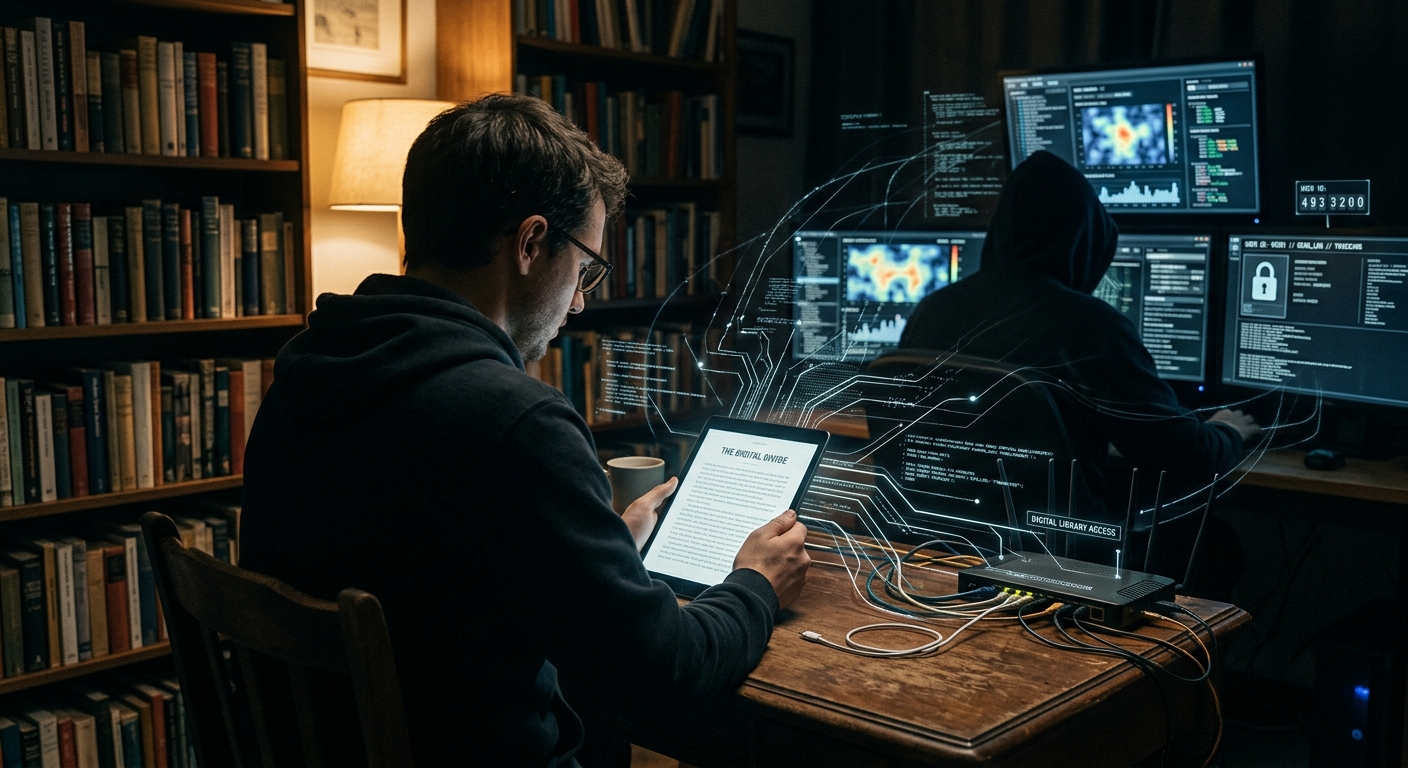
In stark contrast, modern e-readers, smartphone reading apps, and digital book subscriptions operate as sophisticated tracking devices. When a user engages with a digital text, the host platform routinely collects granular telemetry data. Companies actively monitor which books are browsed, the exact duration spent on a specific page, the passages highlighted, and private digital notes in the margins. This continuous, invisible monitoring strips away the anonymity readers have enjoyed for generations.
The aggregation of behavioral data paints an incredibly intimate portrait of an individual’s thoughts, fears, and vulnerabilities. From a political manifesto to a medical text detailing illness, what a person reads directly reveals their most private concerns. Without robust safeguards, this digital tracking creates a scenario where the simple act of reading becomes an exercise in constant surveillance, leaving consumers vulnerable to algorithmic profiling and unwarranted exposure.
The Historical Context: Digitization and Legal Battles
The tension between digital access and reader privacy is not novel; its roots trace back to early, ambitious efforts to scan the world’s copyrighted literature. In the mid-2000s, massive corporate initiatives to create universal digital libraries led to monumental legal clashes between technology giants, authors, and publishers. The resulting class-action lawsuits and proposed settlements were historic, aiming to fundamentally reshape copyright law for the modern age.
However, throughout these high-stakes negotiations, the legal focus remained almost exclusively fixated on economic interests. The dominant discussions centered around copyright infringement, revenue-sharing, and the control of “orphan works”—books whose copyright holders cannot be identified. The underlying business models relied heavily on user engagement metrics, prioritizing commercialization over the civil liberties of the end-user.
During these legal battles, civil liberties organizations consistently raised alarms. They argued that proposed legal settlements failed to address the profound privacy implications of creating centralized digital repositories of human knowledge. Critics pointed out that while settlements detailed how digital profits would be divided, they offered virtually no protections against the unprecedented tracking of reader behavior. There were no binding requirements to prevent mass collection of user data, no stipulations to mandate strict anonymization, and no guarantees that law enforcement would need a judicial warrant to access a reading history. By treating privacy as a peripheral issue, early legal frameworks set a precarious precedent.
Why the “Chilling Effect” Threatens Intellectual Freedom
At the heart of the debate over digital reader privacy is intellectual freedom—the right to seek and receive information from all points of view without restriction or fear of reprisal. When readers know, or merely suspect, that their reading habits are being constantly monitored and potentially shared with third parties, a well-documented psychological phenomenon known as the “chilling effect” takes hold.
Surveillance inherently breeds self-censorship. If a citizen is aware that their interest in unpopular political ideologies, sensitive mental health conditions, or marginalized social justice issues is being logged in a corporate database, they may voluntarily refrain from exploring those critical subjects altogether. This self-imposed censorship strikes at the foundation of a democratic society, which relies absolutely on an informed and intellectually courageous populace.
The freedom of speech is inextricably linked to the freedom to read. Historically, authoritarian regimes have understood the power of monitoring reading habits to control dissent. Even in modern democracies, the alarming lack of privacy safeguards in digital reading can severely suppress free inquiry. A university student researching a controversial thesis, or a patient exploring treatments for a stigmatized disease, should never have to weigh their need for information against the risk of future corporate profiling or government scrutiny.
The Legal Vacuum: Where Traditional Protections Fall Short
In the United States, library records have historically enjoyed incredibly robust legal protection. All fifty states and the District of Columbia have enacted statutes or constitutional provisions that safeguard the strict confidentiality of library patrons. These essential laws ensure a librarian cannot hand over a borrower’s reading history to a police officer or federal agent without a formal, court-ordered warrant.
However, these traditional legal frameworks were predominantly written for an analog world and frequently fail to encompass the complex realities of the commercial digital reading landscape. When consumers purchase e-books or subscribe to digital reading platforms, they effectively step outside the protective umbrella of state library privacy laws. Instead, their rights are governed by lengthy, non-negotiable End User License Agreements (EULAs) and corporate privacy policies primarily designed to maximize data extraction.
While some progressive legislative efforts—such as California’s pioneering Reader Privacy Act—have attempted to extend traditional library legal protections to commercial digital book services, the broader national legal landscape remains fragmented. Comprehensive federal privacy regulations in the U.S. do not explicitly address the unique sensitivities of reading data. Consequently, digital book vendors frequently reserve the right to share user data with third-party marketers and data brokers. This legal vacuum leaves millions relying solely on the temporary goodwill of technology companies.
Core Pillars of Digital Reader Privacy
To successfully bridge the widening gap between the historical ethical standards of traditional libraries and the invasive capabilities of modern platforms, comprehensive privacy frameworks must be established. Protecting reader privacy requires a firm commitment to several core pillars of data ethics:
- Data Minimization and Optional Tracking: Digital book services should minimize data collection, gathering only the information strictly necessary to deliver the requested text. Intrusive features tracking page-view durations and highlights should be disabled by default, requiring explicit opt-in consent.
- Protection Against Warrantless Disclosure: Platforms must legally commit to requiring a valid, court-issued search warrant before handing over reading records to law enforcement agencies. Companies should also notify users of such requests in advance whenever legally permissible.
- Unambiguous Transparency: Readers possess a fundamental right to know exactly what information is being compiled about their habits. Privacy policies must be written in clear language, detailing how data is used and monetized. Industry leaders should publish annual transparency reports.
- Anonymity by Design: Digital platforms should invest in architectural changes that allow users to browse catalogs, read text excerpts, and purchase literature anonymously, mimicking the privacy of paying with physical cash at a bookstore.
Frequently Asked Questions (FAQ)
What specific information do digital reading platforms collect?
Digital reading platforms collect vast telemetry data beyond just the titles you purchase. They routinely track how quickly you read, specific pages where you stop, exact passages highlighted, private notes made, and search queries within the interface. This metadata is aggregated to create detailed consumer profiles.
Why is an individual’s reading history considered highly sensitive data?
The books a person chooses to read offer a direct window into their private thoughts. Reading history can easily reveal sensitive personal details, including health concerns, sexual orientation, religious beliefs, and political affiliations. Exposing this private information can lead to severe discrimination or unwarranted surveillance.
How do traditional library privacy laws differ from e-book platforms?
Traditional library privacy is strictly protected by professional librarian ethical codes and state laws that restrict the disclosure of patron records without a judge’s order. Conversely, commercial e-book platforms operate under terms of service agreements, which grant corporations broad permission to collect data and share it with third parties.
What was the primary privacy concern during the major digital library legal settlements?
During the massive efforts to digitize copyrighted works and settle class-action lawsuits, the legal focus was on copyright infringement and author compensation. Privacy advocates warned that these settlements authorized massive digital libraries without imposing necessary restrictions on tracking, storing, and sharing user reading habits.
What immediate steps can readers take to protect their digital privacy?
Readers can take several steps to protect their privacy by regularly auditing privacy settings on their e-readers, opting out of behavioral data sharing where possible, using open-source reading applications, and utilizing digital platforms directly associated with local public libraries that adhere to strict confidentiality standards.
References
- Privacy: An Interpretation of the Library Bill of Rights — American Library Association (ALA). 2019-06-24. https://www.ala.org/advocacy/intfreedom/librarybill/interpretations/privacy
- The Google Book Settlement as Copyright Reform — Pamela Samuelson, Wisconsin Law Review. 2011-04-15. https://wlr.law.wisc.edu/wp-content/uploads/sites/1263/2011/04/Samuelson.pdf
- California Civil Code Section 1798.90 (Reader Privacy Act) — California State Legislature. 2011-10-09. https://leginfo.legislature.ca.gov/faces/codes_displaySection.xhtml?sectionNum=1798.90.&lawCode=CIV
- State Privacy Laws Regarding Library Records — American Library Association (ALA). 2023-01-01. https://www.ala.org/advocacy/privacy/statelaws
- Samuelson Clinic Students Work to Defend Library Patrons’ Right to Privacy — Berkeley Law, University of California. 2024-05-31. https://www.law.berkeley.edu/article/samuelson-clinic-students-work-to-defend-library-patrons-right-to-privacy/
Similar Articles








Read full bio of Sneha Tete


