
Digital Privacy at the U.S. Border: Know Your Rights
Learn how to protect your digital privacy and data rights at the U.S. border.
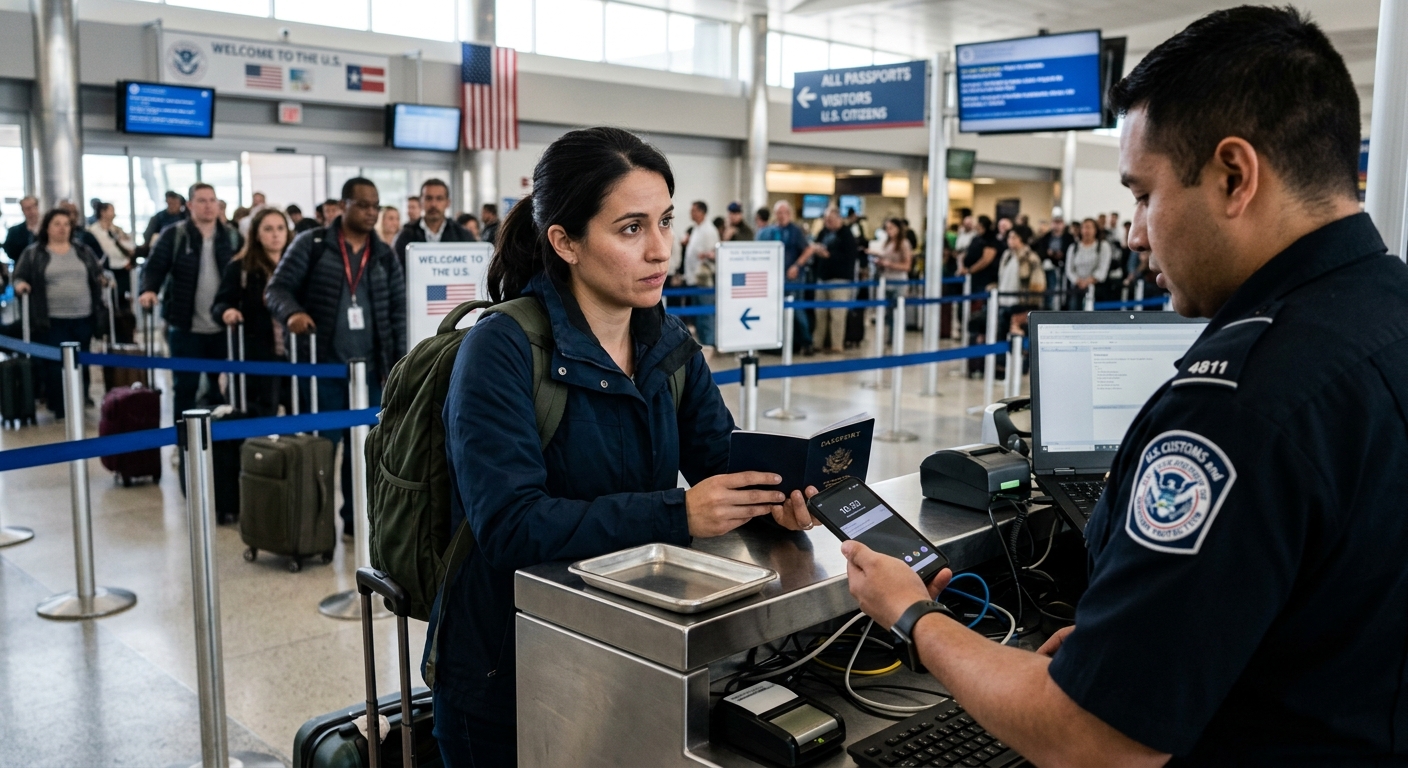
When you pack your bags for an international trip, your smartphone, laptop, tablet, and perhaps a smartwatch are likely the very first items to go in. Today’s travelers carry their entire digital lives in their carry-on luggage. But as you approach a United States port of entry, a significant constitutional collision occurs. The fundamental right to personal privacy meets the federal government’s mandate to secure the nation’s borders.
For decades, the government has exercised broad, unilateral authority to search luggage without a warrant. But does this sweeping authority naturally extend to the thousands of emails, private photos, banking applications, and sensitive medical records stored on a modern microchip? Understanding exactly how your civil liberties apply at international checkpoints is essential for anyone crossing U.S. borders today.
The tension between national security imperatives and individual civil liberties is nowhere more pronounced than at these ports of entry. Whether you are returning home from a routine business trip, arriving for a vacation, or crossing the border to seek asylum, recognizing the legal mechanisms that govern electronic device searches is vital for protecting your private information.
The Fourth Amendment and the Border Search Exception
The Fourth Amendment of the U.S. Constitution guarantees the right of the people to be secure in their persons, houses, papers, and effects against unreasonable searches and seizures. In standard domestic law enforcement interactions within the interior of the country, this foundational protection usually means that authorities must secure a warrant backed by probable cause from a judge before conducting a search.
However, the legal landscape changes dramatically when you step up to a customs booth. Historically, the judicial system has recognized a powerful doctrine known as the “border search exception.” This legal principle grants U.S. Customs and Border Protection (CBP) and Immigration and Customs Enforcement (ICE) broad powers to conduct warrantless, suspicionless searches of travelers and their physical belongings.
The original rationale for this sweeping exception was rooted entirely in national sovereignty: the government has a compelling interest in protecting the country from the entry of physical contraband, illegal weapons, unauthorized individuals, and duty-free goods. Because luggage, purses, and vehicles have traditionally been used to smuggle these physical items, courts have historically permitted border agents to search physical belongings simply because an individual is crossing the border.
The Paradigm Shift: Why Electronic Devices Are Fundamentally Different
While inspecting a suitcase for agricultural products or hidden narcotics makes logical sense under the traditional border search exception, applying that exact same framework to modern electronic devices strains constitutional logic. An electronic device is fundamentally different from a physical piece of luggage in both capacity and function.
In 2014, the U.S. Supreme Court issued a landmark ruling in Riley v. California, addressing the search of cell phones incident to arrest. The Supreme Court unanimously ruled that police officers must obtain a warrant before searching a cell phone seized from an arrested individual. Chief Justice John Roberts noted that modern cell phones are essentially “minicomputers” that hold “the sum of an individual’s private life”. The Court firmly rejected the notion that searching a phone was materially similar to searching a physical wallet, recognizing that digital data encompasses immense quantities of sensitive, historical, and deeply personal information.
Although the Riley decision did not specifically address border searches, its underlying philosophy has profoundly influenced the ongoing debate over digital privacy at ports of entry. Privacy advocates and legal scholars argue that the massive storage capacities of laptops and smartphones, combined with their access to cloud-based data, mean that a forensic border search of a device can be far more invasive than a thorough physical search of a traveler’s home.
Current Policies and Practices by Customs and Border Protection
Despite the obvious distinctions between a physical suitcase and a highly advanced smartphone, federal border agencies continue to assert the authority to search digital devices. Under updated CBP policies, such as Directive No. 3340-049B issued in early 2026, electronic devices are broadly defined to include smartphones, laptops, tablets, flash drives, SIM cards, smartwatches, and even vehicle infotainment systems and drones.
The latest CBP directive establishes two distinct tiers of digital searches that travelers may encounter at the border:
- Basic Searches: This involves an agent manually scrolling through a traveler’s device to inspect contacts, photos, text messages, and applications. Under current agency policy, agents can execute a basic search at their own discretion, with or without any reasonable suspicion of wrongdoing.
- Advanced (Forensic) Searches: If an agent connects external electronic equipment to physically copy, extract, decrypt, or heavily analyze the device’s data, this is classified as an advanced search. CBP policy mandates that advanced searches require “reasonable suspicion” of illegal activity or a national security concern, along with explicit supervisory approval.
According to data released by CBP, the agency conducts tens of thousands of electronic device searches annually. In recent fiscal years, CBP executed over 47,000 electronic device searches at various border crossings. While the agency frequently points out that this represents a tiny fraction of total international travelers, the absolute number of searches means that thousands of citizens and non-citizens alike are subjected to invasive digital reviews every year.
The Fractured Legal Landscape and Circuit Court Rulings
The legal foundation supporting warrantless digital border searches is actively fracturing, leading to a complex patchwork of civil rights that depends entirely on which U.S. court jurisdiction a specific port of entry falls under. Because the Supreme Court has not yet issued a definitive ruling explicitly applying the Riley standard to the border search exception, federal circuit courts have issued wildly varying interpretations.
Some appellate courts, such as the Ninth Circuit and the Fourth Circuit, have recognized the highly intrusive nature of digital searches. They have ruled that border agents must possess reasonable suspicion before conducting advanced, forensic searches of electronic devices, though they still generally permit basic manual searches without suspicion.
Conversely, other jurisdictions have taken a much broader approach, holding that border agents do not need any individualized suspicion to conduct forensic searches of cell phones. This stark circuit split means that a traveler arriving at an airport in one state may face a completely different constitutional standard than a traveler landing just a few states away.
More recently, some federal district court judges have pushed the envelope further, questioning whether the border search exception should apply to digital data at all. In cases like United States v. Sultanov (2024), federal judges have ruled that border agents must secure a warrant based on probable cause before executing searches of electronic devices. These judges argue that such searches are inherently “nonroutine” due to their intrusive nature, and that examining digital data does very little to serve the historical purpose of the border search exception—namely, intercepting physical contraband. These rulings reflect a growing judicial awareness that civil liberties should not simply evaporate because a traveler approaches an international boundary.
Practical Strategies for Safeguarding Your Digital Data
Given the uncertain and constantly shifting legal terrain, travelers must take proactive measures to safeguard their sensitive information before they even pack their bags. If you are an attorney carrying privileged client data, a journalist protecting confidential sources, a medical professional, or simply an individual who values their personal privacy, consider the following data minimization and security strategies:
- Travel with Minimal Data (Burner Devices): The most effective way to prevent border agents from accessing your entire digital life is to ensure that the data is not physically present on the device crossing the border. Consider traveling with a sanitized “burner” laptop or a secondary smartphone wiped clean of highly sensitive documents.
- Utilize Cloud Storage Responsibly: CBP policies generally restrict agents to searching data that is physically stored on the device itself, rather than data hosted in the cloud. Logging out of applications, deleting local copies of sensitive files, and accessing them via secure cloud platforms only after you have cleared customs can significantly mitigate risks.
- Employ Strong Encryption and Passcodes: Ensure that your devices are fully encrypted. Additionally, power down your device before approaching the customs checkpoint. When a device is powered off, it requires a primary alphanumeric passcode to decrypt the file system upon reboot. Rely on strong passcodes rather than biometric unlocks (like facial recognition or fingerprint scans), as the legal protections surrounding compelled biometric unlocking remain highly contested in courts.
- Understand the Scope of Business Policies: If you are traveling for work, consult your employer’s IT or legal department regarding the transportation of proprietary or confidential data. Many corporations mandate specific security protocols for international travel to comply with data privacy regulations and protect trade secrets.
Knowing Your Rights: What to Do If You Are Stopped
Experiencing a secondary screening at the border can be an intimidating and highly stressful ordeal. While you cannot physically stop an armed federal agent from taking your device, understanding how to navigate the interaction can protect your legal standing and civil liberties.
If an agent demands access to your smartphone or laptop, you have the right to politely but firmly state that you do not consent to a search of your device. Saying “I do not consent to this search” ensures that the interaction is legally recorded as non-consensual, which can be critical if the search is later challenged in a court of law.
However, non-consent does not mean physical obstruction. You should never lie to a federal agent, never provide false passwords, and never physically resist an officer. Doing so can result in serious criminal charges, including obstruction of justice.
The consequences of refusing to provide a passcode depend heavily on your immigration status. If you are a U.S. citizen, border agents cannot deny you re-entry into the United States for refusing to unlock your device. However, they may detain you for several hours, confiscate your device for weeks or months to attempt forensic extraction, and subject you to intense questioning. If you are a foreign national, including a lawful permanent resident or visa holder, the stakes are significantly higher. Refusing to comply with a CBP officer’s demand can result in being denied entry to the United States and having your visa revoked.
Frequently Asked Questions (FAQs)
Can border agents legally force me to provide my device password?
Border agents can demand your password, but they cannot physically force you to speak it. However, refusing to provide your passcode can result in your device being seized and held for an extended period for forensic cracking. For non-U.S. citizens, refusal can lead to severe immigration consequences, including immediate deportation or denial of entry.
Does being a U.S. citizen grant me special digital privacy rights at the border?
U.S. citizens have the absolute legal right to re-enter the country. This means CBP cannot deny a citizen entry merely for refusing to unlock a phone. However, citizens are still subject to the exact same device confiscation, detention, and search protocols as foreign nationals. Your citizenship protects your entry, but not necessarily your device.
How long can CBP keep my electronic device if they seize it?
Under internal CBP policies, devices can typically be detained for a brief, reasonable period, generally defined as up to five days. However, this period can be officially extended with supervisory approval. In practice, many travelers have reported their devices being held for several weeks or even months while undergoing forensic analysis at remote government facilities.
Can border agents read my un-downloaded emails in the cloud?
According to internal CBP directives, agents are technically only permitted to search information that is physically resident on the device itself at the time of the border crossing. They are instructed not to intentionally access data hosted solely on remote servers. Placing your device in “Airplane Mode” before inspection is a highly recommended practice to ensure that remote data is not inadvertently downloaded during a basic search.
Conclusion
The intersection of digital technology and border security remains one of the most volatile and heavily debated areas of constitutional law today. As our smartphones and laptops evolve into comprehensive digital archives of our personal and professional lives, the archaic justifications for warrantless border searches appear increasingly inadequate. The notion that a digital device is legally equivalent to a canvas suitcase is a legal fiction that is slowly being dismantled by lower courts.
While federal courts continue to slowly adjudicate the boundaries of the Fourth Amendment in the digital age, the responsibility largely falls on the individual traveler to protect their own data. By understanding the prevailing CBP policies, staying informed about legal shifts in your specific jurisdiction, and employing rigorous data hygiene practices, modern travelers can successfully navigate international borders without unnecessarily compromising their fundamental civil liberties.
References
- CBP Directive No. 3340-049B: Border Search of Electronic Devices — U.S. Customs and Border Protection. 2026-02-02. https://www.cbp.gov/document/directives/cbp-directive-no-3340-049b-border-search-electronic-devices
- Riley v. California, 573 U.S. 373 — U.S. Supreme Court / Justia. 2014-06-25. https://supreme.justia.com/cases/federal/us/573/373/
- Crossing Borders with Electronics: Know Your Rights and Risks — Womble Bond Dickinson. 2025-04-22. https://www.womblebonddickinson.com/us/insights/alerts/crossing-borders-electronics-know-your-rights-and-risks
- Is Exception to Warrantless Searches at Border Changing for Electronic Devices? — Jackson Lewis P.C. 2024-10-21. https://www.jacksonlewis.com/insights/exception-warrantless-searches-border-changing-electronic-devices
Similar Articles








Read full bio of Sneha Tete


