
Digital IDs at Checkpoints: Security vs. Civil Liberties
The TSA's digital ID push raises major privacy and civil liberties concerns.
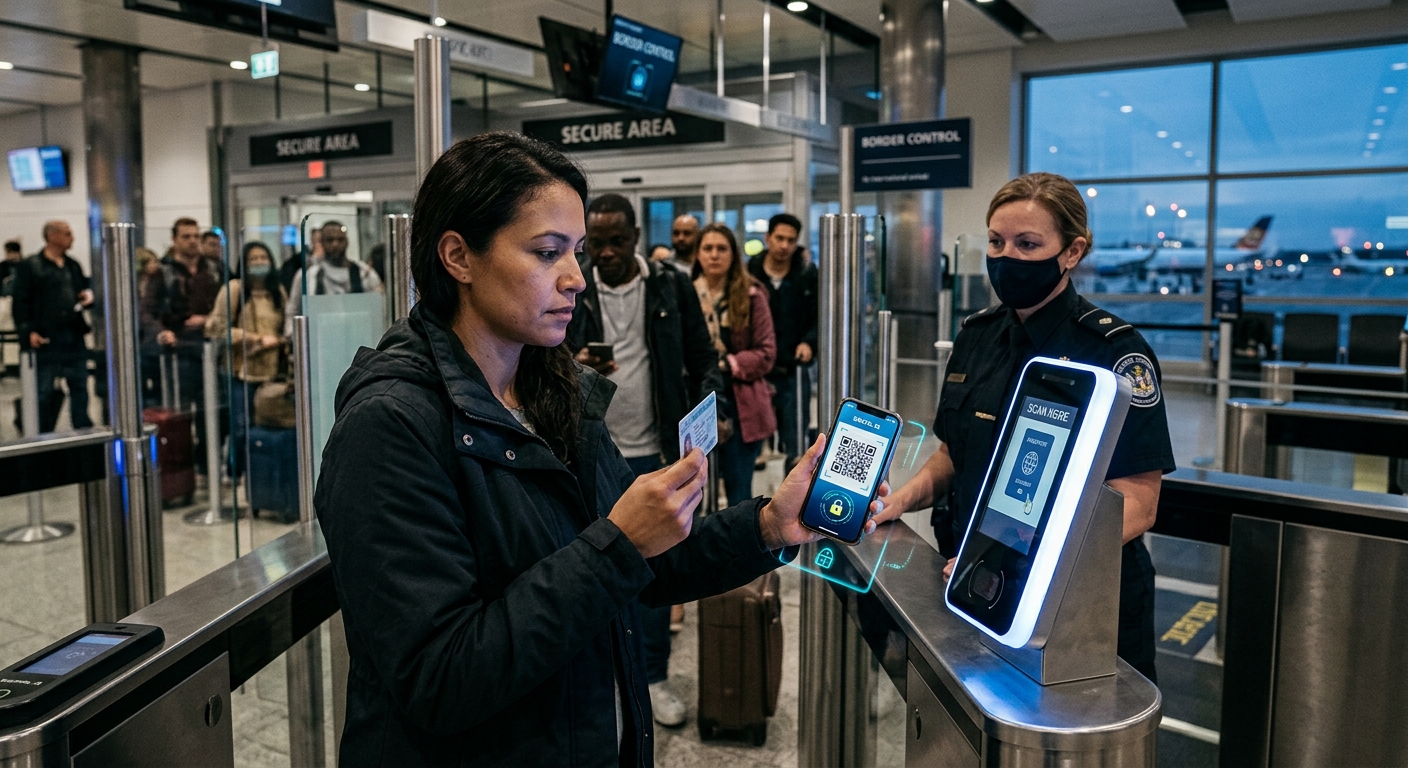
The concept of personal identification is currently undergoing its most significant evolution since the introduction of the modern photograph-based driver’s license. For decades, verifying identity involved handing over a physical piece of plastic or a passport booklet to a security officer. Today, the ubiquity of smartphones has catalyzed a massive push to digitize the contents of our physical wallets. In the United States, the Transportation Security Administration (TSA) is acting as a primary catalyst for this shift, gradually introducing technology that accepts Mobile Driver’s Licenses (mDLs) and other digital identity credentials at airport security checkpoints.
While proponents of the technology argue that digital IDs offer unprecedented convenience and enhanced security against fraudulent documents, privacy advocates and civil liberties organizations are sounding the alarm. Moving from an analog system, where an ID card is visually inspected and handed back, to a digital ecosystem involves complex cryptographic handshakes and data exchanges. Without stringent privacy safeguards baked directly into the technical standards and legal frameworks governing these systems, the widespread adoption of digital IDs could inadvertently build the infrastructure for unprecedented state surveillance. As federal agencies deliberate on national standards for these credentials, it is crucial to analyze not only how digital IDs function but also the hidden risks they pose to individual privacy, autonomy, and equity.
Understanding Mobile Driver’s Licenses (mDLs)
To comprehend the privacy implications of digital IDs, one must first understand what a Mobile Driver’s License actually is. An mDL is not a static digital image or a photograph of a physical ID saved in a mobile device’s camera roll. Rather, it is a highly secure, cryptographically verifiable digital credential issued directly by a trusted government authority, such as a state’s Department of Motor Vehicles.
These digital credentials are built upon intricate international technical frameworks, primarily the ISO/IEC 18013-5 standard, which was published to ensure global interoperability and security. Under this standard, when a traveler presents an mDL at a TSA checkpoint, their device communicates with a digital reader using technologies like Near Field Communication (NFC) or a secure QR code scan. The mobile device transmits specific cryptographic keys that the reader then validates against the state issuer’s public key to confirm the document is authentic and hasn’t been altered.
One of the theoretical advantages of this standard is “data minimization.” In a physical world, showing a driver’s license to prove your age reveals your exact date of birth, home address, physical characteristics, and license number. A properly configured digital ID system can selectively disclose information. For instance, it can simply transmit a cryptographic affirmation that the holder is over a certain age, without revealing their exact birthdate or address. However, the extent to which these privacy-preserving features are mandated versus merely optional is at the heart of the current debate surrounding federal adoption.
The Intersection of the REAL ID Act and Digital Transformation
The push for digital identity at airport checkpoints is heavily intertwined with the ongoing implementation of the REAL ID Act. Enacted by Congress to establish minimum security standards for state-issued driver’s licenses, the REAL ID Act’s mandates have driven federal agencies to consider how mobile credentials can meet or exceed these physical security requirements.
The TSA has actively collaborated with the Department of Homeland Security (DHS) and the National Institute of Standards and Technology (NIST) to develop pathways for integrating mDLs into the federal security apparatus. The agency has rolled out digital ID acceptance at dozens of major airports, allowing passengers who have added their state IDs to digital wallets to tap their phones against a reader instead of handing over a physical card.
From the government’s perspective, this digital transition is highly beneficial. It streamlines the checkpoint process, reduces the bottleneck of visual document inspections, and mitigates the risk of sophisticated counterfeit IDs. Because the TSA reader directly verifies the cryptographic signature of the issuing state, a forged digital ID is significantly harder to produce than a fake physical card. However, civil liberties advocates argue that using the REAL ID mandate to force the normalization of digital IDs without ironclad privacy protections represents a dangerous oversight.
Core Privacy Concerns: The Risk of an Unseen Panopticon
While the technological promise of mDLs is impressive, the architectural choices made during their implementation can dramatically alter their impact on civil liberties. Organizations dedicated to defending privacy rights have raised several critical red flags regarding the standards currently being proposed and tested for widespread digital ID rollout.
The most pressing concern revolves around the potential for centralized tracking. In a physical transaction, handing your ID to a TSA agent leaves no digital footprint. The agent looks at the card, verifies your face, and hands it back. In a digital environment, the transaction generates data. If a digital ID system is designed poorly, it could require the mobile device or the verifying reader to “phone home” to the issuing authority to check the validity of the credential in real-time.
This capability creates an ongoing log of everywhere the individual presents their ID. It would allow state authorities to build a comprehensive database of a person’s movements, activities, and associations. Furthermore, if the connection between the mobile device and the reader is not localized and encrypted, the data being transmitted could be vulnerable to interception by malicious actors or unauthorized surveillance tools. Privacy advocates argue that any federal standard must explicitly prohibit systems that generate centralized authentication logs.
The Perils of Device Handover and Digital Searches
Another significant legal and practical concern is the mechanics of how the digital ID is presented to an authority figure. In the current physical paradigm, you hand over a piece of plastic. When using an mDL, the credential lives on a device that also contains an individual’s most intimate personal information, including emails, financial records, medical data, and location history.
If a digital ID system requires an individual to hand over an unlocked smartphone to a TSA agent or law enforcement officer, it opens a Pandora’s box of constitutional issues. Handing an unlocked phone to an officer could provide them with an opportunity to view notifications, access applications, or copy data under the guise of verifying the ID.
To mitigate this, robust digital ID systems must rely exclusively on contactless data transfer. The user should be able to tap their device against a reader or display a QR code while retaining physical possession of the phone at all times. Furthermore, the operating system must allow the digital ID to be presented while the rest of the device remains securely locked.
Systemic Inequity and the Risk of a Two-Tiered Society
Beyond the direct privacy and security risks, the transition to digital identity systems raises profound questions about equity and accessibility. The underlying assumption of the mDL rollout is that travelers possess a modern smartphone capable of securely storing cryptographic keys, maintaining updated operating systems, and interacting with specialized readers.
Millions of individuals do not have access to such devices due to economic constraints, personal choice, or lack of technological literacy. Older adults, low-income communities, and individuals living in rural areas are disproportionately less likely to own the latest smartphones required for seamless mDL integration. If digital IDs become the default standard, it risks creating a two-tiered system of citizenship and mobility.
Civil rights groups emphasize that physical identification must permanently remain a fully supported and equally efficient alternative to digital IDs. The decision to use a digital ID must be strictly voluntary. If government agencies gradually degrade the experience of using physical IDs to coerce the public into adopting digital tracking mechanisms, they are fundamentally punishing marginalized populations who cannot participate in the digital ecosystem.
Charting a Safer Path Forward for Digital Verification
The evolution of digital identification is not inherently malicious, but its safety depends entirely on the guardrails placed upon it. To harness the convenience of mDLs without sacrificing fundamental freedoms, policymakers, the TSA, and state issuing authorities must commit to a privacy-by-design framework.
Federal standards must mandate strict decentralized verification. When an ID is checked, the cryptographic validation must occur locally between the user’s device and the reader, completely eliminating any requirement for the system to log the transaction in a central database. Additionally, data minimization must be enforced at the protocol level. A security checkpoint requires verifying a specific set of details; it does not need to extract a passenger’s full demographic profile from their digital wallet.
Finally, explicit legal protections must be enacted to ensure that the presentation of a digital ID can never be legally interpreted as consent to search the mobile device. As the TSA continues to modernize its checkpoints, the agency has an obligation to prioritize the civil liberties of the traveling public just as highly as operational efficiency.
Frequently Asked Questions (FAQs)
Are digital IDs or Mobile Driver’s Licenses (mDLs) currently mandatory for air travel?
No. The use of digital IDs at TSA checkpoints is entirely optional. Passengers can continue to use compliant physical driver’s licenses, passports, or other approved physical identification documents to verify their identity. The system is designed to be an alternative, not a mandate.
Can an agent search my phone if I use a digital ID?
When designed correctly, digital ID systems operate contactlessly (e.g., via a tap or QR scan) while your phone remains locked and in your physical possession. You should never be required to hand an unlocked device to an agent. However, privacy advocates are pushing for stronger legal frameworks to explicitly forbid device searches during ID checks.
What happens if my smartphone battery dies before I reach the security checkpoint?
If your device is powered off or runs out of battery, you will not be able to present your digital ID to the reader. The TSA strongly advises all travelers utilizing digital wallets to carry their physical ID as a backup to avoid delays, missed flights, or being denied entry to the secure area.
Does an mDL replace my physical driver’s license entirely?
Currently, an mDL serves as a companion to your physical license, not a complete replacement. While accepted at select TSA checkpoints and by some businesses for age verification, law enforcement agencies and many institutions still require a physical card. You must always carry your physical ID when operating a motor vehicle or traveling.
References
- What are digital IDs and mobile driver’s licenses? — Transportation Security Administration. 2026. https://www.tsa.gov/travel/frequently-asked-questions/what-are-digital-ids-and-mobile-drivers-licenses
- From DMV to Wallet: Understanding Verifiable Digital Credential Issuance — National Institute of Standards and Technology (NIST). 2026-04-28. https://www.nist.gov/blogs/identity-trust/dmv-wallet-understanding-verifiable-digital-credential-issuance
- Navigating the Risks and Rewards of Digital ID Systems — Open Government Partnership. 2024-03-26. https://www.opengovpartnership.org/stories/navigating-the-risks-and-rewards-of-digital-id-systems/
- Digital Identity Leaders and Privacy Experts Sound the Alarm on Invasive ID Systems — American Civil Liberties Union (ACLU). 2025-06-02. https://www.aclu.org/press-releases/digital-identity-leaders-and-privacy-experts-sound-the-alarm-on-invasive-id-systems
Similar Articles








Read full bio of Sneha Tete


