
The Digital ID Dilemma: State Actions and Privacy Risks
Why state lawmakers must block dangerous digital ID networks.
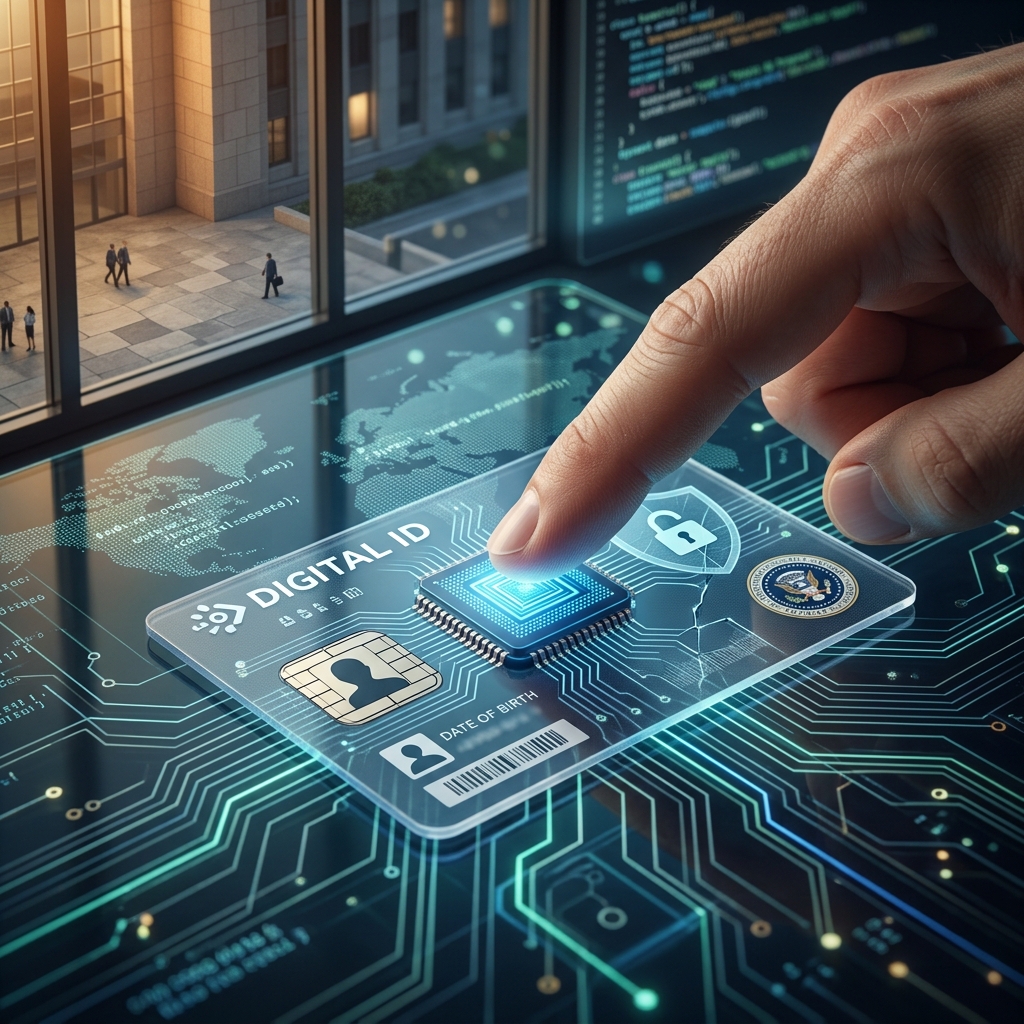
The Digital Transition: Replacing the Physical Wallet
The rapid digitalization of modern society has radically transformed how we interact with the world around us. From banking and healthcare to communication and commerce, nearly every facet of daily life has been streamlined into applications hosted on our mobile devices. As physical cash gives way to digital wallets and physical keys are replaced by smart locks, the digitalization of government-issued identification was an inevitable progression. Proponents argue that bringing identity into the 21st century will reduce bureaucratic friction, eliminate the delays of physical credential replacement, and offer sophisticated tools for combating identity fraud.
However, this monumental shift is not merely a technological upgrade; it represents a fundamental rearchitecting of societal trust. Over the past decade, the rapid digitization of everyday life has systematically replaced physical tokens with digital equivalents. The next logical frontier for technology companies and government agencies is the digitization of our most critical document: the government-issued identity card. Yet, this seemingly convenient shift carries immense implications for civil liberties. The transition toward a digital identity ecosystem—if left unchecked by rigorous legislative safeguards—threatens to fundamentally alter the relationship between the citizen and the state.
If state governments rush to deploy these systems without rigorously evaluating the long-term consequences, they risk constructing an invisible, inescapable web of surveillance that monitors citizens precisely when they are at their most vulnerable. Without proactive intervention from state legislatures, the rollout of mobile driver’s licenses could inadvertently pave the way for a centralized, highly surveilled national identity system. The responsibility falls on local lawmakers to ensure that convenience does not come at the cost of constitutional freedoms.
The Mechanics of Mobile Driver’s Licenses
To understand the threat, one must first understand the technology. State governments across the United States are actively developing and deploying mobile driver’s licenses (mDLs). Unlike a simple photograph of a plastic card stored in a smartphone’s camera roll, an mDL is a highly sophisticated, cryptographically verifiable digital credential. When a citizen approaches a transportation checkpoint or a local business, the mDL does not operate by simply displaying a high-resolution image on the screen. Instead, it utilizes encrypted communication protocols.
Through Near Field Communication (NFC) or a dynamically generated Quick Response (QR) code, the citizen’s device establishes a secure, localized connection with the verifier’s digital reader. The mDL transmits cryptographic attestations—essentially mathematical proofs signed by the state’s Department of Motor Vehicles—confirming that the credential is authentic, active, and unaltered. The underlying standards, such as ISO/IEC 18013-5, are designed to facilitate global interoperability, meaning an mDL issued in New York could technically be authenticated by a scanner in Tokyo. Furthermore, the National Institute of Standards and Technology (NIST) has published comprehensive guidelines, such as NIST SP 1800-42A, accelerating the adoption of digital identities for high-assurance sectors like financial services.
However, while the technical specifications dictate how the data is packaged and transmitted securely, they largely leave the implementation of critical privacy protections up to the individual issuing authorities. This architectural flexibility is a double-edged sword; it allows states to innovate, but it also provides a dangerous loophole for surveillance if lawmakers fail to mandate privacy-first configurations.
The REAL ID Act: A Dangerous Precedent for Centralization
To fully grasp the gravity of the current digital identity push, one must look at the historical precedent of the physical identity framework in the United States. Following the recommendations of the 9/11 Commission, Congress passed the REAL ID Act in 2005. This legislation effectively imposed federal security standards on state-issued driver’s licenses, creating a de facto national identity baseline. The Act mandated specific physical security features and required states to share motor vehicle database information.
When the REAL ID Act was first introduced, it faced immense backlash from civil liberties groups and state legislatures alike. Critics correctly identified that forcing states to centralize their database architectures and standardize their identity materials was tantamount to creating a national ID card—a concept historically rejected by the American public. Many states even passed laws initially refusing to comply with the federal mandate, citing privacy concerns and the burden of unfunded federal requirements.
While the REAL ID Act standardized the physical materials of state IDs to enhance security, applying this same centralization logic to a digital ecosystem poses exponentially higher risks. A standardized physical card still relies on analog verification; you hand it to a security guard, they look at it, and you walk away. A standardized digital identity network, however, possesses the inherent capability to log, track, and aggregate data points every time the credential is used. If a unified, centralized architecture for digital IDs is mandated, it could easily transform into a nationwide tracking grid.
The Core Privacy Threats of a Centralized Framework
Real-Time Tracking and the Death of Anonymity
The most severe threat posed by an unregulated digital identity system is the total erosion of daily anonymity. When a citizen uses a plastic driver’s license to buy alcohol at a grocery store or enter a restricted building, that transaction exists solely in that localized moment. The physical card does not transmit a record of that interaction to a central state database. Conversely, poorly designed mobile driver’s licenses can ‘phone home.’ If an mDL requires a persistent network connection to authenticate against a centralized state server every time it is presented, the state government—and potentially the third-party tech vendors managing the infrastructure—will possess a real-time ledger of a citizen’s movements and activities. This granular tracking capability is entirely incompatible with a free society.
Cybersecurity and the Ultimate Honeypot
Furthermore, centralizing the authentication infrastructure creates an irresistible target for cybercriminals and hostile nation-states. If authentication requires validating credentials against a central government server in real time, that server becomes a monumental honeypot. In an era where massive data breaches are routine—impacting credit bureaus, healthcare providers, and federal agencies alike—centralizing the real-time identity pings of millions of citizens is incredibly reckless. Should malicious actors breach this central architecture, they would gain access not just to static identity files, but to the behavioral metadata of an entire population, mapping out exactly when and where specific individuals are verifying their identities.
Function Creep and the Push for Mandatory Adoption
Another major concern is ‘function creep.’ What begins as an optional, convenient alternative to a physical card for passing through airport security can rapidly mutate into a mandatory requirement for basic participation in modern life. We are already witnessing a legislative push in several jurisdictions to mandate age verification for accessing certain social media platforms and digital content. If mDLs become the standard, it is highly likely that internet service providers, financial institutions, and digital platforms will begin requiring citizens to bind their digital ID to their online profiles.
This fusion of physical identity and digital activity would obliterate the concept of anonymous internet browsing. If online platforms, healthcare providers, and essential businesses begin mandating digital IDs for access, citizens who opt out for privacy reasons will be effectively marginalized. Global pushback against intrusive biometric and digital ID systems is already visible; for example, privacy regulators in Spain temporarily banned the iris-scanning digital identity project Worldcoin due to severe data protection concerns and the unchecked processing of sensitive biometric data.
A Legislative Blueprint for State Lawmakers
Because the issuance of driver’s licenses and state IDs falls exclusively under the jurisdiction of state governments, state legislatures represent the primary and most powerful defense against a privacy-invasive national identity system. Lawmakers must not passively allow Departments of Motor Vehicles to adopt proprietary digital ID platforms from tech vendors without strict statutory guardrails. Proactive legislation is required to protect citizens.
First and foremost, state laws must require that any digital identity system utilize a decentralized, device-centric architecture. Authentication should occur locally between the citizen’s smartphone and the verifier’s device using secure local protocols, completely bypassing remote government servers. Secondly, legislation must mandate strict data minimization, leveraging cryptographic technologies like zero-knowledge proofs. If a citizen needs to prove they are over 21, the mDL should only transmit a cryptographic ‘Yes’ or ‘No’ to the verifier, rather than handing over the citizen’s exact date of birth, home address, and full name. Verifiers should also be legally prohibited from retaining or storing this data after the transaction is complete.
- Prohibit Unwarranted Device Searches: Handing a smartphone to a police officer to present an mDL must not legally constitute consent for a search of the entire device.
- Ensure Physical Alternatives: The state must legally guarantee that physical driver’s licenses will remain permanently valid, universally accepted, and entirely free from penalties for those who opt out of digital versions.
- Mandate Open Source Transparency: The core software powering the state’s digital identity infrastructure should be open source, allowing independent cybersecurity researchers to audit the code for hidden tracking mechanisms.
Comparing Digital ID Implementations
Understanding the technical disparities between a privacy-respecting system and a surveillance-prone system is critical for policymakers tasked with drafting protective legislation.
| System Feature | Privacy-Preserving Digital ID | Surveillance-Prone Digital ID |
|---|---|---|
| Verification Architecture | Local, offline verification via Bluetooth/NFC. | Requires persistent internet connection; pings central servers. |
| Data Disclosure | Minimal disclosure (e.g., age verification only via zero-knowledge proofs). | Transmits full identity profile for every single transaction. |
| Tracking Capabilities | No centralized logging of when, where, or why the ID is used. | Creates a highly detailed, real-time digital trail of user activities. |
| Citizen Choice | Strictly voluntary with robust physical ID alternatives permanently protected. | De facto mandatory; physical IDs slowly phased out, penalized, or unaccepted. |
Balancing Innovation with Civil Liberties
The progression toward digital credentialing is likely inevitable, driven by consumer demand for frictionless experiences and institutional desires for streamlined, fraud-resistant identity verification. However, technological inevitability does not mandate the sacrifice of fundamental privacy rights. We possess the cryptographic tools, such as zero-knowledge proofs and decentralized identifiers, necessary to build mobile driver’s licenses that are exponentially more secure than plastic cards, without transforming them into instruments of state or corporate surveillance.
The responsibility now rests squarely on the shoulders of state lawmakers. They must look beyond the glossy presentations of technology vendors and recognize the profound civil liberties implications of the infrastructure they are commissioning. By enacting proactive, ironclad privacy legislation today, states can prevent the realization of a nightmarish centralized identity system tomorrow, ensuring that the digital future empowers citizens rather than tracking them.
Frequently Asked Questions (FAQ)
What exactly is a mobile driver’s license (mDL)?
A mobile driver’s license (mDL) is a highly secure, cryptographically verified digital representation of your physical driver’s license. Stored in a digital wallet on a smartphone, it allows individuals to prove their identity or age through secure wireless data transmission rather than physically handing over a plastic card.
Why are civil rights advocates concerned about digital IDs?
Advocates worry that poorly designed digital ID systems could function as a pervasive tracking mechanism. If a digital ID connects to a central government server every time it is used, it creates a detailed, real-time log of a citizen’s movements, purchases, and activities, fundamentally eroding personal privacy and anonymity.
Is it mandatory to get a digital driver’s license in the United States?
Currently, digital driver’s licenses are entirely optional in the states where they are offered. Privacy advocates are heavily lobbying state legislatures to pass binding laws ensuring that physical IDs remain permanently valid and that adopting a digital ID remains a strictly voluntary choice free from institutional coercion.
How can data minimization improve digital ID privacy?
Data minimization ensures that only the specific information required for a transaction is shared. For example, if you are entering a bar, a privacy-preserving digital ID system will only share a cryptographic verification that you are over 21, completely withholding your exact birthdate, home address, physical characteristics, and driving restrictions from the bouncer.
References
- NIST Special Publication 1800-42A: Digital Identities—Mobile Driver’s License (mDL) — National Institute of Standards and Technology. 2024-03-13. https://www.nccoe.nist.gov/projects/digital-identities-mdl
- REAL ID Act Guidelines — U.S. Department of Homeland Security. 2024-05-15. https://www.dhs.gov/real-id
- Spain bans Sam Altman’s Worldcoin over privacy concerns — Reuters. 2024-03-06. https://www.reuters.com/technology/spain-bans-sam-altmans-worldcoin-over-privacy-concerns-2024-03-06/
- ISO/IEC 18013-5:2021 Personal identification — ISO-compliant driving licence — Part 5: Mobile driving licence (mDL) application — International Organization for Standardization. 2021-09-30. https://www.iso.org/standard/69084.html
Similar Articles








Read full bio of medha deb


