Introduction
In the wake of rapid technological acceleration, the global hospitality sector experienced a fundamental paradigm shift: the widespread replacement of physical menus with digital Quick Response (QR) codes. Initially adopted as a touchless health measure during a time of global health crises, these pixelated squares have stubbornly remained taped to restaurant tables, bars, and cafe counters. But while the frictionless appeal of scanning a code to view options, order, and pay is undeniable, a growing chorus of consumer protection advocates is raising an alarm.
Behind the glossy interfaces of digital dining apps lies a complex, often opaque web of data harvesting and cybersecurity vulnerabilities. What appears to be a simple digital menu is frequently a gateway for third-party trackers, data brokers, and even malicious cybercriminals to access your most sensitive personal information. The meal might satisfy your appetite, but the hidden cost could be your privacy and security.
The Anatomy of a Digital Menu: How QR Codes Harvest Data
To understand the risks associated with digital menus, one must first dismantle the mechanics of the interaction. A QR code is not inherently malicious; it is simply a two-dimensional barcode that directs a smartphone’s camera to a specific URL. However, the destination URL and the infrastructure supporting it are where the complications begin. When a patron scans a restaurant’s QR code, they are rarely directed to a simple, static PDF of the menu. Instead, they are usually funneled into a sophisticated web application or prompted to download a third-party platform.
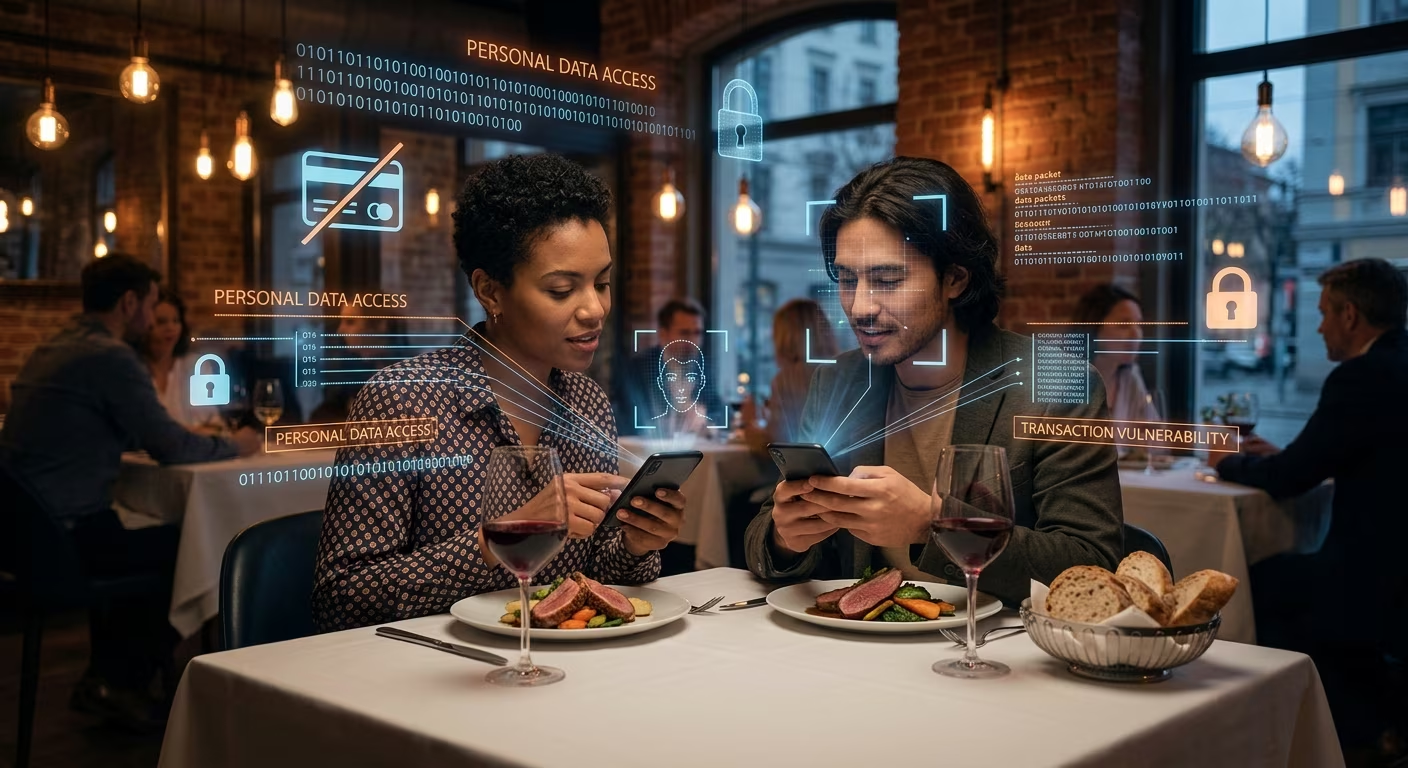
From the moment the page loads, an invisible exchange of data commences. These platforms are meticulously designed to track a wide array of user metrics. The tracking mechanisms embedded in these digital menus can pinpoint the exact table you are sitting at, the time of your visit, and the duration of your stay. As you scroll through the appetizers and entrees, the application monitors your dwell time on specific items, building a psychological profile of your preferences.
Furthermore, these systems often require users to input personal details to complete an order. By the end of a meal, a single digital menu application may have harvested:
- Personally Identifiable Information (PII): Names, email addresses, and phone numbers required for receipt delivery or order confirmation.
- Financial Data: Credit card numbers and billing addresses processed through integrated payment gateways.
- Behavioral and Location Metrics: Frequency of visits, preferred dining times, exact geolocation data, and IP addresses.
- Device Fingerprinting: Information about the smartphone’s operating system, browser type, and mobile carrier.
The Unseen Economy: Data Brokers and Your Appetite
The accumulation of this data is rarely contained within the walls of the restaurant. In many cases, the establishment itself does not own or manage the digital menu infrastructure. They contract these services out to third-party technology companies whose business models often extend beyond mere software licensing. These tech firms frequently monetize their services by acting as data brokers or partnering with them.
Once aggregated, your dining data enters a vast, unseen economy. A preference for a specific dish, combined with your exact geolocation, is packaged and sold to marketing firms. This behavioral data allows advertisers to construct precise consumer profiles for hyper-specific targeting across the internet.
The privacy implications are profound. Consumers are effectively paying for their meals twice: once with their fiat currency, and again with their behavioral data. Moreover, the terms of service and privacy policies governing these digital menus are typically buried in dense legalese, accessible only via a tiny hyperlink that hungry patrons are almost guaranteed to ignore. This creates an environment of forced consent, where individuals must surrender their privacy simply to access the basic service of viewing a menu.
Cybersecurity Threats on the Table
Beyond the legal but ethically murky practices of data brokering, QR code menus also introduce severe cybersecurity risks. As the use of QR codes has proliferated, so too has the ingenuity of cybercriminals seeking to exploit them. Official government and consumer protection agencies, including the Federal Trade Commission (FTC) and the Cybersecurity and Infrastructure Security Agency (CISA), have issued repeated warnings regarding the malicious use of these codes.
The Rise of “Quishing” (QR Phishing)
One of the most prevalent threats is a low-tech but highly effective attack known as “quishing” or QR phishing. Because QR codes are visually incomprehensible to the human eye, it is impossible to determine their destination simply by looking at them. Cybercriminals exploit this by printing their own malicious QR codes on high-quality stickers and discreetly placing them directly over the legitimate codes on restaurant tables.
When an unsuspecting diner scans the tampered code, they are redirected to a fraudulent website that perfectly mimics the restaurant’s legitimate digital menu or payment portal. Believing they are interacting with the restaurant’s system, the patron confidently enters their credit card information, which is immediately siphoned off by the attacker. By the time the diner realizes their food is not arriving and the waitstaff has no record of their order, the financial damage has already been done.
Silent Malware Downloads
In more sophisticated attacks, a malicious QR code does not merely redirect to a phishing site; it initiates an automatic download of malware onto the user’s device. Depending on the vulnerabilities present in the smartphone’s operating system or browser, scanning a tampered code can trigger the installation of trojans, spyware, or ransomware.
Once embedded in the device, this malicious software can operate silently in the background, harvesting contact lists, intercepting text messages (including two-factor authentication codes), and tracking keystrokes to steal login credentials for banking applications. The seamless nature of the QR code scan makes it an ideal vector for these types of attacks, as the user rarely anticipates a cybersecurity breach while ordering a salad.
The Societal Divide: Accessibility in Question
While privacy and security are paramount concerns, the digital menu revolution also raises critical questions about societal equity and accessibility. The wholesale transition to QR codes assumes a universal level of digital literacy and technological ownership that simply does not exist. This shift risks alienating vulnerable demographics and creating a tiered system of access to public accommodations.
Older adults often face hurdles navigating digital menus. Dimly lit rooms and complex mobile interfaces can make ordering a stressful experience. Furthermore, individuals with visual impairments may find standard QR codes entirely inaccessible without specialized screen-reading technology, which is frequently incompatible with third-party restaurant apps.
Additionally, the reliance on smartphones creates a stark economic divide. Individuals who cannot afford modern smartphones, or those who have limited data plans and battery life, are effectively barred from participating in the dining experience. A dead battery should not equate to an inability to purchase food. The insistence on digital-only menus disregards the fundamental necessity of providing an offline, physical alternative to ensure that hospitality remains inclusive for all members of society.
Safeguarding Your Digital Dining Experience
Navigating the modern dining landscape requires a proactive approach to personal cybersecurity and privacy. Both consumers and restaurateurs play a critical role in mitigating the risks associated with digital menus.
| Role | Best Practices for Security and Privacy |
|---|---|
| Consumers |
|
| Restaurateurs |
|
Regulatory Shifts and the Future of Dining Privacy
As public awareness of these issues grows, the regulatory landscape is beginning to shift. Privacy advocates are increasingly calling for legislative action to curb the unchecked data harvesting occurring in physical retail spaces. While comprehensive federal privacy legislation in the United States remains a complex battleground, state-level initiatives are making headway. Laws such as the California Consumer Privacy Act (CCPA) and its subsequent amendments are providing consumers with greater visibility into how their data is collected and the right to opt-out of its sale.
Targeted guidelines for the hospitality industry are essential. Movements advocating for a “Right to a Physical Menu” aim to enshrine offline accessibility into law. Until these regulations are widespread, the responsibility falls on consumers to remain vigilant. Convenience is a modern luxury, but it shouldn’t demand our privacy as payment.
Frequently Asked Questions (FAQs)
Are all restaurant QR codes dangerous?
No, the vast majority of restaurant QR codes are legitimate and function exactly as intended. The danger lies primarily in tampered codes (stickers placed by criminals) and the invisible data collection practices of the third-party apps that host the menus.
How can I tell if a QR code has been tampered with?
Run your finger over the QR code. If you feel a raised edge or can see that a sticker has been placed over the original print, do not scan it. Additionally, always check the URL preview on your smartphone before loading the page to ensure it matches the restaurant’s official website.
Can a QR code hack my phone automatically?
While rare, scanning a malicious QR code can direct your phone to a website that exploits browser vulnerabilities to silently download malware. Ensuring your phone’s operating system and browser are consistently updated to the latest versions significantly reduces this risk.
What should I do if a restaurant refuses to provide a physical menu?
If a physical menu is entirely unavailable, you can choose to limit the data you provide. Do not create an account, use a guest checkout option if paying digitally, or simply ask the server for recommendations and order verbally. Ultimately, you can also choose to dine at establishments that respect offline accessibility.
Is it safer to pay through the QR code app or with a physical credit card?
Paying with a physical credit card directly to the waitstaff is generally safer regarding digital data tracking. It bypasses the third-party app’s data collection and avoids the risk of entering financial details into a potentially spoofed phishing website.
References
- Scammers hide harmful links in QR codes to steal your information — Federal Trade Commission (FTC) / Alvaro Puig. 2023-12-06. https://consumer.ftc.gov/consumer-alerts/2023/12/scammers-hide-harmful-links-qr-codes-steal-your-information
- Think twice before you scan QR codes — U.S. Department of Veterans Affairs (VA News). 2024-11-14. https://news.va.gov/112674/think-twice-before-you-scan-qr-codes/
- Arizona Attorney General’s Office Warns of Fraudulent QR Codes — Arizona Attorney General’s Office. 2022-03-15. https://www.azag.gov/press-release/arizona-attorney-generals-office-warns-fraudulent-qr-codes