
The Invisible Filter: How Digital Censorship Disproportionately Harms Marginalized Communities
Examining how sweeping internet laws and biased algorithms erase vulnerable voices from the digital public square.
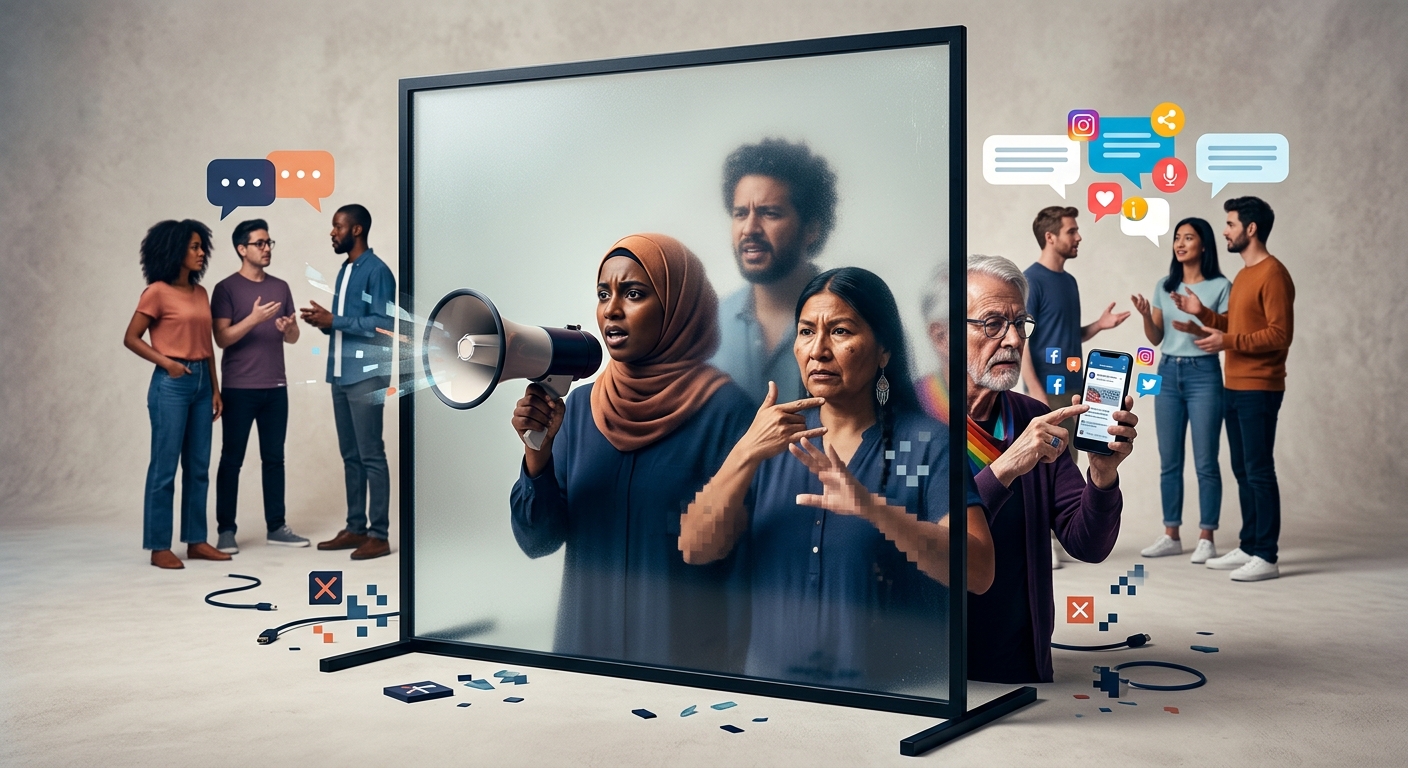
The Digital Public Square and Its Silent Borders
The internet was initially conceptualized as a borderless utopiaan expansive, democratic public square where anyone, regardless of background, socioeconomic status, or identity, could share their truth, find their community, and earn a living. However, the reality of modern digital ecosystems reveals a highly manicured and surveilled environment where the rules of engagement are dictated by corporate algorithms and sweeping legislative mandates. For the vast majority of users, the web remains a vital, uninterrupted lifeline for daily communication and commerce. But for marginalized groups, particularly the LGBTQ+ community, sex workers, and racial minorities, the digital landscape is increasingly becoming a zone of invisible exclusion and aggressive censorship.
As social media giants and digital hosting platforms scramble to comply with strict government regulations, avoid public relations crises, and sanitize their spaces for mainstream advertisers, they employ incredibly blunt regulatory tools. The collateral damage of these sanitization efforts is often the very communities that rely on these networks for survival, physical safety, and basic human solidarity. Instead of a neutral public square, the internet has developed silent borders, pushing marginalized individuals into the shadows through algorithmic suppression, shadowbanning, and arbitrary account terminations.
The Chilling Ripples of Broad Legislation
Legislative attempts to make the internet a “safer” environment have frequently backfired, producing a severe chilling effect on free expression and directly compromising the personal safety of vulnerable populations. A primary and tragic example of this phenomenon is the passage of the Allow States and Victims to Fight Online Sex Trafficking Act (FOSTA) and the Stop Enabling Sex Traffickers Act (SESTA) in the United States. Designed with the crucial and universally supported goal of combating human trafficking, these laws fundamentally altered the landscape of internet liability by amending Section 230 of the Communications Decency Act.
Before the enactment of this legislation, digital platforms were largely immune from civil liability for the content posted by their independent users. FOSTA-SESTA changed the equation entirely by holding platforms legally responsible if their networks were found to inadvertently facilitate sex trafficking. However, instead of precisely targeting illicit activities, the legislation prompted widespread, reactionary panic among technology companies. To mitigate massive legal and financial risks, platforms initiated blanket bans, abruptly shutting down discussion forums, personal advertisements, and private communication channels .
The immediate and devastating result was the displacement of consensual adult sex workers who heavily relied on these digital tools to independently screen clients, share critical safety tips about dangerous individuals, and avoid the physical hazards associated with street-based work. For example, platforms that allowed workers to securely verify client identities or share “bad date” lists were abruptly taken offline. This stripping of digital harm reduction tools forced many back to relying on abusive third-party management or returning to dangerous physical locations. Pushed off regulated and visible digital platforms, many independent workers were forced into darker, more perilous corners of the internet where they face significantly higher risks of violence, extortion, and exploitation . The legislation demonstrated a profound failure by policymakers to consult with the populations most acutely affected by its enforcement, ultimately prioritizing corporate liability protection over human life and occupational safety.
Algorithmic Overreach: When Machines Police Identity
Beyond the formal halls of government legislation, the invisible hand of artificial intelligence governs what we see, what we read, and whose voices remain hidden. Algorithmic content moderation has become the standard, cost-effective tool for managing the unfathomable volume of data uploaded to social networks every minute. Yet, these automated systems are notoriously flawed. They inherit the societal biases of the human engineers who code them and the incomplete, historically prejudiced data sets used to train their parameters. Natural language processing algorithms frequently struggle to distinguish between nuanced cultural context, the educational reclamation of marginalized language, and actual malicious intent.
For the LGBTQ+ community, this algorithmic bias manifests as a constant, underlying friction in their daily digital lives. Words fundamentally associated with queer identitiessuch as “lesbian,” “transgender,” or “queer”are routinely flagged by automated moderation systems as inherently sexual, controversial, or simply “not advertiser-friendly.” Because social media platforms operate primarily as profit-driven advertising networks, their baseline algorithmic objective is brand safety, not free expression. This leads to a pervasive phenomenon known as shadowbanning, where a user’s content is deliberately restricted in visibility without any formal notification. Creators producing crucial educational content about gender identity, advocating for fundamental civil rights, or simply sharing harmless aspects of their daily lives find their digital reach severely throttled.
A recent comprehensive survey highlighted this growing digital anxiety, noting that 71 percent of LGBTQ+ adults are concerned about bias in automated content moderation, citing a long and documented history of systems over-flagging queer and transgender content as inappropriate or dangerous . When machines are tasked with policing human identity to protect corporate bottom lines, they invariably default to a sanitized, cisheteronormative baseline, treating anything outside that incredibly narrow spectrum as a potential policy violation that must be suppressed at all costs.
The Compounding Harms on Health and Community
The suppression of digital expression is not merely an inconvenience for content creators; it represents a profound and rapidly growing public health crisis. For many marginalized individuals, particularly LGBTQ+ youth living in unsupportive households, conservative regions, or rural areas, the internet is often the only accessible source of life-saving health information and peer support. In regions where local legislation actively restricts school curricula or defunds local community centers, digital networks bridge an essential gap. When content moderation algorithms aggressively filter out open discussions regarding sexual health, gender-affirming medical care, or crisis mental health resources under the broad guise of “inappropriate content,” the real-world consequences can be dire and irreversible, actively endangering lives that rely on these invisible lifelines.
Consider the daily operational impact on harm reduction organizations and community clinics. Groups attempting to distribute factual, medical information on safe sex practices, STI prevention, or suicide intervention frequently face arbitrary account suspensions. Their highly educational posts are caught in the algorithmic crossfire of automated systems poorly designed to detect and remove illicit adult content. This technological failure effectively cuts off vulnerable populations from critical, sometimes life-saving, health resources.
Furthermore, the psychological and emotional toll of continuous, systemic censorship cannot be overstated. When marginalized individuals courageously share their lived experiences of discrimination, systemic racism, or physical violence, only to have their deeply personal narratives removed or flagged as “toxic” by platforms, it severely exacerbates feelings of societal isolation. Rigorous academic studies have demonstrated that sharing authentic encounters with racism and discrimination is disproportionately flagged by both human moderators and automated moderation algorithms. This dynamic actively hinders the potential of social media to foster inclusive dialogue and forces marginalized users into forced digital silence .
The Double Standard in Content Moderation
The structural architecture of online censorship frequently reveals a stark, deeply hypocritical double standard. While marginalized communities face stringent, unyielding enforcement and hyper-surveillance of their digital presence, powerful political figures and coordinated, well-funded hate groups frequently evade these very same restrictions. Social media moderation policies are notoriously convoluted, written in dense legalese that allows corporate platforms to enforce their rules selectively and arbitrarily.
Content moderation guidelines routinely fail to protect those who actually need structural safeguarding, instead shielding influential accounts that drive massive user engagementeven when those accounts blatantly violate safety protocols. Human rights advocates have repeatedly warned that these digital policing systems are built on a foundation of structural inequality. Legal and civil rights organizations analyzing these moderation practices have consistently noted that digital systems frequently penalize marginalized users simply for discussing current geopolitical events or calling out coordinated attacks against their own communities .
For example, a marginalized user attempting to expose severe online harassment by quoting the abusive, hateful messages they received may abruptly find their own account banned for “promoting hate speech.” Meanwhile, the original abuser’s account, which generated the initial attack, remains active and unpenalized. This asymmetric, skewed enforcement creates a hostile digital environment where vulnerable voices are systematically quieted, while the aggressive rhetoric directed at them is allowed to proliferate entirely unchecked.
Moving Toward Human-Centric Digital Governance
Addressing the systemic erasure and digital redlining of vulnerable communities requires a fundamental, ground-up paradigm shift in both governmental legislation and corporate platform policy. A more equitable and democratic digital future must move aggressively beyond blunt, fully automated solutions and punitive legal frameworks that cause disproportionate collateral damage.
- Reevaluating Intermediary Liability: There must be a critical reevaluation of laws governing internet liability. While combating severe human rights abuses is paramount, legislation must be crafted with surgical precision. Policymakers must incorporate the direct testimonies and lived expertise of the marginalized communities their laws will impact, ensuring they do not inadvertently criminalize survival tactics.
- Algorithmic Transparency: Technology companies must embrace radical, mandatory transparency regarding their proprietary AI systems. This includes regularly auditing natural language processing models for demographic and cultural bias, and allowing independent researchers to review the data sets shaping online discourse.
- Human-in-the-Loop Moderation: Artificial intelligence should be strictly utilized to assist, rather than entirely replace, human judgment. Platforms must invest heavily in human-in-the-loop moderation, employing diverse reviewers who possess the localized cultural competency required to understand nuanced discourse, slang, and marginalized community dynamics.
- Centering Vulnerable Voices: Finally, the development of digital safety guidelines must center the voices of LGBTQ+ individuals, sex workers, and racial minorities from the absolute beginning, rather than treating them as an afterthought or an acceptable casualty of broader, corporate moderation efforts.
Frequently Asked Questions (FAQs)
What are FOSTA and SESTA?
FOSTA (Allow States and Victims to Fight Online Sex Trafficking Act) and SESTA (Stop Enabling Sex Traffickers Act) are United States laws passed in 2018 aimed at curbing online sex trafficking. They amended Section 230 of the Communications Decency Act, making digital platforms legally liable for user content related to trafficking. However, to avoid immense legal liability, platforms broadly banned adult content and personal advertisements, which inadvertently pushed consensual sex workers off safe digital platforms and into significantly more dangerous physical environments.
What is shadowbanning and who does it affect?
Shadowbanning is a covert algorithmic moderation practice where a social media platform deliberately restricts the visibility of a user’s content without notifying them. Their posts may not appear in search results, public feeds, or recommendation algorithms. This disproportionately affects marginalized communities, such as LGBTQ+ creators and educators, whose content is often falsely flagged by AI algorithms as sensitive or inappropriate simply for containing identity-related keywords.
How do content moderation algorithms develop bias?
Algorithms develop bias through their foundational training data and initial human programming. If an artificial intelligence is trained on datasets that disproportionately associate words like “transgender,” “queer,” or “lesbian” with explicit or controversial material, the algorithm learns to automatically suppress or flag content containing those words. Additionally, these automated systems lack the human nuance to understand cultural context, such as a marginalized community reclaiming a word versus a malicious user utilizing it as a targeted slur.
Why is digital censorship considered a critical public health issue?
For geographically or socially isolated individuals, especially LGBTQ+ youth, the internet serves as a primary, sometimes singular, access point for critical health resources, including mental health support, suicide prevention, and inclusive sexual health education. When biased moderation algorithms erase these topics to maintain a sanitized, advertiser-friendly platform, vulnerable people lose access to life-saving information and deeply necessary supportive communities.
References
- How FOSTA/SESTA Overlooks Consensual Sex Workers in an Attempt to Protect Sex Trafficking Dickinson Law Review / Penn State Law. 2019-10-24. https://ideas.dickinsonlaw.psu.edu
- Bias, Privacy, and Promise: What LGBTQ+ Adults Say About AI LGBT Tech. 2025-10-07. https://www.lgbttech.org
- Double Standards in Social Media Content Moderation Brennan Center for Justice. 2021-08-04. https://www.brennancenter.org
- People who share encounters with racism are silenced online by humans and machines, but a guideline-reframing intervention holds promise Proceedings of the National Academy of Sciences (PNAS). 2024-04-14. https://www.pnas.org
Similar Articles








Read full bio of Sneha Tete


