
The Digital Cage: Electronic Surveillance in Immigration
How the shift toward electronic monitoring expands the carceral state into the daily lives and communities of immigrants.
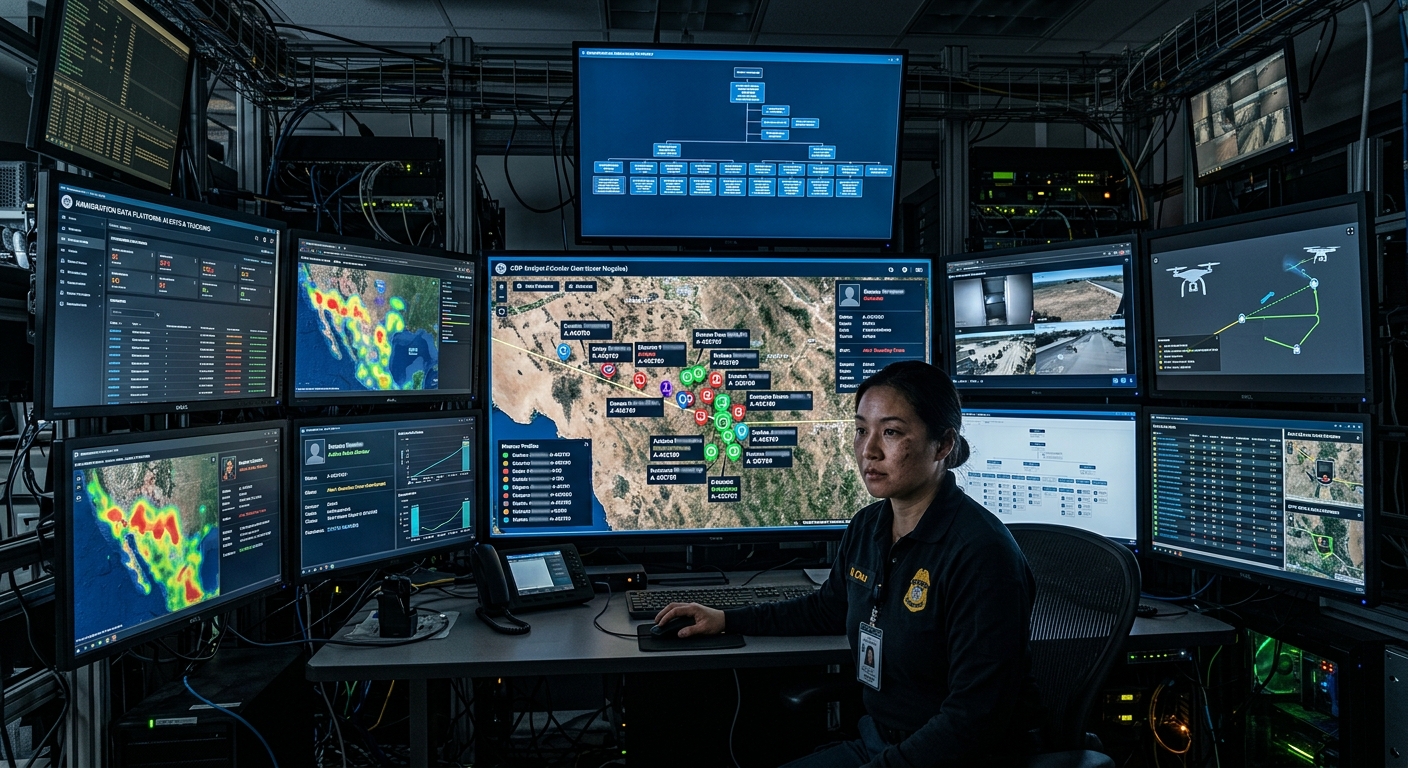
Introduction to the New Frontier of Enforcement
The landscape of immigration enforcement in the United States is undergoing a profound and highly controversial transformation. For decades, the primary mechanism for processing and controlling immigrants navigating the complex legal system has been physical incarceration. Vast networks of remote, heavily fortified detention centers have locked away hundreds of thousands of people seeking asylum or simply awaiting their immigration court hearings. In recent years, however, mounting public pressure regarding the inherently inhumane conditions of these brick-and-mortar facilities, combined with exorbitant operational costs, has prompted the federal government to rapidly pivot toward what they categorize as “Alternatives to Detention” (ATDs). Yet, as this transition unfolds across the country, a crucial question emerges: are these digital mechanisms truly humane alternatives, or simply an extension of the carceral state into the private homes and communities of marginalized populations?
While these monitoring programs are consistently marketed to the public and lawmakers as a progressive, compassionate step away from traditional jail cells, the ground reality is far more insidious. The massive proliferation of electronic surveillance—encompassing GPS ankle shackles, biometric voice recognition software, and advanced facial matching mobile applications—has essentially created a pervasive system of e-carceration. Human rights advocates argue convincingly that this technological shift does not abolish the cage; it merely digitizes it. By analyzing the rapid expansion of these surveillance technologies, the underlying economic incentives of private contractors, and the profound privacy implications, it becomes clear that true justice requires a radical departure from the current enforcement paradigm, moving away from tracking and toward genuine community support.
The Evolution of Immigration Enforcement Technology
The core concept of applying alternative conditions to physical custody in the civil immigration context is not entirely new. The Intensive Supervision Appearance Program (ISAP) was originally introduced in 2004 as a mechanism to monitor a relatively small, specific subset of individuals released from physical custody. However, the sheer scale and technological sophistication of these programs have exploded over the past decade. According to the U.S. Government Accountability Office (GAO), enrollments in ICE’s ATD programs more than doubled between 2015 and 2020 alone. By early 2024, hundreds of thousands of immigrants were being actively monitored on the agency’s non-detained docket, representing an unprecedented expansion of domestic government surveillance.
The enforcement technology itself has undergone a significant and troubling evolution. Early iterations of electronic monitoring relied heavily on bulky, stigmatizing radio-frequency ankle monitors that simply ensured a person remained at a specific home address. While ankle shackles equipped with continuous Global Positioning System (GPS) tracking are still widely utilized, the enforcement apparatus has increasingly shifted toward smartphone-based applications. The most prominent of these tools is SmartLINK, a specialized mobile app that requires users to submit to biometric facial comparison technology to establish their identity during mandatory, often randomized, check-ins. Other program participants are monitored through automated telephonic reporting systems that utilize voiceprint biometrics to verify their identity on a regular basis.
This sweeping technological pivot is frequently justified by government officials as a less restrictive, modernized means to ensure that noncitizens comply with their release conditions and attend their scheduled immigration court hearings. From a logistical standpoint, authorities argue that these digital tools allow them to rapidly manage a ballooning caseload with a limited number of field officers. However, the mass adoption of biometric apps and real-time location tracking represents a massive expansion of the state’s surveillance capabilities. Instead of being confined to a specific geographic facility, individuals are tracked continuously in their daily lives. This expansive digital footprint allows authorities to monitor movements, associations, and personal routines with unprecedented granularity, turning ordinary neighborhoods into an open-air extension of the detention system.
A Paradigm Shift or Rebranded Confinement?
The ongoing marketing of electronic monitoring as a benevolent “alternative” to physical detention relies on a fundamental misconception: that the mere absence of steel bars automatically equates to freedom. For the individuals subjected to this relentless surveillance, the daily reality is vastly different. Advocates and legal scholars frequently describe these programs not as an alternative to detention, but as an alternative form of confinement entirely. The psychological, physical, and social toll of continuous monitoring is profound and well-documented by medical professionals and civil rights organizers across the nation.
Individuals forced to wear GPS ankle monitors routinely report severe physical pain, chronic swelling, and permanent scarring from the heavy, tightly fastened devices. The tracking units require frequent battery charging, often tethering individuals to an electrical outlet for hours each day, which severely limits their ability to maintain steady employment, care for young children, or participate fully in family life. Beyond the immediate physical discomfort, the social stigma is palpable and damaging. The visible presence of a clunky electronic monitor instantly brands the wearer as a dangerous criminal in the eyes of the general public, despite the fact that immigration violations are classified as civil, rather than criminal, matters.
For those assigned to smartphone applications like SmartLINK, the burden is intensely psychological. The constant threat of a randomized app check-in creates a debilitating state of hyper-vigilance. Missed calls, technical app glitches, or poor cellular service—which are incredibly common—can result in immediate arrest, revocation of a person’s release status, and an abrupt return to physical detention. This pervasive anxiety infiltrates every single aspect of life, creating a toxic environment where individuals feel constantly scrutinized by an invisible, omnipotent warden. By placing the mechanisms of control directly onto the bodies and personal devices of immigrants, the state effectively transforms the home and the workplace into extensions of the carceral system.
The Economics of the Surveillance State
To fully understand the rapid and aggressive expansion of electronic monitoring in immigration enforcement, one must critically examine the powerful economic incentives driving this shift. Physical detention is extraordinarily expensive for the government. According to recent budgetary estimates, it costs taxpayers roughly $150 per day to hold a single adult in a traditional immigration detention center. In stark contrast, the daily cost of operating electronic monitoring programs through ISAP is estimated at less than five dollars per participant.
On the surface, this stark cost differential appears to be a compelling, fiscally responsible argument for the wholesale adoption of ATDs. However, this low per-capita cost has had a highly paradoxical and damaging effect. Rather than replacing physical detention beds on a strict one-to-one basis, the sheer affordability of electronic monitoring has facilitated a massive widening of the enforcement net. Individuals who, in previous years, would have simply been released on their own recognizance or granted parole without any electronic surveillance are now routinely enrolled in stringent ATD programs. The ultimate result is a bloated dual system: physical detention beds remain heavily funded and filled, while the digital dragnet expands exponentially alongside it.
This unchecked expansion is highly lucrative for the private contractors involved. The daily administration of ICE’s Alternatives to Detention program is overwhelmingly outsourced to massive private corporations. BI Incorporated, a direct subsidiary of the GEO Group—which is one of the largest private prison operators in the entire world—holds the exclusive, billion-dollar federal contract for administering ISAP and developing the SmartLINK application. This corporate consolidation dictates that the very same entities profiting from locking immigrants in physical cells are now generating massive revenue from tracking them in the community. Critics argue that this profit motive inherently conflicts with the goal of creating humane, just immigration policies. When financial success is explicitly linked to surveillance volume, there is a structural incentive to over-monitor.
Privacy, Data Sharing, and Civil Liberties Concerns
The mass deployment of biometric and continuous location-tracking technologies by immigration authorities raises profound civil liberties and privacy concerns that extend far beyond the immigrant community. The sheer volume of highly sensitive data collected through applications like SmartLINK—including real-time geolocation tracking, highly detailed facial recognition scans, and behavioral patterns—represents a goldmine of unregulated personal information. Yet, the legal and regulatory framework governing the collection, long-term retention, and inter-agency sharing of this data remains alarmingly opaque.
Civil rights organizations have continually sounded the alarm regarding the potential catastrophic misuse of this information. There is significant, documented apprehension that data collected ostensibly for the sole purpose of ensuring court appearances could be quickly weaponized for broader law enforcement actions. This includes coordinating aggressive deportation raids that target not just the monitored individual, but their undocumented family members and community associates whose locations are incidentally captured. Furthermore, the extent to which this data is readily shared with other federal intelligence agencies, local police departments, or even sold to third-party data brokers is not fully transparent, leaving vulnerable populations exposed to severe abuses of power.
Moreover, this regime of digital surveillance conveniently circumvents traditional constitutional protections against unreasonable searches and seizures. In the criminal justice system, persistent location monitoring generally requires a specific warrant, probable cause, and a high standard of ongoing judicial oversight. In the civil immigration system, however, individuals are subjected to this incredibly invasive surveillance as a mandatory condition of their temporary release, often without access to meaningful legal representation or the ability to challenge the necessity of the monitoring in front of an impartial judge.
Exploring Genuine Alternatives: Community-Based Support Models
If traditional physical detention is fundamentally inhumane and electronic surveillance is merely a digital adaptation of a cage, what actually constitutes a genuine, effective alternative? The overwhelming consensus among immigrant rights advocates, legal scholars, and human rights organizations is that true alternatives must be firmly rooted in community support rather than state-sponsored surveillance. Evidence-based models unequivocally demonstrate that compliance with immigration proceedings does not require coercion, physical shackles, or biometric tracking apps.
Community-based case management programs focus heavily on providing immigrants with the essential tools and resources they desperately need to navigate the notoriously complex U.S. legal system. These holistic programs connect individuals with trusted legal representation, social services, stable housing assistance, and necessary healthcare. The underlying, proven philosophy is that when people understand their legal rights, trust the administrative process, and are supported in their basic human needs, they become heavily invested in actively participating in their legal proceedings.
The statistical data strongly supports this compassionate approach. Independent studies of community-supported models consistently show compliance and court appearance rates exceeding 90 percent, frequently surpassing the rates achieved through coercive and expensive electronic monitoring. Furthermore, these community programs operate at a fraction of the overall cost of physical detention, without funneling billions of taxpayer dollars into the coffers of for-profit private prison corporations. By radically shifting the paradigm from aggressive enforcement and surveillance to robust support and legal empowerment, the government can successfully fulfill its administrative goals while respecting the fundamental human dignity of those seeking refuge. Real alternatives do not put a digital leash on individuals; they provide a solid foundation for justice.
Frequently Asked Questions (FAQs)
What are Alternatives to Detention (ATD) in the context of immigration?
ATDs are official programs utilized by U.S. Immigration and Customs Enforcement (ICE) to monitor noncitizens who have been released from physical custody while their specific cases proceed through the immigration court system. These programs heavily rely on electronic surveillance, including GPS ankle monitors, telephonic voice verification, and smartphone applications loaded with facial recognition technology.
Why do civil rights advocates refer to electronic monitoring as “e-carceration”?
Advocates utilize the term “e-carceration” to actively highlight that electronic monitoring is not a true alternative to incarceration, but rather an invasive extension of it. The constant surveillance, severe physical restrictions, and psychological distress caused by these technologies essentially mimic the restrictive environment of a physical prison, effectively turning private homes and communities into digital cages.
Are electronic monitoring programs more cost-effective than physical detention?
On a per-person, per-day basis, electronic monitoring is significantly cheaper (often under $5) compared to physical detention (over $150). However, this much lower cost has led to a massive expansion of the surveillance net, capturing hundreds of thousands of individuals who would otherwise have been released without any monitoring. Furthermore, billions of taxpayer dollars are still directed to massive private prison contractors to run these digital programs.
Do immigrants need electronic surveillance to ensure they appear in court?
No. Extensive research and historical data consistently demonstrate that when immigrants are provided with community-based support—such as dedicated case management, free legal representation, and basic social services—court appearance rates routinely exceed 90 percent. Genuine community support ensures administrative compliance without the need for invasive, stigmatizing, and traumatizing surveillance technologies.
References
- Alternatives to Detention: ICE Needs to Better Assess Program Performance and Improve Contract Oversight — U.S. Government Accountability Office. 2022-06-22. https://www.gao.gov/products/gao-22-104529
- Detention Management — U.S. Immigration and Customs Enforcement. 2024. https://www.ice.gov/detain/detention-management
- The Real Alternatives to Detention — National Immigrant Justice Center. 2019. https://immigrantjustice.org/research-items/report-real-alternatives-detention
- Dismantling Detention: International Alternatives to Detaining Immigrants — Human Rights Watch. 2021-11-03. https://www.hrw.org/report/2021/11/03/dismantling-detention/international-alternatives-detaining-immigrants
Similar Articles








Read full bio of medha deb


