
Digital Activism & the 21st-Century Push for Equity
How digital networks fueled a historic global mass movement for racial equity.
Introduction: A New Paradigm for Civic Action
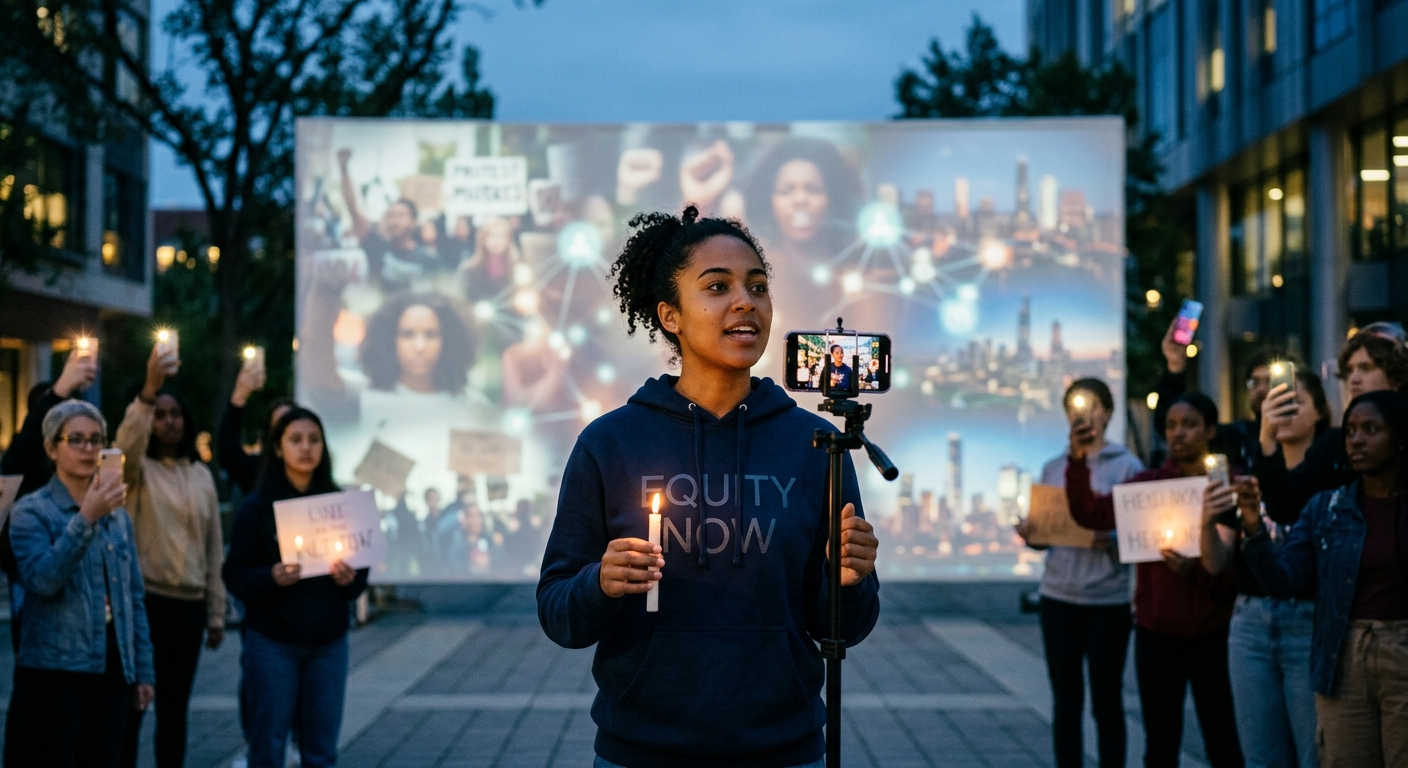
In the annals of civic engagement, the dawn of the twenty-first century has witnessed a profound metamorphosis in how human beings organize, mobilize, and advocate for societal transformation. The traditional blueprints for grassroots resistance have been comprehensively rewritten by the advent of ubiquitous digital connectivity and a heightened global consciousness regarding entrenched structural inequities. Where previous generations relied on the slow dissemination of printed manifestos and the centralized coordination of charismatic leaders, today’s mass movements are characterized by their staggering velocity, decentralized architecture, and transnational resonance. This shift was never more evident than during the historic groundswell of anti-racism and social justice protests that enveloped the globe at the turn of the 2020s. These events permanently altered the worldwide discourse surrounding racial equity, law enforcement accountability, and institutional reform. The modern push for equity represents a complex tapestry of historical continuity interwoven with unprecedented technological acceleration, creating a social movement unlike any other in recorded history.
The Architecture of Contemporary Social Movements
Decentralization vs. Traditional Leadership
Historically, major civil rights advancements were heavily dependent on the visibility and strategic direction of singular, charismatic figures. These leaders acted as the primary spokespersons for the aggrieved, negotiating directly with state actors and dictating the tactical trajectory of the movement. However, contemporary social justice organizing deliberately eschews this top-down hierarchy in favor of a decentralized, leader-full structure. By distributing leadership across a wide network of local organizers and community coalitions, activists ensure that the movement is fundamentally less vulnerable to the incapacitation, targeted harassment, or co-optation of a single individual. This robust architecture empowers regional chapters to tailor their activism to the specific socioeconomic and political realities of their distinct communities while remaining firmly tethered to a broader, universally understood ethos of liberation, human rights, and systemic equality.
The Role of Digital Connectivity
The proliferation of social media platforms and encrypted messaging applications has radically democratized the capacity for mass mobilization. Modern smartphones have effectively transformed ordinary citizens into independent, on-the-ground broadcasters, capable of documenting civil rights abuses and broadcasting them to a global audience in real-time. This digital infrastructure successfully bypasses traditional media gatekeepers, allowing raw, unfiltered narratives to ignite immediate public outrage and coordinated action. Furthermore, online networks frequently serve to rapidly manage logistics, disseminate community bail fund resources, and provide critical tactical safety updates during large-scale demonstrations. The internet has fundamentally altered the speed at which a hyper-local grievance can evolve into an overwhelming, widespread mobilization.
From Local Grievances to Global Solidarity
Cross-Border Empathy
One of the most striking phenomena of the twenty-first-century push for racial equity is its profound, borderless nature. A localized injustice captured on mobile video in a Midwestern American city can seamlessly trigger massive displays of solidarity in major international hubs like London, Paris, Nairobi, and Sydney. This cross-border empathy is heavily fueled by a shared recognition among marginalized populations worldwide that systemic oppression, albeit culturally distinct in its local applications, operates on a fundamentally similar framework of racial hierarchy, socioeconomic exclusion, and systemic disenfranchisement.
Universal Demands for Institutional Accountability
When international crowds gathered in the summer of 2020, they were not solely protesting specific American incidents of police violence; they were simultaneously shining a piercing spotlight on the historical and contemporary failings of their own domestic institutions. European demonstrators highlighted the unresolved legacies of colonial exploitation and local discriminatory policing, while activists in the Global South drew stark parallels between economic imperialism and state-sanctioned violence. This universalization of the racial justice narrative forced international bodies to take unprecedented action. In 2021, the United Nations Office of the High Commissioner for Human Rights (OHCHR) issued a landmark report calling on member states to adopt transformative agendas to dismantle systemic racism and hold law enforcement accountable globally, officially validating the interconnectedness of these global pleas .
Demographics and Scale: The Metrics of Mass Mobilization
The sheer magnitude of modern equity movements has shattered historical precedents. In the United States, researchers and crowd-counting experts cited by The New York Times estimated that the racial justice protests of 2020 involved anywhere from 15 to 26 million participants, unambiguously classifying it as the largest protest movement in American history . This scale was not just a testament to the volume of participants, but to the sustained duration and geographical spread of the demonstrations, which reached small rural towns as well as massive urban centers.
Crucially, this scale was accompanied by unprecedented demographic diversity. Research conducted by the Pew Research Center indicated that the crowds demonstrating for racial justice were younger, more highly educated, and significantly more racially and ethnically diverse than the general adult population, pointing to a cross-cultural coalition that transcended traditional sociopolitical boundaries . White, Hispanic, and Asian citizens marched in record numbers alongside Black activists, demonstrating a widening acknowledgment that dismantling systemic inequality is a collective societal responsibility rather than a burden meant to be shouldered solely by the oppressed.
| Element of Protest | Mid-20th Century Civil Rights Movements | 21st Century Social Justice Movements |
|---|---|---|
| Leadership Structure | Centralized, charismatic leaders and national spokespersons. | Decentralized, local organizers, and leader-full networks. |
| Communication | Print media, newsletters, phone trees, and church meetings. | Social media algorithms, viral video, and encrypted messaging. |
| Scale & Speed | Weeks or months required to organize national marches. | Millions mobilized globally within mere hours or days. |
| Demographics | Primarily heavily segregated by community lines with allied support. | Highly intersectional, multiracial, and cross-generational coalitions. |
Historical Continuity and Modern Divergences
Parallels with the 20th Century Civil Rights Era
While the tactical methods have evolved dramatically, the underlying grievances fueling today’s mass movements share a direct and undeniable lineage with the struggles of the mid-twentieth-century Civil Rights era. The demands for an end to state-sanctioned violence, the push for equitable housing and educational opportunities, and the fight against systemic voter suppression are issues that have persisted across generations. Modern activists stand firmly on the shoulders of the strategic pioneers of the 1960s, continually utilizing the philosophical frameworks of civil disobedience, nonviolent resistance, mutual aid, and economic boycotts to apply pressure to the mechanisms of the state.
Expanding the Intersectional Lens
Where the twenty-first-century movement diverges most distinctly from its historical predecessors is in its rigorous, unapologetic commitment to intersectionality. Today’s racial justice organizers explicitly emphasize how race intimately intersects with gender identity, sexual orientation, economic class, and disability. The modern movement deliberately centers the voices of Black women, transgender individuals, and the undocumented—demographics that were frequently marginalized or asked to subsume their specific grievances within older civil rights frameworks. This holistic approach recognizes that true systemic equity cannot be achieved if the most vulnerable and marginalized subsets of a community are left unprotected.
Institutional Responses and Policy Shifts
Legislative Hurdles and Structural Changes
Translating the kinetic, high-octane energy of street protests into codified legal reform remains one of the most formidable challenges for the modern mass movement. At the local and municipal levels, the sustained pressure has yielded tangible results: numerous city councils have reallocated funding toward community-based mental health services, banned no-knock warrants, and implemented stricter use-of-force continuums for law enforcement officers. However, at the federal level, comprehensive structural overhauls have frequently been stifled by partisan gridlock. The friction between the undeniable popular mandate for reform and the lethargic, often deeply resistant nature of federal legislative bodies underscores the ongoing tension between grassroots activism and deeply entrenched institutional inertia.
Corporate and Cultural Reckonings
Beyond the legislative sphere, the global push for equity has catalyzed a profound cultural and corporate reckoning. Multinational corporations, historically reticent to engage in controversial sociopolitical discourse, found themselves overwhelmingly compelled to publicly affirm their commitment to racial justice. This resulted in a wave of internal diversity audits, the removal of historically insensitive branding, and billion-dollar financial commitments to minority-owned businesses and community equity initiatives. While scholars and activists rightly warn against the genuine dangers of performative activism and superficial corporate rebranding, the mere fact that major economic entities felt intense public pressure to pivot their stances signifies a dramatic shift in the cultural acceptance regarding the realities of race and equity.
Sustaining Momentum in the Digital Age
Combating Activism Fatigue
The hyper-visibility and rapid pace of digital-first social movements bring a unique set of psychological and organizational challenges, chief among them being severe activism fatigue. The continuous consumption of traumatic video footage, coupled with the emotional toll of perpetual online advocacy, can lead to debilitating burnout among both frontline organizers and the general public. To counteract this, contemporary movements are increasingly prioritizing community care, mental health resources, and sustainable organizing practices. By recognizing that the fight for systemic equity is a generational marathon rather than a sprint, leaders are fostering resilient networks capable of enduring the inevitable ebbs and flows of mainstream public attention.
Transitioning from Street Protests to Electoral Power
For a movement to permanently alter the fabric of society, the passion of the streets must eventually permeate the ballot box. A significant evolution in the twenty-first-century racial justice movement has been its deliberate, calculated pivot toward electoral organizing. Activists have successfully channeled protest momentum into massive voter registration drives, grassroots civic education campaigns, and the mobilization of historically marginalized voting blocs. By actively electing reform-minded prosecutors, progressive city council members, and representative federal lawmakers, the movement is working meticulously to dismantle systemic inequities from within the very institutions that historically perpetuated them.
Frequently Asked Questions (FAQ)
What makes modern social justice movements distinct from historical protests?
Modern movements are defined by their decentralized leadership, meaning they do not rely on a single charismatic figurehead. Additionally, they heavily utilize digital technology and social media for rapid mobilization, allowing local issues to gain international attention almost instantly.
How did digital technology impact the racial equity protests of 2020?
Smartphones and social platforms allowed citizens to record and disseminate instances of injustice without relying on traditional news outlets. This unmediated access to information helped organize logistics, raise funds, and build a massive, informed coalition in real-time.
Why did the push for racial justice become a global phenomenon?
While sparked by specific events in the United States, populations globally recognized parallels within their own borders. International communities rallied to protest their domestic issues of systemic racism, colonial legacies, and unequal law enforcement practices, uniting under a shared desire for accountability.
What role does intersectionality play in current activism?
Intersectionality ensures that the movement addresses the overlapping layers of discrimination people face. Rather than focusing solely on race, modern activism simultaneously advocates for the rights of women, the LGBTQ+ community, and people with disabilities, aiming for a truly inclusive form of justice.
Conclusion: The Unfinished Journey Toward Systemic Equity
The evolution of modern protest has undeniably reshaped the global sociopolitical landscape, proving that localized grievances can swiftly transform into an unstoppable worldwide mandate for change. By leveraging the unprecedented power of digital connectivity, decentralized networks have orchestrated the largest push for racial equity in history. However, as the initial shockwaves of mass mobilization settle, the hard, methodical work of institutional reform continues. The journey toward true systemic equity requires unyielding persistence, a seamless transition from street activism to policy implementation, and an enduring commitment to intersectional justice. As communities navigate the complexities of the twenty-first century, the modern social movement stands as a powerful testament to the unbreakable human will to forge a fairer, more accountable world.
References
- Black Lives Matter May Be the Largest Movement in U.S. History — The New York Times (Buchanan, Bui, Patel). 2020-07-03. https://www.nytimes.com/interactive/2020/07/03/us/george-floyd-protests-crowd-size.html
- Recent protest attendees are more racially and ethnically diverse, younger than Americans overall — Pew Research Center. 2020-06-24. https://www.pewresearch.org/short-reads/2020/06/24/recent-protest-attendees-are-more-racially-and-ethnically-diverse-younger-than-americans-overall/
- Agenda towards transformative change for racial justice and equality — UN Office of the High Commissioner for Human Rights (OHCHR). 2021-06-28. https://www.ohchr.org/en/racism/agenda-towards-transformative-change-racial-justice-and-equality
Similar Articles








Read full bio of Sneha Tete


