
The Dangers of “Your Papers, Please” Laws in Modern America
How expanding mandatory ID laws and checkpoints threaten our civil liberties.
The Chilling Echoes of an Authoritarian Phrase
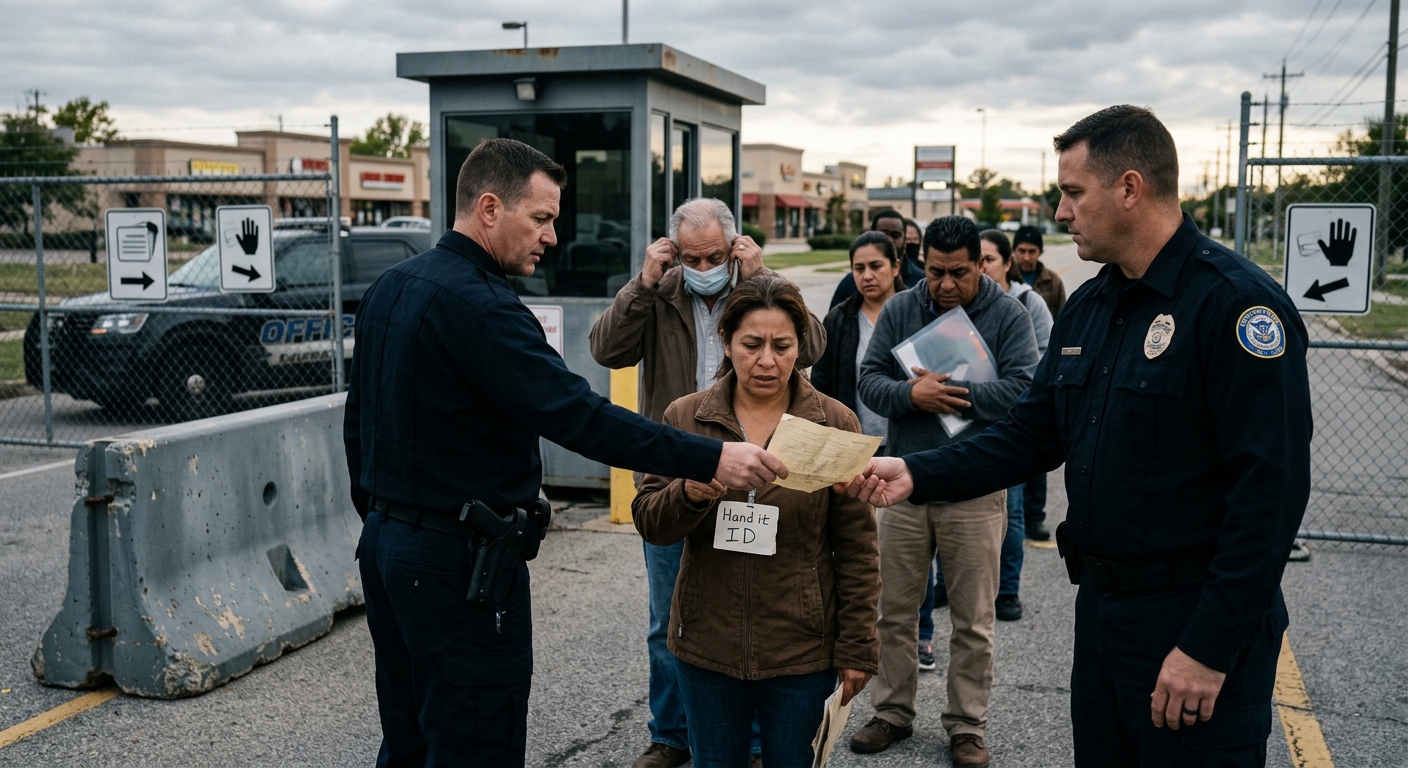
The phrase “Your papers, please” has long been synonymous with totalitarian regimes, dystopian fiction, and police states. Historically, it conjures bleak images of heavily guarded checkpoints, authoritarian overreach, and citizens living under the constant, suffocating gaze of government surveillance. However, this chilling demand is no longer relegated to history books or foreign dictatorships; it is an increasingly normalized reality within the United States. Through a combination of state-level statutes, expanding law enforcement powers, and sweeping federal mandates, the right to exist anonymously in public spaces is steadily eroding.
At the heart of this transformation is a fundamental tension between the government’s pursuit of national security and the individual’s constitutional right to privacy. While proponents of mandatory identification laws argue that they are essential tools for law enforcement and counterterrorism, civil liberties advocates warn of a dangerous paradigm shift. When individuals are compelled to prove their identity to participate in everyday life—whether walking down the street, boarding a domestic flight, or entering a public building—the foundational principles of freedom and liberty are fundamentally compromised. This article explores the legal mechanisms driving this shift and the profound threat they pose to our democratic society.
The Fourth Amendment and the Right to Anonymity
To understand the danger of mandatory identification protocols, one must look to the bedrock of American civil liberties: the Fourth Amendment. The framers of the United States Constitution ratified the Fourth Amendment to protect citizens against unreasonable searches and seizures, ensuring that the government could not arbitrarily intrude upon an individual’s personal life without probable cause. Implicit in this protection is the right to anonymity—the freedom to move about society without being tracked, monitored, or forced to justify one’s presence to the state.
Anonymity is not merely a shield for wrongdoers, as surveillance advocates often claim. It is a vital component of a free society. It protects activists, journalists, whistleblowers, and everyday citizens from government harassment and societal retribution. When the state possesses the unchecked power to demand identification at will, it effectively shifts the burden of proof from the government to the citizen. Instead of the state needing a reason to suspect you of a crime, you must affirmatively prove that you have a right to be where you are.
This inversion of the constitutional standard is particularly alarming because it normalizes suspicion. If walking down a public sidewalk or waiting at a bus stop is treated as an implicitly conditional act, subject to government verification, the concept of public liberty is gutted. The Fourth Amendment was designed precisely to prevent this kind of dragnet surveillance and arbitrary interference, yet modern legal interpretations have increasingly carved out loopholes that weaken these essential protections.
The Legal Slippery Slope: “Stop and Identify” Statutes
The erosion of the right to anonymity is most evident in the proliferation of “stop and identify” laws across various states. To grasp how these laws function, it is necessary to examine the evolution of policing standards, beginning with the landmark 1968 Supreme Court case, Terry v. Ohio. In Terry, the Court ruled that police officers could briefly detain a person based on a reasonable, articulable suspicion that criminal activity is afoot—a threshold much lower than the probable cause required for a full arrest. This type of brief detention became known as a Terry stop.
For decades, the scope of a Terry stop was strictly limited. Officers could pat down a suspect for weapons to ensure their safety, but they could not compel the individual to answer questions or provide identification. That changed drastically in 2004 with the Supreme Court’s ruling in Hiibel v. Sixth Judicial District Court of Nevada. In a narrow decision, the Court upheld a Nevada statute that criminalized a suspect’s refusal to provide their name to an officer during a valid Terry stop. The majority argued that obtaining a suspect’s identity was a commonsense inquiry that served legitimate law enforcement objectives.
The Hiibel decision opened a Pandora’s box for civil liberties. It effectively blessed state-level “stop and identify” statutes, which now exist in nearly half of the states in the U.S. These laws mandate that individuals must reveal their identity to police officers who suspect them of a crime. However, the requirement of reasonable suspicion is notoriously subjective. What constitutes suspicious behavior? In practice, “stop and identify” laws often empower law enforcement to conduct pretextual stops, disproportionately targeting marginalized groups, racial minorities, and residents of over-policed neighborhoods.
When an officer demands identification based on a vague hunch, the interaction quickly escalates from a consensual encounter to a coercive one. Refusing to comply—even if the initial stop was questionable—can result in immediate arrest for obstruction. This dynamic creates a chilling effect on the right to walk freely, transforming neighborhoods into soft checkpoints where residents must be prepared to show their papers upon request.
The REAL ID Act: A De Facto National Identity System
While “stop and identify” laws operate at the local and state levels, the push for mandatory identification is heavily driven by federal initiatives. The most prominent example is the REAL ID Act of 2005. Passed in the emotional aftermath of the September 11 terrorist attacks, the legislation was ostensibly designed to establish minimum security standards for state-issued driver’s licenses and identification cards. In reality, the REAL ID Act functions as an unfunded mandate that coerces states into building a standardized, interconnected national identification database.
Under the guise of standardizing security features, the REAL ID Act requires states to collect and store extensive personal information—including digital photographs, signatures, and primary identity documents—and make their motor vehicle databases accessible to all other states. The federal government enforces compliance by prohibiting agencies, such as the Transportation Security Administration (TSA), from accepting non-compliant licenses for official purposes, including boarding commercial domestic flights or entering federal facilities.
Civil liberties advocates have long warned that the REAL ID Act creates a de facto national identity card. Historically, Americans have fiercely resisted the implementation of a national ID, recognizing that centralizing identity data in a unified system creates massive vulnerabilities. A nationalized database is a prime target for cybercriminals, identity thieves, and state-sponsored hackers. Furthermore, it lays the groundwork for pervasive domestic tracking.
The modernization of “your papers” has now extended into the digital realm. The push for REAL ID compliance has paralleled the development of mobile driver’s licenses and facial recognition technology at airports and public venues. As physical identification cards are digitized and linked to biometric markers, the ability of the government to passively track citizens’ movements without their knowledge or consent increases exponentially. The REAL ID Act serves as the infrastructural backbone for a future where anonymous travel and participation in society are virtually impossible.
Checkpoint America: Infringing on the Right to Travel
The freedom of movement is a bedrock constitutional principle, repeatedly upheld by the Supreme Court as a fundamental liberty. Yet, the proliferation of identity checkpoints severely restricts this right. The most visible manifestation of this is at airports, where the TSA has effectively conditioned the right to interstate travel upon the relinquishment of Fourth Amendment protections. Passengers are subjected to mandatory identification checks, bodily scans, and baggage searches, fundamentally transforming air travel from a free market service into a government-regulated privilege.
Beyond airports, the concept of a border has expanded aggressively into the domestic interior. U.S. Customs and Border Protection (CBP) claims the authority to operate internal checkpoints up to 100 miles from any external boundary. In these zones—which encompass nearly two-thirds of the American population—citizens are routinely stopped and subjected to immigration inquiries without any individualized suspicion of wrongdoing. These interior checkpoints normalize the culture of mandatory identification, blurring the line between border security and domestic policing.
When access to transportation infrastructure is gated by identification mandates, the right to travel is heavily compromised. Those who cannot easily obtain compliant identification—such as the elderly, rural populations, low-income individuals, and undocumented immigrants—are effectively trapped, barred from accessing vital services, visiting family, or seeking employment across state lines.
The Broader Societal Impact of Constant Surveillance
The societal impact of an identification-obsessed culture extends far beyond legal and constitutional debates; it profoundly alters the psychological landscape of a nation. When citizens internalize the expectation that they must always be ready to prove their identity to authorities, a subtle but profound shift occurs. A society based on trust and liberty degrades into one characterized by suspicion and control.
This environment is uniquely hostile to democratic participation. Protestors, whistleblowers, and dissidents rely on the ability to organize and speak out without fear of immediate government retaliation. If every public interaction, travel route, and digital transaction requires a centralized identity verification, the space for dissent vanishes. The chilling effect on free speech is immeasurable, as individuals begin to self-censor, acutely aware that their movements and affiliations are being permanently logged. It represents a dramatic pivot away from the ideals of personal autonomy.
Terry Stops vs. “Stop and Identify” Laws
Understanding the difference between a standard investigative stop and one involving compulsory identification is crucial for recognizing the erosion of civil liberties.
| Feature | Traditional Terry Stop | “Stop and Identify” Encounter |
|---|---|---|
| Legal Standard Required | Reasonable suspicion of a crime. | Reasonable suspicion of a crime. |
| Right to Remain Silent | Individual can refuse to answer questions or give a name. | Individual is legally forced to state their name or provide identification. |
| Penalty for Refusal | None; refusal cannot be the sole basis for an arrest. | Immediate arrest for obstruction or failure to identify. |
| Primary Objective | Brief investigation and officer safety (e.g., weapons pat-down). | Compulsory logging of the individual’s identity into state records. |
Frequently Asked Questions (FAQs)
What are “stop and identify” laws?
“Stop and identify” laws are state-level statutes that require individuals to provide their name or identification to a police officer if the officer has a “reasonable suspicion” that the individual has committed, is committing, or is about to commit a crime. Refusing to provide identification in these specific jurisdictions can result in arrest.
Do I legally have to show my ID to the police at all times?
No. You do not have to randomly show your ID to the police simply for walking down the street. Officers must have at least a “reasonable suspicion” of criminal activity to temporarily detain you. However, if you are driving a vehicle, you are legally required to produce a driver’s license upon request during a traffic stop.
What is the REAL ID Act, and how does it affect me?
The REAL ID Act is a federal law that establishes minimum security standards for state-issued driver’s licenses and identification cards. Once fully enforced, federal agencies, including the TSA, will not accept non-compliant IDs for accessing federal facilities or boarding commercial domestic flights. It fundamentally standardizes identification data across states, moving the nation closer to a centralized ID system.
Does the Fourth Amendment protect me from random ID checks?
Yes, the Fourth Amendment protects against unreasonable searches and seizures, which generally prohibits police from stopping you arbitrarily to demand identification without any individualized suspicion. However, certain exceptions exist at international borders and at specific, legally authorized checkpoints (such as organized DUI checkpoints).
Conclusion: Guarding Our Constitutional Liberties
The demand for identification on demand represents a fundamental inversion of a free society. It transforms the citizen from a sovereign individual with inherent rights into a suspect who must constantly seek permission to exist in public spaces. Between the expanding scope of stop and identify laws, the federal coercion of the REAL ID Act, and the sprawling network of domestic checkpoints, the foundational protections of the Fourth Amendment are under severe strain.
Guarding our constitutional liberties requires active vigilance. It requires state legislatures to resist unnecessary federal identification mandates, courts to strictly scrutinize pretextual police stops, and citizens to know and assert their rights. If society passively accepts the normalization of constant identity verification, we risk sacrificing the very liberties that define a democratic republic, trading the right to anonymity for an illusion of security. The preservation of liberty depends on our collective refusal to become a nation where freedom is contingent upon carrying the right paperwork at all times.
References
- Hiibel v. Sixth Judicial District Court of Nevada, 542 U.S. 177 — Supreme Court of the United States. 2004-06-21. https://supreme.justia.com/cases/federal/us/542/177/
- Terry v. Ohio, 392 U.S. 1 — Supreme Court of the United States. 1968-06-10. https://supreme.justia.com/cases/federal/us/392/1/
- REAL ID Privacy Impact Assessment — U.S. Department of Homeland Security. 2007-03-01. https://www.dhs.gov/xlibrary/assets/privacy/privacy_pia_realid.pdf
- The Real ID Act of 2005 (Pub. L. 109-13) — U.S. Government Publishing Office. 2005-05-11. https://www.govinfo.gov/app/details/PLAW-109publ13
Similar Articles








Read full bio of Sneha Tete


