
Connected Cars and the Illusion of Privacy
The hidden privacy risks of connected cars and corporate data harvesting.
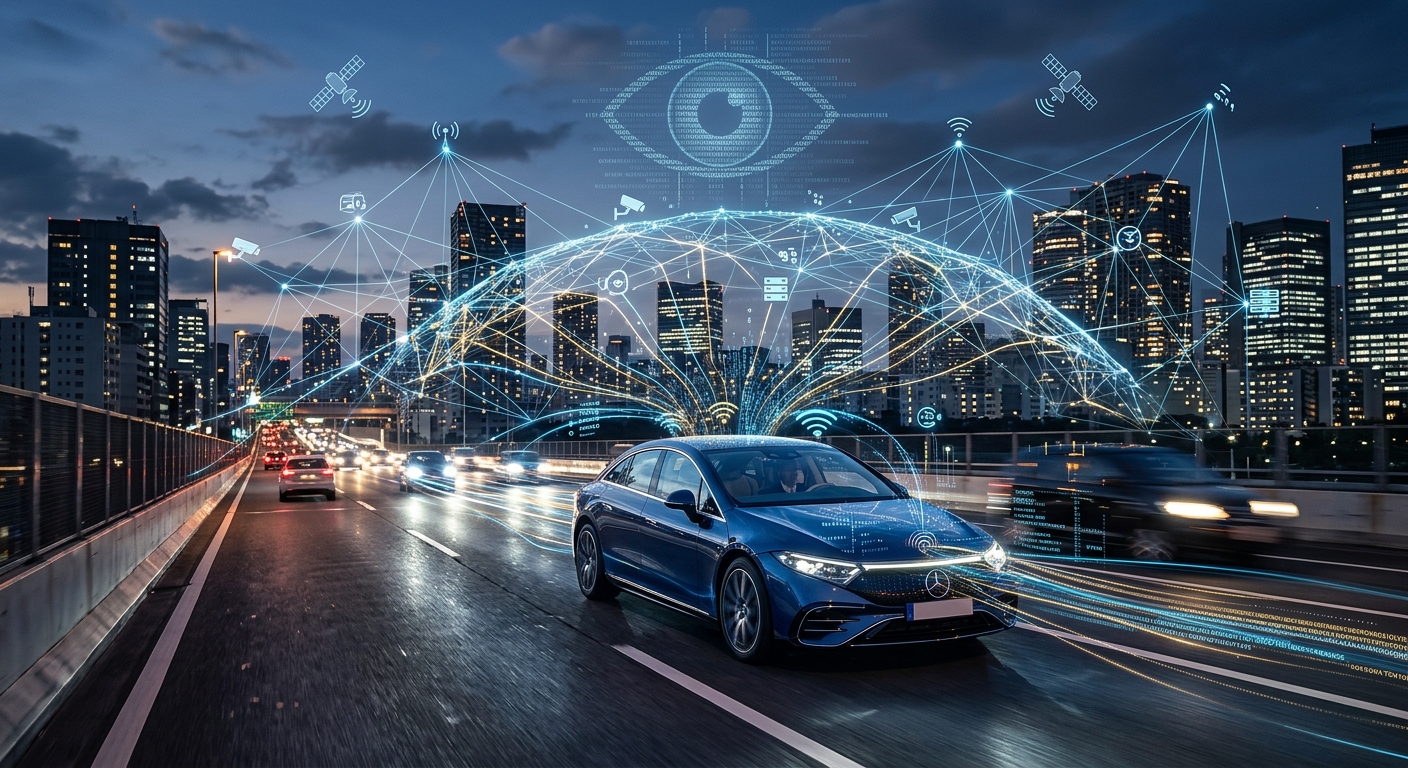
The modern automobile is an engineering marvel. It is no longer merely a mechanical vessel of steel, rubber, and combustion meant to transport humans from point A to point B. Instead, today’s vehicles have morphed into highly sophisticated, rolling computing platforms. Equipped with high-definition cameras, ultrasonic sensors, biometric scanners, and always-on cellular connections, connected cars have transformed the driving experience. They offer unparalleled convenience, real-time traffic navigation, advanced collision avoidance, and seamless integration with our digital lives. However, this transformation carries a steep, often invisible cost: the systematic erosion of consumer privacy.
As automakers pivot from traditional manufacturing to becoming massive data aggregators, the interior of the automobileonce considered a private sanctuaryhas been cracked open. A stark illustration of this vulnerability emerged in 2023 when a major investigation revealed that employees at a leading electric vehicle manufacturer were routinely circulating highly sensitive, private video footage captured by customer cars. This footage, shared in internal chat rooms, included embarrassing moments, private property layouts, and intimate family interactions. This incident was not an isolated technical glitch; it exposed the fundamental flaws in how the automotive industry handles the immense volume of data harvested from drivers every single day. It is a wake-up call to the reality of ubiquitous surveillance in our driveways.
The Myth of Data Anonymization
When questioned about data collection practices, automakers frequently deploy a common defense: they assure consumers that all collected data is strictly “anonymized.” The premise is that by stripping away specific identifiers like the Vehicle Identification Number (VIN), license plate, or the registered owner’s name, the data becomes harmless and untraceable. In the context of modern vehicle telematics and high-definition multimedia, this assurance is largely a myth.
Visual data is inherently and profoundly identifiable. When an external vehicle camera records the inside of an open garage, it captures the layout of the home, the possessions inside, and the daily routines of the residents. When an internal cabin camera records the occupants, it captures their faces, their emotional states, their passengers, and their conversations. No amount of metadata scrubbing can truly anonymize a high-resolution video of a person’s face or their home.
Furthermore, behavioral data acts as a unique digital fingerprint. If an automotive company collects a sequence of GPS coordinates indicating a vehicle leaves a specific suburban address at 7:30 AM every weekday, parks at a particular corporate office at 8:15 AM, and visits a specific medical clinic every Wednesday afternoon, it takes very little effort to deanonymize that profile. The aggregation of location data, driving habits, and visual feeds creates a comprehensive mosaic of a user’s life, rendering the concept of true anonymization practically impossible in the modern connected vehicle ecosystem.
The Expanding Architecture of Vehicle Telematics
The scope of data collected by a contemporary connected vehicle extends far beyond video recordings. The telematics architecture of a modern car is designed to monitor and report on virtually every aspect of the vehicle’s operation and the driver’s behavior. This continuous stream of telemetry includes, but is not limited to, the following data points:
- Precise Geolocation: Continuous tracking of the vehicle’s movements, speed, and parking locations.
- Biometric Data: Weight sensors in seats, internal cameras monitoring eye gaze and pupil dilation for fatigue detection, and steering wheel sensors monitoring grip.
- Infotainment and Device Syncing: Call logs, text messages, contact lists, and media preferences downloaded from paired smartphones.
- Driving Dynamics: Acceleration patterns, hard braking events, and steering wheel angle trajectories.
The integration of third-party operating systems, such as Android Automotive OS, further complicates the privacy landscape. Academic research has demonstrated that these integrated systems often allow third-party applications to collect sensor data directly from the vehicle. In many instances, the applications deployed on these platforms have been found to harbor discrepancies between their declared data permissions and their actual privacy policies, creating blind spots where user data can be siphoned off without informed consent.
The Hunger for AI Training Data: The Human in the Loop
To understand why automakers are so aggressively harvesting this data, one must look at the future of the industry: autonomous driving. The race to achieve Level 4 and Level 5 full driving automation is heavily reliant on machine learning and artificial intelligence. To train an Advanced Driver Assistance System (ADAS) to reliably recognize pedestrians, interpret erratic traffic signals, and navigate complex urban environments, the underlying algorithms require billions of miles of real-world driving data.
However, AI does not learn in a vacuum. Machine learning models require structured, labeled data. When a vehicle’s camera captures an unusual object on the highway, an algorithm cannot magically understand what it is. It requires a human data annotator to review the footage, draw a bounding box around the object, and label it as a “discarded tire” or a “stray animal.”
This “human-in-the-loop” requirement is the critical failure point for vehicular privacy. Automakers employ armies of data labelers to comb through petabytes of customer footage. As long as human beings are required to manually review and annotate the data collected by consumer vehicles, the risk of that data being misused, mocked, or improperly shared remains exceptionally high. The technological mandate for AI advancement is fundamentally at odds with the user’s expectation of a private driving experience.
Regulatory Voids and the Legal Landscape
The regulatory framework governing automotive data collection has struggled to keep pace with the rapid technological advancements in the industry. For years, the sector operated under a patchwork of self-regulatory guidelines that proved inadequate for protecting consumer privacy. Automotive privacy policies are notoriously dense, highly technical, and written in legalese that defies easy comprehension. Consumers are effectively subjected to a “take it or leave it” scenario: agree to the expansive terms of service, or lose access to the vehicle’s core functionalities, such as navigation or remote unlocking.
However, federal and state regulators are beginning to take a more aggressive stance. The Federal Trade Commission (FTC) has increasingly scrutinized the connected car ecosystem, recently highlighting that the unlawful collection, use, and disclosure of consumer data by automakers is squarely on its radar. The FTC has specifically emphasized that persistent, precise geolocation data and biometric information are highly sensitive, and their mishandling violates core consumer protection laws.
Despite these warnings, the United States lacks a comprehensive, overarching federal privacy law akin to the European Union’s General Data Protection Regulation (GDPR). Instead, consumers are left relying on a fragmented system of state laws, such as the California Consumer Privacy Act (CCPA), which offers robust protections for some but leaves millions of other drivers exposed. Until a unified regulatory standard is established, the burden of protecting vehicular data falls heavily on the individual consumer.
Mitigating the Surveillance State in Your Driveway
While the architecture of connected vehicles is inherently geared toward data collection, consumers are not entirely powerless. Taking back control of your digital dashboard requires proactive engagement with your vehicle’s settings and a clear understanding of what you are consenting to. Below is a breakdown of common vehicular data collection systems and potential mitigation strategies.
| Sensor / System Type | Data Collected | Consumer Mitigation Strategy |
|---|---|---|
| Internal Cabin Cameras | Facial recognition, driver attention, passenger activity, emotional state. | Check the vehicle’s settings menu to disable internal data sharing. If physical privacy is paramount, utilize a small, removable sliding camera cover. |
| External Surround Cameras | Video of surroundings, garage interiors, pedestrians, other vehicles. | Opt-out of “fleet learning” or data-sharing agreements in the mobile app. Ensure video clips are not configured to automatically upload to corporate cloud servers. |
| Telematics / GPS Systems | Precise geolocation, driving habits, speed, acceleration patterns. | Revoke third-party app permissions within the infotainment system. Avoid opting into insurance-linked driving monitor programs unless the financial benefit outweighs the privacy loss. |
| Bluetooth / Smartphone Sync | Contacts, call logs, text messages, detailed media preferences. | Only grant permission for hands-free calling. Deny the vehicle access to download your full contact book or message history upon initial pairing. |
It is crucial to perform a “digital reset” when selling or returning a leased vehicle. Just as one would wipe a smartphone before trading it in, drivers must perform a factory reset on their infotainment systems to clear paired devices, saved home addresses, and integrated garage door codes.
The Future of Driving and Data Sovereignty
As the automotive industry continues its march toward full electrification and autonomy, the volume of data generated by vehicles will only increase exponentially. The integration of 5G networks will allow cars to stream high-definition telemetry in real-time, communicating not just with corporate servers, but with smart city infrastructure and other vehicles on the road.
This future demands a paradigm shift in how we view digital sovereignty. Consumers must demand hardware-level privacy switches, transparent data collection practices, and the fundamental right to opt out of surveillance without bricking their expensive vehicles. The car is an extension of the personal sphere, and its transformation into a corporate data-harvesting node must be met with stringent legal safeguards and informed consumer resistance. The right to travel without being tracked, analyzed, and commodified is a fundamental freedom that must be preserved in the digital age.
Frequently Asked Questions (FAQs)
Can I completely disable data collection in my connected car?
In most modern vehicles, it is impossible to completely disable all data collection without rendering the car un-drivable or severely limiting its core functions. Basic telemetry is often required for the vehicle’s internal computer to operate safely. However, you can significantly limit data sharing by opting out of telemetry uploads, “fleet learning” programs, and third-party app tracking within the infotainment settings.
Are automakers legally allowed to sell my location data?
The legality depends on the specific terms of service you agreed to and your jurisdiction. While many automakers claim they do not sell personal data to data brokers, they often share it with “affiliated partners” or insurance companies if the user opts in. The FTC has stated it will pursue enforcement actions against companies that unlawfully collect and disclose precise geolocation data.
Does deleting the manufacturer’s app stop the car from tracking me?
No. Deleting the smartphone app only stops the app from tracking your phone’s data. The vehicle itself houses an independent cellular modem that communicates directly with the manufacturer’s servers. To restrict this, you must navigate the privacy settings directly on the vehicle’s dashboard screen.
What should I do before selling my connected car?
Always perform a complete factory reset on the vehicle’s infotainment system. This process deletes your saved home addresses, paired Bluetooth devices, synced contacts, and integrated application logins. You should also log into your manufacturer’s mobile app to officially sever the connection between your online account and the vehicle’s VIN.
References
- Tesla workers shared ‘intimate’ car camera images, ex-employees allege Reuters. 2023-04-06. https://www.reuters.com/technology/tesla-workers-shared-sensitive-images-recorded-by-customer-cars-2023-04-06/
- Cars & Consumer Data: On Unlawful Collection & Use Federal Trade Commission (FTC). 2024-05-14. https://www.ftc.gov/policy/advocacy-research/at-ftc/2024/05/cars-consumer-data-unlawful-collection-use
- Vehicle Data Privacy: Industry and Federal Efforts Under Way but NHTSA Needs to Define Its Role Government Accountability Office (GAO). 2017-07-28. https://www.gao.gov/products/gao-17-656
- A First Look at Android Automotive Privacy Mert D. Pese / SAE Technical Paper. 2023-04-11. https://doi.org/10.4271/2023-01-0037
- Vehicle Data Collection: A Privacy Policy Analysis and Comparison SCITEPRESS. 2023-01-01. https://doi.org/10.5220/0011779500003405
Similar Articles








Read full bio of medha deb


