
The Congressional Push for Federal Data Privacy
Exploring the ongoing legislative battle to protect consumer data.
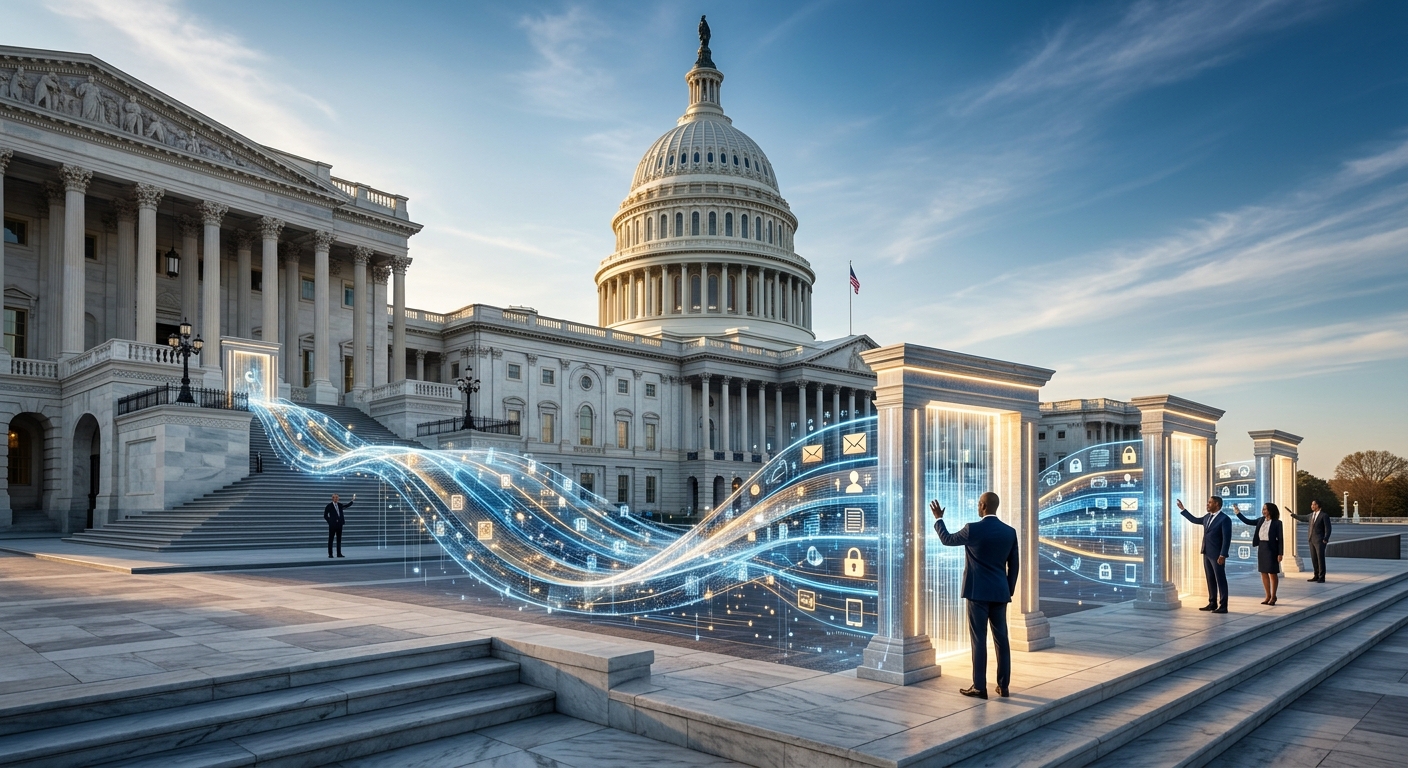
In the modern digital economy, data has become the definitive currency. Every interaction—each click, scroll, digital transaction, and geographic movement—generates a rich tapestry of personal information. This data is relentlessly harvested, aggregated, and monetized by a sprawling ecosystem of technology companies, data brokers, and advertising networks. While this commercial surveillance economy has fueled incredible technological innovation and highly personalized digital experiences, it has also triggered profound concerns regarding consumer privacy, civil liberties, and data security. The urgency for a comprehensive federal data privacy law has never been greater, and federal lawmakers are increasingly feeling the pressure to act and establish meaningful boundaries.
The Landscape of American Privacy Legislation
For decades, the United States has operated without an overarching national data privacy framework. Instead of a cohesive federal standard—such as the European Union’s General Data Protection Regulation (GDPR)—the U.S. relies on a complex, fragmented patchwork of sector-specific laws. Legislation like the Health Insurance Portability and Accountability Act (HIPAA) protects specific types of medical records, while the Gramm-Leach-Bliley Act (GLBA) governs financial data. Furthermore, the Children’s Online Privacy Protection Act (COPPA) imposes restrictions on the data collected from users under the age of thirteen.
However, these sector-specific laws leave vast chasms in protection. The majority of the information Americans generate online—ranging from search engine queries and social media interactions to location tracking via fitness applications—falls completely outside the purview of federal statutory protection. In the absence of congressional action, numerous states have stepped into the legislative void. California led the charge with the California Consumer Privacy Act (CCPA) and the subsequent California Privacy Rights Act (CPRA), establishing robust consumer rights. Since then, states like Virginia, Colorado, Connecticut, and Utah have enacted their own comprehensive data privacy laws, creating a regulatory labyrinth for businesses operating nationwide and leaving citizens with disparate rights depending solely on their physical zip code.
Recognizing the unsustainable nature of this state-by-state patchwork, members of Congress have proposed several ambitious frameworks aimed at establishing baseline privacy rights for all Americans. Bipartisan efforts have coalesced around major legislative vehicles, most notably the American Data Privacy and Protection Act (ADPPA) introduced in previous congressional sessions, and more recent iterations like the American Privacy Rights Act (APRA). These bills represent a significant departure from historical legislative gridlock, signaling a growing consensus among lawmakers that the current paradigm must be fundamentally restructured to protect everyday consumers.
Core Pillars of Proposed Data Privacy Frameworks
The Principle of Data Minimization
Data minimization represents a seismic shift in data governance and is a foundational element of modern federal privacy proposals. Historically, the internet has operated on a “notice and choice” model. Companies publish lengthy, complex privacy policies, and consumers are forced to click “accept” to access a service, theoretically granting consent for broad data collection. Data minimization dismantles this broken framework. Instead of placing the burden on the consumer to navigate obscure settings to opt-out, data minimization mandates that companies must inherently limit their data collection from the start.
Under this framework, entities are legally permitted to collect, process, and transfer personal data only when it is strictly necessary and proportionate to provide the specific product or service requested by the consumer. For instance, a mobile flashlight application would be expressly prohibited from quietly tracking a user’s GPS location or accessing their contact list, as those data points are entirely unrelated to the core function of illuminating a screen. This transitions the industry from a default state of mass surveillance to a default state of privacy.
Civil Rights in the Digital Age
Another critical pillar of emerging federal privacy legislation is the integration of civil rights protections into the digital ecosystem. Historically, traditional civil rights laws have protected individuals from discrimination in physical arenas such as housing, employment, and public accommodations. However, in the algorithm-driven internet era, discrimination often occurs invisibly. Machine learning models and automated decision-making systems routinely rely on vast datasets that can perpetuate historical biases.
Algorithms used to screen resumes, determine creditworthiness, or display housing advertisements can—intentionally or inadvertently—discriminate against marginalized communities by using proxy variables like zip codes, browsing history, or consumer behavior. Robust federal privacy proposals aim to explicitly prohibit companies from collecting, processing, or transferring covered data in a manner that discriminates on the basis of race, color, religion, national origin, sex, or disability. By establishing these digital civil rights, lawmakers hope to ensure that the internet remains an equitable environment where consumers are not penalized or profiled by opaque algorithmic systems.
Establishing Concrete Consumer Rights
Any meaningful federal framework must enshrine a specific set of undeniable rights for consumers, allowing them to take control of their digital identities. Current legislative proposals typically emphasize the following core rights:
- The Right to Access: Consumers must have the ability to request and obtain a clear, comprehensible record of the personal data a company has collected about them, including inferences drawn from that data.
- The Right to Correction: If a consumer discovers inaccurate or outdated information within a company’s database, they possess the right to mandate its correction, a crucial feature when data brokers sell profiles that influence background checks.
- The Right to Deletion: Often referred to as the “right to be forgotten,” consumers must be empowered to demand the permanent deletion of their personal information when it is no longer needed.
- The Right to Portability: To prevent vendor lock-in and promote digital competition, users should be able to export their data in a machine-readable format to transfer it to a competing service.
- Universal Opt-Out Mechanisms: Instead of clicking “opt-out” on hundreds of individual websites, legislation proposes mandating compliance with global privacy control signals—browser-level settings that broadcast a user’s refusal to be tracked across the web.
The Stumbling Blocks: Preemption and Enforcement
Despite the broad, bipartisan agreement on the necessity of these consumer rights, comprehensive federal privacy legislation has repeatedly stalled in Congress due to two major political stumbling blocks: state preemption and the private right of action. These highly contentious issues highlight the delicate balancing act lawmakers face when attempting to draft legislation that satisfies consumer advocates, state attorneys general, and multinational technology corporations.
The Preemption Battle
Preemption refers to the legal doctrine determining whether a federal law overrides or supersedes existing state laws. In the context of data privacy, the technology industry vehemently advocates for a “federal ceiling.” They argue that a single, unified national standard is essential to foster innovation, reduce massive compliance costs, and prevent a fractured internet where user experiences vary wildly across state lines.
Conversely, privacy advocates and state regulators argue that any federal legislation should act purely as a “federal floor.” They contend that Congress should establish baseline baseline protections but allow progressive states to enact even stricter regulations as technology rapidly evolves. Agencies like the California Privacy Protection Agency (CPPA) have explicitly opposed federal bills that threaten to preempt comprehensive state laws, warning that broad federal preemption could inadvertently weaken the hard-won rights of residents in states that already have stringent consumer protections in place.
| Preemption Model | Definition | Advocates’ Perspective |
|---|---|---|
| Federal Floor | Sets a minimum national standard but allows individual states to pass stricter regulations. | Favored by consumer rights groups and state regulators, as it preserves stronger local protections and allows states to respond to new tech threats. |
| Federal Ceiling | Overrides all state data privacy laws, establishing a single, uniform national standard that no state can exceed. | Favored by industry and tech companies to avoid navigating a complex, expensive patchwork of varying compliance rules across the country. |
The Private Right of Action (PRA)
The second insurmountable hurdle has historically been the enforcement mechanism, specifically whether to include a Private Right of Action (PRA). A PRA would grant individual consumers the legal authority to sue companies directly for violations of the privacy statute, either individually or through class-action lawsuits.
Proponents of a PRA, including leading civil liberties organizations, argue that government regulators simply do not possess the financial resources or manpower to investigate and penalize every privacy violation. They view civil litigation as a vital enforcement tool that holds corporations accountable and provides actual financial restitution to harmed individuals. On the other side of the aisle, business associations and tech lobbyists fiercely oppose a PRA. They argue that empowering citizens to sue will unleash a flood of frivolous, predatory class-action lawsuits spearheaded by opportunistic trial lawyers, ultimately bankrupting small businesses and stifling technological innovation without providing meaningful privacy benefits to the public. Compromise drafts often attempt to thread the needle by allowing a PRA only after a multi-year grace period or requiring consumers to notify regulatory agencies before filing a lawsuit.
The Role of the Federal Trade Commission (FTC)
While Congress debates permanent statutory frameworks, the Federal Trade Commission (FTC) has actively positioned itself as the nation’s premier privacy enforcement agency. Utilizing its broad authority under Section 5 of the FTC Act, which prohibits “unfair or deceptive acts or practices,” the agency has repeatedly penalized companies for failing to secure consumer data or misleading users about their expansive data collection practices.
Recognizing the limitations of reactive, case-by-case enforcement, the FTC has also initiated an Advance Notice of Proposed Rulemaking (ANPR) focusing comprehensively on commercial surveillance and data security. Through this administrative process, the FTC seeks to establish broad, binding regulations to curb lax data security, limit privacy abuses, and ensure algorithmic fairness across the digital economy. However, the FTC’s rulemaking process is historically slow, procedurally cumbersome, and subject to intense legal challenges from industry groups. Consequently, comprehensive congressional legislation remains the most durable solution. Any successful federal privacy bill would likely grant the FTC targeted rulemaking authority, allocate significant funding to establish a dedicated privacy bureau within the agency, and empower it to levy substantial civil penalties for first-time violations.
The Broad Impact on Consumers and Small Businesses
The enactment of a comprehensive federal privacy law would profoundly reshape the digital ecosystem. For the average consumer, it would bring a newfound sense of agency, safety, and transparency. The constant barrage of manipulative cookie banners and impenetrable privacy policies would ideally be replaced by standardized, easy-to-understand controls built directly into web browsers and mobile devices. Consumers would finally possess the legal leverage to demand transparency and enforce their digital boundaries.
For the business community, the transition would require a significant overhaul of data architecture and compliance strategies. While multinational corporations possess the resources to adapt, small and medium-sized enterprises (SMEs) could face substantial compliance hurdles. To address this, lawmakers are carefully exploring tiered compliance models, exempting small businesses from the most burdensome requirements while ensuring that the massive data brokers and major tech platforms bear the primary weight of regulatory scrutiny.
Frequently Asked Questions (FAQ)
What exactly is commercial surveillance?
Commercial surveillance refers to the ubiquitous business practice of continuously collecting, analyzing, and profiting from the vast amounts of digital information generated by people as they use the internet, applications, and smart devices. This data is often used to build intricate profiles to target users with hyper-specific advertising.
How does data minimization differ from current privacy practices?
Currently, most companies operate under a “notice and choice” model, meaning they can collect nearly anything as long as it is vaguely mentioned in their long-form privacy policy. Data minimization flips this model entirely, legally restricting companies to only collect the specific, minimal data necessary to provide the actual service the user requested.
Will a federal privacy law eliminate state laws like California’s CCPA?
This remains one of the most fiercely debated topics in Congress. If a federal bill includes strict “preemption” clauses, it could override and nullify state laws like the CCPA. If it acts as a “floor,” state laws would remain intact and could offer stronger, localized protections.
Why is a Private Right of Action (PRA) so controversial?
Consumer advocates argue a PRA is necessary because individuals should be able to sue companies that violate their privacy rights to seek damages. Conversely, businesses argue that a PRA encourages frivolous, expensive class-action lawsuits that harm innovation and drain resources without fundamentally improving consumer privacy.
Can the FTC fix the privacy problem without Congress?
While the FTC can penalize deceptive practices and is attempting to draft rules on commercial surveillance to protect consumers, its statutory authority is inherently limited. Most legal experts agree that sweeping, permanent changes require a clear mandate and explicit legislation passed by Congress.
Conclusion
As the digital landscape becomes increasingly complex, the absence of a comprehensive federal data privacy law remains a glaring vulnerability in American public policy. The relentless expansion of commercial surveillance, the threat of algorithmic discrimination, and the confusing patchwork of state regulations underscore the critical need for congressional action. Establishing a national standard that prioritizes data minimization, guarantees robust consumer rights, and incorporates strong enforcement mechanisms is not merely a regulatory exercise; it is a fundamental imperative to protect civil liberties in the digital age. Lawmakers must navigate the political minefields of preemption and private litigation to deliver a framework that empowers consumers, restrains corporate overreach, and ensures the internet serves as a safe, equitable platform for all.
References
- Overview of the American Data Privacy and Protection Act, H.R. 8152 — Congressional Research Service. 2022-08-31. https://crsreports.congress.gov/product/pdf/LSB/LSB10776
- Trade Regulation Rule on Commercial Surveillance and Data Security — Federal Trade Commission (Federal Register). 2022-08-22. https://www.federalregister.gov/documents/2022/08/22/2022-17752/trade-regulation-rule-on-commercial-surveillance-and-data-security
- The California Privacy Protection Agency Opposes the American Privacy Rights Act — California Privacy Protection Agency. 2024-06-26. https://cppa.ca.gov/announcements/2024/20240626.html
- H.R.8152 – American Data Privacy and Protection Act — Congress.gov. 2022-12-30. https://www.congress.gov/bill/117th-congress/house-bill/8152
Similar Articles








Read full bio of Sneha Tete


