
Unmasking Inequities: School Discipline Disparities
Federal data reveals systemic school discipline disparities affecting youth.
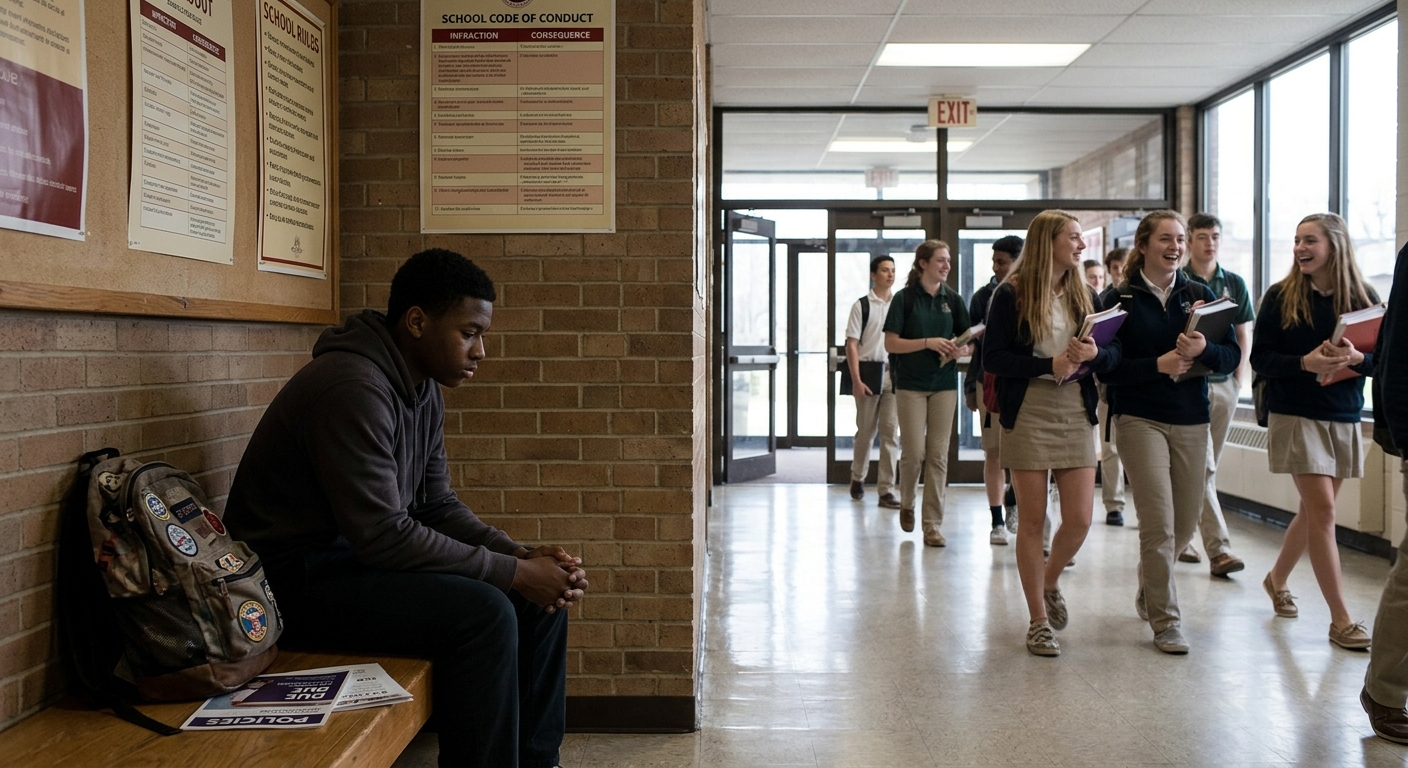
Introduction to the Civil Rights Data Collection
Achieving true educational equity in the United States requires acknowledging the deep-seated flaws within the nation’s public school systems. For decades, educators, parents, and civil liberties advocates have underscored the absolute necessity of robust, comprehensive data collection to uncover hidden inequalities. The U.S. Department of Education’s Civil Rights Data Collection (CRDC) serves as the primary mechanism for establishing this essential transparency. Originally established in the late 1960s as a tool to monitor desegregation efforts, the initiative has experienced various periods of dormancy, revision, and expansion over the decades.
Today, when the federal government periodically releases this comprehensive civil rights data—covering nearly all public schools across the country—it provides a stark, undeniable portrait of systemic inequities that persist in modern education. These massive data sets illuminate the inner workings of school climate, student discipline, access to rigorous coursework, and overall resource allocation. More importantly, they validate the long-standing, vocal concerns of civil rights organizations regarding the disproportionate use of harsh, exclusionary disciplinary tactics on marginalized youth. By requiring school districts to accurately report on specific metrics such as suspensions, expulsions, referrals to law enforcement, school-related arrests, and the use of physical restraints, the CRDC forces the American education system to confront uncomfortable truths about racial bias and systemic discrimination against students with disabilities. It is only through tracking and analyzing these disparities that advocates can push for meaningful legislative reforms .
The Scope of the Problem: Disparities in School Discipline
When examining the landscape of public education, the statistics surrounding school discipline paint a deeply troubling picture. Exclusionary discipline—a term that encompasses out-of-school suspensions and expulsions—has become a default response for many administrators dealing with behavioral infractions. However, the data reveals that these consequences are not distributed equitably among the student population. Students of color, particularly Black and Latino youth, repeatedly bear the brunt of these punitive measures.
According to widespread analysis of federal civil rights data, Black students are consistently suspended and expelled at rates that vastly exceed their proportion of the overall student body. For instance, while Black students may represent roughly 15 percent of a given school population, they frequently account for nearly 40 percent of all disciplinary exclusions . This staggering disparity is not an anomaly restricted to a few isolated districts; it is a pervasive, nationwide trend that persists across urban, suburban, and rural school environments alike.
Crucially, research indicates that these racial disparities are not the result of students of color committing more frequent or more severe offenses than their White peers. Instead, the disparities often stem from subjective disciplinary categories, such as “disrespect,” “defiance,” or “disruption.” When behavior is open to interpretation, implicit biases can easily influence administrative decisions, leading to harsher punishments for minority students for the exact same infractions that might earn a White student a simple warning. The reliance on exclusionary discipline fundamentally deprives marginalized youth of valuable instructional time, widening the academic achievement gap and alienating them from the school community. It is imperative to understand that an initial suspension often acts as a catalyst for future academic disengagement, creating a vicious cycle of punishment and withdrawal.
The Intersection of Disability and Discipline
While racial disparities in school discipline are alarming, the situation becomes even more severe when analyzing the treatment of students with disabilities. Federal laws, including the Individuals with Disabilities Education Act (IDEA) and Section 504 of the Rehabilitation Act, were designed to protect these students and ensure they receive a free appropriate public education in a supportive environment. Despite these legal safeguards, students with disabilities are disproportionately subjected to extreme forms of discipline, including suspension, expulsion, and physical restraint.
The data exposes a chilling reality: children who require specialized behavioral supports are frequently met with punitive force instead of therapeutic intervention . Students receiving special education services represent a minority of the total student enrollment, yet they often account for a vast majority of the instances where physical and mechanical restraints are used. The use of physical restraints—holding a student to restrict their movement—and mechanical restraints—using devices to strap a student down—are highly controversial, dangerous practices that can cause significant physical trauma and long-lasting psychological distress. Seclusion, the practice of placing a student alone in a locked room, is also frequently utilized, despite overwhelming evidence of its detrimental effects.
The intersectionality of race and disability creates a compounding effect that places Black students with disabilities at the highest risk of severe disciplinary action. African American students who have been identified as having a disability face exponential rates of exclusionary discipline, arrest, and physical restraint compared to their White peers with disabilities. This double marginalization highlights a catastrophic failure in the education system’s ability to provide equitable, compassionate care. Rather than accommodating the complex behavioral and psychological needs of these students through Individualized Education Programs (IEPs), schools are too often choosing to isolate and punish them, violating the fundamental spirit of civil rights protections.
Impact of Disciplinary Actions by Demographic
| Disciplinary Action | Primary Impact on Student | Most Affected Demographics |
|---|---|---|
| Out-of-School Suspension | Loss of instructional time, increased dropout risk, academic regression | Black students, Latino students, Students with disabilities |
| School-Related Arrest | Introduction to the justice system, creation of a permanent record | Black students, Students with disabilities |
| Physical & Mechanical Restraint | Physical trauma, psychological distress, loss of trust in educators | Students with disabilities (especially Black youth with disabilities) |
The Reality of the School-to-Prison Pipeline
The extensive use of exclusionary discipline does more than just disrupt a student’s academic progress; it actively funnels them into the juvenile and adult criminal justice systems, a phenomenon widely known as the school-to-prison pipeline . This pipeline is constructed through policies that criminalize minor behavioral infractions and heavily rely on law enforcement to handle routine school discipline.
The presence of School Resource Officers (SROs) and local police on school campuses has drastically altered the educational environment. Routine behavioral issues that were historically handled internally by teachers, counselors, or principals are now frequently escalated to law enforcement. The civil rights data tracks these interactions through metrics such as “referrals to law enforcement” and “school-related arrests.” Unsurprisingly, the same demographic disparities seen in suspensions are mirrored in these criminal justice metrics. Black, Latino, and Indigenous students, as well as students with disabilities, make up an overwhelming majority of youth arrested on school grounds for minor infractions.
Being pushed into the justice system has devastating, long-term consequences. A single school-related arrest can drastically reduce a student’s likelihood of graduating from high school. Furthermore, juvenile justice involvement is heavily correlated with future adult incarceration, lower lifetime earning potential, and adverse public health outcomes. The school-to-prison pipeline effectively strips youth of their potential, transforming educational institutions from places of opportunity into entry points for the carceral state.
Are Zero-Tolerance Policies Effective?
The root of much of this disciplinary crisis can be traced back to the widespread adoption of zero-tolerance policies in the 1990s. Originally intended to address serious threats like firearms and illegal drugs on campus, these rigid policies quickly expanded to cover a wide array of non-violent, minor infractions, such as dress code violations or talking back to a teacher. The underlying philosophy was that mandatory, harsh punishments would deter misbehavior and create a safer, more orderly learning environment.
However, decades of educational research and civil rights data analysis have conclusively proven that zero-tolerance policies are highly ineffective. Studies consistently show that high rates of out-of-school suspension do not improve school climate or increase student safety. On the contrary, schools with the highest suspension rates often report poorer academic achievement, lower standardized test scores, and worse overall school climates. Exclusionary discipline fails to address the root causes of student misbehavior, whether those causes are related to undiagnosed learning disabilities, trauma, mental health struggles, or socio-economic instability. By rigidly enforcing zero-tolerance mandates, schools are discarding students rather than educating them, fostering an environment of fear rather than one of community engagement.
Moving Forward: Policy Changes and Restorative Justice
Addressing the profound inequities revealed by civil rights data requires a fundamental paradigm shift in how schools approach student behavior. Educators, policymakers, and civil liberties advocates emphasize the urgent need to dismantle the school-to-prison pipeline by abandoning zero-tolerance policies in favor of evidence-based, supportive frameworks.
One of the most promising alternatives is the implementation of Restorative Justice practices. Unlike traditional punitive discipline—which focuses solely on determining guilt and enforcing isolation—restorative justice centers on mediation, personal accountability, and repairing the harm caused to the community. When conflicts arise, students are guided by trained facilitators through structured conversations to deeply understand the impact of their actions. They collaborate directly with affected parties to formulate solutions. This approach keeps students in the classroom, prevents the severing of peer relationships, and fosters essential socio-emotional skills like empathy and conflict resolution.
Additionally, the widespread adoption of Positive Behavioral Interventions and Supports (PBIS) provides a tiered framework to encourage positive behavior proactively. By explicitly teaching behavioral expectations and offering targeted interventions for students who need extra support, schools can significantly reduce the need for exclusionary discipline.
Crucially, schools must invest heavily in mental health resources. Replacing armed security guards with school psychologists, counselors, and social workers ensures that students receive the specialized care they need to thrive. Furthermore, ongoing implicit bias training for teachers and administrators is vital to ensure that disciplinary decisions are made fairly and equitably. Continuous collection and transparent reporting of civil rights data will remain essential to hold districts accountable and track reform progress over time.
Conclusion
The systematic tracking and release of civil rights data by the federal government is not merely an administrative exercise; it is an indispensable tool for achieving educational justice. The numbers tell a sobering story of an education system that is failing its most vulnerable populations, disproportionately punishing Black and Latino students, and criminalizing youth with disabilities. The school-to-prison pipeline represents a grave civil rights crisis that demands immediate, sustained, and unified action from all levels of government and society.
Acknowledging these disparities is only the very first step. True educational equity requires dismantling the punitive structures that have long dominated school discipline. By actively transitioning toward restorative practices, investing in robust mental health support, and prioritizing inclusive classroom environments, public schools can finally fulfill their foundational promise: to be a place of empowerment, growth, and boundless opportunity for every single student, regardless of their race, background, or ability.
Frequently Asked Questions (FAQs)
- What is the Civil Rights Data Collection (CRDC)?
The CRDC is a mandatory survey administered by the U.S. Department of Education that collects data on student access to educational programs and the enforcement of civil rights laws. It tracks metrics like student discipline, course enrollment, and school climate across public schools. - What is the school-to-prison pipeline?
The school-to-prison pipeline refers to the systemic policies and practices—such as zero-tolerance discipline and the heavy presence of police in schools—that push students, disproportionately those of color or with disabilities, out of educational environments and into the juvenile and criminal justice systems. - How does exclusionary discipline affect students with disabilities?
Students with disabilities are frequently subjected to exclusionary discipline (like suspensions and expulsions) at much higher rates than their peers. This deprives them of legally mandated educational accommodations and specialized services, worsening behavioral and academic challenges. - Why are zero-tolerance policies controversial?
Zero-tolerance policies require strict, predetermined punishments for specific infractions regardless of context. Research shows they do not improve school safety, but instead lead to higher dropout rates, increased justice system involvement, and exacerbated racial disparities.
References
- 2020-21 Civil Rights Data Collection: Student Discipline and School Climate in U.S. Public Schools — U.S. Department of Education, Office for Civil Rights. 2023-11-01. https://www2.ed.gov/about/offices/list/ocr/docs/crdc-2020-21-student-discipline-report.pdf
- K-12 EDUCATION: Discipline Disparities for Black Students, Boys, and Students with Disabilities — U.S. Government Accountability Office (GAO). 2018-03-22. https://www.gao.gov/products/gao-18-258
- Behavior and School Discipline for Students with Disabilities — Institute of Education Sciences (IES). 2023-09-25. https://ies.ed.gov/blogs/research/post/behavior-and-school-discipline-for-students-with-disabilities
- School to Prison Pipeline Assessment — Virginia Board for People with Disabilities. 2022-10-01. https://www.vaboard.org/wp-content/uploads/2022/10/School-to-Prison-Pipeline.pdf
Similar Articles








Read full bio of medha deb


