
Civil Liberties in the Age of Digital Surveillance
Examining how modern technology impacts our foundational privacy rights.
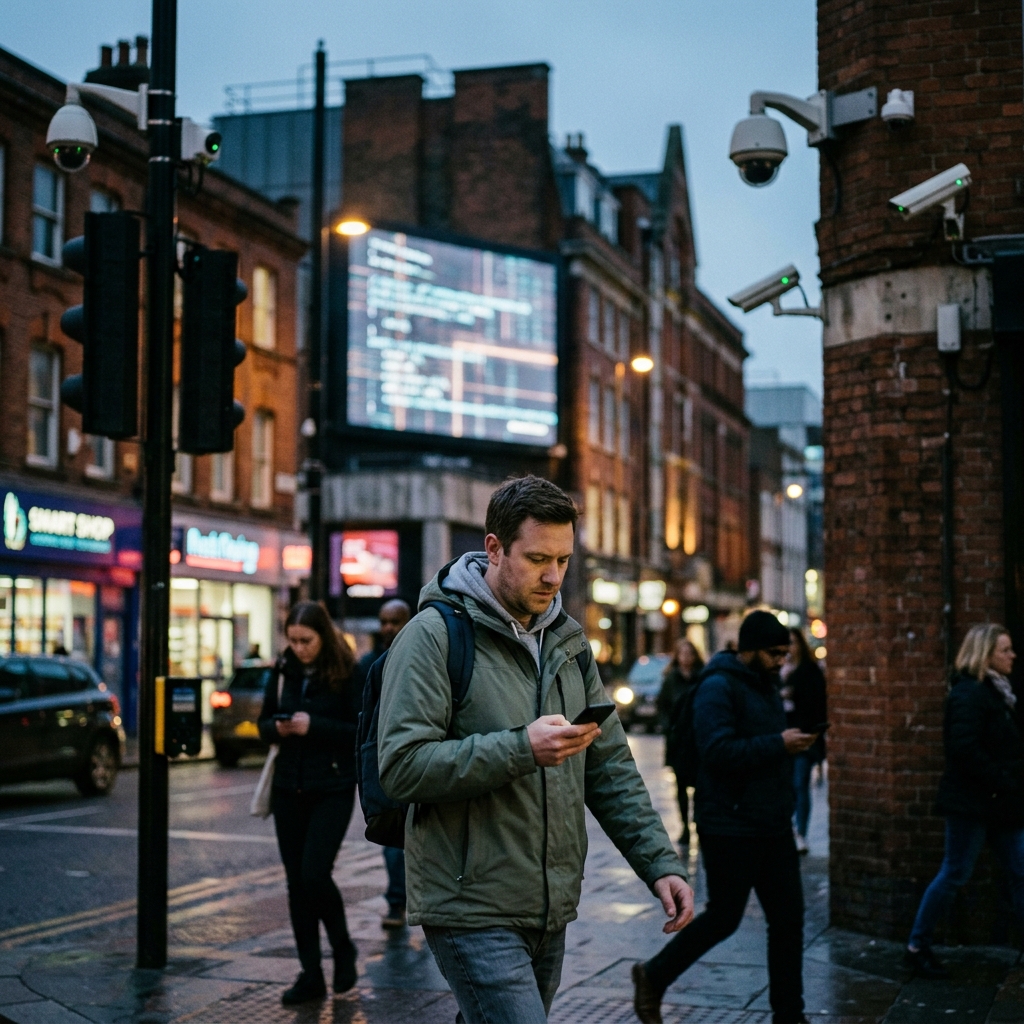
The Intersection of Innovation and Constitutional Rights
Civil liberties serve as the essential bedrock of democratic societies, acting as a critical buffer between individual autonomy and overreaching state power. Historically, these foundational liberties—particularly the right to privacy and the staunch protection against unreasonable searches and seizures—were conceptualized exclusively in a physical world. The United States Constitution’s Fourth Amendment, alongside international human rights frameworks, was explicitly drafted to protect tangible items: ”persons, houses, papers, and effects.” In the pre-digital era, privacy was inherently safeguarded by the natural limitations of the physical world. Thick walls, heavy locks, and the sheer logistical and financial impossibility of monitoring millions of citizens simultaneously acted as a robust defense against mass surveillance.
However, the rapid and relentless acceleration of the digital revolution has fundamentally fractured this historical legal paradigm. Today, human life is inexorably intertwined with complex digital infrastructure. We carry pocket-sized supercomputers that constantly transmit our real-time geographic location, we rely on remote cloud servers to store our most intimate personal and professional correspondence, and we navigate public spaces that are heavily laden with high-definition tracking cameras. The transformation of physical ”papers and effects” into invisible bits and bytes stored on remote servers has created unprecedented, high-stakes challenges for legal scholars, policymakers, and privacy advocates worldwide.
The core question defining civil liberties in the twenty-first century is no longer simply about keeping government agents out of our physical living rooms. Instead, the modern challenge is determining how to establish firm digital boundaries that prevent unwarranted intrusion into our deeply personal virtual lives. Technological capabilities have vastly outpaced the historically slow machinery of the law, creating dangerous gray areas where constitutional protections are routinely tested, redefined, and sometimes alarmingly diluted by the surveillance apparatus.
Reevaluating the Third-Party Doctrine
One of the most consequential and heavily debated battlegrounds in the realm of digital civil liberties is the ongoing application of the ”third-party doctrine.” Established by the Supreme Court during the 1970s, this legal doctrine essentially posits that an individual possesses no legitimate expectation of privacy in information they voluntarily turn over to third parties. In a pre-digital context, this pertained to banking records and the specific phone numbers dialed on a home landline. The judicial logic was straightforward: if you freely share your data with a bank clerk or a telephone operator, you implicitly accept the risk that those entities might eventually hand that information over to the government.
In our deeply connected digital age, however, the strict application of this doctrine poses an existential threat to personal privacy. Citizens do not merely hand over a few random digits to their service providers; they continuously and automatically broadcast a comprehensive, intimate mosaic of their daily lives. Internet service providers track browsing histories, health applications log heart rates and menstrual cycles, and cellular carriers map physical movements with astonishing, pinpoint precision. Simply existing in modern society requires participating in this data exchange.
Recognizing the severe friction between outdated legal precedent and modern technological reality, the Supreme Court issued a landmark ruling in Carpenter v. United States (2018). The Court ruled that acquiring an individual’s historical cell-site location information (CSLI) from telecom providers requires a warrant supported by probable cause. The ruling correctly noted that a cell phone is essentially a ”feature of human anatomy,” and that tracking its historical location provides an intimate window into a person’s life, revealing their familial, political, professional, religious, and sexual associations. This crucial decision marked a vital limitation on the third-party doctrine, finally acknowledging that the involuntary, constant generation of digital location data necessitates robust, modern constitutional safeguards.
The Rise of Algorithmic Surveillance and Biometrics
Beyond the immense volume of data silently emitted by our mobile devices, the physical world itself has been transformed into a sprawling arena of constant algorithmic surveillance. The widespread proliferation of facial recognition technology (FRT) and advanced biometric tracking has effectively dismantled the historical concept of public anonymity. Historically, an individual could freely walk through a crowded market, attend a controversial political protest, or visit a sensitive medical clinic without being immediately identified and permanently cataloged in a database. Today, vast, interconnected networks of both state and privately owned cameras are equipped with sophisticated machine-learning software capable of identifying individuals in real-time, mapping their social associations, and systematically tracking their physical movements across entire metropolitan areas.
This immense tracking capability presents profound, chilling risks to civil liberties, particularly regarding the fundamental rights to free speech, peaceful assembly, and association. Furthermore, it is a well-documented fact that facial recognition systems are fundamentally flawed and deeply biased. In a highly detailed 2020 testimony before the United States Congress based on extensive evaluations, the National Institute of Standards and Technology (NIST) detailed massive demographic disparities in the accuracy of commercially available facial recognition algorithms.
The NIST research revealed that false positive rates are substantially higher in Asian, African American, and Native American faces relative to Caucasian faces. Furthermore, algorithmic error rates were found to be noticeably higher for women than for men, as well as higher for the elderly and young children. When law enforcement agencies unquestioningly deploy these deeply flawed FRT systems, these algorithmic biases translate directly into real-world civil rights violations. This routinely leads to devastating consequences, including wrongful arrests, unlawful detentions, and the systemic, disproportionate targeting of marginalized communities who are already heavily policed.
Corporate Complicity and the Data Broker Economy
A distinctly modern challenge characterizing the surveillance landscape is the intricate, symbiotic, and largely unregulated relationship between government intelligence agencies and private technology corporations. The vast majority of our digital data is not directly or forcefully collected by the state itself; rather, it is voluntarily harvested, packaged, and monetized by private corporations. Big Tech companies, alongside a shadowy, multibillion-dollar ecosystem of third-party data brokers, relentlessly scrape location data, consumer habits, and social network connections from our smartphone applications and smart home devices.
This corporate data hoarding has given rise to a legally dubious and highly controversial practice wherein law enforcement agencies simply bypass the rigid constitutional requirement for a warrant by purchasing the desired citizen data directly on the open commercial market. By opening their checkbooks to buy location histories, geofence parameters, and digital behavioral profiles from commercial data brokers, government entities effectively exploit a massive, unregulated loophole in domestic privacy laws. This corporate complicity in state surveillance severely undermines the foundational principles of due process and probable cause.
The United Nations Office of the High Commissioner for Human Rights (OHCHR), in its comprehensive 2022 thematic report on the right to privacy in the digital age, sharply criticized this growing global trend. The OHCHR warned that the widespread, unregulated monitoring of public spaces and the unchecked abuse of commercial hacking and data tools carry profound risks. These practices threaten to create unescapable systems of pervasive surveillance and control that could fatally undermine the development of vibrant, democratic, and rights-respecting societies worldwide.
Traditional vs. Digital Privacy Protections
To fully grasp the severe erosion of civil liberties, it is highly instructive to compare the baseline expectations of privacy from the pre-digital era to our current technological reality. The table below outlines how fundamental rights have shifted.
| Privacy Concept | Pre-Digital Era (Physical) | Modern Digital Era |
|---|---|---|
| Search & Seizure | Required physical entry into a home or direct seizure of physical documents. | Remote access to cloud servers and digital devices; often done invisibly. |
| Public Anonymity | Guaranteed by the sheer volume of crowds and the lack of tracking technology. | Effectively eliminated by facial recognition, license plate readers, and CCTV. |
| Third-Party Sharing | Limited to discrete actions (e.g., handing a document to an accountant). | Constant, involuntary broadcasting of location and behavioral data to tech firms. |
| Scale of Surveillance | Targeted and resource-intensive, requiring immense physical manpower. | Mass, automated surveillance that is incredibly cheap and easy to scale. |
Forging a Path Forward for Digital Civil Rights
Addressing the slow, systematic erosion of digital civil liberties requires a highly comprehensive and multifaceted approach. This strategy must necessarily involve aggressive legislative reform, the ongoing evolution of judicial interpretation, and the mandatory implementation of robust technological safeguards. While the current challenges are undeniably immense, there are clear, actionable steps that can ensure human rights survive the complex digital transition.
- Comprehensive Privacy Legislation: National legislatures must immediately enact strict data protection laws that explicitly restrict the unregulated collection, retention, and sale of location and biometric data by commercial entities. This must include decisively closing the glaring legal loophole that currently allows state actors to purchase what they cannot constitutionally seize without a judge’s approval.
- Regulating Biometric Surveillance: There must be a widespread, strictly enforced moratorium on the use of passive live facial recognition technology in public spaces by law enforcement agencies. Until rigorous, unbiased standards can be definitively guaranteed—and their impacts on marginalized communities fully mitigated—these systems pose too great a threat to a free society.
- Protecting End-to-End Encryption: The widespread availability and adoption of end-to-end encryption is a non-negotiable necessity for the long-term preservation of digital privacy. Encryption acts as the digital equivalent of a securely sealed envelope; it ensures that intimate conversations, financial transactions, and medical records remain totally inaccessible to malicious cybercriminals and overreaching state surveillance alike. Policymakers must firmly resist any legislative calls to mandate built-in ”backdoors” in encrypted systems, as intentionally weakening underlying security protocols ultimately harms civil liberties and dangerously exposes citizens to cyber warfare.
Frequently Asked Questions (FAQs)
What is the third-party doctrine in the context of digital privacy?
The third-party doctrine is a longstanding legal principle suggesting that individuals lose their reasonable expectation of privacy for any information they voluntarily share with a third party, such as a bank or a telecommunications provider. In the digital age, this doctrine has become highly controversial, as citizens are practically forced to share massive amounts of intimate data (like real-time location and search histories) with tech companies simply to participate in modern society.
How does facial recognition technology threaten civil liberties?
Facial recognition technology (FRT) severely threatens civil liberties by effectively eliminating physical anonymity in public spaces, which can drastically chill free speech, the right to protest, and freedom of assembly. Additionally, extensive government studies have proven that FRT algorithms suffer from significant racial and gender biases, leading to higher rates of false identifications and wrongful arrests among minority populations and women.
Can law enforcement legally purchase citizen data without a warrant?
Currently, yes. Because of gaps in existing privacy legislation, law enforcement and intelligence agencies routinely bypass the Fourth Amendment’s traditional warrant requirement by simply purchasing detailed location data and digital behavioral profiles from private, commercial data brokers operating on the open market.
Why is end-to-end encryption vital for protecting constitutional rights?
End-to-end encryption guarantees that only the communicating users can read the messages, shielding private communications from hackers, corporate entities, and government surveillance. It ensures the modern equivalent of a private, closed-door conversation, which is absolutely essential for protecting freedom of expression, securing sensitive journalistic sources, and maintaining individual autonomy in a highly monitored world.
References
- Carpenter v. United States, 585 U.S. 296 (2018) — Supreme Court of the United States. 2018-06-22. https://www.supremecourt.gov/opinions/17pdf/16-402_h315.pdf
- Facial Recognition Technology (FRT) Testimony — Charles H. Romine / National Institute of Standards and Technology (NIST). 2020-02-06. https://www.nist.gov/speech-testimony/facial-recognition-technology-frt-0
- The right to privacy in the digital age (A/HRC/51/17) — UN Office of the High Commissioner for Human Rights (OHCHR). 2022-08-04. https://www.ohchr.org/en/documents/thematic-reports/ahrc5117-right-privacy-digital-age
Similar Articles








Read full bio of medha deb


