
How to Spot and Stop Chinese Consulate Impersonation Scams
Learn how fake consulate calls work, who they target, and exactly what to do if scammers pretend to be Chinese officials.
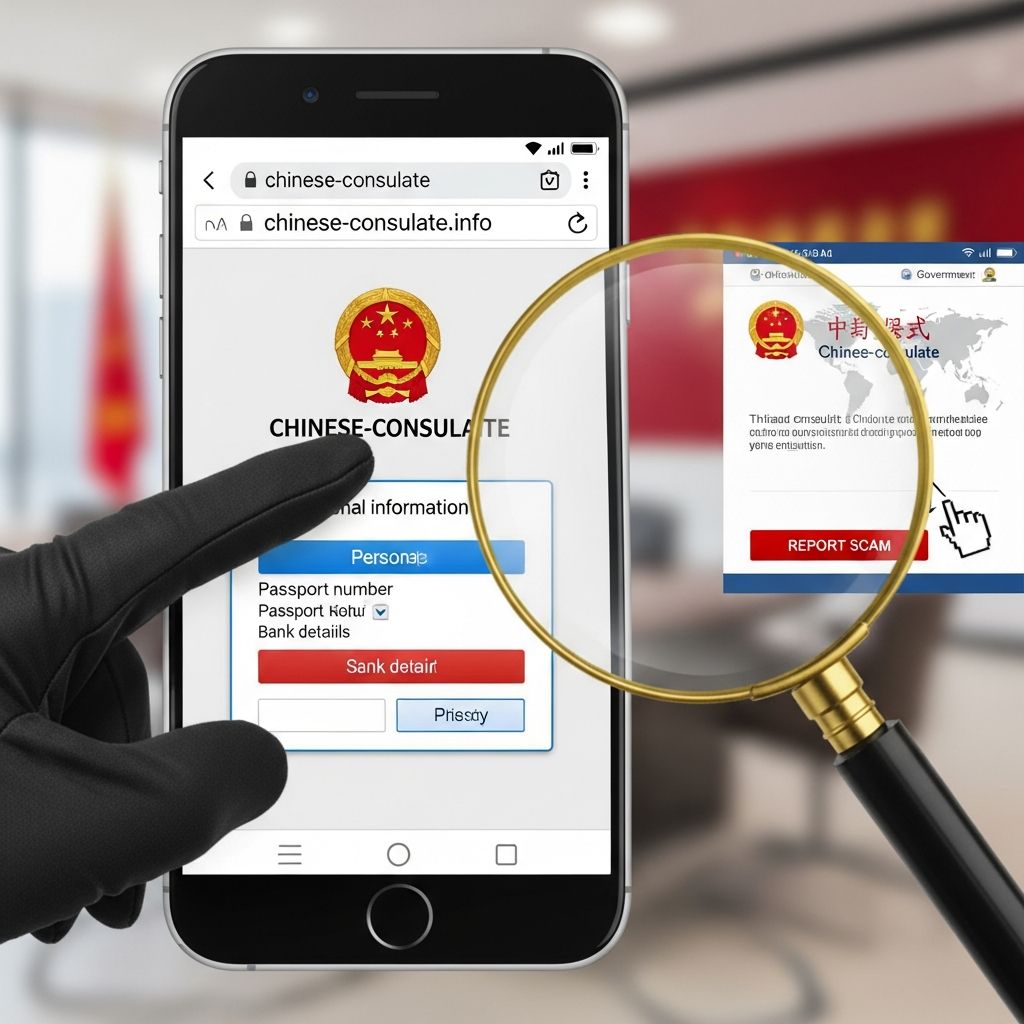
Across the United States and in other countries, scammers are placing calls and messages that pretend to come from a Chinese consulate or embassy. These fraudsters pressure people into sharing personal information or sending money, often by using fear and urgency. Understanding how these schemes work is the first step to staying safe.
Why Scammers Pretend to Be Consulates
Impersonating a government office is a powerful way for criminals to build instant credibility and fear. When a caller claims to be from a consulate, many people feel they must cooperate, especially if they rely on that government office for visas, passports, or legal documents. According to the U.S. Federal Trade Commission (FTC), scammers use this trust to trick victims into providing bank details or making wire transfers.
Chinese consulate and embassy impersonation scams have been widely reported, including by U.S. authorities and by Chinese diplomatic missions themselves, which have publicly warned that they do do not call people to demand money or personal banking information.
How the Consulate Impersonation Scam Typically Works
Although details can vary, most of these scams follow a similar pattern. Recognizing the common elements can help you end the call before any damage is done.
1. The Initial Contact
Scammers may contact you through several channels:
- Automated phone calls (robocalls), often starting in Mandarin
- Live calls from someone claiming to be a consular official, police officer, or translator
- Messages sent through apps popular among Chinese speakers, such as WeChat or similar platforms
The message might say there is an important document waiting at the consulate, a legal issue involving your name, or an urgent matter with your immigration or financial status.
2. Creating Fear and Urgency
Fraudsters rely on emotional pressure. They may claim:
- Your identity has been used for criminal activity in China or abroad
- There is a warrant for your arrest or a pending investigation
- You failed to pick up an official notice or package and now face penalties
- Your visa, student status, or residency is at risk if you do not cooperate
At this stage, they push you not to hang up and warn you not to tell anyone else, claiming the case is “confidential.” This isolation increases their control over the conversation.
3. Demands for Money or Information
Once you are scared or confused, the scammer moves to their real goal: obtaining money or sensitive data. Common demands include:
- Requesting your passport number, national ID number, or Social Security number
- Asking for bank account or credit card numbers
- Directing you to wire money or make a bank transfer to a so-called “safe” account
- Requesting payment via prepaid gift cards, cryptocurrency, or third-party payment apps
In some cases, they may also ask you to keep a video call open for long periods or to record a statement, which can later be misused or manipulated.
Who Is Being Targeted?
Reports from both U.S. authorities and Chinese consulates show that these scams often target people with Chinese names or those likely to have ties to China, such as students, workers, and recent immigrants. However, anyone can be called: scammers can auto-dial phone numbers and may also target people outside the Chinese-speaking community once a script proves profitable.
| Typical Target Group | Why They Are Targeted |
|---|---|
| Chinese international students | Often unfamiliar with local laws, may fear losing visa status, and may trust calls from “authorities” more readily. |
| Recent immigrants or temporary workers | May be concerned about immigration problems and reluctant to contact local police. |
| Families of people living abroad | Scammers sometimes claim that a relative in another country is in trouble and needs money urgently. |
| Chinese-speaking professionals | Seen as more likely to have funds and to understand Mandarin or other Chinese dialects. |
Red Flags That a “Consulate” Call Is a Scam
Legitimate consulates and embassies follow strict procedures. Several signs can help you quickly identify a fraudulent contact.
- Unsolicited contact: You receive a call or message about an issue you did not expect, such as a mysterious package, fine, or legal case.
- Pressure to act immediately: The caller says you must decide right away or face arrest, deportation, or loss of status.
- Demands for payment by phone: They ask you to wire money, pay via gift cards, or transfer funds to a “safe” or “case” account. Consulates have stated they do not collect fees this way.
- Requests for sensitive personal data: They ask for your full bank account numbers, PINs, or other information that real officials usually would not request over the phone.
- Caller ID spoofing: The number may appear to be from a consulate, but scammers can fake phone numbers using cheap technology.
- Threatening language: The caller uses fear—arrest, jail, exposure to family—to keep you on the line and compliant.
What Real Consulates and Embassies Say
The Chinese Consulate General in New York, and other Chinese missions, have issued public notices explaining that:
- They do not call people to demand bank transfers or online payments.
- Official fees are collected only at consular service windows during in-person visits.
- They will not threaten arrest or immigration punishment by phone.
- Suspicious calls should be reported to local law enforcement.
Likewise, U.S. agencies such as the FTC have emphasized that no legitimate official—whether from a consulate, the IRS, immigration, or the police—will ever demand payment through gift cards, cryptocurrency, or wire transfers as the only way to resolve a problem.
How to Respond If You Get a Suspicious Call
Taking the right steps in the first few moments can prevent major financial and privacy harm.
Immediate Actions
- Hang up right away. You do not have to be polite, and you do not owe an explanation.
- Do not press any keys. If it is a robocall asking you to “press 1” to speak with an agent, simply end the call; pressing keys can confirm your number is active.
- Do not share any information. Never confirm your name, address, ID number, or bank details.
- Do not call back using numbers they give you. If you truly have consular business, look up the official number on a trusted government website.
Follow-Up Steps
If you think you may have been targeted or tricked, take these additional steps:
- Report the call to authorities. In the U.S., you can submit a report to the Federal Trade Commission, which tracks fraud patterns.
- Contact local police if you have lost money or shared sensitive data, so a report can be filed and investigated.
- Alert your bank or card issuer immediately if you provided financial details or made a transfer. They may be able to block transactions or freeze accounts.
- Monitor your accounts and credit for unusual activity, and consider placing a fraud alert with major credit bureaus if personal identifiers were exposed.
- Warn friends, family, and classmates, especially those who may be new to the country or unfamiliar with local scams.
Protecting Yourself and Your Community
Prevention is easier when you adopt a few simple habits around phone calls, messages, and your personal information.
Build Safe Communication Habits
- Be skeptical of unexpected calls, especially if they involve money or legal threats.
- Verify independently. If a call mentions a real organization—such as a consulate, bank, or university—hang up and reach out using a phone number or email from an official website, not from the caller.
- Limit what you share publicly. Reduce how much personal data you post on social media or public platforms; scammers often use this to sound more credible.
- Use call-blocking tools. Many phones and carriers provide features that help filter suspected spam and robocalls.
Support Vulnerable Groups
Some people are at higher risk because of language barriers, unfamiliarity with local systems, or fear of dealing with authorities. You can help by:
- Explaining common scams in the person’s preferred language when possible
- Sharing official warnings from credible sources, such as consulate websites or government consumer protection agencies
- Encouraging international students and newcomers to ask a trusted friend, advisor, or legal clinic before responding to any threatening call
Frequently Asked Questions (FAQs)
Q1: Can a real Chinese consulate or embassy call me about a legal issue?
A real consulate may occasionally contact people who have active cases or pending services, but they will not threaten arrest, demand secrecy, or insist on immediate payment by phone or online transfer. Public notices from Chinese consulates clearly state that they do not collect fees over the phone or via social media and that suspicious calls should be reported to police.
Q2: The caller knew my Chinese name and part of my ID number. Does that mean it’s real?
Not necessarily. Scammers can obtain personal details from data breaches, public records, or social media and use them to sound legitimate. Even if a caller knows accurate information about you, treat any demand for money or sensitive data with caution and verify independently through official channels.
Q3: What if the caller ID shows the actual number of a consulate or embassy?
Caller ID can be spoofed, meaning the number on your screen can be manipulated to look like any organization, including a consulate, police department, or bank. Do not rely on caller ID alone. Hang up and dial the official number listed on the consulate’s website to confirm.
Q4: Is it safe to press buttons to talk to a live agent or to be removed from the call list?
No. Pressing keys can confirm to scammers that your number is active, which may result in more unwanted calls. The safest option is to hang up immediately and, if possible, block the number.
Q5: I already sent money to someone claiming to be from a consulate. What should I do now?
Act quickly. Contact your bank or payment provider right away and explain that you were the victim of a scam, asking whether any transfers can be reversed or frozen. Then report the fraud to your local police and to a national consumer protection or fraud-reporting agency so they can track patterns and possibly assist in recovery efforts.
References
- Scammers impersonate the Chinese Consulate — Federal Trade Commission (FTC). 2018-04-12. https://consumer.ftc.gov/consumer-alerts/2018/04/scammers-impersonate-chinese-consulate
- PHISHING EXAMPLE: Phone Fraud, Chinese Consulate — Information Security Office, University of California, Berkeley. 2018-06-07. https://security.berkeley.edu/news/phishing-example-phone-fraud-chinese-consulate
- Phone Scam Alert — Consulate General of the People’s Republic of China in New York. 2025-05-22. https://newyork.china-consulate.gov.cn/eng/lsfw/lsbh/202505/t20250522_11630630.htm
- Latest Scam Alerts — Anti-Deception Coordination Centre (ADCC), Hong Kong Police Force. 2025-11-25 (page ongoing). https://www.adcc.gov.hk/en-hk/alerts.html
Similar Articles








Read full bio of medha deb


