
The Hidden Map: Cell Phone Tracking and Digital Privacy
Explore the intersection of mobile technology, government surveillance, and the evolving Fourth Amendment.
The Unseen Trail We Leave Behind
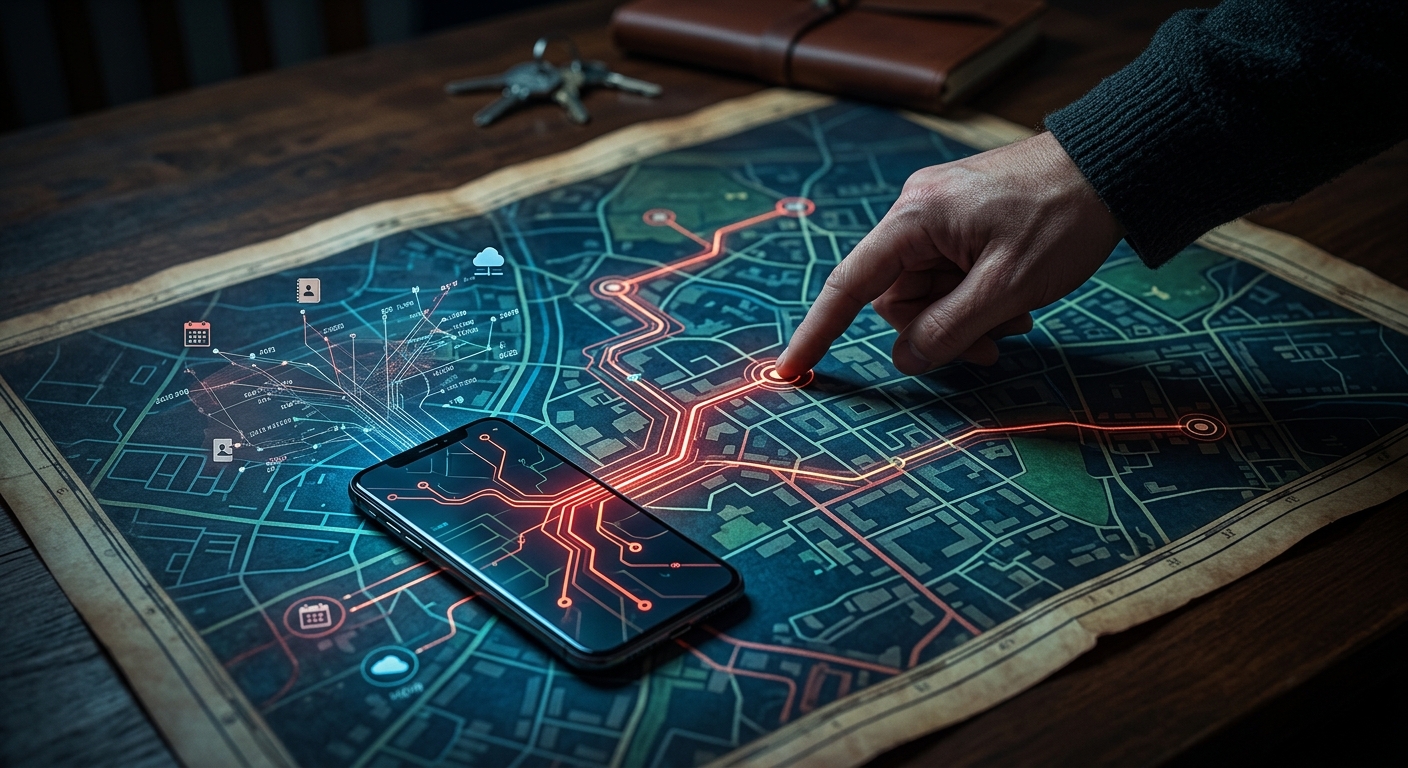
In modern society, a smartphone is much more than a mere communication tool; it is a compulsory companion for navigating daily life. We use our devices for everything from banking and navigation to social interaction and remote work. However, the immense convenience of constant connectivity comes with an invisible, yet profoundly significant, cost: continuous geolocation surveillance. Every time your phone connects to a cellular network, it generates a digital breadcrumb. Over time, these breadcrumbs form a detailed, inescapable map of your daily existence.
For years, the sheer volume of data generated by our mobile devices outpaced the legal frameworks designed to protect civil liberties. Law enforcement agencies capitalized on this technological gap, routinely accessing location data without judicial oversight. This practice sparked a fierce national debate regarding the balance between effective criminal investigations and the fundamental constitutional right to privacy. To truly grasp the gravity of this issue, one must first understand how this technology operates beneath the surface and how the legal landscape has evolved to address it.
The Mechanics of Mobile Tracking
When most people think of location tracking, they picture the Global Positioning System (GPS). While GPS is highly accurate and widely used by mapping applications, it is far from the only method by which a mobile device can be tracked. In fact, relying solely on GPS paints an incomplete picture of mobile surveillance capabilities.
The Anatomy of CSLI
The fundamental infrastructure of cellular communication relies on a vast network of radio antennas, commonly known as cell towers or cell sites. For a mobile phone to function—to receive calls, text messages, or push notifications—it must maintain a constant connection with the nearest available cell tower. To do this, the device continuously scans its environment and “pings” nearby towers, measuring signal strength to ensure a seamless handoff as the user moves from one geographic area to another.
Each time this connection occurs, the wireless carrier logs a time-stamped record known as Cell-Site Location Information (CSLI). Because cellular providers operate thousands of towers, especially in densely populated urban areas, this data can pinpoint a user’s location with astonishing precision. Unlike a GPS module, which a user can manually disable in their device settings, CSLI generation is an inherent, inescapable requirement for cellular network functionality. If the phone is powered on and connected to a network, it is generating CSLI.
Wi-Fi and Bluetooth Beacons
Beyond GPS and CSLI, modern smartphones frequently broadcast their presence through Wi-Fi and Bluetooth protocols. Even if a user does not actively connect to a specific network, the device emits periodic probes searching for familiar routers. Retailers and commercial entities often deploy Bluetooth beacons or Wi-Fi sniffers within physical stores to track shopper movements, analyzing which aisles a customer visits and how long they linger. While this data is primarily utilized for targeted advertising, it represents another layer of pervasive location monitoring that operates silently in the background.
Comparison of Location Tracking Technologies
| Technology | How It Works | Accuracy | User Control |
|---|---|---|---|
| GPS | Receives signals from orbital satellites to calculate coordinates. | High (often within meters) | Can usually be toggled off in settings. |
| CSLI | Pings local cellular radio towers to route calls and data. | Medium to High (depends on tower density) | Cannot be disabled without turning on Airplane Mode. |
| Wi-Fi/Bluetooth | Scans for local routers or beacons to establish local network connections. | Very High (room-level accuracy indoors) | Can be disabled via device menus. |
The Erosion of the Third-Party Doctrine
The legal justification for warrantless government access to location data historically rested on a foundational concept known as the “Third-Party Doctrine.” Established in the 1970s through Supreme Court cases such as United States v. Miller and Smith v. Maryland, the doctrine asserts a simple premise: individuals have no reasonable expectation of privacy in information they voluntarily hand over to third parties.
In the analog era, this logic was relatively straightforward. If you gave your financial records to a bank, or dialed a phone number through a telephone operator, you implicitly understood that the bank or the operator had access to that information. Consequently, the government could subpoena those records directly from the business without needing a search warrant supported by probable cause.
However, the digital revolution placed the Third-Party Doctrine under immense strain. Cell phone users do not actively choose to share their location coordinates with Verizon, AT&T, or T-Mobile in the same way they choose to deposit a check. The conveyance of CSLI is entirely automated, occurring without affirmative user action. Applying a 1970s legal framework to 21st-century technology meant that citizens were effectively forced to choose between participating in modern society and surrendering their Fourth Amendment rights.
A Constitutional Turning Point: Carpenter v. United States
The tension between the Third-Party Doctrine and modern digital surveillance culminated in the landmark 2018 Supreme Court decision, Carpenter v. United States. The case centered on Timothy Carpenter, a suspect in a string of armed robberies. Without obtaining a warrant, federal investigators acquired 127 days’ worth of Carpenter’s historical CSLI from his wireless carriers. This data yielded 12,898 distinct location points—an average of 101 data points per day—allowing prosecutors to place Carpenter near the scenes of the crimes.
Carpenter’s legal team argued that this warrantless acquisition violated his Fourth Amendment right against unreasonable searches and seizures. The government, relying heavily on the Third-Party Doctrine, countered that Carpenter had voluntarily used his phone, thereby surrendering any expectation of privacy regarding the location data held by his service providers.
In a deeply consequential 5-4 ruling, the Supreme Court sided with Carpenter. Chief Justice John Roberts, writing for the majority, acknowledged that historical cell-site records present unique constitutional challenges. The Court ruled that tracking a person’s location over a prolonged period provides an intimate window into the “privacies of life,” revealing their familial, political, professional, religious, and sexual associations. Because a cell phone is virtually an extension of human anatomy in the modern era, the Court determined that individuals maintain a legitimate expectation of privacy in their physical movements, even if that data is held by a third-party corporation. As a result, law enforcement must generally obtain a search warrant based on probable cause to access historical CSLI.
Current Law Enforcement Practices and Loopholes
While Carpenter established a robust constitutional shield for historical location data, it did not end the privacy debate. Law enforcement agencies continually adapt to legal shifts, and several controversial practices and loopholes remain fully active today.
Real-Time Tracking and Tower Dumps
The Supreme Court specifically limited its ruling in Carpenter to historical data covering an extended period (seven days or more). It left open the question of whether a warrant is required for real-time tracking—where police actively “ping” a suspect’s phone to find their current location—or for short-term historical requests. Furthermore, authorities frequently utilize “tower dumps,” a practice where they compel a service provider to release the identifying information of every single device that connected to a specific cell tower during a certain timeframe. This dragnet approach inherently sweeps up the data of countless innocent bystanders.
Cell-Site Simulators (Stingrays)
Another prevalent technology is the cell-site simulator, colloquially known as a “Stingray.” These portable devices masquerade as legitimate cell towers, tricking nearby mobile phones into connecting with them rather than the actual cellular network. Once connected, the simulator can extract unique device identifiers and pinpoint the phone’s physical location. Because Stingrays emit signals that can disrupt normal cellular service and potentially interfere with emergency communications, their use is highly controversial. While federal agencies like the Department of Justice have implemented internal policies requiring warrants for Stingray use in most circumstances, state and local regulations vary wildly, leaving significant gaps in oversight.
Commercial Data Brokers
Perhaps the most alarming modern loophole is the rise of the commercial data broker industry. Thousands of smartphone applications—ranging from weather widgets to mobile games—collect highly precise GPS data from users under the guise of providing localized services. These app developers then sell this location data to massive aggregation companies. Because the government is prohibited from seizing data without a warrant, federal agencies have increasingly resorted to simply purchasing it. By buying bulk location data directly from commercial brokers, authorities bypass the Fourth Amendment’s warrant requirement entirely, arguing that they are merely operating as commercial consumers in a free market.
Actionable Steps to Reclaim Your Digital Privacy
While overarching policy changes and judicial rulings are necessary to secure comprehensive digital rights, individuals do not have to wait for the legal system to catch up. There are several proactive measures you can implement to drastically reduce the size of your digital footprint:
- Audit Application Permissions: Routinely check your device’s settings to review which applications have access to your location. Revoke location privileges for any app that does not strictly require it to function (e.g., a calculator or a simple game).
- Use “While Using” Constraints: If an app legitimately needs your location (such as a ride-sharing service or maps), restrict its access to “Only While Using the App” rather than allowing continuous background tracking.
- Manage Wi-Fi and Bluetooth: Turn off Wi-Fi and Bluetooth when you are not actively using them. This prevents commercial retail sensors from silently logging your device’s MAC address as you walk through a mall or city street.
- Utilize Airplane Mode for Complete Disconnect: If you must travel to a sensitive location and wish to avoid generating CSLI, enabling Airplane Mode severs the connection to cellular towers. Be aware, however, that your phone cannot receive calls or texts in this state.
- Scrutinize Terms of Service: Before downloading niche applications, consider how they monetize their platform. Free apps often generate revenue by harvesting and selling user data.
Frequently Asked Questions (FAQs)
Does turning off location services stop my phone from tracking me?
Turning off “Location Services” in your phone’s software disables the GPS module, meaning applications cannot pinpoint your exact coordinates. However, it does not stop your phone from connecting to cellular towers. As long as your phone has a cellular signal, your wireless provider is generating and storing Cell-Site Location Information (CSLI). The only way to completely halt cellular tracking is to power the device down or use Airplane Mode.
Can a VPN hide my physical location from my cellular provider?
No. A Virtual Private Network (VPN) encrypts your internet traffic and hides your IP address from the websites you visit, providing excellent protection against online tracking. However, a VPN operates at the software level and does nothing to hide your device’s physical radio connections from the cell towers maintained by your wireless carrier.
Are law enforcement agencies required to tell me if they tracked my location?
Under certain statutes, such as the Stored Communications Act, the government is generally required to notify a target if their electronic records were accessed. However, courts frequently grant “gag orders” or delayed notification requests if prosecutors argue that informing the suspect would jeopardize an ongoing criminal investigation, lead to the destruction of evidence, or endanger a witness’s life.
Conclusion
The ubiquitous nature of the smartphone has undeniably transformed our world, offering unprecedented convenience and connectivity. Yet, it has also transformed citizens into walking data generators, perpetually broadcasting their whereabouts to corporate servers and government agencies. While the landmark ruling in Carpenter v. United States reaffirmed that the Fourth Amendment’s protections extend into the digital age, the evolution of surveillance technology guarantees that the battle for privacy is far from over. From commercial data brokers to invasive cell-site simulators, the landscape of location tracking remains fraught with constitutional perils. As technology continues its relentless advance, both active legislative reform and vigilant personal digital hygiene will be essential to ensure that our right to move freely and anonymously is not permanently erased.
References
- Carpenter v. United States, 585 U.S. 296 (2018) — Supreme Court of the United States. 2018-06-22. https://www.supremecourt.gov/opinions/17pdf/16-402_h315.pdf
- The Fourth Amendment in the Digital Age — Brennan Center for Justice. 2021-03-18. https://www.brennancenter.org/our-work/research-reports/fourth-amendment-digital-age
- Department of Justice Policy Guidance: Use of Cell-Site Simulator Technology — U.S. Department of Justice. 2015-09-03. https://www.justice.gov/opa/file/767321/download
- How Location Monitoring Works — United States Courts. 2024-12-15. https://www.uscourts.gov/services-forms/location-monitoring
Similar Articles








Read full bio of medha deb


