
Blake Lively, TikTok, and the Legal Drama Behind *It Ends With Us*
Inside the dispute between Blake Lively and TikTok creators over fan criticism, defamation claims, and what the law says about online commentary.
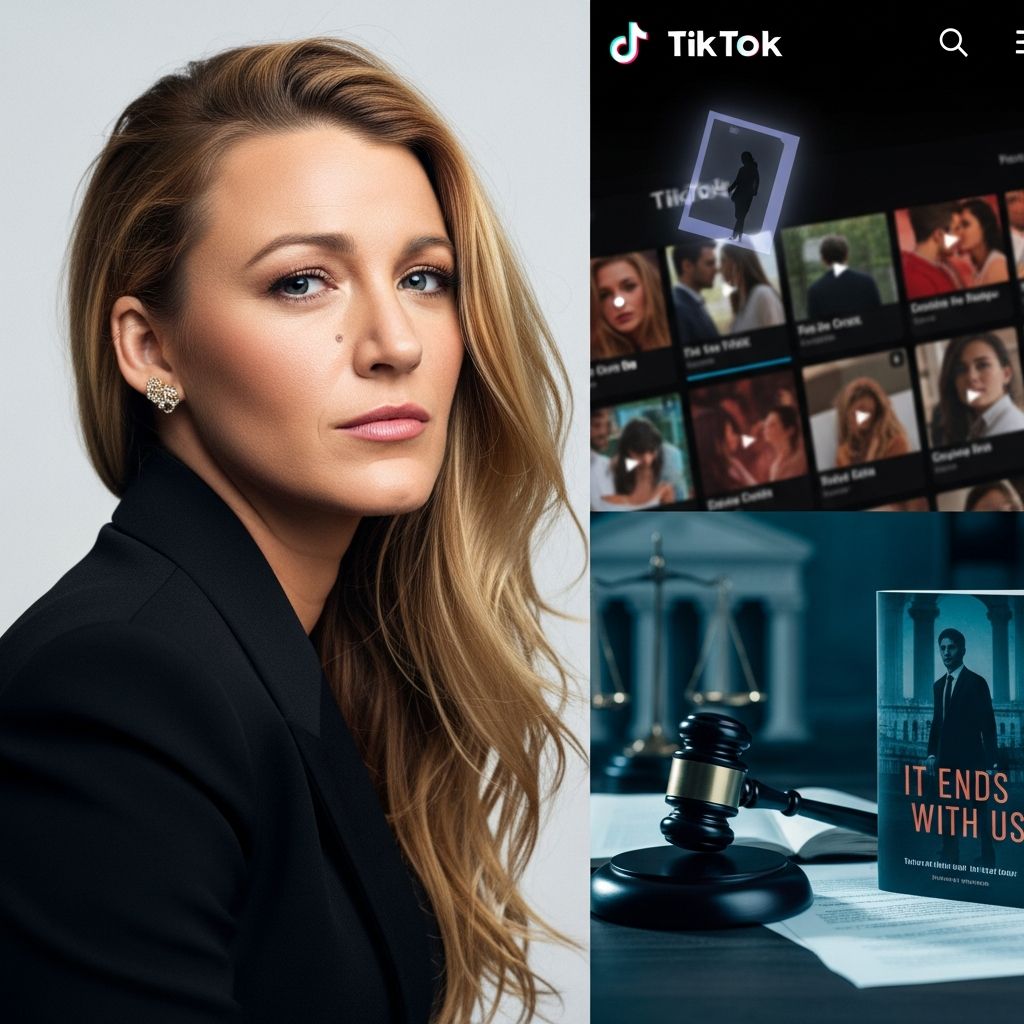
When a bestselling book becomes a high-profile film, controversy is almost guaranteed. With It Ends With Us, the debate has gone beyond reviews and social media reactions and edged into legal territory. Actor and producer Blake Lively has pushed back against TikTok criticism, sparking a broader conversation about how far fans and online commentators can go before their posts become potential defamation.
This article unpacks the dispute as inspiration for a deeper look at the law: what defamation is, how it applies to online commentary, why celebrities face a different legal standard, and what both fans and creators should know before posting their next viral video.
From Romance Novel to Legal Flashpoint
It Ends With Us, originally a popular novel marketed as a romantic story that also addresses domestic abuse, drew an intense fandom well before cameras rolled. Once the film adaptation was announced, every creative choice—casting, costumes, tone, and marketing—became a lightning rod on social media.
Blake Lively, as both star and producer, quickly found herself at the center of this storm. TikTok creators dissected:
- Her performance, styling, and age relative to the character.
- The film’s portrayal of sensitive subjects like intimate partner violence.
- Alleged behind-the-scenes decisions about how faithfully the movie followed the book.
Some commentary stayed squarely within traditional criticism. But other videos allegedly veered into claiming specific facts about Lively’s conduct and motives, igniting debate about whether those statements crossed the legal line into defamation.
Defamation 101: When Speech Becomes Legally Risky
Defamation law is meant to balance two powerful interests: protecting reputation and preserving freedom of expression. In the U.S., that balance is strongly tilted toward protecting speech, especially when the subject is a public figure or a matter of public concern.
At its core, a defamation claim typically requires the plaintiff to show:
- A false statement of fact about the plaintiff.
- Publication to at least one other person (a TikTok audience qualifies).
- Fault—at least negligence, and for public figures, actual malice.
- Harm to reputation (or presumed harm for certain categories of statements in some states).
Under the U.S. Supreme Court’s landmark decision in New York Times Co. v. Sullivan, public officials—and later, public figures—must prove that false statements were made with “actual malice,” meaning the speaker either knew they were false or acted with reckless disregard for whether they were true.1 This high bar is designed to prevent self-censorship in discussions about public figures and public issues.
Why TikTok Creators and Fans Feel Exposed
Creators who make commentary videos about celebrities often assume they are just “sharing opinions.” But once a video goes viral, the stakes change. The same legal rules that apply to newspapers and TV broadcasts can apply to a creator talking into their phone.
Common ways online content can raise defamation concerns include:
- Stating rumors as facts (e.g., saying someone did something unlawful rather than clearly labeling it a rumor).
- Implying undisclosed factual bases for harsh character attacks (e.g., “I can’t say why, but trust me, she’s a domestic abuser”).
- Mischaracterizing documents or footage (like contracts, emails, or on-set clips) while presenting a narrative as factual.
- Ignoring clear corrections when the subject or their representatives publicly dispute demonstrably false claims.
Creators may believe they are safe because they are “just small accounts.” But in practice, virality, not follower count, often drives legal attention. A video with millions of views can have reputational impact comparable to traditional media coverage.
Opinion vs. Defamation: Where the Legal Line Lies
Online debate frequently hinges on the phrase, “It’s just my opinion.” In defamation law, however, not all statements framed as opinions are protected.
| Type of Statement | Example (Hypothetical) | Likely Legal Treatment |
|---|---|---|
| Pure opinion about art | “I think the movie glorifies abuse and is irresponsible.” | Protected speech; value judgment about creative work. |
| Opinion based on disclosed true facts | “The trailer shows very soft-focus scenes after violence, so to me it feels like romanticizing trauma.” | Often protected; audience can assess the same facts. |
| Implied factual assertion | “She deliberately misled survivors in her interviews.” | Risky; suggests a specific factual act and intent. |
| Clear factual claim | “She lied in court about what happened on set.” | Potentially defamatory if false and harmful. |
Court decisions emphasize that context matters. A casual rant filled with hyperbole on a comedic channel may be interpreted differently from a sober “exposé” that presents itself as investigative reporting. The more a creator adopts the tone and format of factual journalism, the more risk if their claims are wrong.
Blake Lively as a Public Figure: The “Actual Malice” Hurdle
Blake Lively is undeniably a public figure. Under U.S. law, that carries both advantages and disadvantages in a defamation case. She has far more platforms to counter criticism—interviews, official statements, social media—than a private person. But it is also significantly harder for her to win a defamation lawsuit.
To prevail, she would likely need to prove that:
- Specific statements about her conduct or character are factually false.
- The creator made them with actual malice—knowing they were false or recklessly ignoring doubts about their truth.
- The statements caused real reputational harm, such as professional fallout or measurable damage to opportunities.
The Supreme Court has repeatedly reaffirmed the actual malice standard as a key protection of free speech.1 In practice, this means that even harsh, unfair, and deeply upsetting commentary about public figures will often remain legally protected unless it can be shown to be both false and maliciously or recklessly made.
Why This Fight Resonates Beyond One Movie
The friction between Lively and some TikTok creators is more than a celebrity spat. It illustrates emerging tensions at the intersection of:
- Fandom culture, where fans feel ownership over stories and characters.
- Platform algorithms, which reward sensational and emotionally charged content.
- Legal norms built for print and broadcast media now colliding with creators distributed across millions of independent channels.
Film adaptations of beloved books are often lightning rods for criticism. What is different now is the speed, scale, and specificity with which allegations—true or false—can circulate. A single viral TikTok can shape public perception before any official response is heard.
Online Speech, Harassment, and Safety
Beyond defamation, high-profile controversies raise questions about online harassment and safety. While the First Amendment strongly limits government restrictions on speech, platforms have their own policies about:
- Abusive and targeted harassment.
- Hate speech based on protected characteristics.
- Non-consensual sharing of private information (doxxing).
Research from the Pew Research Center shows that a significant share of U.S. adults, particularly women and young people, report experiencing online harassment, including physical threats and sustained stalking-like behavior.2 For public figures, high visibility often magnifies both legitimate criticism and abusive targeting.
Celebrities increasingly respond with a mix of strategies:
- Publicly correcting false claims.
- Privately or publicly sending legal demand letters.
- Reporting posts to platforms under policy violations.
- In rare cases, filing lawsuits to set boundaries.
How Courts View Social Media Evidence
Should a controversy like this land squarely in court, social media posts themselves become crucial evidence. Modern defamation cases often involve:
- Screenshots and archives of deleted videos or comments.
- Platform analytics showing reach, impressions, and engagement.
- Expert testimony on how algorithms promote or demote content.
- Comparisons between different creators making similar statements, to assess malice or negligence.
Courts have gradually adapted to treating social media posts as ordinary publications for legal purposes. Federal and state courts routinely admit such evidence, subject to normal authentication rules.3 For creators, this means that deleting a controversial post does not necessarily erase the legal footprint it has already left.
Practical Guidance for TikTok Creators and Fans
Creators and fans who want to speak passionately about movies, books, and celebrities can still do so robustly while minimizing legal risk. Consider the following practices:
1. Be Clear When You Are Speculating
- Use language like “I suspect,” “It appears,” or “My interpretation is…” when you lack hard evidence.
- Explain the facts you are relying on so viewers can draw their own conclusions.
2. Separate Critique of Art from Accusations About People
- Focus on how a film portrays sensitive subjects rather than attacking the moral character of individuals.
- Reserve factual accusations for situations where you have strong, verifiable support.
3. Correct Mistakes Promptly
- If new information shows that a claim you made is wrong, publish a visible correction or clarification.
- Courts and audiences alike tend to look more favorably on creators who acknowledge and fix errors.
4. Understand Platform Policies
- Each platform has its own rules about harassment, misinformation, and harmful content.
- Violations can result in removal of videos, demonetization, or account suspensions, even if the speech would be legal under the First Amendment.
5. Consider the Human Impact
- Behind every project and performance are people who may see your content.
- It is possible to be incisively critical of art while still being mindful about personal attacks.
What This Means for Celebrities and Studios
For public figures like Blake Lively, online backlash is not new—but the legal strategies around it are evolving. Some potential approaches include:
- Proactive communication: Clearly explaining creative choices, especially around sensitive subjects like domestic violence, can reduce speculation.
- Distinguishing between fair criticism and false allegations: Studios and representatives may tolerate (or even welcome) harsh reviews, while more firmly contesting specific factual claims.
- Using legal tools sparingly but strategically: Lawsuits can backfire by amplifying criticism (the “Streisand effect”), but carefully chosen cases can deter clearly false, harmful statements.
The broader entertainment industry is also watching how courts handle conflicts between creators and fans. Influencer commentary is now a standard part of a film’s publicity environment, sometimes boosting buzz and sometimes complicating it.
Domestic Violence Themes and Public Debate
Because It Ends With Us deals with intimate partner violence, the public conversation around the film carries additional weight. Research from the Centers for Disease Control and Prevention (CDC) indicates that about 1 in 4 women and nearly 1 in 10 men in the U.S. have experienced contact sexual violence, physical violence, and/or stalking by an intimate partner, with reported impacts like injury, fear, and post-traumatic stress.4
Depictions of abuse in popular media can influence public understanding. Advocates often argue that:
- Responsible portrayals can increase awareness and help survivors feel seen.
- Careless romanticization can trivialize or normalize harmful dynamics.
These stakes partly explain why fans and commentators feel so strongly about how a work like It Ends With Us is adapted and marketed. Still, legal standards do not turn on the sensitivity of the subject alone; they focus on whether specific statements about real people are false, harmful, and made with the requisite level of fault.
Looking Ahead: Law, Culture, and the Next Viral Uproar
The Lively/TikTok friction over It Ends With Us is unlikely to be the last clash between celebrities and online creators. As more works dealing with trauma, abuse, or social justice themes are adapted for the screen, the cycle of intense fan reaction and swift creator commentary will continue.
We can expect future disputes to test questions such as:
- How courts treat parasocial relationships when assessing harm and intent.
- Whether defamation suits against smaller creators will become more or less common.
- How platforms adjust policies to balance free expression and safety.
For now, the takeaway is clear: online speech about celebrities enjoys strong legal protection, but it is not limitless. Understanding the boundary between protected opinion and actionable defamation helps everyone—fans, critics, and public figures—navigate the new landscape more confidently.
Frequently Asked Questions (FAQs)
Q: Can I be sued for criticizing a movie or performance on TikTok?
A: You can strongly criticize a movie, performance, or creative choices. Legal risk arises if you make false factual claims about real people—for example, stating as fact that an actor did something illegal or dishonest without reliable evidence. Pure opinions about the quality or impact of the work are generally protected speech.
Q: Does saying “in my opinion” protect me from defamation claims?
A: Not automatically. Courts look at the full context. If your “opinion” implies undisclosed false facts (like saying “in my opinion she committed fraud” without any factual basis), it can still be treated as a factual assertion and potentially be defamatory if false and harmful.
Q: Do celebrities have more or less protection from defamation than regular people?
A: Celebrities have less legal protection in the sense that they must clear a higher bar to win a defamation case. They have to prove “actual malice” for most public statements about them, which is harder than the negligence standard that applies to private individuals in many situations. This standard is meant to protect open discussion about public figures.
Q: If I delete a video that might be defamatory, am I safe?
A: Deleting a video can limit further harm, but it does not erase the fact that it was published. Viewers may have downloaded or archived it, and screenshots can be used as evidence. Prompt deletion and correction may, however, reduce potential damages and show you did not act with ongoing reckless disregard.
Q: Where can I learn more about U.S. defamation law and online speech?
A: The U.S. courts’ decisions in cases like New York Times Co. v. Sullivan and resources from organizations such as the Reporters Committee for Freedom of the Press and the Electronic Frontier Foundation can provide non-legal-advise educational overviews about how defamation law interacts with free speech and digital platforms.
References
- New York Times Co. v. Sullivan, 376 U.S. 254 — U.S. Supreme Court. 1964-03-09. https://supreme.justia.com/cases/federal/us/376/254/
- The Supreme Court and the First Amendment — U.S. Courts, Administrative Office of the U.S. Courts. 2022-09-20. https://www.uscourts.gov/about-federal-courts/educational-resources/supreme-court-and-first-amendment
- Social Media and the Courts — Federal Judicial Center. 2020-01-15. https://www.fjc.gov/content/social-media-and-courts
- The State of Online Harassment — Pew Research Center. 2021-01-13. https://www.pewresearch.org/internet/2021/01/13/the-state-of-online-harassment/
- Preventing Intimate Partner Violence — Centers for Disease Control and Prevention (CDC). 2022-10-05. https://www.cdc.gov/violenceprevention/intimatepartnerviolence/fastfact.html
Similar Articles








Read full bio of Sneha Tete


