
Biometric Surveillance: Privacy Rights in Air Travel
The hidden privacy risks of airport facial recognition and the fight for rights
The Expanding Web of Biometric Surveillance: Transparency and Privacy in Air Travel
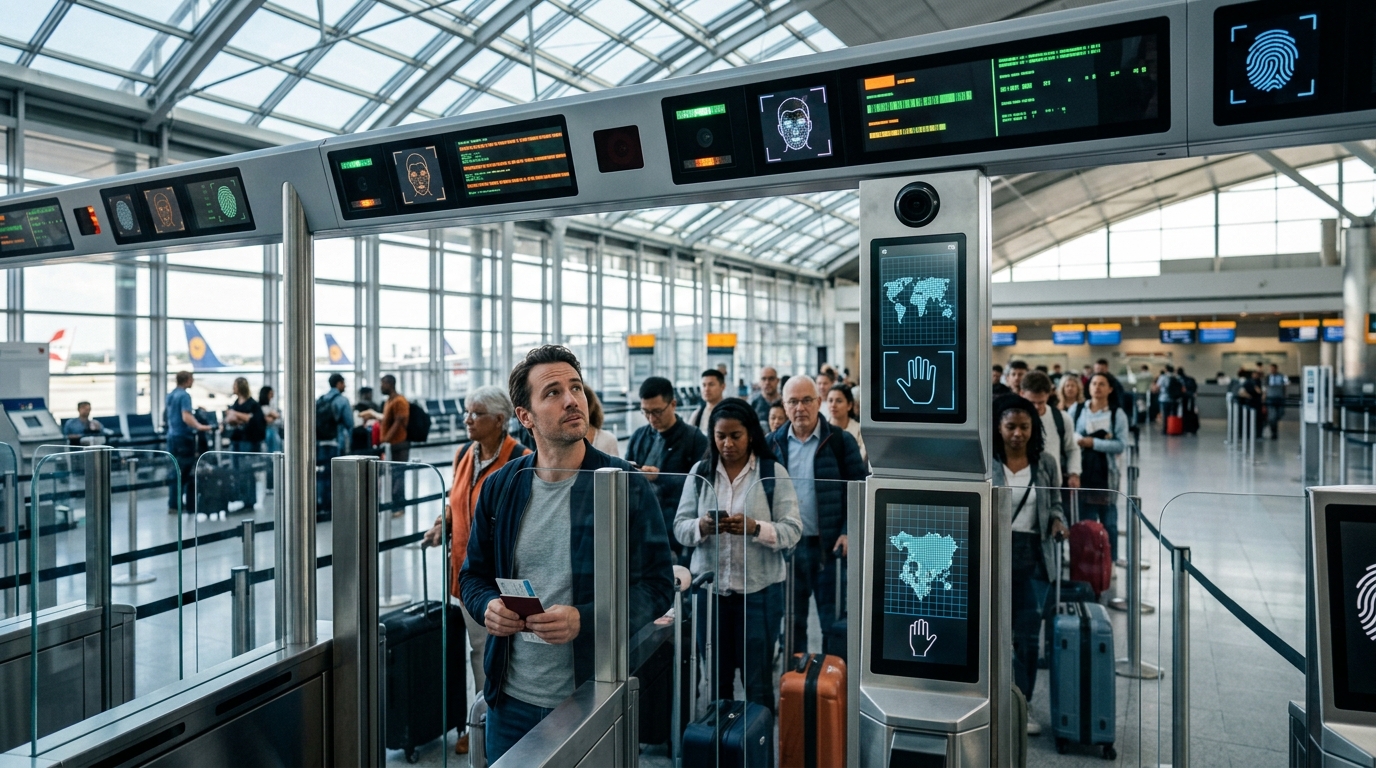
Traveling through an airport today feels drastically different than it did just a decade ago. Gone are the days when a simple paper boarding pass and a quick glance at a driver’s license were the sole gatekeepers to the skies. Instead, passengers are increasingly greeted by glowing kiosks and tablet-sized cameras that analyze the geometric contours of their faces. This rapid deployment of biometric technology by federal agencies, particularly the Transportation Security Administration (TSA) and Customs and Border Protection (CBP), represents one of the most significant shifts in public security infrastructure of the 21st century.
Yet, this leap into a frictionless, sci-fi-esque future of air travel has not arrived without profound controversy. Civil liberties organizations have raised persistent alarms regarding the unchecked expansion of these face-scanning systems. The core of their argument is not merely about the technology itself, but the severe lack of transparency surrounding its implementation. Advocacy groups assert that the federal government is effectively building a nationwide, biometric tracking system hidden in plain sight, without comprehensive public debate or explicit congressional authorization.
When civil rights defenders are forced to litigate simply to acquire basic programmatic information about these sweeping surveillance architectures, it underscores a troubling disconnect between government policy and public accountability. This article examines the rapid rise of biometric travel, the demographic pitfalls of the technology, and the ongoing legal and legislative battles to reclaim traveler privacy.
The Architecture of Airport Biometrics
The deployment of facial recognition at airports is generally bifurcated into two main initiatives, though they frequently overlap in the eyes of the consumer. First is the CBP’s biometric entry-exit program, designed specifically for international travel. This system cross-references a traveler’s real-time photograph against a gallery of images previously provided to the government, such as passport or visa photos. Second is the TSA’s domestic deployment of advanced credential authentication units. These machines scan a passenger’s state-issued ID and simultaneously capture a live photo to confirm their identity before they proceed to physical luggage screening.
Proponents of this technological integration argue that it dramatically improves both security and operational efficiency. Human agents are notoriously susceptible to fatigue, distraction, and inherent cognitive biases when comparing a physical face to a tiny, two-dimensional photograph on a laminated card. By offloading this verification process to complex algorithms, the TSA and CBP aim to expedite queue times and theoretically reduce the margin of human error in detecting forged documents or imposters.
However, the speed at which these pilot programs have metamorphosed into standard operating procedures is alarming to privacy scholars. What began as a handful of testing sites at major hubs has rapidly expanded to dozens of airports nationwide. The overarching concern is that this infrastructure, once fully entrenched, will become impossible to roll back. The transition from voluntary pilot to mandatory requirement is a well-documented phenomenon in homeland security protocol. Today, it might be presented as an efficiency upgrade; tomorrow, it could be the mandatory price of entry for domestic mobility.
The Illusion of Choice and Consent
One of the most persistent criticisms levied against airport facial recognition programs is the concept of informed consent. Currently, federal agencies maintain that submitting to a facial scan at a domestic TSA checkpoint is entirely voluntary. Passengers theoretically have the right to request a manual identity verification process, opting out of the algorithmic scan without facing penalties or losing their place in line.
In practice, however, the physical and psychological architecture of the security checkpoint is designed to funnel travelers into compliance. Signage explaining the opt-out procedure is frequently inadequate, poorly positioned, or entirely absent. In a busy, high-stress environment where passengers are anxious about missing flights and conditioned to obey uniformed officers without hesitation, very few realize they have the agency to say no. When an agent points to a camera and instructs a passenger to look at the lens, it is perceived as a direct order, not a polite request.
This environment creates a system of forced compliance masked as voluntary participation. In a comprehensive 2020 report evaluating these biometric programs, the Government Accountability Office (GAO) explicitly noted that privacy notices were not consistently current, complete, or available at the physical locations where the technology was deployed. When travelers are deprived of clear, accessible information regarding their rights, their participation cannot be genuinely classified as voluntary. It becomes an erosion of privacy by attrition.
Algorithmic Flaws and Demographic Disparities
Beyond the ethical debates over mass surveillance and implied consent, there is a fundamental technical question: does the technology actually work fairly for everyone? The empirical data suggests a troubling reality. Facial recognition algorithms are not objective, infallible arbiters of identity. They are mathematical models trained on enormous datasets of human faces. If those datasets lack demographic diversity, or if the underlying algorithms are poorly calibrated, the resulting system will inevitably exhibit significant biases.
In late 2019, the National Institute of Standards and Technology (NIST) published a landmark study evaluating the demographic effects of facial recognition algorithms. The findings were staggering. The study reviewed hundreds of algorithms and found widespread empirical evidence of demographic differentials. Specifically, false positive rates—situations where the algorithm incorrectly concludes that two different people are the same individual—were significantly higher for people of color, particularly Asian and African American faces, compared to Caucasian faces. The algorithms also demonstrated higher error rates when analyzing the faces of women and the elderly.
In the context of airport security, a false negative (failing to match a person to their own ID) might result in a temporary delay while an agent intervenes. But false positives in law enforcement or broader security contexts carry the severe risk of misidentification, potentially subjecting innocent individuals to invasive interrogations, missed flights, or unjust detainment. Implementing a technology with known, quantifiable biases against marginalized communities into the primary arteries of national transportation raises profound civil rights implications. It is inherently problematic to subject the traveling public to an automated system that performs worse for certain races and genders.
The Black Box of Data Handling
A massive vulnerability in the current biometric framework is the lack of transparency regarding data retention, data sharing, and cybersecurity. Advocacy organizations have frequently had to resort to Freedom of Information Act (FOIA) requests—and subsequent lawsuits when those requests are ignored or heavily redacted—simply to understand the foundational rules governing these programs.
The public deserves to know precisely what happens to their biometric data once the camera flashes. Does the TSA immediately purge the image, or is it temporarily stored? Are the photographs ingested into broader Department of Homeland Security (DHS) databases? Are they shared with other federal law enforcement agencies, local police departments, or even foreign governments? What cybersecurity measures are in place to prevent a catastrophic breach of highly sensitive, immutable biometric identifiers?
Unlike a password or a credit card number, you cannot change your face if your biometric profile is compromised. The inherent permanence of facial geometry makes the stakes of data security astronomically high. Without legally binding constraints and aggressive independent auditing, the infrastructure built for airport identity verification could easily be repurposed for broader, warrantless surveillance tracking individuals across public spaces. The opaqueness with which these agencies operate prevents independent security researchers and civil rights advocates from verifying the government’s privacy claims.
Legislative Pushback and Future Governance
As the deployment of these technologies has accelerated, so too has the backlash. A growing, bipartisan coalition of lawmakers is recognizing the acute dangers of unfettered biometric surveillance. Recent legislative proposals seek to explicitly rein in the TSA’s authority to expand facial recognition without strict guardrails. For instance, efforts such as the Traveler Privacy Protection Act have been introduced to establish concrete boundaries on biometric data collection.
These legislative efforts aim to shift the burden of proof. Rather than forcing citizens to actively opt-out of a confusing system, lawmakers want to mandate an opt-in structure, where individuals must explicitly consent to biometric processing. Furthermore, such bills attempt to legally mandate immediate data deletion and prohibit the TSA from sharing passenger data with external law enforcement entities absent a judicial warrant. The struggle over airport biometrics is a proxy war for the future of privacy in the digital age. If the federal government is permitted to normalize mandatory facial recognition for the basic act of commercial travel, it establishes a precedent that can be replicated in public transit, government buildings, and urban environments.
Summary of Stakeholder Perspectives
To understand the complexity of the biometric expansion, it is helpful to view the diverse interests of the entities involved in the travel ecosystem:
| Stakeholder Category | Primary Objectives & Motivations | Core Concerns & Arguments |
|---|---|---|
| TSA & CBP | Enhanced national security, fraud reduction, expedited passenger flow. | Relying heavily on manual ID checks is slower and prone to human error. |
| Airlines | Faster boarding times, reduced staffing costs, improved customer experience. | Worries about passenger pushback and integration costs for new hardware. |
| Privacy Advocates | Protecting civil liberties, enforcing constitutional rights against unreasonable search. | Mass surveillance, lack of informed consent, and algorithmic bias. |
| Lawmakers | Balancing national security interests with constitutional protections. | The overreach of executive agencies bypassing congressional authorization. |
Conclusion
The deployment of facial recognition technology at airports forces society to confront a fundamental question: how much of our anonymity are we willing to sacrifice at the altar of perceived convenience and security? The efforts by civil rights groups to sue for basic operational details highlight a systemic failure of government transparency. While technology will inevitably continue to evolve, it must do so within a framework that respects democratic oversight, addresses systemic algorithmic biases, and fiercely protects the constitutional rights of the individual. Until robust, enforceable regulations are passed, the traveling public remains involuntary participants in an unprecedented experiment in mass biometric tracking.
Frequently Asked Questions (FAQ)
- Is facial recognition currently mandatory for domestic air travel?
No. According to the TSA, participation in facial recognition screening at domestic checkpoints is voluntary. Passengers have the right to request alternative manual identity verification, though signage and instructions are not always clear. - What happens if I decide to opt out of the facial scan?
If you opt out, you inform the TSA agent, and they will manually inspect your physical ID and boarding pass. This may take slightly longer, but you should not lose your place in line or face secondary screening solely for opting out. - Does the government keep the photo taken at the airport?
The TSA claims that for standard identity verification, the photo is immediately overwritten and not saved. However, for CBP’s international biometric entry-exit program, photos are matched against a pre-existing gallery, and data retention policies can vary depending on citizenship status and the specific program phase. - Are facial recognition algorithms completely accurate?
No. Independent studies have shown that many algorithms have demographic differentials, meaning they produce higher error rates for certain groups, including people of color, the elderly, and women.
References
- Facial Recognition: CBP and TSA are Taking Steps to Implement Programs, but CBP Should Address Privacy and System Performance Issues — U.S. Government Accountability Office (GAO). 2020-09-02. https://www.gao.gov/products/gao-20-568
- Face Recognition Vendor Test (FRVT) Part 3: Demographic Effects — National Institute of Standards and Technology (NIST). 2019-12-19. https://doi.org/10.6028/NIST.IR.8280
- More airports are scanning faces. A new bill would limit the practice. — The Washington Post. 2025-05-08. https://www.washingtonpost.com/technology/2025/05/08/tsa-facial-recognition-opt-out-bill/
Similar Articles








Read full bio of medha deb


