
Biometric Data Harvesting: The Hidden Cost of Social Media
How viral trends fuel the mass collection of our physical identities.
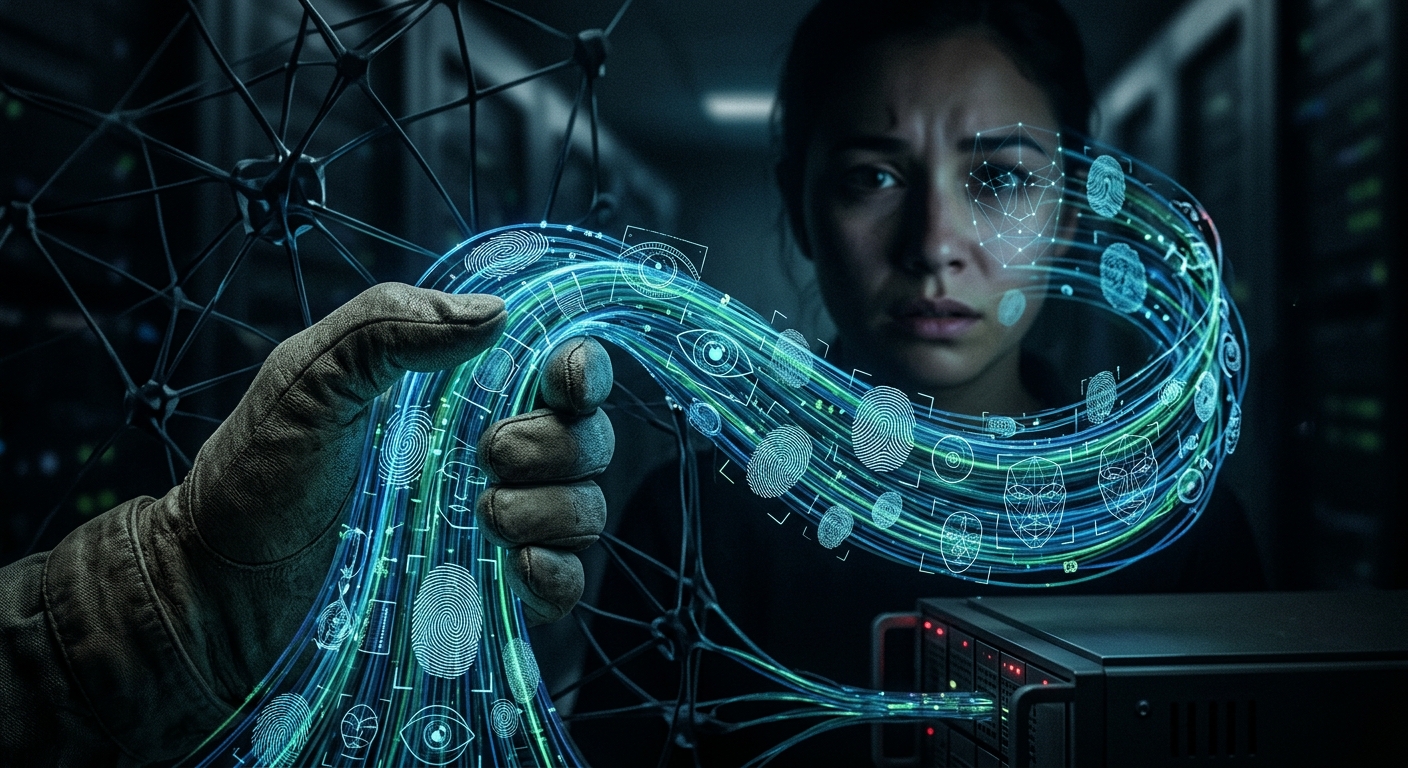
The Hidden Cost of Viral Trends
In the modern era of digital connectivity, our relationship with the internet has fundamentally shifted from text-based interactions to hyper-visual, audio-driven experiences. We are no longer simply typing out our thoughts; we are broadcasting our physical selves to the world in high definition. This evolution has driven an unprecedented demand for personal data by the world’s largest technology companies. However, the data being harvested today is vastly different from the search histories and click tracking of the early internet. It is deeply personal, highly sensitive, and inherently biological. As social media platforms push users to engage with viral video formats, sophisticated AI filters, and interactive audio trends, a shadow industry of biometric data harvesting is quietly operating beneath the surface. This covert collection mechanism threatens to permanently alter the landscape of digital privacy, transforming our unchangeable physical traits into monetizable commodities.
The Evolution of Social Media Data Mining
To understand the current privacy landscape, it is crucial to trace the evolution of social media data mining. During the Web 2.0 era throughout the 2000s and early 2010s, tech giants built their fortunes by harvesting behavioral metadata. They meticulously tracked who we associated with, what links we clicked, the geographic locations we checked into, and the specific consumer products we searched for. This era was defined by cognitive and behavioral tracking, allowing platforms to build highly profitable advertising profiles based on our preferences and digital habits. However, as artificial intelligence and spatial computing advanced into the 2020s, the focus shifted from inferring our preferences to mapping our physical biology. The smartphone camera and microphone became the ultimate physiological sensors. We have rapidly moved away from tracking what users think to cataloging exactly what they physically consist of. This massive shift has been driven by the tech industry’s insatiable need for high-fidelity training data to power generative AI models, deep-learning recommendation engines, and next-generation augmented reality (AR) systems.
Understanding Biometrics in the Digital Age
To fully grasp the gravity of this technological shift, we must clearly define what constitutes biometric data. According to the National Institute of Standards and Technology (NIST), biometric data refers to biological attributes of an individual from which distinctive and repeatable values can be extracted for the purpose of automated recognition. While the general public often associates the term “biometrics” with legacy security measures—such as physical fingerprint scanners at border control checkpoints or retina scans in restricted facilities—the modern digital definition is far more pervasive and invisible. It encompasses “faceprints,” which are highly detailed mathematical maps of facial geometry. A faceprint calculates the exact distance between a user’s eyes, the natural curve of their jawline, and the specific depth of their eye sockets. Similarly, “voiceprints” are unique, computationally generated spectrographic models of an individual’s vocal tract, capturing minute details of pitch, cadence, resonance, and breath patterns. Unlike a standard photograph or a casual audio recording, these digital prints are sophisticated, machine-readable datasets designed to instantaneously identify and track a person across disparate platforms, databases, and digital environments.
How Modern Viral Formats Fuel Data Collection
This massive biological data collection is rarely framed to the consumer as corporate surveillance; instead, it is ingeniously packaged as frictionless entertainment. Modern social media feeds are completely dominated by rapid-fire video formats, highly engaging audio-sync trends, and incredibly sophisticated AI-driven visual filters. When a user happily engages with an aging filter to see what they might look like in forty years, uses a virtual makeup lens, or tries an avatar generator, they are often entirely unaware that they are consenting to high-fidelity facial mapping. The platform’s software must rigorously analyze the user’s face in three dimensions to apply the digital overlay seamlessly as they move. This practice gained widespread public attention when major social media platforms quietly updated their extensive terms of service. For instance, in June 2021, tech news outlet TechCrunch reported that the wildly popular video-sharing app TikTok had modified its United States privacy policy to explicitly allow the automated collection of biometric identifiers and biometric information from user-generated content, specifically naming “faceprints and voiceprints.” The notoriously vague nature of these corporate updates leaves everyday users completely in the dark about how long this sensitive data is retained, whether it is being used to train proprietary machine learning algorithms, or if it is actively shared with an ecosystem of third-party data brokers. As viral internet challenges prompt millions of users to upload multi-angle videos of their faces and crisp, unadulterated clips of their voices, tech companies are silently building the largest biometric databases in human history without facing significant public backlash.
The Policy Gap: Vague Terms and Broad Permissions
The legal mechanism that enables this massive biological data extraction is often hidden in plain sight, buried deep within endlessly long end-user license agreements (EULAs) and convoluted privacy policies. These digital documents are notoriously dense, meticulously written in corporate legalese designed to protect the platform from liability rather than to transparently inform the consumer. A standard tactic is the deployment of conditional, open-ended language. A platform’s policy might innocuously state that the company will collect biometric data “where permitted by law” or that they will “seek required permissions when applicable.” However, this specific phrasing creates a massive, exploitable vulnerability for the average American user. Because the overwhelming majority of U.S. jurisdictions currently lack explicit laws requiring platforms to obtain clear, written, opt-in consent before scanning a face or mapping a voice, the platform simply assumes implicit consent the moment a user opens the app or records a video. Furthermore, ambiguous phrases like “service optimization,” “content moderation,” or “business purposes” are frequently cited as the primary justification for this collection. These umbrella terms can encompass everything from harmless internal analytics to the highly lucrative development of commercial facial recognition software, granting tech behemoths a near-blank check to utilize biological data in ways the end-user never anticipated, desired, or explicitly approved.
Why Immutable Data Matters
The aggressive transition from traditional behavioral data mining to biometric data harvesting represents a fundamental escalation in digital privacy risk. This heightened danger is rooted in a simple but profound biological reality: the immutability of human physical traits. If a massive corporate database is breached by hackers and malicious actors steal a vast list of passwords, credit card numbers, or even Social Security numbers, the victims still have avenues for recourse. Passwords can be easily reset, compromised credit cards can be swiftly canceled, and long-term financial monitoring can be enacted to prevent fraud. However, biometric data absolutely cannot be reset. You only possess one face and one voice. If a high-fidelity faceprint or voiceprint is compromised in a data breach, the damage is permanent and irrevocable. The Federal Trade Commission (FTC) formally recognized these severe and mounting risks in a comprehensive May 2023 policy statement. The agency issued a stark, public warning regarding the widespread misuse of biometric information, emphasizing that the rapid proliferation of these technologies raises significant consumer privacy and data security concerns, alongside the alarming potential for algorithmic bias and systemic discrimination. The FTC explicitly noted that massive centralized databases of biometric information present highly attractive, high-value targets for advanced cybercriminals. Once a threat actor possesses your immutable biometric signature, they can bypass advanced biometric security measures, impersonate you flawlessly in secure digital environments, or synthesize highly convincing deepfake audio and video to extort your family, deceive your employers, or drain your financial accounts.
The State of Privacy Legislation in the United States
Despite the severe and permanent risks associated with biometric data collection, the regulatory landscape in the United States remains highly fragmented and woefully inadequate. Unlike the European Union, which provides comprehensive, overarching protections for all its citizens under the General Data Protection Regulation (GDPR), the U.S. desperately lacks a unified, federal digital privacy law. Consequently, the immense burden of protecting digital identity has fallen squarely to individual state legislatures, resulting in a confusing, uneven patchwork of regulations that leaves most Americans unprotected. The most robust, effective, and frequently cited legal standard in the country is the Illinois Biometric Information Privacy Act (BIPA), which was remarkably enacted ahead of its time in 2008. BIPA strictly requires any private entity doing business in Illinois to obtain explicit, informed, written consent from individuals before collecting or storing their biometric data. Crucially, the law also includes a powerful “private right of action,” which allows everyday citizens to sue companies directly for statutory violations, rather than waiting for a state attorney general to initiate an enforcement action. This potent legislation has successfully forced several massive technology conglomerates to pay hundreds of millions of dollars in class-action settlements and fundamentally alter their invasive data collection practices—but only for users residing within the physical borders of Illinois. For the vast majority of Americans living in states without equivalent, fiercely enforced privacy laws, there is virtually no legal shield preventing tech companies from silently harvesting, permanently storing, and ruthlessly monetizing their physical characteristics.
Actionable Strategies to Protect Your Digital Identity
While establishing systemic protections will ultimately require comprehensive federal legislative action, individuals can take immediate, proactive steps today to limit their digital exposure and safeguard their unchangeable biological traits from corporate harvesting:
- Audit App Permissions: Routinely navigate through your smartphone’s privacy settings and aggressively revoke camera and microphone access for any applications that do not strictly require them to function. If a platform only needs text input, it does not need access to your lens.
- Minimize the Use of AR Filters: While AI-driven aging filters, digital beauty lenses, and cartoon avatar generators are highly entertaining, they serve as the primary mechanisms for capturing high-fidelity facial topography. Limit your use of native platform filters to reduce the frequency of your face being mathematically mapped.
- Scrutinize Policies and Opt-Out: You do not need a law degree to protect yourself. Use the “find” function (Ctrl+F) to search for specific terms like “biometric,” “faceprint,” and “voiceprint” in privacy agreements before using a new service. Additionally, regularly navigate to platform settings to disable personalized advertising and cross-platform tracking.
- Be Mindful of Audio Uploads: When participating in viral internet trends or uploading personal video blogs, be keenly aware that clear, isolated audio of your speaking voice can easily be scraped and used to generate synthetic, deepfake voiceprints.
Frequently Asked Questions (FAQs)
What is the exact difference between a photograph and a faceprint?
A photograph is simply a flat, two-dimensional visual representation of a person. A faceprint, however, is a complex, machine-readable mathematical model generated by specialized software that precisely measures the specific geometry of your facial features, such as the exact millimeter distance between your pupils or the depth of your jawline. While a photo can be viewed by a human, a faceprint is utilized by algorithms to identify you autonomously across massive datasets in a fraction of a second.
Why do social media companies want my biometric data?
Companies eagerly collect this data to rapidly improve their proprietary technologies and maintain a competitive edge. High-fidelity face and voice data are utilized to train advanced artificial intelligence models, refine augmented reality (AR) visual filters, power highly addictive content recommendation algorithms, and develop incredibly precise targeted advertising profiles that can predict your demographic information, health status, and even your emotional state.
Is it completely legal for apps to collect my faceprint without directly asking?
In the vast majority of the United States, yes. Because there is currently no comprehensive federal law governing biometric privacy, companies can legally collect this highly sensitive data by quietly hiding the permission clause deep within their lengthy Terms of Service agreements. However, in a select few states like Illinois, specific, robust laws require companies to obtain explicit, written consent from the user before any biometric collection occurs.
References
- Biometric Data – Glossary — National Institute of Standards and Technology. 2024-01-01. https://csrc.nist.gov/glossary/term/biometric_data
- Policy Statement of the Federal Trade Commission on Biometric Information — Federal Trade Commission. 2023-05-18. https://www.ftc.gov/legal-library/browse/policy-statement-federal-trade-commission-biometric-information-section-5-federal-trade-commission
- Biometric Information Privacy Act (740 ILCS 14/) — Illinois General Assembly. 2008-10-03. https://www.ilga.gov/legislation/ilcs/ilcs3.asp?ActID=3004&ChapterID=57
- TikTok just gave itself permission to collect biometric data on U.S. users — TechCrunch. 2021-06-03. https://techcrunch.com/2021/06/03/tiktok-just-gave-itself-permission-to-collect-biometric-data-on-u-s-users-including-faceprints-and-voiceprints/
Similar Articles








Read full bio of medha deb


