
The Biometric Border: Your Right to Opt Out of Facial Scans
Unmasking the reality of facial recognition at the border and your legal rights.
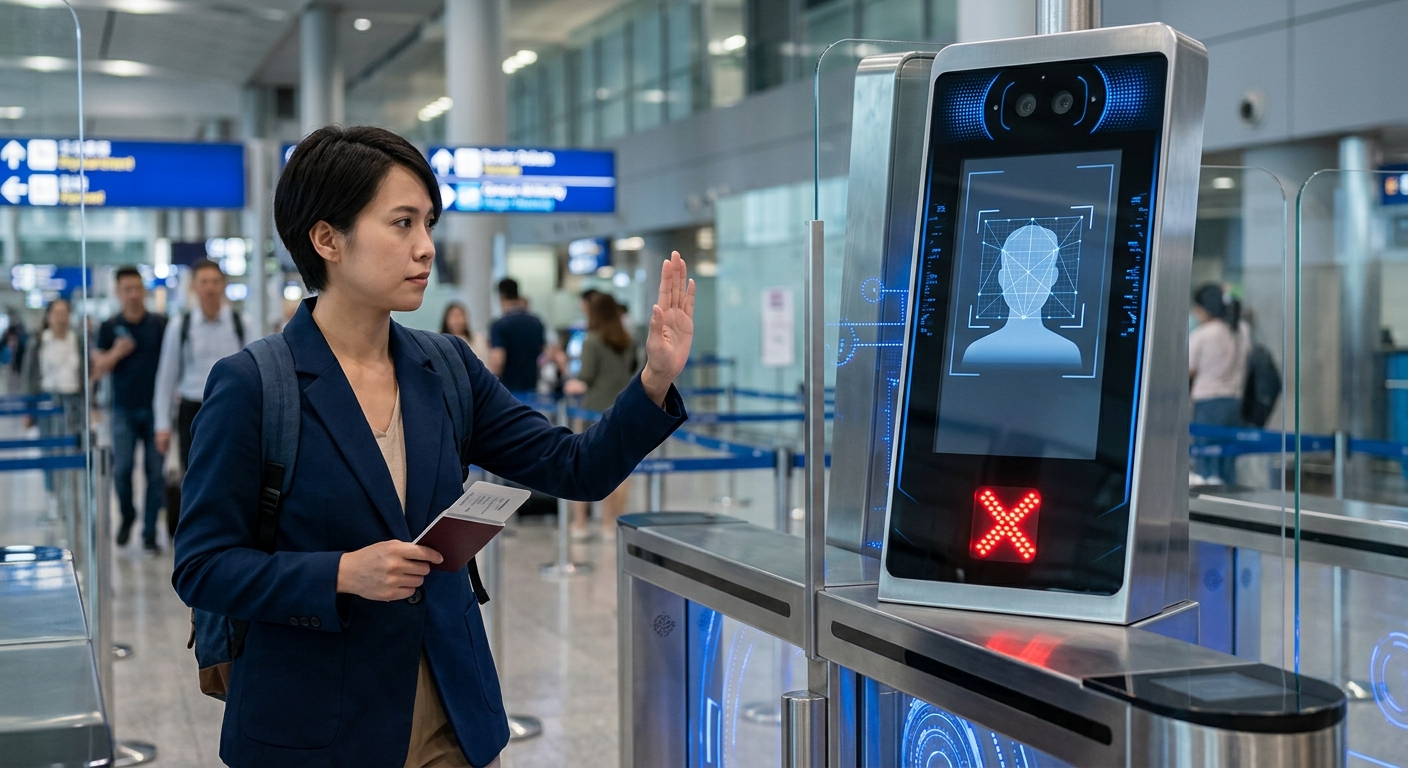
In recent years, traversing an international airport or border crossing has evolved from a routine presentation of travel documents into a high-tech encounter with biometric surveillance. The rollout of facial recognition systems at departure gates and customs checkpoints across the United States has been swift and largely quietly implemented. While the stated goal of these programs is to streamline travel and enhance national security, the rapid deployment of this technology has ignited serious civil liberties concerns. One of the most alarming aspects of this biometric expansion is the frequent disconnect between official government policy and the reality travelers face on the ground. Namely, while United States citizens possess the explicit legal right to opt out of facial recognition scans, border officers and airline personnel frequently fail to honor—or are entirely ignorant of—this right.
This article delves into the complexities of border biometrics, unpacking the widespread deployment of facial recognition technology, the profound privacy implications of its use, and the systemic issues travelers encounter when attempting to assert their legal rights. Understanding the mechanisms of these surveillance tools and the legal framework surrounding them is crucial for any traveler navigating the modern, digitized border.
The Expanding Reach of Border Surveillance
U.S. Customs and Border Protection (CBP) has steadily expanded its reliance on biometric data collection under the umbrella of its Traveler Verification Service (TVS) . Initially introduced as pilot programs at select airports, facial recognition checkpoints have now become a ubiquitous presence at major international terminals, seaports, and land border crossings. When a traveler approaches a checkpoint, a camera captures their photograph, which is then run against a gallery of images previously provided to the government—such as passport photos, visa applications, or other official records.
The stated premise behind this infrastructure is operational efficiency and identity verification. By automating the comparison of a traveler’s face to official databases, CBP argues it can process passengers faster and detect fraudulent documents more effectively . However, this shift represents a fundamental transformation in how the government tracks movement. Instead of a localized, manual verification process by a human officer, travel is increasingly mediated by opaque algorithms and centralized databases. This infrastructure essentially subjects millions of innocent travelers to digital line-ups, building a foundation for a broader biometric surveillance apparatus that extends well beyond the immediate confines of the airport checkpoint.
The Illusion of Choice: When Official Policy Clashes With Reality
According to official CBP guidelines, U.S. citizens are not required to submit to facial recognition technology . The policy dictates that citizens can opt out by notifying a border officer or airline representative, at which point they should be directed to a manual document check. However, civil rights advocates and frequent travelers have repeatedly documented a starkly different reality.
Countless travelers report that when they request to opt out, they are met with resistance, confusion, or outright hostility from agents. In some documented instances, travelers—including legal experts fully versed in civil liberties—have been explicitly told by border officers that opting out is impossible, illegal, or that “their data is already in the system anyway.” This misinformation points to a severe lack of training among frontline personnel and a systemic failure to respect established privacy rights .
The consequences of this disconnect are profound. When an authority figure in a uniform insists that compliance is mandatory, the average traveler is unlikely to push back, fearing that doing so could result in missed flights, extensive interrogations, or being placed on a government watchlist. This dynamic creates an “illusion of choice.” The right to opt out exists on paper, but if exercising that right requires navigating aggressive pushback or risking significant travel delays, it ceases to be a meaningful option for the general public.
Why You Should Care About Biometric Data Collection
The normalization of facial recognition at borders is not merely an administrative shift; it is a profound civil liberties issue that touches on privacy, equity, and data security. The unchecked expansion of these technologies presents several distinct threats to fundamental rights.
Privacy and the Surveillance State
At its core, mandatory or coerced facial recognition forces individuals to trade their biometric data for the basic right to travel. Unlike a password or an identification card, your face cannot be changed. The normalization of scanning faces at airports acclimatizes the public to constant biometric surveillance, paving the way for its use in public spaces, protests, and everyday commercial transactions. Civil liberties organizations argue that this infrastructure creates a chilling effect on the freedom of movement and association, laying the groundwork for a ubiquitous surveillance state where anonymous travel becomes functionally impossible.
Algorithmic Bias and Inaccuracy
Facial recognition technology is not infallible. A substantial body of research, including landmark studies conducted by the National Institute of Standards and Technology (NIST), has demonstrated that many facial recognition algorithms suffer from severe demographic biases . These systems frequently exhibit higher error rates when analyzing the faces of people of color, women, and non-binary individuals compared to white men .
In the context of border security, an algorithmic error is not a minor inconvenience—it can lead to false accusations of identity fraud, unjustified detainment, and severe distress. Relying on biased technology to gatekeep international travel inevitably means that marginalized demographics bear a disproportionate share of the negative consequences, effectively coding racial and gender discrimination into the architecture of border control.
Data Security and Breach Risks
The collection of millions of facial images requires massive databases to store and process this highly sensitive information. History has repeatedly shown that no government database is entirely immune to cyberattacks or internal misuse. If a biometric database is compromised, the fallout is uniquely catastrophic. You cannot reissue a face or a fingerprint the way you can cancel a compromised credit card. The centralized pooling of biometric identifiers creates an irresistible target for malicious actors, state-sponsored hackers, and identity thieves, putting the personal security of every scanned traveler at permanent risk.
The Legal and Regulatory Vacuum
One of the most contentious aspects of domestic facial recognition deployment is the lack of explicit legislative authorization . Congress has mandated the implementation of a biometric entry-exit system for foreign nationals, but it has never passed legislation explicitly authorizing or mandating the biometric tracking of United States citizens.
Despite this legislative vacuum, executive agencies have unilaterally expanded these programs, relying on broad interpretations of existing security mandates. This overreach has prompted pushback from bipartisan lawmakers who have demanded greater transparency regarding how the technology is deployed, how long data is retained, and how the public is informed of their right to opt out . Without robust, binding legal frameworks, oversight remains dangerously weak, leaving federal agencies to self-regulate their use of some of the most powerful surveillance tools ever created.
A Step-by-Step Guide on How to Opt Out at the Airport
If you are a U.S. citizen and wish to protect your biometric privacy, you have the legal right to opt out of the Traveler Verification Service. However, successfully navigating this process requires preparation and confidence. Here is a practical guide on how to assert your rights:
- Be Proactive: Do not wait until you are directly in front of the camera. As you approach the boarding gate or customs checkpoint, look for signage indicating the use of biometric scanners.
- Communicate Clearly: Inform the airline gate agent or the CBP officer directly and politely that you are a U.S. citizen and you are opting out of the facial recognition scan. You can state, “I am a U.S. citizen, and I would like to opt out of the biometric scan and request a manual document check.”
- Have Documents Ready: Have your U.S. passport open and ready to present for manual inspection. This demonstrates that you are prepared to verify your identity through traditional means.
- Hold Your Ground: If an agent tells you that the scan is mandatory or that you cannot opt out, politely reiterate that CBP policy allows U.S. citizens to request a manual check. Remain calm but firm in asserting your rights.
- Document the Interaction: If you are denied the right to opt out or subjected to unreasonable delays, make a mental note of the officer’s name, badge number, and the time of the incident. You can file a formal civil rights complaint with the Department of Homeland Security’s oversight bodies.
How Marginalized Communities Bear the Brunt of Biometric Enforcement
The burden of navigating automated surveillance and asserting legal rights does not fall equally on all travelers. For white, affluent travelers—including legal professionals equipped with the knowledge to push back—opting out can still be a frustrating ordeal. But for people of color, immigrants, religious minorities, and transgender individuals, the stakes of challenging a border officer are exponentially higher.
These communities already face disproportionate rates of secondary screening, arbitrary questioning, and systemic profiling at borders and airports. For a marginalized traveler, insisting on the right to opt out can easily be misinterpreted as “suspicious” behavior, triggering aggressive retaliation or prolonged detention. When the technology itself is statistically more likely to misidentify them, and the human oversight is steeped in historical biases, marginalized groups are trapped in a precarious catch-22. The failure of authorities to institutionalize a seamless, respected opt-out process effectively coerces those most vulnerable to surveillance into surrendering their biometric privacy out of sheer self-preservation.
Frequently Asked Questions (FAQs) About Border Biometrics
Is facial recognition mandatory for non-U.S. citizens?
Generally, yes. Under current U.S. law, the Department of Homeland Security is mandated to maintain a biometric entry-exit system for most foreign nationals. While certain exemptions exist for specific visa categories, most non-U.S. citizens cannot opt out of biometric data collection when crossing U.S. borders.
Will opting out put me on a watchlist?
Legally, exercising your right to opt out of a voluntary facial recognition scan should not place you on a government watchlist or affect your traveler status (e.g., TSA PreCheck or Global Entry). However, some travelers report being subjected to additional questioning as a result of opting out, underscoring the need for better officer training and public accountability.
How long does CBP store U.S. citizen photos if they are scanned?
According to CBP’s published privacy assessments, the images of U.S. citizens captured at these checkpoints are supposed to be retained for no longer than 12 hours for verification purposes and then deleted. Conversely, images of non-U.S. citizens can be stored in Department of Homeland Security databases for up to 75 years.
Can airlines force me to use facial recognition to board?
Airlines are increasingly acting as proxies for CBP by operating biometric boarding gates. While airlines may strongly encourage the use of the technology to speed up boarding, they must accommodate U.S. citizens who wish to opt out and have their boarding pass and passport checked manually by a gate agent.
The Path Forward for Traveler Privacy
As facial recognition continues its steady march into everyday travel, the protection of civil liberties relies on an informed public willing to assert its rights. A border policy that allows opting out only in theory, while punishing it in practice, is fundamentally flawed. Until robust legal safeguards are enacted and front-line officers are rigorously trained to respect traveler privacy, Americans must remain vigilant, know their rights, and stand firm against the creeping normalization of biometric surveillance. Traveling securely should never require surrendering your fundamental privacy rights to an unproven and often biased machine.
References
- Statement for the Record on Assessing CBP’s Use of Facial Recognition Technology — U.S. Customs and Border Protection, Department of Homeland Security. 2022-07-27. https://www.dhs.gov/news/2022/07/27/statement-record-assessing-cbps-use-facial-recognition-technology
- Facial Recognition: CBP and TSA are Taking Steps to Implement Programs, but CBP Should Address Privacy and System Performance Issues — U.S. Government Accountability Office (GAO). 2020-09-02. https://www.gao.gov/products/gao-20-568
- Face Recognition Vendor Test (FRVT) Part 3: Demographic Effects (NISTIR 8280) — National Institute of Standards and Technology (NIST). 2019-12-19. https://nvlpubs.nist.gov/nistpubs/ir/2019/NIST.IR.8280.pdf
- Senators Merkley and Blunt Press for More Transparency Regarding Collection of Americans’ Biometric Data — Office of U.S. Senator Jeff Merkley. 2022-01-10. https://www.merkley.senate.gov/senators-merkley-and-blunt-press-for-more-transparency-regarding-collection-of-americans-biometric-data/
Similar Articles








Read full bio of Sneha Tete


