
Big Tech Policing: Racial Equity vs. Surveillance
Examining the clash between corporate civil rights pledges and police tech.
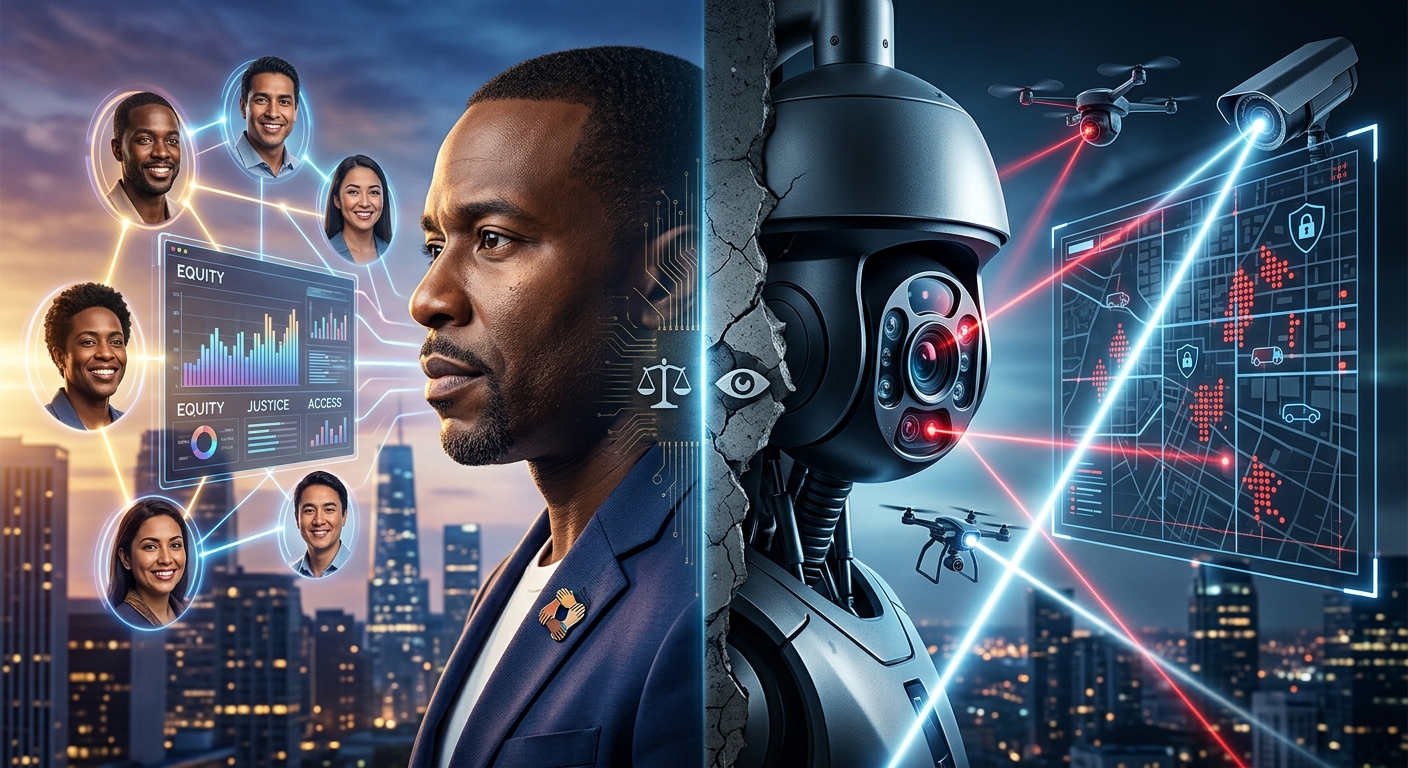
In the wake of global social justice movements in 2020, a profound cultural shift rippled through corporate America. Unprecedented public outcries for racial equity and the dismantling of systemic discrimination prompted major technology conglomerates to issue sweeping declarations of solidarity. Billions of dollars were pledged to civil rights organizations, internal diversity initiatives were aggressively expanded, and corporate blogs were flooded with assurances that these tech titans stood firmly with marginalized communities. However, as the dust settled on these philanthropic public relations campaigns, civil liberties advocates began highlighting a severe and deeply unsettling contradiction. Many of the same multinational corporations championing racial justice remain the primary architects and suppliers of the advanced surveillance infrastructure utilized by modern law enforcement—systems that disproportionately monitor, track, and penalize the very communities these companies promised to protect.
This glaring paradox sits at the volatile intersection of enterprise technology, ethics, and systemic bias. Providing law enforcement agencies with sophisticated data-aggregation tools, predictive algorithms, and sweeping cloud-storage capabilities inherently conflicts with pledges to dismantle racial inequality. By critically examining the lifecycle of these surveillance platforms—from their lucrative corporate development to their real-world deployment in minority neighborhoods—it becomes unequivocally clear that achieving genuine societal equity requires more than financial donations. It demands a fundamental, structural reevaluation of the commercial technologies that empower and expand the reach of the modern policing state.
The Disconnect Between Corporate Philanthropy and Product Deployment
During the summer of 2020, major technology firms made definitive public commitments to address racial injustice. Microsoft, for instance, published comprehensive outlines detailing a multi-year focus aimed at combating systemic inequality, emphasizing their unequivocal belief in the necessity of protecting Black lives and investing in community empowerment . Competitors across Silicon Valley issued similar pronouncements, accompanied by promises to increase supplier diversity, fund justice reform, and leverage their vast resources for social good.
While civil rights organizers initially lauded these corporate initiatives as necessary steps toward accountability, the underlying cognitive dissonance soon became the subject of intense scrutiny. The philanthropic divisions of these tech giants were aggressively funding racial justice, while their enterprise and government contracting divisions were simultaneously fulfilling highly lucrative contracts to supply police departments. Activists rapidly pointed out that funding community social justice programs while selling predictive policing software and massive data-warehousing solutions is entirely contradictory. The immense pressure to reconcile this disconnect has only intensified. Shareholders, internal employee coalitions, and the broader public are increasingly demanding that tech companies align their profitable enterprise models with their stated humanitarian values, pushing the industry to look beyond performative activism.
Unpacking the Infrastructure: The Domain Awareness System
To truly understand the depth of this ethical contradiction, one must analyze the specific surveillance mechanisms being deployed in urban centers. A prominent example of the deep collaboration between Big Tech and law enforcement is the Domain Awareness System (DAS). In 2013, reports detailed how the New York Police Department (NYPD) worked directly with Microsoft to engineer a revolutionary crime-fighting system designed to aggregate an unprecedented volume of civic data into a single, cohesive interface .
A Domain Awareness System acts as the central, omniscient nervous system for urban policing. Rather than relying on isolated pieces of evidence, it synthesizes live streams of information from thousands of citywide security cameras, automated license plate readers, portable radiation detectors, 911 dispatch calls, and voluminous historical arrest records . When an incident is reported, dispatchers and officers can instantly access a multi-layered interactive map, view live video feeds from the surrounding blocks, and immediately pull up the historical data of individuals flagged in the vicinity.
While proponents of the technology argue that such expansive systems are absolutely vital for counterterrorism and rapid emergency response, civil liberties advocates view them as a dystopian reality. The sheer magnitude of data collected—much of which captures the innocuous daily movements of innocent civilians—creates an inescapable dragnet of digital surveillance. Furthermore, the financial motivations underpinning these tools are staggering. The initial NYPD and Microsoft agreement reportedly included an unprecedented marketing arrangement allowing the software to be monetized and sold to other global law enforcement agencies, thereby directly intertwining public policing infrastructure with corporate profit margins .
Demographic Differentials and the Reality of Algorithmic Bias
The most insidious consequence of deploying advanced surveillance technology in law enforcement is its inherent tendency to amplify existing systemic biases. Technology is frequently marketed by its creators as an objective, race-neutral mathematical tool. In reality, algorithms, machine learning models, and data-aggregation systems are engineered by humans, trained on heavily skewed historical data, and deployed within a society already fraught with well-documented inequalities.
Because Black, Brown, and lower-income communities have historically been subjected to higher rates of policing, they inevitably generate a disproportionate amount of law enforcement data. This includes more street stops, more arrests, and infinitely more hours of security camera footage. When this skewed, biased data is fed into predictive policing algorithms or Domain Awareness Systems, the software predictably identifies these same neighborhoods as ‘high risk.’ This mathematical labeling justifies further surveillance and an increased police presence, creating a devastating, self-fulfilling feedback loop where technology continuously validates and reinforces the institutional bias of the agencies utilizing it.
This demographic bias is not theoretical; it is highly documented, particularly within biometric technologies. A landmark 2019 comprehensive study by the National Institute of Standards and Technology (NIST) strictly evaluated the effects of demographic differences on contemporary facial recognition software. The meticulous report revealed empirical evidence that the vast majority of facial recognition algorithms exhibit significant demographic differentials, meaning their baseline accuracy varies wildly depending on the race, age, and biological sex of the subject . Specifically, the systems demonstrated substantially higher rates of ‘false positives’ when analyzing Black and Asian individuals compared to white individuals . In the context of criminal justice, a false positive is not merely a software glitch; it directly facilitates wrongful arrests, unconstitutional searches, and severe civil rights violations.
The Expanding Web: Cloud Computing and Data Storage
Beyond the flashy, highly debated tools like facial recognition, the true backbone of modern police surveillance lies in the less visible realm of cloud computing and data storage. As police departments gather petabytes of data from body-worn cameras, drone footage, social media monitoring, and dashboard cameras, they require massive infrastructure to store, process, and analyze this information. Tech giants are the primary providers of these essential cloud services.
By providing the necessary digital warehousing for law enforcement, tech companies become indispensable partners in the surveillance ecosystem. Even if a corporation temporarily pauses the sale of a specific algorithm, their servers continue to host the databases that track civilian movements and affiliations. This raises profound ethical questions: Can a company truly claim to support marginalized groups if their server farms are the literal vaults holding the data used to disproportionately target those same groups? Civil rights organizations argue that supplying the foundational architecture for mass surveillance is just as complicit as building the specific biometric tools themselves.
The 2020 Moratoriums: Meaningful Change or Public Relations?
The intense public pressure and widespread mobilization of 2020 did force some tangible policy shifts within the tech industry. Recognizing the profound reputational and ethical risks associated with their products, several prominent industry leaders altered their immediate stance on providing biometric tools to law enforcement. In June 2020, major corporations including Microsoft, Amazon, and IBM announced highly publicized decisions to either temporarily pause or completely halt the sale of their facial recognition software to police departments . Microsoft explicitly stated it would withhold selling facial recognition technology to U.S. law enforcement until robust, human-rights-based federal regulations were enacted.
While privacy advocates rightfully celebrated these historic announcements as a major victory for civil liberties, they also approached the moratoriums with heavy skepticism. A temporary pause is often viewed as a strategic public relations shield rather than a permanent ethical boundary. The 2020 pauses almost exclusively addressed facial recognition, purposely leaving the sprawling, highly profitable contracts for cloud data storage, predictive policing algorithms, and comprehensive data dashboards completely intact.
Grassroots organizations emphasize that the broader ecosystem of data-driven, tech-enabled policing remains largely undisturbed. The underlying logic of mass surveillance is still actively being packaged and sold as a municipal service. Until technology corporations commit to completely and permanently divesting from supplying any infrastructure that facilitates discriminatory policing, their corporate commitments to racial justice remain strictly conditional.
Charting an Ethical Future in Enterprise Technology
Bridging the immense chasm between corporate racial equity initiatives and the harsh realities of tech-enabled policing requires a comprehensive approach that moves far beyond voluntary corporate pledges. First and foremost, technology companies must adopt uncompromising, legally binding ethical frameworks that dictate exactly who can purchase their software and for what specific purposes. Internal ethics review boards must be granted the authoritative power to veto government contracts that pose a high risk of violating civil liberties or human rights.
Furthermore, comprehensive federal legislation is required to prevent reliance on corporate self-regulation. Lawmakers must establish strict, enforceable guardrails on how local and federal police departments can acquire, test, and deploy surveillance technologies. This includes mandating independent, third-party audits for algorithmic bias prior to any public deployment, and legally requiring transparent community consent before new surveillance tools are introduced into municipalities.
Ultimately, if the technology sector truly believes that marginalized lives matter, that foundational belief must be explicitly reflected in their source code, their client acquisition strategies, and their corporate bottom lines. A company cannot legitimately claim to be actively dismantling systemic racism while simultaneously selling the master tools of systemic surveillance to the very institutions perpetuating it. The ultimate measure of a corporation’s dedication to justice is not found in the size of its philanthropic grants, but in the revenue streams it is willing to sacrifice in the defense of human rights.
Frequently Asked Questions (FAQs)
- What exactly is a Domain Awareness System (DAS)?
A Domain Awareness System is a centralized data-aggregation platform used by law enforcement. It synthesizes real-time information from sources like security cameras, license plate readers, and arrest databases into a single dashboard, allowing police to instantly monitor civic activity across a given area.
- Why do civil rights organizations oppose the use of predictive police surveillance?
Organizations strongly oppose these technologies because they have been proven to disproportionately target Black and Brown communities. The algorithms are trained on historically biased arrest data, creating a feedback loop that continually over-polices minority neighborhoods and violates civil liberties.
- Did major tech companies completely ban facial recognition for police use?
Not completely. In 2020, corporations like IBM, Amazon, and Microsoft paused or ended facial recognition sales to police. However, many of these actions were framed as temporary moratoriums pending federal regulation, and the companies continue to supply other massive forms of surveillance infrastructure.
- How does algorithmic bias actually occur in law enforcement technology?
Machine learning models learn exclusively from historical data sets. Because marginalized communities face higher policing rates, the historical data fed into predictive software is already skewed. The algorithm flags these areas as ‘high risk,’ prompting more policing, which generates more skewed data.
- What role does cloud computing play in police surveillance?
Cloud computing provides the essential digital infrastructure for mass surveillance. As police collect immense amounts of data from body cameras, drones, and street monitors, they heavily rely on corporate server farms to store and analyze this massive flow of information.
References
- NYPD, Microsoft create crime-fighting tech system — AP News. 2013-02-20. https://apnews.com/article/nypd-microsoft-create-crime-fighting-tech-system
- Face Recognition Vendor Test (FRVT) Part 3: Demographic Effects — National Institute of Standards and Technology (NIST). 2019-12-19. https://doi.org/10.6028/NIST.IR.8280
- Addressing racial injustice — Microsoft Corporate Blogs. 2020-06-23. https://blogs.microsoft.com/blog/2020/06/23/addressing-racial-injustice/
- Microsoft joins Amazon, IBM in pausing face scans for police — AP News. 2020-06-11. https://apnews.com/article/microsoft-joins-amazon-ibm-in-pausing-face-scans-for-police
Similar Articles








Read full bio of medha deb


