
The Battle for a Free Internet: Securing Net Neutrality
An open internet requires more than FCC regulations; Congress must act.
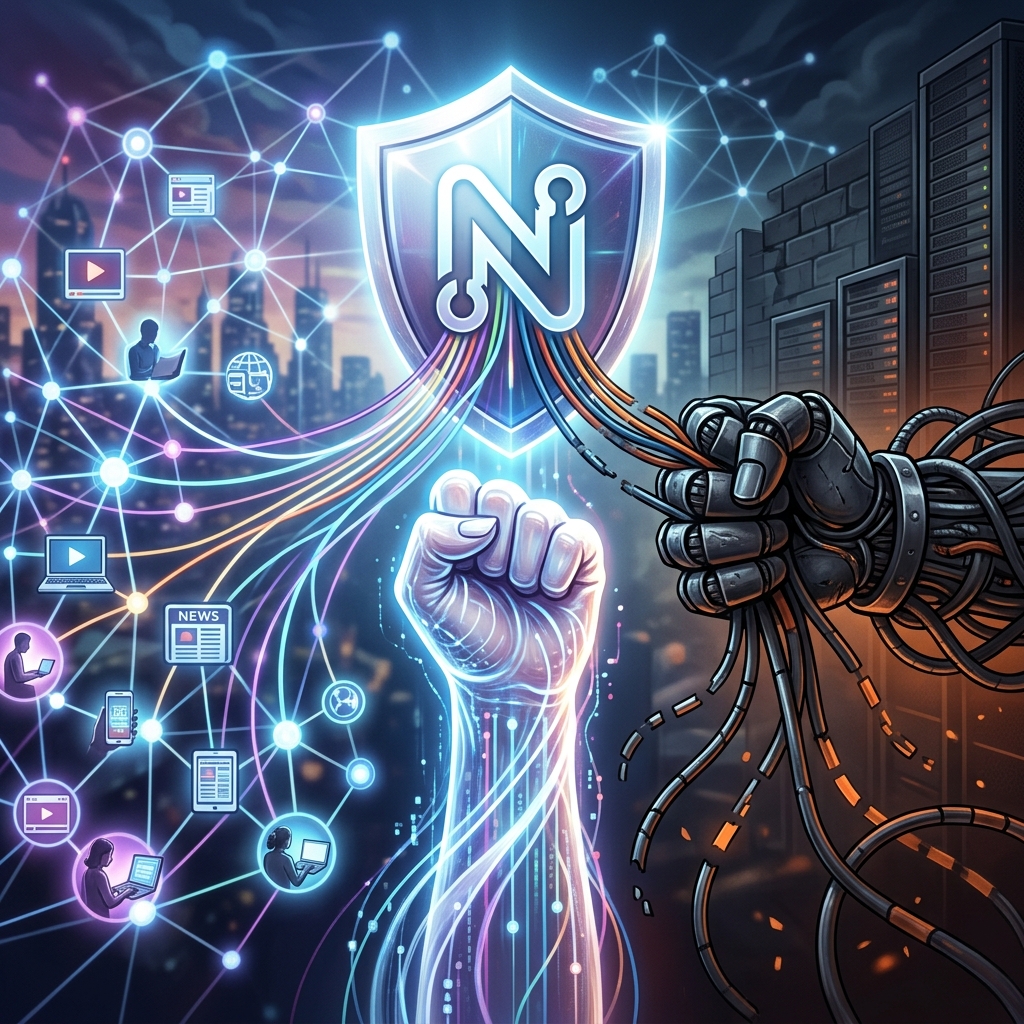
The internet is no longer a luxury reserved for a privileged few; it is the central nervous system of modern civilization. From the fundamental way we conduct international business and pursue higher education to how we access life-saving healthcare and engage in democratic discourse, digital connectivity is seamlessly interwoven into the very fabric of our daily lives. At the heart of this vast digital ecosystem lies a foundational, guiding principle known as net neutrality. The concept itself is incredibly straightforward, yet over the past two decades, it has sparked one of the most highly contentious and deeply politicized technological debates of the twenty-first century. As the federal regulatory landscape constantly shifts beneath our feet, the call for a permanent, legislative anchor to officially secure an open internet has never been more urgent.
While various regulatory bodies, most notably the Federal Communications Commission (FCC), continue to maneuver to establish technical guidelines, true network stability requires decisive action from lawmakers to actively protect everyday consumers from potential corporate gatekeeping. In a modern era where a stable broadband connection is functionally equivalent to having electricity and running water, leaving the fundamental rules of digital equality to the whimsical pendulum of rotating political administrations poses a profound risk. It directly threatens freedom of expression, economic innovation, competitive markets, and fundamental civil liberties worldwide.
Deconstructing the Concept: What Exactly is Net Neutrality?
Net neutrality is the core doctrine demanding that Internet Service Providers (ISPs)—the massive telecommunications conglomerates that literally connect you to the web—must treat all internet data equally . It mandates that these broadband gatekeepers cannot legally discriminate or dynamically charge differently by user, content, website, platform, application, or method of communication. In an environment strictly governed by robust net neutrality rules, a service provider cannot intentionally slow down or outright block specific websites, nor can it establish exclusive “fast lanes” designed for multinational corporations willing to pay premium fees to have their specific content delivered faster than their competitors.
To fully understand the monumental gravity of this principle, consider the physical national highway system as an analogy. Imagine if the corporate entities managing the nation’s major highways suddenly decided to reserve the fastest, smoothest, and safest lanes exclusively for massive commercial delivery trucks that pay a premium toll, while forcefully relegating everyday commuters, public transit, and small business delivery vans into highly congested, pothole-riddled side roads. Net neutrality explicitly ensures that the internet remains a perfectly balanced public freeway where a local independent bookstore’s website loads just as swiftly and reliably as a multinational e-commerce conglomerate’s flagship homepage.
Without this critical, universally applied doctrine, broadband providers possess the technical capability and intense financial incentive to engage in three primary network management practices that are inherently detrimental to everyday digital consumers:
- Blocking: Outright preventing network users from accessing lawful content, digital applications, or directly competing voice and streaming services.
- Throttling: Intentionally degrading the internet speed or overall quality of specific digital services, such as a provider deliberately buffering a rival video streaming platform so a frustrated user permanently switches to the ISP’s proprietary media service.
- Paid Prioritization: Demanding exorbitant, recurring payments from content creators, edge providers, or streaming services in direct exchange for preferential, rapid routing of their data over the provider’s physical network .
By officially classifying broadband internet access as a “telecommunications service” under Title II of the Communications Act of 1934, federal regulators have historically possessed the explicit, legally tested authority to aggressively prohibit these specific practices, ensuring the internet remains a perfectly level playing field for everyone involved, regardless of their financial capital .
The Regulatory Pendulum: A Decade of Legal Whiplash
The fight for an open internet has been heavily characterized by a relentless, exhausting game of regulatory ping-pong. Over the past decade, the legal rules governing exactly how ISPs manage incoming and outgoing internet traffic have shifted dramatically. These sudden reversals have been almost entirely dependent on the specific political administration occupying the White House and the corresponding partisan composition of the Federal Communications Commission .
This ongoing, decade-long tug-of-war has created severe instability for technology investors, independent software developers, digital rights advocates, and ordinary consumers alike. To properly illustrate the intense volatility of internet governance over the past several years, it is highly informative to look at the primary regulatory shifts that have continually redefined the digital landscape:
| Year | Regulatory Action | Consequence for the Internet Ecosystem |
|---|---|---|
| 2015 | FCC adopts the historic Open Internet Order | Classified broadband internet heavily under Title II authority, successfully establishing strict federal bans on blocking, throttling, and paid prioritization practices . |
| 2017 | FCC aggressively repeals Title II Classification | Reverted broadband entirely to an “information service,” legally stripping the FCC of its primary enforcement power and allowing ISPs to largely voluntarily self-regulate their networks . |
| 2018-2021 | States unilaterally enact local net neutrality laws | Independent states like California and Washington stepped in to aggressively create their own strict neutrality mandates, successfully defending them in lengthy federal court battles against massive telecom giants . |
| 2024 | FCC officially votes to restore Title II rules | Formally recognized broadband as an essential digital utility once again, explicitly reinstating the robust federal protections for consumers and addressing critical, modern national security vulnerabilities . |
The landmark 2024 decision by the FCC marks a massive, highly celebrated return to fundamental consumer protection. It acknowledges that after the massive global shift to remote work, virtual education, and vital telemedicine during recent crises, federal internet oversight is practically indispensable . However, despite the widespread public celebration, this distinct victory brilliantly highlights a glaring systemic flaw: the very foundation of our modern digital economy should not be subjected to the cyclical, highly partisan whims of changing federal agencies.
Beyond the Technical Jargon: The Real-World Stakes
The ongoing debate over active network management is not merely an abstract, high-level legal dispute regarding the strict interpretation of the Communications Act; it has incredibly profound, tangible implications for every single individual who logs online. From digital entrepreneurship and local commerce to fundamental human rights and emergency safety, the stakes of an open, unbiased internet touch literally every corner of modern global society.
Fostering Innovation and Small Business Growth
The internet has historically served as the ultimate economic equalizer across the globe. A single, ambitious entrepreneur operating out of a suburban garage can seamlessly reach an international audience, directly competing alongside well-established, heavily funded legacy corporations. This unique economic dynamic is solely possible because of an explicitly open network infrastructure. If telecommunications providers are legally permitted to charge edge providers for prioritized internet access, it deliberately creates an insurmountable financial barrier to entry for early-stage startups and small businesses.
Independent creators, local journalists, and niche application developers simply cannot afford to outbid trillion-dollar technology monopolies for “fast lane” network access. Ultimately, the next revolutionary digital application, educational tool, or local e-commerce service might be quietly suffocated in its infancy simply because the creator could not afford the mandatory ISP toll required to reach their target consumers reliably.
Safeguarding Free Expression and Civil Liberties
A structurally free and fundamentally open internet is absolutely vital for the unwavering preservation of free expression and democratic organizing. In a digital world completely devoid of enforceable net neutrality rules, broadband providers silently but effectively become the ultimate arbiters of public speech. They suddenly possess the immense, legally unchecked power to block access to specific websites they inherently disagree with politically, or actively slow down the data loading speeds of content primarily generated by marginalized communities, labor unions, and grassroots organizers.
For modern social movements that actively rely heavily on rapid digital mobilization, crowdfunding, and instantaneous video sharing to effectively expose systemic injustices, intentional network throttling could thoroughly and quietly dismantle their operational ability to communicate with the broader public. An open internet permanently guarantees that the vital flow of public information remains completely uncensored by massive corporate interests.
Addressing the Digital Divide and Public Safety
Recent global health and environmental crises undeniably laid bare the stark, undeniable reality that reliable internet access is not a discretionary household utility, but an absolute baseline necessity for basic education, remote employment, and critical telemedicine access. When ISPs are allowed to operate entirely free from stringent Title II oversight, their primary operational focus naturally and predictably drifts toward aggressively maximizing shareholder profit, often entirely ignoring or severely neglecting underserved, rural, and low-income communities, leaving them with subpar, highly unreliable service.
Furthermore, robust net neutrality protections explicitly allow federal regulatory bodies to systematically monitor widespread broadband outages, address severe digital security vulnerabilities, and actively work toward the equitable national deployment of digital infrastructure. Without such inherent authority, federal regulators fundamentally cannot require telecom companies to systematically report catastrophic broadband outages or collect emergency outage data, severely crippling their ability to protect public safety during natural disasters .
The Legislative Imperative: Why Congress Must Act
While the FCC’s recent 2024 vote to officially reinstate comprehensive net neutrality rules is heavily celebrated by digital rights groups and consumer advocates, it is an inherently fragile and temporary victory. Because the FCC is structurally an independent agency whose leadership is directly appointed by the acting President of the United States, its overarching policy direction can entirely flip every four to eight years based on election results. This persistent, exhausting regulatory volatility creates a highly unpredictable operational environment for everyday consumers, software developers, and the telecommunications industry itself.
To permanently secure the undeniable future of the internet, the ultimate responsibility falls squarely and entirely on the shoulders of the federal legislative branch. Only the United States Congress possesses the explicit, unquestionable power to enact a permanent, statutory mandate that codifies essential net neutrality principles directly into federal law. Immediate, decisive legislative action would successfully insulate the open internet from the constantly shifting political winds of bureaucratic agencies and the relentless, highly funded lobbying efforts of massive telecommunications conglomerates .
Bipartisan legislation that explicitly and permanently prohibits the practices of throttling, blocking, and paid prioritization, while definitively establishing broadband networks as an essential public utility, is the absolute only practical way to firmly end this decade-long partisan tug-of-war. Advocates, civil rights organizations, and ordinary citizens must urgently pressure their legally elected representatives to heavily prioritize comprehensive digital rights. Congress fundamentally cannot afford to passively treat the open internet as a secondary, highly partisan issue. The forward trajectory of the global economy, civic democratic engagement, and individual user privacy rely heavily on the protected integrity of our network connections.
Frequently Asked Questions (FAQ) About the Open Internet
What exactly does Title II classification technically mean?
Title II of the Communications Act of 1934 actively gives the federal government the legal authority to appropriately treat certain necessary, highly critical industries as “common carriers” or heavily regulated public utilities. By explicitly classifying broadband internet providers under Title II authority, the government can effectively regulate the internet similarly to standard landline telephones and regional power grids, strictly ensuring that major telecommunications providers fundamentally serve the public interest and do not unfairly discriminate or maliciously manipulate consumer access .
Will enforcing strict net neutrality rules logically cause my monthly internet bill to substantially increase?
There is absolutely no substantial, peer-reviewed economic evidence indicating that comprehensive net neutrality protections directly or indirectly increase average consumer internet bills. In fact, by legally preventing massive ISPs from extracting entirely arbitrary toll fees from independent content creators and streaming platforms, these robust regulatory rules actively help prevent severe trickle-down financial costs that might otherwise be predictably passed on to the everyday consumer in the direct form of significantly higher digital subscription prices .
Why are major telecommunications companies strictly and consistently against net neutrality mandates?
ISPs fundamentally argue that strict government regulations inherently stifle technological innovation and heavily deter critical capital investment in new, high-speed broadband infrastructure. They vehemently contend that the distinct market ability to heavily charge premium edge providers for prioritized network delivery would explicitly allow them to invest substantially more capital into rapidly expanding fiber-optic networks, particularly in isolated, underserved rural areas. As a result, they strongly prefer a “light-touch” regulatory approach that heavily relies on unencumbered free-market competition rather than strict federal oversight .
Do other international nations aggressively enforce net neutrality protections?
Yes. The European Union, India, Canada, and Brazil, among numerous other developed nations, have successfully enacted incredibly strong, legally binding net neutrality frameworks. These comprehensive global standards strictly prioritize the fundamental rights of everyday users to freely access digital content without telecommunications interference or artificial, profit-driven network degradation.
How exactly does the explicit lack of net neutrality affect major streaming platforms and media consumption?
Without explicitly defined net neutrality, an ISP could theoretically and legally demand that a major global video platform pay a massive, recurring financial fee to definitively ensure its multimedia content streams directly to consumers without buffering. If the platform refuses to pay the purely arbitrary toll, the ISP could artificially throttle the specific network connection, actively rendering the streaming service unwatchable for the end consumer. With strong net neutrality fully active, the ISP is legally obligated to properly deliver all lawful data at the exact same, unbiased speed .
Conclusion
The internet is unequivocally the most significant communicative and economic tool ever invented in human history. Its incredible, transformative global power stems almost entirely from its highly decentralized, open foundational architecture—a brilliant technical structure that actively allows innovative ideas, borderless commerce, and vital human connection to beautifully flow completely unimpeded by centralized corporate gatekeepers. Allowing private, profit-driven broadband providers to artificially manipulate this delicate digital ecosystem for distinct corporate financial gain fundamentally alters the very nature of modern digital interaction and democratic expression. While federal regulatory agencies predictably continue their exhausting, highly partisan bureaucratic tug-of-war to merely mitigate the widespread damage, the definitive, long-term solution is overwhelmingly clear. It is officially time for federal legislative bodies to step forcefully into the modern digital age and cement net neutrality firmly into federal statutory law. Only through decisive, unifying congressional action can we definitively ensure that the internet permanently remains a phenomenally fast, entirely open, and deeply fair utility for generations to come.
References
- FCC Restores Net Neutrality — Federal Communications Commission. 2024-04-25. https://www.fcc.gov/document/fcc-restores-net-neutrality
- ISP | Wex | US Law | LII — Legal Information Institute (Cornell Law School). 2024-01-01. https://www.law.cornell.edu/wex/isp
- 5 questions, answers on ‘net neutrality’ — AP News. 2014-11-10. https://apnews.com/article/technology-business-42cdfb2f1da74d30ab624647dc5ce100
- Net neutrality 2.0: Perspectives on FCC regulation of internet service providers — Brookings Institution. 2017-05-20. https://www.brookings.edu/articles/net-neutrality-2-0-perspectives-on-fcc-regulation-of-internet-service-providers/
- FCC Democrats Restore Net Neutrality Rules — U.S. Senate Committee on Commerce, Science, & Transportation. 2024-04-25. https://www.commerce.senate.gov/2024/4/fcc-democrats-restore-net-neutrality-rules
- Federal judge says California can enforce net neutrality law — AP News. 2021-02-23. https://apnews.com/article/california-net-neutrality-law-d0e5fc579d4ffbbfefcdb9517dc71095
Similar Articles








Read full bio of Sneha Tete


