
The Battle for Digital Expression: Online Free Speech Rights
Explore the escalating legal battles over online speech, censorship, and constitutional rights.
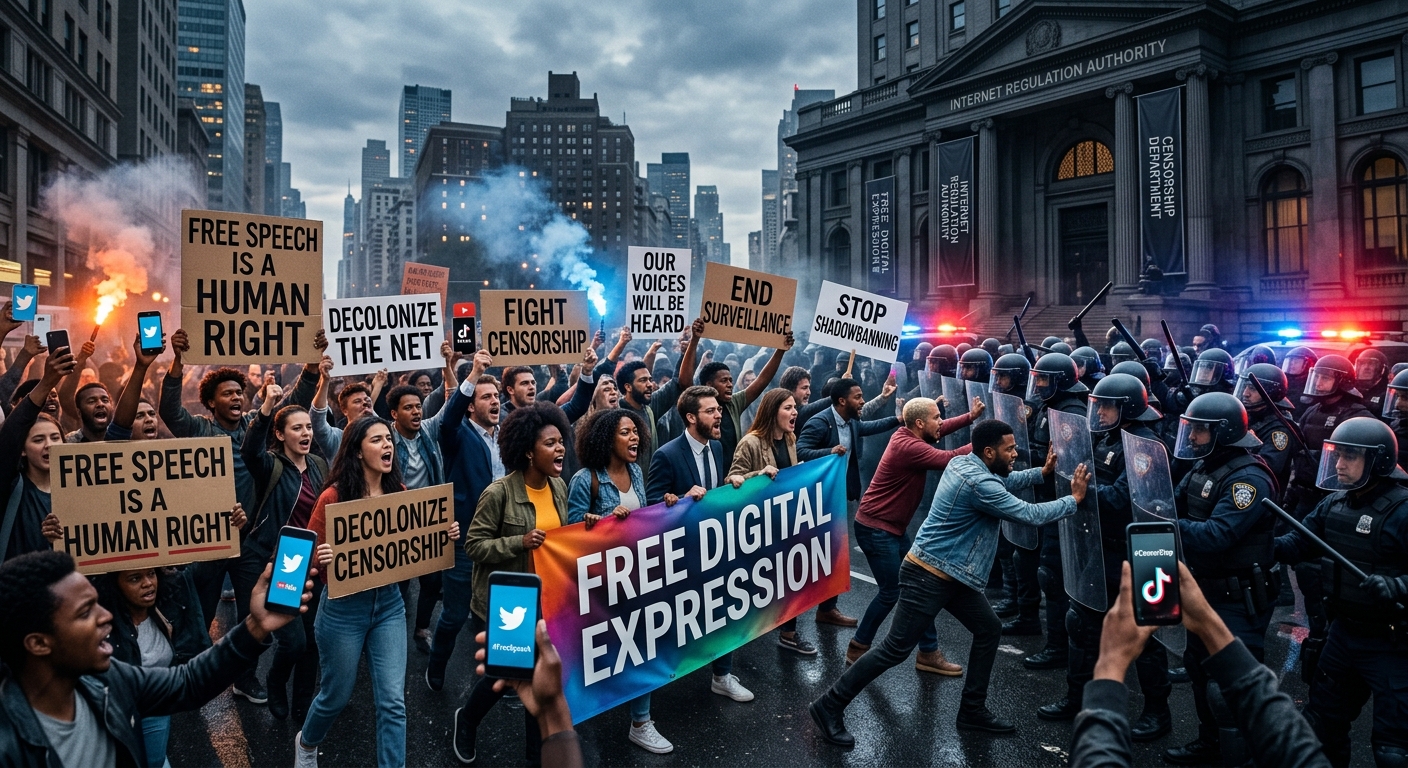
The internet, once heralded as an open, boundless frontier for human connection and the free exchange of ideas, has increasingly transformed into a highly contested legal battleground. At the center of this modern conflict lies a fundamental question that will define the next century of human communication: who ultimately controls the flow of information in the digital public square? Our online speech rights are currently facing unprecedented, multi-directional challenges. These threats emanate from quiet government coercion, sweeping state legislative mandates, and invasive regulatory frameworks that prioritize surveillance over liberty. As the boundaries blur between necessary platform curation and unconstitutional censorship, understanding how the First Amendment actually applies in the digital age is more crucial than ever. The ongoing struggle to balance user safety, corporate platform autonomy, and individual constitutional liberties is defining the modern era of communication, forcing society to reevaluate what freedom of expression truly means when our primary modes of speech are owned by private tech conglomerates.
Decoding the First Amendment in the Digital Age
To fully grasp the current threats to our digital expression, one must first dismantle a pervasive and widespread modern misconception regarding the First Amendment of the United States Constitution. Frequently, users who find their posts deleted, shadow-banned, or their accounts entirely suspended by social media platforms cry foul, vigorously asserting that their constitutional right to free speech has been egregiously violated. However, this relies on a fundamental misunderstanding of constitutional law. The First Amendment is inherently a limitation on government power, deliberately designed by the framers to prevent state actors from silencing dissenting voices or punishing citizens for their political beliefs. It does not apply to private entities, including the massive tech corporations that operate today’s most popular social media networks.
This legal framework, commonly known as the state action doctrine, means that private companies maintain their own distinct First Amendment rights. Just as a traditional newspaper publisher cannot be forced by the government to print an op-ed they fundamentally disagree with, a private social media platform cannot constitutionally be compelled to host content that violates its established community guidelines. Platforms possess the constitutional editorial discretion to curate the environment they offer to their users. While the immense, unprecedented power concentrated in the hands of a few Silicon Valley executives is undoubtedly a valid subject of public concern, anti-trust scrutiny, and societal debate, equating their private moderation decisions to unconstitutional government censorship legally misrepresents the foundational principles of American civil liberties. Recognizing this vital legal distinction is the essential first step in navigating the complex web of digital speech regulations currently moving through our courts.
The Content Moderation Conundrum: Platform Autonomy vs. State Mandates
The inherent tension between digital platform autonomy and legislative control has reached a boiling point in recent years, manifesting most notably in aggressive state laws designed to strictly dictate how digital networks operate. Lawmakers in states like Texas and Florida spearheaded this movement by passing controversial legislation that essentially attempted to strip major social media platforms of their editorial discretion. Proponents of these state laws argued that tech giants had become the new de facto public square and were unfairly silencing specific political viewpoints. To counter this perceived ideological bias, the state laws imposed strict “must-carry” mandates, effectively making it illegal for platforms to ban politicians or remove certain types of user-generated content, regardless of whether that content breached the platform’s terms of service.
However, from a constitutional perspective, these state mandates represent a severe, direct threat to free expression. By forcing private platforms to host speech against their will, the government is engaging in what is known as “compelled speech.” This sharply contradicts decades of legal precedent protecting the editorial rights of private publishers. If the government can dictate what a digital platform must leave up, it inherently possesses the power to control the overarching narrative of that platform. In the landmark 2024 Supreme Court decisions surrounding the NetChoice cases, the judicial system grappled with these exact themes, examining whether state governments have the authority to commandeer private digital spaces. The foundational argument against these laws is that the First Amendment protects private actors from being forced by the state to serve as uncurated mouthpieces. If platforms were legally barred from moderating their spaces, the internet would quickly devolve into an unusable landscape overrun by spam, extreme content, and harassment, paradoxically chilling the speech of everyday users who would flee these hostile environments.
“Jawboning”: The Fine Line Between Government Guidance and Coercion
While outright legislative mandates represent a direct, highly visible assault on platform autonomy, a far more insidious threat to online speech operates in the shadows: a practice legally termed “jawboning.” Jawboning occurs when government officials use informal pressure, backroom threats of regulatory action, or public bullying campaigns to coerce private platforms into removing specific content or banning particular users. This dynamic creates a highly dangerous backdoor to unconstitutional censorship. If the First Amendment explicitly prohibits the government from directly banning speech, the state logically cannot circumvent this constitutional restriction by threatening private companies into doing the dirty work on its behalf.
The difficulty with regulating jawboning lies in distinguishing between permissible, helpful government communication and unconstitutional coercion. Government agencies frequently, and legally, communicate with tech platforms to flag illegal activities, warn of sophisticated foreign election interference, or share critical public health data during emergencies. This flow of information is often legitimate and necessary for public safety. However, when a government official’s “request” to take down a post is accompanied by veiled threats of antitrust investigations, revocation of vital legal immunities (such as Section 230 protections), or public retaliation, it unequivocally crosses the line from persuasion to state-sponsored coercion. This delicate, high-stakes balance was the central focus of recent Supreme Court litigation involving the federal government’s communications with tech companies regarding public health and election-related content. Protecting digital speech requires robust, clearly defined legal safeguards that prevent state actors from weaponizing their authority to secretly dictate private moderation policies, ensuring that the government cannot invisibly strong-arm the digital public square.
The Age Verification Debate: Privacy, Anonymity, and Access
Another rapidly expanding threat to digital free speech comes cloaked in the universally supported, well-intentioned goal of child safety. Across the country, lawmakers are proposing and passing mandatory age verification laws that require users to prove their identity before accessing certain websites, social media platforms, or adult content. While protecting minors from online harm is a critical societal objective, the blunt mechanisms deployed by these state and federal laws introduce severe collateral damage to the constitutional rights of all internet users.
Mandatory age verification inherently destroys digital anonymity, a cornerstone of free expression that has historically protected whistleblowers, political dissidents, and marginalized communities from persecution. When users are required to submit government-issued identification or undergo biometric facial scans to access online information, a chilling effect is immediately cast over the internet. Adults may self-censor or completely avoid researching highly sensitive topics—such as reproductive healthcare, controversial political movements, or mental health resources—out of fear that their browsing habits are being tied directly to their real-world identities and potentially leaked. Furthermore, these legal mandates force digital platforms to accumulate massive, centralized databases of highly sensitive personal information, creating irresistible honeypots for identity thieves, cybercriminals, and foreign adversaries. As highlighted by prominent digital rights advocates, these laws unconstitutionally burden adults’ access to protected speech while failing to provide actual, practical safety for minors. Rather than making the internet safer, mandatory age verification systems build a vast surveillance infrastructure that fundamentally undermines the right to privately and freely access information.
A Balancing Act: Protecting Vulnerable Users Without Compromising Liberty
As we navigate the complex, rapidly evolving future of online discourse, policymakers must resist the urge to rely on blunt, unconstitutional instruments to solve highly nuanced digital problems. Protecting vulnerable populations and fostering a healthy digital environment does not require sacrificing the First Amendment at the altar of safety. Instead of dictating platform moderation policies or mandating invasive identity checks, the focus should shift toward empowering users and enhancing systemic privacy frameworks.
True digital safety can be achieved through robust, comprehensive consumer data privacy laws that strictly restrict how tech companies collect, use, and monetize user data, particularly the data of minors. By limiting algorithmic tracking and targeted advertising by default, lawmakers can protect youth without infringing on anyone’s speech rights. Additionally, expanding media literacy education and providing parents with superior, device-level control tools offer effective, constitutionally sound alternatives to government-mandated censorship.
Legislative Approaches vs. Constitutional Alternatives
| Legislative Approach | Stated Goal | First Amendment & Privacy Implications |
|---|---|---|
| “Must-Carry” Mandates | Prevent platforms from banning politicians or viewpoints. | Compels private entities to host speech, violating their editorial discretion and flooding platforms with harmful content. |
| Government Jawboning | Encourage the removal of misinformation or dangerous content. | Creates a backdoor for government censorship through coercion and threats of regulatory retaliation. |
| Mandatory Age Verification | Keep minors away from adult or harmful online content. | Destroys online anonymity, burdens adult access to legal speech, and creates massive cybersecurity risks. |
| Comprehensive Privacy Laws | Limit addictive algorithms and data harvesting of minors. | Protects users structurally without regulating or censoring the actual speech or content being shared. |
Frequently Asked Questions (FAQs)
- Does the First Amendment prevent social media platforms from banning users?
No. The First Amendment protects individuals from government censorship. Private companies, including social media platforms, have their own First Amendment rights to curate their platforms and enforce their own terms of service, which includes banning users who violate their rules. - What exactly is government “jawboning”?
Jawboning refers to the practice where government officials use informal pressure, bullying, or veiled threats of regulatory action to coerce private platforms into censoring specific users or content, effectively bypassing constitutional limits on government censorship. - Why are digital rights groups opposing age verification laws for social media?
Digital rights organizations argue that requiring ID to access the internet destroys user anonymity, creates massive data security risks, and unconstitutionally restricts adults from easily accessing lawful, protected speech out of fear of surveillance. - Can state governments legally treat tech platforms as “common carriers”?
This is a heavily debated legal theory. Recent court rulings have largely rejected the idea that social media platforms are mere conduits like telephone companies, affirming instead that they engage in protected editorial curation.
References
- Moody v. NetChoice, LLC (No. 22-277) — Supreme Court of the United States. 2024-07-01. https://www.supremecourt.gov/opinions/23pdf/22-277_d18f.pdf
- Murthy v. Missouri (No. 23-411) — Supreme Court of the United States. 2024-06-26. https://www.supremecourt.gov/opinions/23pdf/23-411_3dq3.pdf
- Age Verification Harms Everyone — Electronic Frontier Foundation. 2025-01-15. https://www.eff.org/deeplinks/2025/01/age-verification-harms-everyone
Similar Articles








Read full bio of Sneha Tete


