
Avoiding Fake Unemployment Benefit Websites and Phishing Traps
Learn how scammers mimic unemployment offices online and by text, and the exact steps you can take to protect your identity.
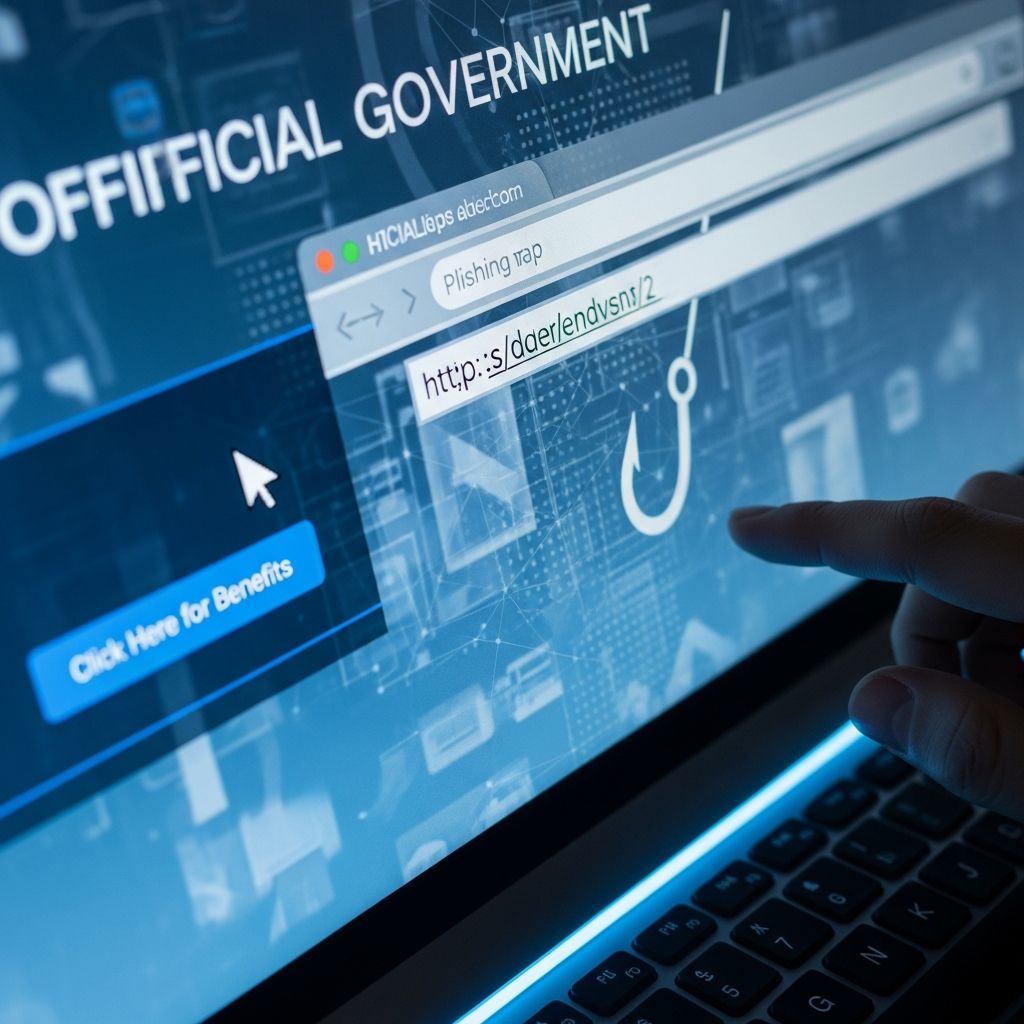
Fraudsters are increasingly impersonating state unemployment offices online and via text or email to steal people’s personal information and hijack unemployment benefits. These scams often look official, copy government logos, and pressure you to act quickly, making them hard to recognize if you are worried about your benefits.
This guide explains how these scams work, the most common warning signs, and the concrete actions you can take to protect your identity, secure your benefits, and report fraud effectively.
Why Unemployment Benefits Are a Big Target for Scammers
Unemployment insurance programs pay billions of dollars each year, which makes them a powerful magnet for organized criminal groups and identity thieves. During and after the pandemic, expanded eligibility and emergency benefits made it even easier for fraudsters to exploit gaps in verification and oversight.
According to oversight agencies and law enforcement, organized crime rings have repeatedly focused on unemployment programs because:
- Large sums of money move quickly through these systems, often via direct deposit or prepaid cards.
- Stolen identities are widely available on underground markets, making it simple to file many fraudulent claims at once.
- High claim volume during economic stress can overload state systems, making it harder to catch every fake application in real time.
Criminals have evolved from simply filing bogus claims to creating fake unemployment websites and phishing campaigns designed to capture Social Security numbers, logins, and banking data directly from victims.
How Fake Unemployment Websites and Phishing Schemes Work
Recent alerts from federal agencies describe a clear pattern: scammers pretend to be state workforce agencies and lure people to fraudulent look-alike websites through deceptive messages.
Step 1: Phishing Messages Create Panic
Scammers typically start with a message that appears urgent and official. These messages may:
- Claim your unemployment claim is on hold, suspended, or needs verification.
- Say you must “update information,” “correct an error,” or “reactivate” your benefits.
- Appear to come from a state workforce agency or labor department email address or phone number.
The Department of Justice has warned that criminals often send these phishing messages by text or email and include a link that looks like it goes to a state website but does not.
Step 2: Fake Websites Capture Your Data
When you click the link in the phishing message, you may be taken to a website that looks almost identical to your state’s unemployment portal. According to the Internal Revenue Service (IRS) and the Department of Justice, these fake sites are deliberately designed to confuse consumers into entering sensitive information.
On these fraudulent sites you may be asked to provide:
- Your full name and address
- Social Security number and date of birth
- Online account username and password for the real unemployment system
- Bank account or debit card information for benefit deposits
Once entered, this information allows fraudsters to log into your real unemployment account, reroute future benefits, and commit broader identity theft, including opening new financial accounts or filing tax returns in your name.
Step 3: Misuse of Stolen Identities
The IRS reports that states have experienced a surge in fraudulent unemployment claims filed using stolen identities, often across multiple states at once. In other words, criminals may use your data to claim benefits in a state where you never lived or worked.
Common ways fraudsters use stolen information include:
- Filing new unemployment claims in multiple states under your name.
- Changing the payment method in an existing claim so the money goes to accounts they control.
- Using your data to open financial accounts, obtain loans, or file fraudulent tax returns.
Red Flags: How to Recognize a Fake Unemployment Site or Message
While scammers work hard to mimic real government communications, there are consistent warning signs you can watch for.
| Warning Sign | What It May Mean |
|---|---|
| Unexpected text or email asking for personal data | State workforce agencies generally do not initiate contact by text to request sensitive information. |
| Link that looks similar to, but not exactly like, your state’s domain | The address may add extra words, unusual abbreviations, or a different top-level domain (for example, “.com” instead of “.gov”). |
| Spelling mistakes or awkward grammar | Many scam messages are rushed or machine-translated and contain basic language errors. |
| Pressure to act immediately or threats to cut off benefits | Urgency is a common social-engineering trick used to bypass your usual caution. |
| Requests for full SSN, banking logins, or debit card PINs by message | Legitimate agencies instruct you to sign in through their official site rather than provide this information over text or email. |
Simple Checks Before You Click or Type
Before responding to any unemployment-related message:
- Do not click links in unexpected texts or emails claiming to be from a state agency.
- Type the official web address for your state workforce agency directly into your browser or use a trusted bookmark.
- Verify the sender by contacting the agency using a phone number or website you find independently through a government directory or previous official correspondence.
- Look for “.gov” domains and secure connections (https) when interacting with government websites, while still checking for slight misspellings or added words.
Signs Your Identity May Already Be Misused for Unemployment Fraud
Even if you never filed for unemployment, your personal information may already be in the hands of criminals. The IRS identifies several common warning signs that your identity is being used for unemployment benefits fraud.
- You receive mail about an unemployment claim or payment you did not file, sometimes from a state where you never worked.
- You get an unexpected benefits card or deposit in your bank account connected to unemployment payments.
- You receive an IRS Form 1099-G for “Unemployment Compensation” reflecting benefits you did not receive or an amount higher than what you actually collected.
- Your current employer informs you that a claim was filed in your name while you are still working.
If any of these occur, treat them as urgent signs that you may be the victim of unemployment identity theft.
What to Do If You Clicked a Fake Link or Gave Out Information
If you suspect you responded to a phishing message or entered information on a fraudulent unemployment website, taking quick, organized steps can limit the damage.
1. Contact Your State Workforce Agency Directly
Reach out to the unemployment agency in the state involved using a phone number or online portal listed on an official government site. The U.S. Department of Labor provides a directory of state workforce agencies and identity theft reporting contacts.
- Explain that you may have given information on a fake site or received suspicious communications.
- Ask the agency to secure or reset your unemployment account, and to document that you reported a possible phishing incident.
- Request guidance on whether a fraudulent claim has already been filed using your identity.
2. Take Immediate Identity-Theft Protection Steps
The IRS recommends that people who suspect they’re victims of unemployment identity theft take broader protective actions beyond the unemployment system itself.
- Order your credit reports from major credit reporting companies and look for accounts or inquiries you do not recognize.
- Place a fraud alert or consider a credit freeze with the credit bureaus to make it harder for new accounts to be opened in your name.
- Change passwords for important online accounts, especially email, banking, and government portals, using strong unique passphrases and enabling multifactor authentication where available.
3. Address Incorrect Tax Forms
If you receive an IRS Form 1099-G reporting unemployment benefits you did not receive, the IRS instructs you to contact the state agency listed on the form and request a corrected 1099-G.
- Tell the state that you were a victim of unemployment identity theft.
- Ask them not to report the fraudulent benefits as income in your name.
- Retain copies of all correspondence in case of future questions about your tax return.
4. Report the Fraud to Federal Authorities
Reporting helps law enforcement track patterns and may support broader crackdowns on organized unemployment fraud schemes.
- File an identity theft report with the Federal Trade Commission through its official government portal, which will generate a customized recovery plan and sample letters you can use.
- Report phishing texts or emails involving disaster or emergency programs to the National Center for Disaster Fraud, which works closely with the Department of Justice on benefits fraud.
How State and Federal Agencies Are Responding
While individuals need to stay vigilant, state and federal authorities have also taken steps to better detect and prevent unemployment fraud and phishing operations.
- The Department of Justice has publicly warned about fake unemployment benefit websites and urged the public to check URLs carefully and report suspicious sites.
- The IRS has published detailed guidance on unemployment identity theft and how taxpayers should handle incorrect Forms 1099-G.
- State workforce agencies have implemented additional identity-verification tools and analytics to flag suspicious claims and prevent large-scale fraud.
These measures help, but they cannot stop every scam—especially those that rely on tricking individuals directly. That is why learning to recognize phishing and fake sites remains so important.
Practical Tips to Stay Safe When Managing Unemployment Benefits Online
You can reduce your risk significantly by building a few habits into how you access and monitor any unemployment or government benefit accounts.
- Use bookmarks: Save the official unemployment website for your state and access it only through that bookmark, not through emailed or texted links.
- Enable multifactor authentication: If your unemployment portal offers it, use an additional verification step, such as a code sent separately, to log in.
- Check your account regularly: Log in periodically to confirm your contact details, payment method, and recent activity are correct and expected.
- Limit oversharing online: Avoid posting details about benefit status or personal identifiers on social media that scammers could use to personalize attacks.
- Educate family members: Many scams target people who are less familiar with online systems; review warning signs with relatives who are receiving benefits.
Frequently Asked Questions (FAQs)
Q1: Can a real unemployment agency ask for my Social Security number?
Yes, legitimate state agencies do need your Social Security number to process claims, but they will generally ask for it only through secure official channels, such as the state’s authenticated unemployment portal or in properly formatted application forms—not through unsolicited texts or emails requesting that you reply with personal data.
Q2: I got a text about a problem with my benefits that includes a link. What should I do?
Do not click the link. Instead, open your browser and type in the known web address of your state workforce agency or use a saved bookmark. Log in from there to check for any messages or issues. You can also call the agency using a phone number listed on its official state website to confirm whether there is a real problem.
Q3: How do I know if an unemployment website is legitimate?
Check that the web address exactly matches your state’s official domain (often ending in “.gov”), look for https encryption, and compare the link against what is printed on official letters or what is listed on your state government’s main website. Be cautious of extra words, misspellings, or domains that use “.com” or unusual endings when you expect a government site.
Q4: What should I do if I receive a 1099-G for benefits I didn’t claim?
Contact the state agency that issued the 1099-G immediately, report that you are a victim of identity theft, and request a corrected form that does not show the fraudulent benefits as your income. Keep documentation of your communications and follow identity-theft recovery steps, including reviewing your credit reports and placing alerts or freezes if appropriate.
Q5: Should I report unemployment phishing attempts even if I did not lose money?
Yes. Reporting suspicious messages and fake websites helps law enforcement and oversight agencies track emerging tactics and take action against criminal networks. You can report such attempts to federal authorities and your state workforce agency, even if you did not respond or suffer a financial loss.
References
- Phishing scheme targets unemployment insurance benefits and PII — Federal Trade Commission. 2021-08-18. https://consumer.ftc.gov/consumer-alerts/2021/08/phishing-scheme-targets-unemployment-insurance-benefits-pii
- Identity theft and unemployment benefits — Internal Revenue Service. 2022-03-01. https://www.irs.gov/identity-theft-fraud-scams/identity-theft-and-unemployment-benefits
- Justice Department Warns About Fake Unemployment Benefit Websites — U.S. Department of Justice. 2020-12-03. https://www.justice.gov/archives/opa/pr/justice-department-warns-about-fake-unemployment-benefit-websites
- Employers: Beware of Widespread Unemployment Benefits Fraud — ID Watchdog (citing FTC and U.S. Secret Service). 2021-01-05. https://www.idwatchdog.com/education/-/article/employers-beware-of-unemployment-fraud
- Our Response to Fraud — California Employment Development Department. 2023-06-15. https://edd.ca.gov/en/about_edd/fraud-response/
Similar Articles








Read full bio of medha deb


