
The Unseen Watchers: Automated Vehicular Surveillance
Explore the hidden network of license plate readers tracking drivers.
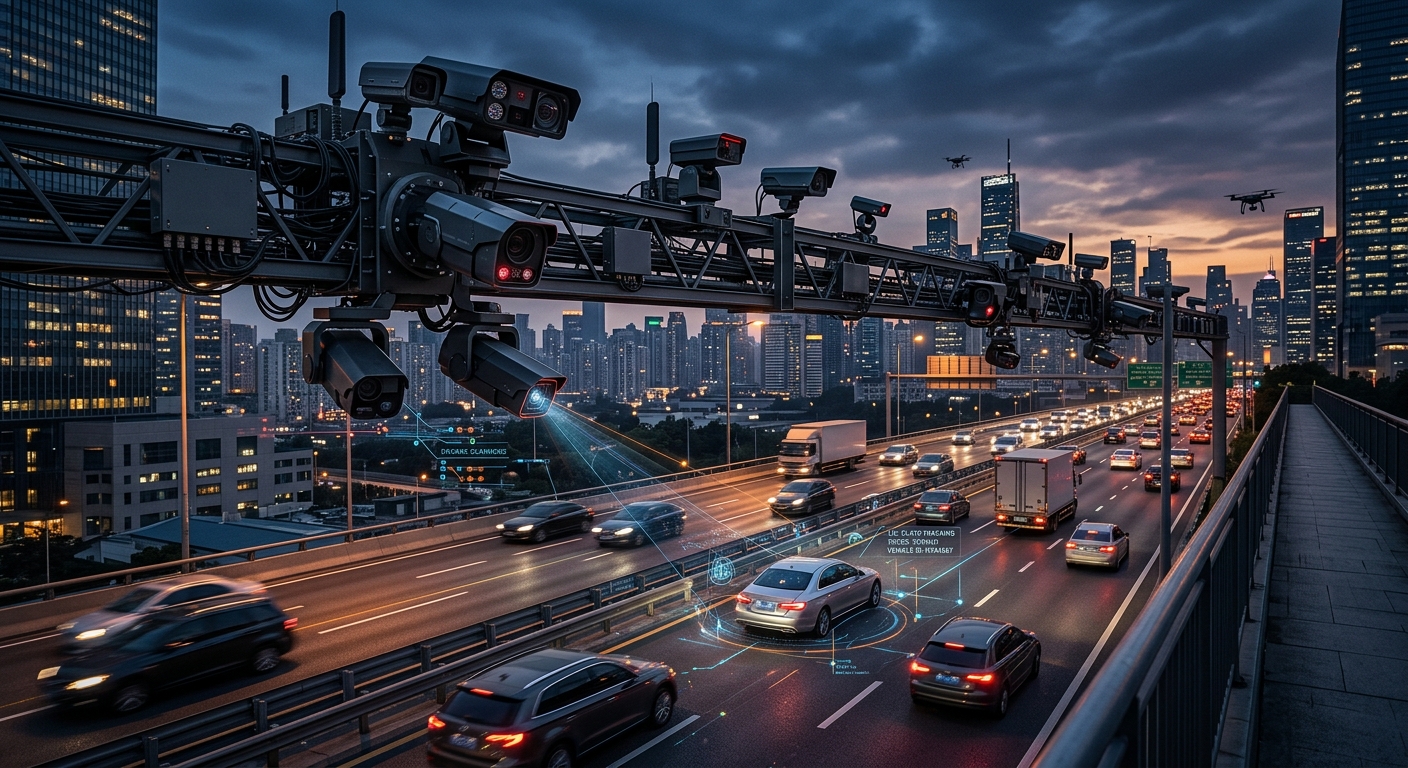
The concept of privacy in the twenty-first century is constantly being redefined by rapid technological advancements. While much of the public debate surrounding digital surveillance heavily focuses on smartphone tracking, facial recognition algorithms, and social media data mining, one of the most pervasive tracking networks operates entirely offline, capturing our physical movements in the real world. Every time you pull out of your driveway, commute to work, drop your children off at school, or visit a medical specialist, you are likely leaving a digital breadcrumb trail. This invisible web is powered by Automated License Plate Readers (ALPRs), a technology that has quietly transformed the American roadways into an expansive, searchable grid of vehicular movement.
The normalization of mass surveillance has profound implications for civil liberties. What was once a localized tool designed to quickly identify stolen vehicles or apprehend fleeing suspects has metamorphosed into an omniscient, nationwide database. This evolution poses a distinct challenge to the fundamental right to anonymity in public spaces. As commercial entities and government agencies join forces to aggregate billions of location data points, everyday citizens find their daily routines logged, analyzed, and stored indefinitely. The implications are vast, touching upon constitutional rights, the potential for systemic abuse, and the erosion of a society where individuals can move freely without the persistent gaze of the state.
The Mechanics of Automated License Plate Recognition
To understand the sheer scope of the modern privacy threat, it is essential to examine how Automated License Plate Recognition (ALPR) technology functions on a technical level. ALPR systems rely on high-speed, infrared cameras mounted on police cruisers, highway overpasses, toll booths, and even neighborhood utility poles. These specially designed cameras are capable of capturing thousands of high-definition images per minute, effortlessly operating in low-light conditions and capturing vehicles even at highway speeds.
When an ALPR camera snaps a picture of a passing car, the system utilizes advanced Optical Character Recognition (OCR) software to instantly translate the visual image of the license plate into alphanumeric text. However, the data collected extends far beyond a simple string of letters and numbers. Each captured record is permanently paired with a precise geographic coordinate (GPS location), a date and time stamp, and often a wide-angle photograph of the vehicle itself. This supplementary imagery can inadvertently capture the faces of the driver and passengers, bumper stickers revealing political affiliations, or the surrounding environment.
The volume of data generated by these continuous systems is staggering. Commercial data brokers and regional law enforcement networks routinely collect billions of plate scans annually. Because the cost of digital storage has plummeted over the last decade, there is little financial incentive to delete this information. Consequently, databases that were originally pitched to the public as real-time alerts for active crimes are now functioning as historical archives, allowing operators to rewind the clock and meticulously map out the exact movements of a specific vehicle over months or even years.
Federal Agencies and the Nationalization of Local Tracking
The most alarming development in the realm of vehicular surveillance is the seamless integration of localized data into massive federal repositories. Originally, ALPR systems were strictly localized—a city police department might use them to monitor its own jurisdictional borders. However, the modern surveillance landscape is defined by aggressive data sharing and unprecedented commercial partnerships. Federal entities, ranging from federal drug enforcement units to border patrol and homeland security agencies, have recognized the immense investigative value of aggregated location data, allowing them to bypass the need to physically build their own camera networks across the country.
Instead of deploying cameras on every street corner, federal agencies frequently purchase access to sprawling commercial databases or tap into regional data-sharing hubs maintained by local law enforcement. This creates a nationalized dragnet. According to a December 2024 report by the United States Government Accountability Office (GAO), federal law enforcement agencies routinely utilize third-party commercial databases to access nationwide license plate data. The report highlighted significant concerns regarding the lack of standardized policies to assess bias risks and implement adequate privacy protections when leveraging these public-space surveillance technologies.
Commercial data brokers play a pivotal role in this ecosystem. These private companies aggressively court both private entities—such as repossession agencies, tolling authorities, and parking garages—and public police departments to funnel their localized data into a centralized architecture. By acting as the middleman, data brokers create an environment where the original context of the data collection is completely erased. A photo taken by a private towing company to enforce parking rules is suddenly repurposed as criminal intelligence by federal agents, vastly expanding the surveillance footprint without a single piece of legislation authorizing such a comprehensive system.
When a local sheriff’s department in a small town uploads its daily ALPR scans to a shared network, that information instantly becomes searchable by federal agents thousands of miles away. This effectively circumvents local political processes. Even if a city council passes a stringent ordinance restricting how its police department can use surveillance technology, the data that has already been shared or purchased by federal agencies remains entirely accessible, creating a sprawling, unregulated intelligence apparatus that operates with little to no congressional oversight.
The Erosion of Fourth Amendment Protections
The proliferation of continuous ALPR databases fundamentally challenges the traditional interpretation of the Fourth Amendment of the United States Constitution, which protects citizens from unreasonable searches and seizures. Historically, the law dictated that individuals have a diminished expectation of privacy in public spaces; after all, if you drive your car on a public road, anyone can theoretically look at your license plate. However, the Founding Fathers could not have anticipated a technological paradigm where automated cameras systematically log the movements of every citizen on a national scale.
This friction between outdated legal precedents and modern surveillance capabilities has repeatedly surfaced in the highest courts. In the landmark 2012 case, United States v. Jones, the Supreme Court ruled that law enforcement could not physically attach a GPS tracking device to a suspect’s vehicle without a warrant. While this case primarily hinged on the physical trespass of placing the device on the car, multiple justices noted in their concurring opinions that the continuous, long-term monitoring of a person’s movements fundamentally impinges upon reasonable expectations of privacy.
This concept was further solidified in the seminal 2018 Supreme Court decision, Carpenter v. United States. In Carpenter, the Court ruled that the government must obtain a warrant to access historical cell-site location information (CSLI) from a wireless carrier. The Court emphasized that an individual maintains a legitimate privacy interest in the comprehensive record of their physical movements, even if that information is technically held by a third-party commercial entity. This historic ruling invigorated the “mosaic theory” of privacy—the legal concept that while a single observation of a person in public might not violate their privacy, the aggregation of thousands of discrete data points creates a deeply revealing and intimate mosaic of their life.
When applied to ALPR data, the continuous tracking of a vehicle can reveal profound details. It can highlight regular visits to a psychiatrist, participation in political protests, attendance at a specific place of worship, or trips to sensitive medical clinics. The aggregation of this data transitions the tracking from a simple public observation into an invasive search into an individual’s private affairs.
The Risks of Unchecked Data Sharing and Retention
The current absence of a unified, federal regulatory framework governing ALPR technology leaves the American public vulnerable to a myriad of distinct privacy and security risks. When surveillance capabilities outpace legislative safeguards, the potential for both systemic and individual abuse grows exponentially.
- Retrospective Tracking: Without stringent retention limits, ALPR databases allow law enforcement to track individuals retroactively without needing to prove prior reasonable suspicion. If an individual becomes a person of interest today, investigators can simply query commercial databases to reconstruct their exact movements over the past three to five years. This retroactive surveillance essentially treats every citizen as a perpetual suspect whose location data is held in escrow just in case it is needed in the future.
- Profiling and Harassment: The lack of strict oversight opens the door for profiling, harassment, and the chilling of First Amendment rights. Historical precedents consistently show that unchecked surveillance tools are frequently deployed disproportionately in marginalized neighborhoods or used to monitor political activists. An automated system that catalogs everyone attending a controversial rally or a union meeting creates a permanent record of association, potentially discouraging citizens from exercising their constitutional rights to peaceable assembly.
- Data Breaches and Insider Threats: There are profound security vulnerabilities inherent in centralized tracking. The consolidation of billions of highly sensitive location records into centralized commercial and government databases creates an incredibly lucrative target for malicious actors. Data breaches, unauthorized access by rogue employees, and coordinated cyberattacks can expose the daily routines of millions of people to hackers, stalkers, or foreign adversaries, leading to devastating real-world consequences.
Mitigating the Risks: Paths Toward Regulatory Frameworks
Addressing the challenges posed by automated vehicular surveillance does not necessarily require abandoning the technology entirely. Rather, it demands the implementation of robust, enforceable safeguards that balance legitimate investigative utility with foundational civil liberties. A comprehensive regulatory framework must prioritize transparency, accountability, and the strict minimization of data collection.
First and foremost, legislative bodies should mandate Warrant Requirements for Database Queries. Just as the Supreme Court mandated a warrant for historical cell phone location data in Carpenter, law enforcement agencies must be required to obtain a probable cause warrant from a judge before querying historical ALPR databases. This ensures that the technology is exclusively used to investigate specific, documented crimes rather than to conduct baseless, speculative fishing expeditions.
Secondly, jurisdictions must implement Strict Data Retention Limits. The most effective way to prevent the creation of permanent surveillance dossiers is to drastically limit how long data can be stored. Data pertaining to vehicles that are not actively linked to an ongoing criminal investigation should be purged rapidly—ideally within 24 to 48 hours of collection.
Finally, there must be Prohibitions on Third-Party Data Purchasing and a mandate for Independent Auditing. To prevent government agencies from bypassing local oversight by simply purchasing data from commercial brokers, federal and state laws must close the existing “data broker loophole.” Furthermore, agencies utilizing ALPR technology must be required to publish regular transparency reports and submit to independent audits to proactively monitor for unauthorized access and algorithmic bias.
Frequently Asked Questions (FAQs)
What is an Automated License Plate Reader (ALPR)?
An ALPR is a sophisticated, high-speed camera system integrated with optical character recognition (OCR) software. These systems capture images of every passing vehicle, converting the physical license plate number into digital text, and logging it into a massive database alongside the exact date, time, and precise GPS coordinates of the photograph.
How do federal agencies access my location data without a warrant?
Many federal agencies currently bypass the need for a warrant by purchasing access to commercial databases maintained by private data brokers. They also tap into regional data-sharing networks where local law enforcement agencies voluntarily upload their daily ALPR scans. Because this data is considered to be collected in “public space” and is hosted by third parties, agencies often claim it falls outside the traditional scope of Fourth Amendment protections.
Can the government track my car even if I haven’t committed a crime?
Yes. Unlike traditional surveillance methods that target a specific suspect with a warrant, ALPR networks operate entirely passively and indiscriminately. They continuously record the movements of every single vehicle that passes their lenses, regardless of whether the driver is suspected of any wrongdoing.
How is the Fourth Amendment related to vehicular location tracking?
The Fourth Amendment protects American citizens against unreasonable searches and seizures. Recent landmark Supreme Court rulings have clearly established that the continuous, long-term tracking of an individual’s location—even if the data is gathered by third parties—constitutes an invasive search and therefore requires a warrant. Privacy advocates passionately argue this same legal standard must be uniformly applied to historical ALPR data.
References
- Law Enforcement: DHS Could Better Address Bias Risk and Enhance Privacy Protections for Technologies Used in Public — U.S. Government Accountability Office (GAO). 2024-12-03. https://www.gao.gov/products/gao-25-106511
- United States v. Jones, 565 U.S. 400 — Supreme Court of the United States. 2012-01-23. https://supreme.justia.com/cases/federal/us/565/400/
- Carpenter v. United States, 585 U.S. 296 — Supreme Court of the United States. 2018-06-22. https://supreme.justia.com/cases/federal/us/585/16-402/
Similar Articles








Read full bio of Sneha Tete


