
Analyzing the Numbers Behind Border Family Separations
A deep dive into the statistics, policy shifts, and human cost at the border.
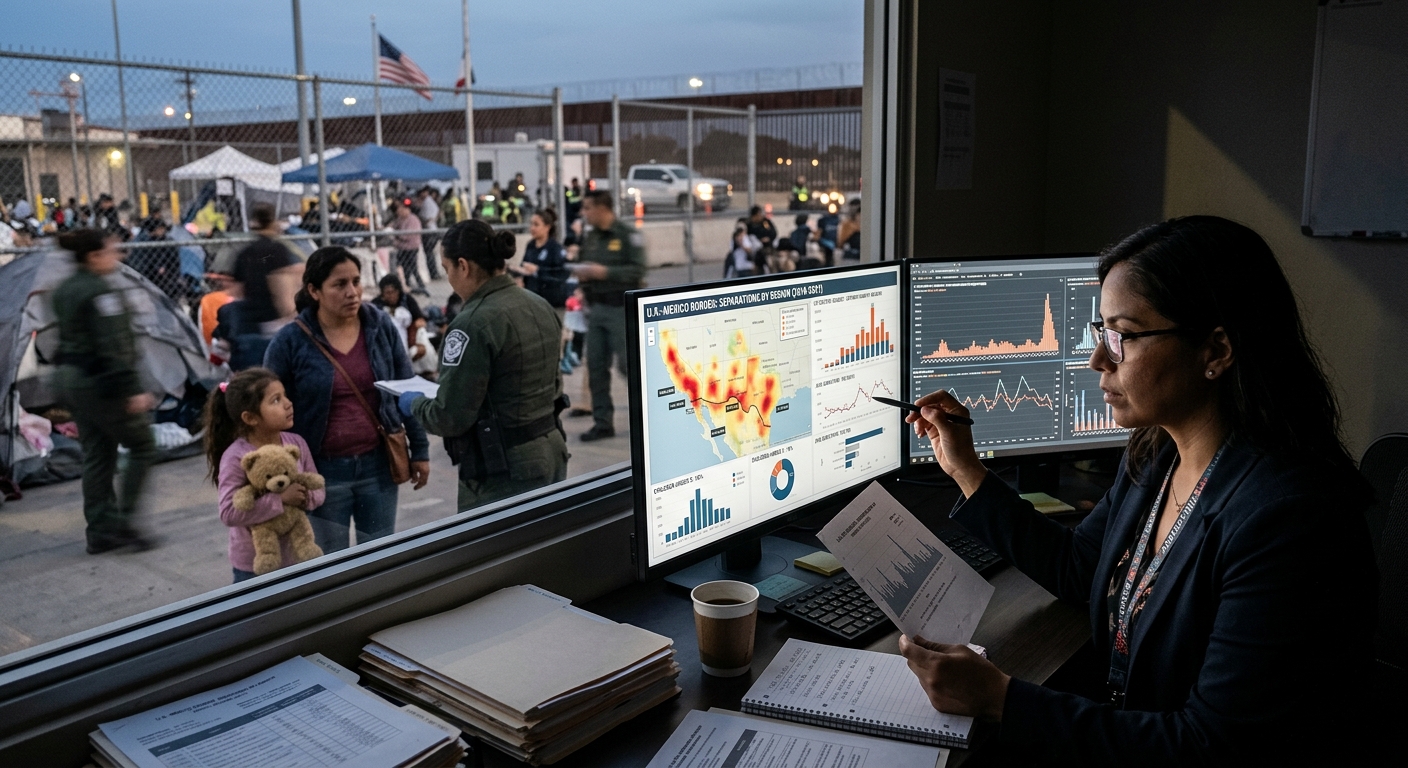
Introduction to a Systemic Shift
In the landscape of modern United States immigration policy, few directives have generated as much widespread scrutiny, logistical chaos, and enduring humanitarian impact as the initiatives leading to widespread family separations at the U.S.-Mexico border. While the enforcement of immigration laws has always involved complex operations, the period between 2017 and 2018 marked a stark departure from historical norms. The abrupt implementation of a sweeping prosecution strategy resulted in thousands of children being systematically detached from their parents. By examining the statistical data, governmental reports, and subsequent legal battles, we can better understand the immense scale of this administrative directive and its lasting consequences on migrant families.
The Genesis of the Zero-Tolerance Strategy
To grasp the numerical magnitude of the crisis, it is essential to first understand the legal mechanisms that facilitated it. Historically, undocumented border crossings by family units were frequently handled through civil deportation proceedings. Families were typically kept together in detention centers or released into the United States with pending immigration court dates. This approach prioritized familial unity while civil cases were processed.
However, the introduction of a “zero-tolerance” framework fundamentally altered this procedural pathway. The directive mandated that all adults apprehended crossing the border between official ports of entry be referred for federal criminal prosecution, regardless of whether they were seeking asylum or accompanied by minor children. Because long-standing child welfare regulations and federal laws strictly prohibit the incarceration of children in adult criminal detention facilities, the prosecution of the parents inherently necessitated the removal of their children.
These minors were subsequently reclassified under the law as “unaccompanied alien children” (UAC). They were transferred from the custody of Customs and Border Protection (CBP) into the care of the Office of Refugee Resettlement (ORR), a division of the Department of Health and Human Services (HHS). This legal reclassification is what drove the sudden, steep rise in separated children entering the federal shelter system.
A Data Infrastructure Unprepared for the Influx
The human toll of the policy was compounded by severe technological and administrative inadequacies. Government watchdogs, including the Department of Homeland Security’s Office of Inspector General (OIG) and the Government Accountability Office (GAO), later revealed that border enforcement agencies implemented the separation mandate without a cohesive strategy for tracking families or ensuring future reunification.
When the policy took effect, the disparate databases used by CBP, Immigration and Customs Enforcement (ICE), and HHS were not integrated. If a parent was prosecuted and sent to a federal holding facility while their child was transported to a shelter halfway across the country, there was no centralized tracking number connecting their files. Border patrol agents resorted to using indecipherable manual codes or taking notes on physical paper, leading to widespread data entry errors.
This lack of a unified technological infrastructure meant that when federal courts eventually ordered the government to reunite the families, authorities had to manually comb through thousands of individual records. The absence of reliable data transformed what should have been a straightforward logistical process into a multi-year investigative crisis.
By the Numbers: Analyzing the Impact
Quantifying the exact number of separated families has been an evolving challenge due to the initial poor record-keeping. However, through persistent legal inquiries, court-ordered disclosures, and independent audits, a clearer picture of the demographics and scale has emerged.
Initial court proceedings identified a primary class of roughly 2,600 children who were in government custody at the time a federal injunction was issued in mid-2018. However, subsequent investigations revealed that the practice had begun much earlier than previously disclosed under pilot programs. When factoring in these earlier separations, the total number of children taken from their parents surpassed 5,000.
Demographic Breakdown
The children impacted by these policies were not just older teenagers capable of articulating their identities or family histories; a significant portion were exceptionally young. Based on the data subsets analyzed during the height of the crisis:
- Gender Distribution: Approximately 64 percent of the separated minors were male, mirroring broader demographic trends in border crossings, while 36 percent were female.
- Age Vulnerability: A staggering proportion of the children were under the age of ten. In the initial tracked group of over 2,600 minors, more than 1,000 fell into this young demographic.
- Infants and Toddlers: Most distressingly, data revealed that over 100 children in the initial tracking group were under the age of five, including pre-verbal infants and toddlers who were entirely dependent on caregivers.
Status and Custody Outcomes
Once the federal mandate to reunite families was issued, tracking the discharge status of these children highlighted further complications. The data showed varied trajectories for the separated minors:
| Custody Status | Description |
|---|---|
| Discharged to Sponsors | The majority of the initial 2,600+ children were eventually released from government shelters. Many were sent to live with verified family members or sponsors already residing in the United States while their cases proceeded. |
| Reunited in Custody | A fraction of families were successfully matched and moved to family residential centers, though this process was heavily delayed by bureaucratic hurdles. |
| Voluntary Separation | In over a hundred documented cases, parents who had already been deported made the agonizing decision to let their children remain in the U.S. to pursue asylum claims independently, rather than subjecting them to the dangers of their home countries. |
Judicial Intervention and the Push for Accountability
The statistical realities of the crisis fueled widespread public outcry and intense legal mobilization. Civil rights organizations initiated massive class-action lawsuits against the federal government, arguing that the practice violated fundamental constitutional rights and due process. The litigation focused heavily on the government’s inability to provide concrete data regarding the whereabouts of the children.
In the summer of 2018, a federal district court judge issued a sweeping preliminary injunction. The ruling effectively halted the systematic separation of families and imposed strict, rapid deadlines for the government to return children to their parents. Specifically, the court demanded that children under the age of five be reunited within 14 days, and all other minors within 30 days.
Meeting these deadlines proved nearly impossible due to the aforementioned data failures. The government was forced to deploy massive resources, cross-referencing HHS shelter logs with ICE deportation manifests. The judicial oversight brought a necessary level of transparency to the crisis, forcing regular statistical reporting that allowed the public to grasp the true scope of the separations.
The Humanitarian Toll and Psychological Aftermath
Beyond the spreadsheets and court dockets lies a profound public health and humanitarian crisis. Peer-reviewed medical and psychological studies have extensively documented the severe health impacts of forced family separation, particularly on young children. The abrupt removal of a primary caregiver triggers an acute toxic stress response in developing brains.
Mental health professionals working with the detained youth reported alarming rates of trauma, separation anxiety, depression, and regressive behaviors. Children confined to institutional shelter environments without familial comfort exhibited signs of prolonged psychological distress. Furthermore, parents held in adult detention centers suffered from severe anguish, exacerbated by the lack of communication and information regarding their children’s locations.
The trauma of the event did not evaporate upon reunification. Many families require long-term therapeutic interventions to rebuild trust and address the emotional scars inflicted by the sudden and prolonged detachments.
The Broader Impact on the Immigration System
The repercussions of the family separation crisis extended far beyond the immediate families involved; they deeply impacted the broader United States immigration apparatus. The sudden influx of thousands of young children into the Office of Refugee Resettlement (ORR) system stretched federal shelter capacities to their absolute limits. Emergency pop-up shelters, often lacking the comprehensive childcare standards required for long-term stays, had to be erected at immense taxpayer expense.
Furthermore, the diversion of resources toward processing family separations and managing the subsequent reunification logistics strained border enforcement agencies. Caseworkers, asylum officers, and immigration judges faced massive backlogs as the system struggled to accommodate the convoluted legal proceedings born out of the zero-tolerance policy. The crisis underscored a critical systemic vulnerability: immigration infrastructure designed primarily for single adults is fundamentally incapable of safely managing vulnerable child populations without disastrous consequences.
The Arduous Path to Full Reunification
While the injunction stopped the immediate hemorrhaging of families, repairing the damage has proven to be a painstaking, multi-year endeavor. The most complex and tragic cases involved parents who were processed, criminally convicted for illegal entry, and swiftly deported to their countries of origin without their children.
By the time the courts mandated reunification, hundreds of parents were already thousands of miles away in remote areas of Central America, without reliable phone numbers or addresses. Non-governmental organizations and human rights defenders had to establish on-the-ground search committees in countries like Guatemala, Honduras, and El Salvador. Advocates physically traveled to rural villages trying to locate deported parents and inform them of their children’s whereabouts.
Even years after the formal end of the policy, specialized government task forces continue to work alongside advocacy groups to resolve the remaining cases. The long tail of this policy serves as a stark reminder of how quickly administrative actions can fracture lives, and how difficult it is to reverse those consequences.
Conclusion: Lasting Policy Implications
The data surrounding the separation of families at the U.S. border provides a sobering look at the intersection of criminal justice and immigration enforcement. The “zero-tolerance” policy demonstrated that without rigorous ethical guardrails and robust technological infrastructure, aggressive enforcement mandates can rapidly devolve into humanitarian disasters.
The numbers—thousands of children scattered, hundreds of infants detained, and countless records lost—highlight the absolute necessity of prioritizing human rights and familial integrity in border management. Moving forward, the lessons extracted from these statistics must inform legislative safeguards to ensure that such a systematic fracturing of families is never repeated, and that the fundamental dignity of migrants is preserved regardless of their legal status.
Frequently Asked Questions (FAQs)
What was the “zero-tolerance” border policy?
The zero-tolerance policy was an enforcement directive that mandated the criminal prosecution of all adults apprehended crossing the U.S. border unlawfully. Because adults were sent to federal criminal holding facilities where children are not legally allowed to be kept, the policy resulted in the systematic separation of parents from their minor children.
How many children were affected by family separations?
While early court mandates focused on an initial group of around 2,600 children, subsequent government audits and investigations revealed that over 5,000 children were separated from their families when accounting for pilot programs and earlier enforcement actions.
Why was it so difficult to reunite the families?
Reunification was severely hindered by a lack of coordinated data tracking. The federal agencies responsible for apprehending the parents and sheltering the children used different, unlinked databases. Furthermore, hundreds of parents were deported to their home countries without their children, making them incredibly difficult to locate.
Are all the separated families reunited now?
While the vast majority of families have been reunited through the tireless efforts of legal advocates, NGOs, and government task forces, the process has taken years. A small number of cases remain complex due to parents electing to leave their children in the U.S. for safety, or ongoing difficulties in locating deported individuals.
References
- Special Review – Initial Observations Regarding Family Separation Issues Under the Zero Tolerance Policy — Department of Homeland Security Office of Inspector General. 2018-09-27. https://www.oig.dhs.gov/sites/default/files/assets/2018-10/OIG-18-84-Sep18.pdf
- Unaccompanied Children: Agency Efforts to Reunify Children Separated from Parents at the Border — Government Accountability Office. 2018-10-24. https://www.gao.gov/products/gao-19-163
- In reversal, Trump orders halt to his family separation rule — Associated Press. 2018-06-20. https://apnews.com/article/immigration-north-america-donald-trump-ap-top-news-politics-9cebc6d88b43431eb05f03a62f835261
Similar Articles








Read full bio of Sneha Tete


