
The New Watchman: AI Surveillance and Suspicious Behavior
AI cameras now judge our actions, threatening privacy and civil liberties.
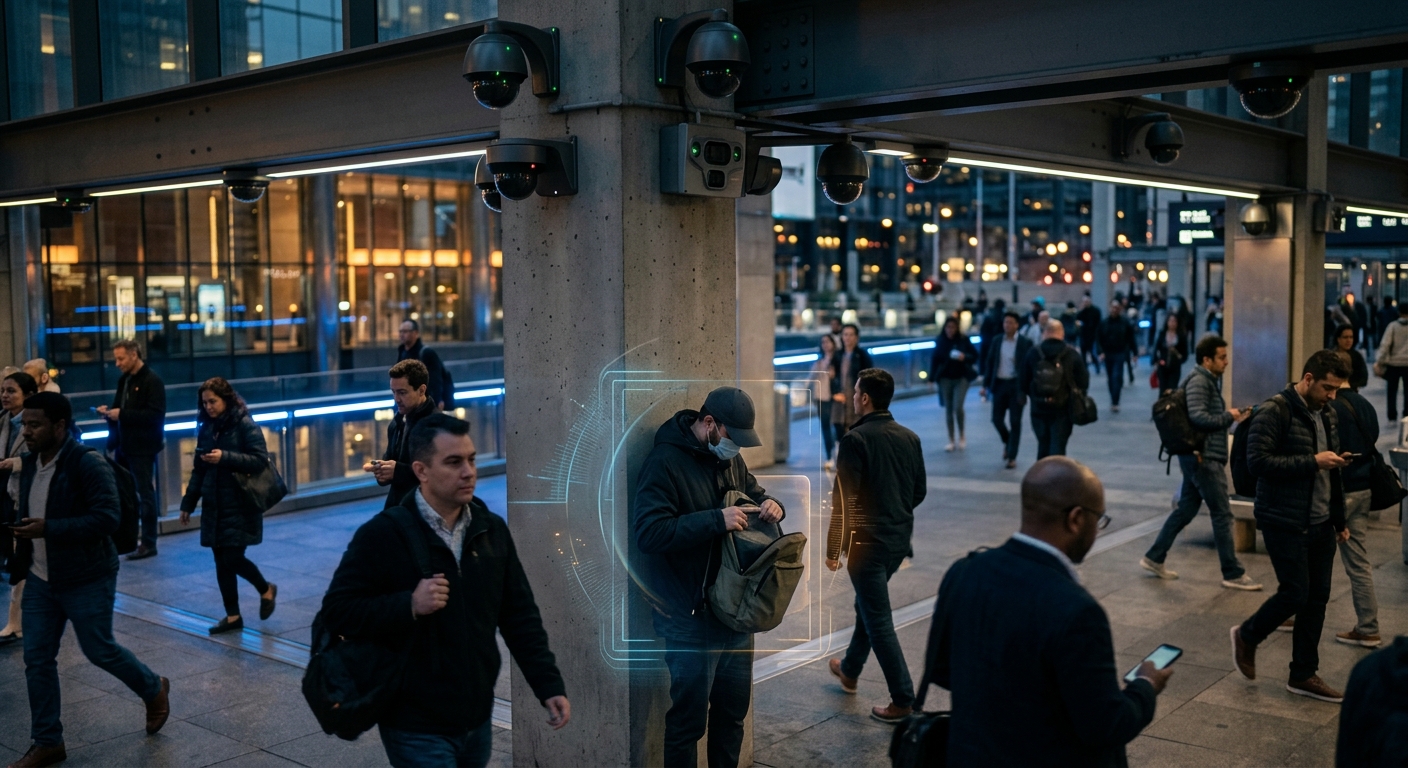
For decades, the standard security camera was merely a passive observera digital memory bank that recorded events for human review after the fact. Today, a profound transformation is underway in the realm of public monitoring. Powered by artificial intelligence (AI) and machine learning, modern surveillance networks have evolved from passive recorders to active, automated judges of human behavior. This shift toward algorithmic surveillance means that cameras are no longer simply capturing our movements; they are analyzing, interpreting, and categorizing them in real-time.
At the center of this technological leap is the controversial concept of automated behavior detection. Local law enforcement agencies, private property managers, and national security organizations are increasingly deploying AI tools programmed to flag ‘suspicious’ activities. However, turning the subjective concept of suspicion over to an algorithm introduces profound questions regarding privacy, civil liberties, and the presumption of innocence in public spaces. When an invisible digital entity holds the power to label a citizen as a potential threat, society must examine how these systems work, what biases they conceal, and what happens to human freedom when everyone is treated as a permanent suspect.
The Anatomy of Algorithmic Suspicion
To understand the danger of automated behavior detection, one must first examine how these systems define deviance. Unlike traditional security models where a human guard evaluates the context of a situation, algorithmic video surveillance (AVS) relies on predefined statistical models. These systems map the human body into a series of data points, analyzing gait, speed, proximity to objects, and duration of stay in a specific area.
Software vendors program these AI systems to recognize anomalies. If a baseline of ‘normal’ behavior is establishedsuch as walking efficiently from point A to point Banything outside that narrow parameter triggers an alert. Examples of actions that algorithms routinely flag include:
- Loitering or lingering: Standing in a designated zone for an extended period, regardless of the reason.
- Unusual movement trajectories: Pacing back and forth, walking against the flow of a crowd, or moving erratically.
- Abandoned objects: Leaving a bag or package on the ground and walking away.
- Sudden changes in speed: Breaking into a run in a crowded area where others are walking.
The fundamental flaw in this architecture is the absence of human context. A person standing outside a train station for thirty minutes might be waiting for a chronically late friend. An individual pacing back and forth could be deeply engaged in a stressful phone call. A person running through a plaza might simply be trying to catch a departing bus. To the algorithm, however, these are statistical anomalies that mirror pre-crime indicators. The AI cannot perceive intent; it only perceives deviation from a programmed norm. Consequently, the technology generates a staggering volume of false positives, effectively criminalizing mundane human activities.
The Hidden Danger: Embedded Bias in Machine Learning
Perhaps the most alarming aspect of AI-driven behavior analysis is its potential to scale and institutionalize systemic biases. Algorithms do not write themselves; they are trained on vast datasets of historical surveillance footage and arrest records. Because historical law enforcement practices have disproportionately targeted marginalized communities, the data fed into these AI models is inherently flawed.
When an algorithm is taught what a ‘suspicious’ person looks like based on biased historical data, the resulting technology acts as an automated amplifier for prejudice. If past policing data indicates that authorities frequently stop and question young men of color in specific neighborhoods, predictive policing and behavioral analytics software may quietly incorporate these demographic and geographic markers into its risk assessments.
Moreover, facial recognition technology (FRT)often integrated alongside behavioral analytics in modern access control and surveillance gridshas been proven repeatedly to suffer from higher error rates when identifying women and people with darker skin tones. When you combine inaccurate biometric identification with a behavior-flagging algorithm, the risk to civil rights compounds dramatically. A false positive no longer just means a security guard takes a second look; it can lead to an unwarranted police stop, public humiliation, or an escalation of force based entirely on an algorithmic miscalculation.
Real-World Deployments and the Erosion of Anonymity
The theoretical risks of automated surveillance have already become reality. Governments and private entities globally are rapidly expanding their use of these technologies, often outpacing the legislative frameworks necessary to govern them.
A watershed moment for algorithmic video surveillance occurred during the 2024 Paris Olympics. France passed experimental legislation allowing the deployment of advanced AI cameras designed to detect abandoned bags, crowd surges, and erratic movements. While the French government promised that the systems would not use facial recognition, privacy advocates warned that normalizing AVS on such a massive scale sets a dangerous precedent. The experiment effectively transformed the Olympic Games into a testing ground for automated mass monitoring, blurring the line between essential security measures and a panopticon-style surveillance state.
In the United States, the deployment of similar technologies is highly fragmented but equally pervasive. From schools using AI to monitor student behavior to retail stores deploying emotion-recognition software to spot potential shoplifters, automated suspicion is quietly embedding itself into the fabric of daily life. The lack of a cohesive federal standard means that these systems operate in a regulatory gray area. In many jurisdictions, citizens are entirely unaware that their movements are being analyzed, graded, and stored by third-party tech vendors. Legal scholars have begun comparing these unchecked deployments to unregulated experiments on human subjects, conducted without consent or ethical oversight.
The Chilling Effect on Civil Liberties
The First and Fourth Amendments of the U.S. Constitution have long protected citizens from unreasonable searches and seizures, while safeguarding the right to free expression and association. Pervasive algorithmic surveillance fundamentally threatens these core liberties by altering the dynamic between the state and the individual.
When people know, or even suspect, that they are being continuously monitored and analyzed by an unforgiving algorithm, they alter their behavior. This phenomenon, known as the ‘chilling effect,’ stifles free expression. Individuals may choose not to attend a lawful protest, visit a controversial political office, or even gather in certain public squares for fear of being cataloged by the system or flagged as anomalous. The spontaneous, unscripted nature of public life becomes restricted when every citizen feels compelled to perform ‘normalcy’ to avoid triggering an automated police dispatch.
Furthermore, automated surveillance flips the constitutional presumption of innocence. In a democratic society, individuals are presumed innocent, and the burden of proof rests on the state to justify an investigation. AI surveillance operates on the opposite premise. By continuously scanning entire crowds for pre-crime behaviors, the system treats everyone as a latent threat until proven otherwise. Once a person is flagged by the algorithm, the burden subtly shifts to the citizen to explain why their behavior was benign.
Charting a Path Forward: Regulation and Accountability
The genie cannot be put back in the bottle; artificial intelligence and advanced surveillance technologies are here to stay. However, society does not have to accept the unchecked deployment of these systems at the expense of fundamental freedoms. Establishing rigorous democratic oversight is essential to balance public safety with civil liberties.
To rein in the excesses of algorithmic surveillance, several robust policy interventions are necessary:
- Mandatory Transparency and Audits: Law enforcement agencies and private corporations must publicly disclose the types of AI surveillance they use. Furthermore, these systems must undergo independent, third-party audits to assess their accuracy, bias, and impact on marginalized communities before deployment.
- Strict Limits on Data Retention: Information gathered by behavioral analytics systems should not be stored indefinitely. Clear, legally binding limits must be established regarding how long footage and metadata can be kept and who is permitted to access it.
- Bans on Emotion Recognition: The pseudoscientific practice of using AI to determine an individual’s emotional state or intent based on facial micro-expressions should be banned in public spaces and law enforcement contexts.
- Meaningful Human Oversight: An algorithmic alert should never be the sole basis for an arrest, a search, or a use of force. Human reviewconducted by personnel trained to understand the limitations and biases of AImust remain a mandatory intermediary step.
The defense of privacy in the digital age requires active vigilance. Technology should serve the public interest, not act as an invisible interrogator.
Frequently Asked Questions (FAQ)
What is algorithmic surveillance?
Algorithmic surveillance is the use of artificial intelligence and machine learning to analyze video feeds, audio recordings, or data streams in real-time. Instead of just recording footage, these systems actively identify objects, track movements, and flag specific behaviors or events without human intervention.
How do cameras determine if behavior is ‘suspicious’?
AI cameras are programmed to recognize specific physical patterns, such as walking against the flow of traffic, standing in one place for an extended period, or leaving a bag unattended. The system compares real-time movements against a programmed baseline of ‘normal’ behavior and triggers an alert if it detects a statistical anomaly.
Does automated behavior detection include facial recognition?
Not always, but the two technologies are frequently integrated. Behavior detection focuses on kinesthetics and body movement, while facial recognition technology (FRT) focuses on biometric identification. When combined, a system can both flag a ‘suspicious’ action and attempt to immediately identify the person performing it.
Why is algorithmic surveillance considered a threat to civil liberties?
These systems are known to generate high rates of false positives, largely because AI cannot understand human context. Additionally, the algorithms are often trained on biased historical data, leading to the disproportionate targeting of marginalized groups. Pervasive monitoring also creates a chilling effect on free speech and the right to assemble publicly.
Are there federal laws regulating AI surveillance in the US?
Currently, there is no comprehensive federal law in the United States governing the use of AI in public surveillance. Regulation is largely a patchwork of local and state laws, with some cities banning facial recognition while others expand algorithmic policing with minimal oversight.
Conclusion
The proliferation of algorithmic surveillance represents a critical juncture for modern society. While the promise of enhanced public safety is a compelling narrative, it must not be pursued at the absolute cost of privacy and civil rights. Automating the detection of suspicious behavior strips away the essential human context needed to navigate the complexities of daily life, replacing empathy and judgment with cold, statistical probability. As these AI systems become more entrenched in public spaces, from urban streets to Olympic stadiums, the need for stringent regulatory frameworks, independent auditing, and transparent public discourse has never been more urgent. Only by demanding accountability can we ensure that our technological tools serve to protect society, rather than inherently suspecting it.
References
- Governing Artificial Intelligence in Law Enforcement: Ethical Challenges, Regulatory Frameworks, and Accountability Mechanisms Semantic Scholar / Interdisciplinary Research. 2026-03-15. https://www.semanticscholar.org/
- Algorithmic Surveillance Takes the Stage at the Paris Olympics Lawfare. 2024-08-09. https://www.lawfaremedia.org/article/algorithmic-surveillance-takes-the-stage-at-the-paris-olympics
- An AI Taxonomy for Criminal Justice MIT Technology Review. 2026-05-18. https://www.technologyreview.com/
- The Civil Rights Implications of the Federal Use of Facial Recognition Technology US Commission on Civil Rights. 2024-09-19. https://www.usccr.gov/
- Police Technology Experiments Columbia Law Review. 2025-02-03. https://columbialawreview.org/content/police-technology-experiments/
Similar Articles








Read full bio of medha deb


