
The Algorithmic Gatekeeper: AI and Fair Hiring Practices
As automated systems reshape employment, algorithmic fairness is critical.
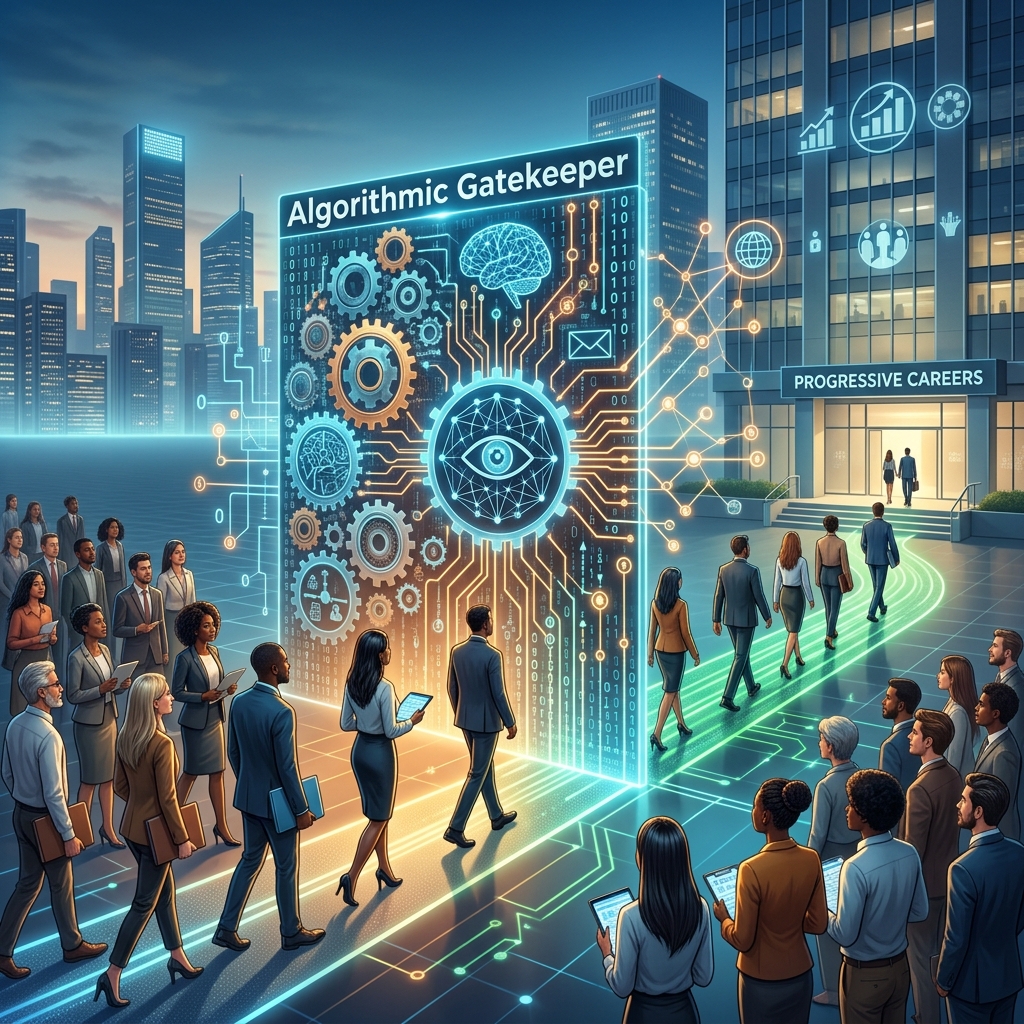
The Dawn of the Digital Talent Acquisition Era
The modern job search has undergone a quiet but profound transformation. Gone are the days when the primary gatekeeper to a new career was a human resources associate meticulously reading paper resumes. Today, applicants are increasingly subject to the scrutiny of the “invisible recruiter”—artificial intelligence (AI) and automated employment decision tools (AEDTs). From predictive screening software to gamified personality tests and algorithmic video interviews, organizations are leveraging machine learning to sift through thousands of applications with unprecedented speed.
According to a Pew Research Center survey, a significant portion of American workers are deeply concerned about the trajectory of AI in the workplace, with many worrying it could lead to diminished job opportunities or biased evaluations . While the corporate appeal of these tools is clear—efficiency, cost reduction, and the promise of a standardized process—the reality is far more complex. Rather than eliminating human error, AI systems often inherit, magnify, and scale the very biases they were intended to replace.
The broader economic implications are equally staggering. In an era where a company’s success is deeply intertwined with the diversity of its workforce, relying on flawed algorithms can inadvertently stifle innovation by screening out highly capable talent who possess non-traditional backgrounds. When algorithms dictate who gets an interview and who gets ignored, the stakes for civil rights, economic mobility, and workplace equity become monumentally high.
Behind the Curtain: Mechanics of Automated Hiring Tools
To understand how AI might prevent qualified candidates from getting hired, one must first demystify how these automated systems operate. Hiring algorithms do not evaluate applicants using independent reasoning or empathy; they rely on predictive analytics powered by massive datasets.
When an applicant submits a resume through an applicant tracking system (ATS), natural language processing algorithms scan the document for specific keywords, semantic structures, and experience markers. Beyond text analysis, some platforms utilize behavioral tracking. In one-way video interviews, for example, AI might analyze an applicant’s vocal intonation, pacing, word choice, and even facial micro-expressions to gauge cultural fit or enthusiasm.
The critical vulnerability in this technology lies in its training data. Machine learning models “learn” what a successful employee looks like by analyzing the historical data of a company’s past top performers. If a company has a history of predominantly hiring candidates from specific demographics—such as white, male, able-bodied graduates from elite universities—the algorithm will inherently map those traits as predictors of success. Consequently, the AI will build a predictive profile that favors applicants who mirror the historical majority, effectively coding systemic exclusion into a proprietary algorithm.
Demographics at Risk: How Bias Manifests in Practice
The illusion of technological neutrality is one of the most dangerous misconceptions surrounding AI in talent acquisition. Because algorithms process mathematics, they are often wrongly assumed to be objective. However, bias frequently manifests in both obvious and insidious ways.
One of the most famous historical examples occurred when a major tech conglomerate attempted to build an AI recruiting tool to automate the search for top software engineering talent . The company realized its system was systematically downgrading resumes that contained the word “women’s” and penalizing graduates of two all-women’s colleges. The system had been trained on a decade’s worth of resumes submitted to the company, the vast majority of which came from men, leading the algorithm to deduce that male candidates were statistically preferable. The tool was ultimately scrapped, serving as a powerful cautionary tale.
Beyond gender, racial biases are frequently embedded in these tools. Natural language processors can unfairly penalize applicants who use dialects, regional phrasing, or names that differ from the Eurocentric norm. If an algorithm correlates long employment gaps with poor performance, it may disproportionately filter out women who took time off for childcare, individuals from socioeconomically disadvantaged backgrounds who faced prolonged unemployment, or people who were formerly incarcerated, all of which often correlate with existing racial disparities.
| Stage of Hiring Process | Type of AI Tool Deployed | Potential Bias and Civil Rights Risks |
|---|---|---|
| Candidate Sourcing & Outreach | Targeted Advertisement Algorithms | Algorithms may only display job advertisements to specific demographic groups based on online behavior, effectively hiding opportunities from older workers or minority groups. |
| Resume & Application Screening | Natural Language Processing (NLP) Parsers | May automatically downgrade applicants with non-traditional formatting, employment gaps, or terminology associated with minority organizations. |
| Pre-Employment Initial Assessments | Gamified Cognitive and Personality Tests | Can severely disadvantage neurodivergent candidates or individuals with motor skill impairments who cannot interact with the game mechanics optimally. |
| Video Interviews & Evaluations | Facial Analysis & Sentiment Tracking | Penalizes applicants with facial paralysis, physical tics, speech impediments, or distinct cultural communication styles by incorrectly reading their micro-expressions. |
The Intersection of Automation and Accessibility
The impact of automated screening is perhaps most acute for job seekers with disabilities and neurodivergent candidates. The Americans with Disabilities Act (ADA) mandates that employers provide reasonable accommodations and prohibits discrimination based on a candidate’s physical or mental impairments. Yet, algorithmic hiring systems are often deployed without considering accessibility, creating invisible digital barriers.
Consider an AI video interviewing platform programmed to assess a candidate’s engagement by measuring continuous eye contact, rapid speech patterns, and specific facial expressions. This metric system inherently disadvantages an applicant who is autistic, someone who has a speech impediment like a stutter, or an individual with a condition that causes facial paralysis. To the algorithm, the deviation from the statistical baseline is flagged as a lack of confidence or poor communication skills, resulting in an automatic rejection.
The U.S. Equal Employment Opportunity Commission (EEOC) has explicitly warned that the use of AI in hiring can lead to disability discrimination . If an algorithm screens out an individual because their disability prevents them from completing a gamified assessment in a standard way, the employer could be in direct violation of the ADA, even if the discrimination was unintentional.
Navigating the Regulatory Landscape and Civil Rights
As the civil rights implications of algorithmic hiring become undeniable, regulatory bodies and lawmakers are beginning to push back against unchecked technological deployment. The EEOC has launched a dedicated initiative focusing on AI and Algorithmic Fairness, issuing formal guidance to clarify that existing civil rights laws apply just as rigorously to digital algorithms as they do to human managers. The agency emphasizes that employers are legally responsible for the discriminatory outputs of their AI tools, even if the software was purchased from a third-party vendor.
At the local level, municipalities are pioneering new regulatory frameworks. New York City’s Local Law 144, enforced by the Department of Consumer and Worker Protection (DCWP), represents one of the nation’s first significant attempts to regulate these technologies . The law mandates that employers using AEDTs to screen candidates must subject those tools to an independent bias audit annually. Furthermore, employers are required to publicly post the results of these audits and notify candidates that an AI system is being used to evaluate them.
While these regulations are vital steps forward, critics argue that they often lack comprehensive coverage. Bias audits generally focus on a narrow set of metrics, such as evaluating disparate impact across gender and race, but they often struggle to measure intersectional discrimination or biases against less quantifiable traits.
Toward Ethical Algorithms: Strategies for Fairer Hiring
To harness the benefits of technology without sacrificing equity, the corporate sector must move toward ethical, explainable AI. Addressing algorithmic bias requires more than retroactive compliance; it demands proactive, inclusive design.
- Diverse Engineering Teams: The development of AI tools must involve diverse teams of software engineers, sociologists, and civil rights experts who can identify potential blind spots before a model is deployed.
- Explainable AI (XAI): Employers should reject opaque models where the decision-making process is hidden. Systems must be able to explain exactly which variables contributed to a candidate’s score.
- Continuous, Holistic Auditing: Bias audits should not be a one-time regulatory checklist. Algorithms drift and evolve; they require continuous monitoring using broad, intersectional metrics that go beyond basic legal compliance.
- Humans in the Loop: AI should augment human decision-making, not replace it entirely. A qualified human recruiter must always have the authority and the contextual knowledge to review and override automated rejections.
- Alternative Assessment Options: Employers must establish clear pathways for candidates to request alternative evaluation methods. If an applicant is uncomfortable or unable to complete an algorithmic video interview due to a disability, providing a traditional interview option is both ethical and a legal safeguard.
FAQs: Understanding Algorithmic Hiring
What exactly is an automated employment decision tool (AEDT)?
An AEDT is any software or computer-based system that uses machine learning, artificial intelligence, or statistical modeling to substantially assist or replace human decision-making in the hiring or promotion process.
Can an AI system legally reject me because of my disability?
No. Under the Americans with Disabilities Act, an employer cannot use a screening tool that automatically filters out individuals with disabilities unless the tool evaluates skills that are strictly essential to the core functions of the job. Employers must provide reasonable accommodations if a standard AI test disadvantages a disabled candidate.
How can applicants know if they are being evaluated by an algorithm?
Currently, transparency depends entirely on your geographic location. Jurisdictions like New York City require employers to explicitly notify candidates when an automated decision tool is in use. However, in many other regions, candidates may not be informed that an AI is parsing their resume or analyzing their video responses.
What happens to my data after an AI hiring system analyzes it?
Data privacy is a growing concern in the realm of automated hiring. When you submit a resume, complete a gamified assessment, or participate in a video interview, your data is often processed by third-party vendors who develop these AI tools. Depending on the platform’s terms of service and local privacy laws, your biometric data, behavioral patterns, and personal information might be stored to further “train” the algorithm for future candidates. Applicants should carefully read the privacy policies associated with any third-party assessment platform and look for options to opt-out of data retention where applicable.
What should I do if I suspect an algorithm discriminated against me?
If you believe you were unfairly screened out by an automated system due to your race, gender, age, or disability, you can file a formal complaint with the U.S. Equal Employment Opportunity Commission (EEOC) or your local state department of labor. It is crucial to document the application process, note the type of assessment used, and retain any correspondence with the employer.
Conclusion: Reclaiming the Human Element
As artificial intelligence continues to weave itself into the fabric of the modern workforce, we stand at a critical crossroads for workplace equity. The promise of an unbiased, perfectly efficient digital recruiter remains a mirage, clouded by the historical prejudices embedded in the data we feed our machines. Left unchecked, automated hiring tools possess the terrifying potential to digitize discrimination, locking marginalized communities out of economic opportunities at scale. However, by demanding algorithmic transparency, enforcing rigorous civil rights frameworks, and insisting on consistent human oversight, we can ensure that technology serves as a tool for inclusion rather than a barrier to entry. The future of work must be built on the principle that while algorithms can rapidly process data, only humans can truly recognize potential and character.
References
- Artificial Intelligence and the ADA — U.S. Equal Employment Opportunity Commission. 2022-05-12. https://www.eeoc.gov/laws/guidance/artificial-intelligence-and-ada
- Automated Employment Decision Tools (AEDT) — NYC Department of Consumer and Worker Protection (DCWP). 2023-07-05. https://www.nyc.gov/site/dca/about/automated-employment-decision-tools.page
- U.S. Workers Are More Worried Than Hopeful About Future AI Use in the Workplace — Pew Research Center. 2025-02-25. https://www.pewresearch.org/short-reads/2025/02/25/us-workers-are-more-worried-than-hopeful-about-future-ai-use-in-the-workplace/
- Amazon Scraps Secret AI Recruiting Tool that Showed Bias Against Women — Reuters. 2018-10-10. https://www.reuters.com/article/us-amazon-com-jobs-automation-insight/amazon-scraps-secret-ai-recruiting-tool-that-showed-bias-against-women-idUSKCN1MK08G/
Similar Articles








Read full bio of Sneha Tete


