
The High-Tech Mirage of AI Weapons Detectors
AI weapons scanners promise safety, but false positives reveal critical flaws.
The Promise and the Pitfalls of Frictionless Security
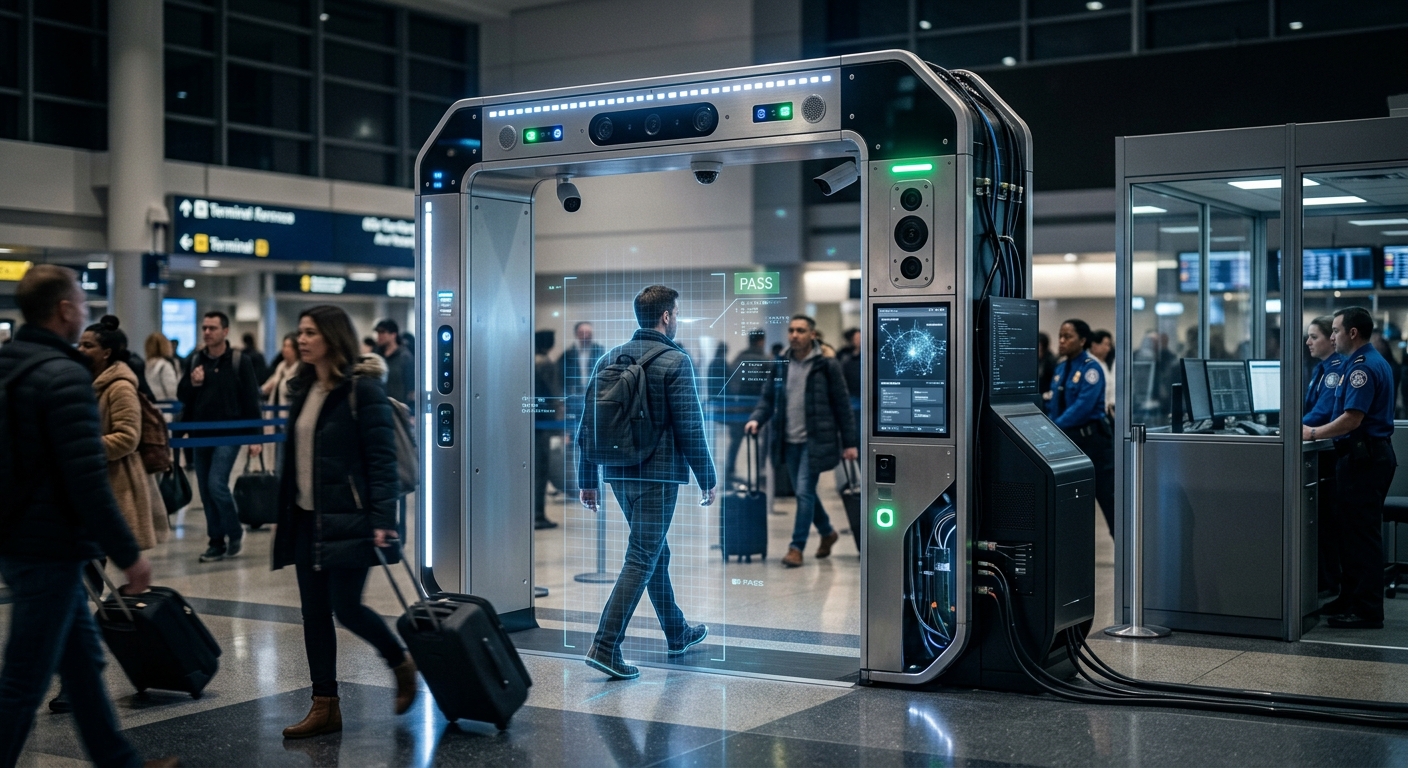
In recent years, the escalating epidemic of mass shootings in the United States has left communities, administrators, and policymakers desperate for actionable solutions. As debates over legislative reform remain trapped in partisan gridlock, public institutions have increasingly turned to the private tech sector for a perceived silver bullet. Enter the artificial intelligence weapons detector: an advanced, heavily marketed piece of hardware promising to seamlessly identify firearms in real-time. Sold as a frictionless alternative to traditional metal detectors, these AI-driven systems are rapidly appearing at the entrances of sports stadiums, hospital lobbies, metropolitan transit hubs, and public school systems. Proponents claim that cutting-edge machine learning algorithms can analyze the shape, density, and magnetic signature of items carried by pedestrians without requiring them to empty their pockets or break their stride.
However, beneath the glossy marketing campaigns and high-tech aesthetics lies a controversial reality. Security experts, civil liberties advocates, and federal regulators are increasingly sounding the alarm regarding the true efficacy of AI weapons scanners. Rather than serving as the ultimate safeguard against active shooters, mounting evidence suggests these systems frequently suffer from crippling technical flaws, generate a massive deluge of false positives, and introduce profound privacy concerns. More alarmingly, relying on unproven proprietary technology can create a dangerous illusion of safety, diverting crucial funding and attention away from evidence-based violence prevention strategies.
When Algorithms Guess Wrong: The False Positive Dilemma
The primary selling point of an AI weapons detector is its supposed ability to distinguish between benign everyday items and lethal threats. Traditional metal detectors alert on mass, meaning keys, smartphones, and steel-toed boots trigger the exact same alarm as a handgun. Artificial intelligence scanners, utilizing a combination of advanced physical sensors and proprietary algorithms, claim to have solved this bottleneck. In practice, however, the technology has severely struggled to interpret the complex, unpredictable reality of human behavior and varied personal objects.
Real-world deployments have repeatedly laid bare the limitations of the technology. For instance, a highly publicized pilot program testing AI-powered weapons scanners inside the New York City subway system yielded deeply troubling results. According to data released by the New York Police Department in late 2024, over thousands of active scans, the highly touted machines detected zero firearms. Instead, the scanners triggered more than a hundred false positives in just one month. Everyday commuter items, ranging from metallic water bottles and laptop computers to standard umbrellas, routinely confused the algorithms, proving that the software was far from infallible.
When these systems are deployed in educational environments, the false positive problem is radically magnified. Students carrying heavy three-ring binders, musical instruments, and dense lunchboxes are regularly flagged as potential threats. A comprehensive review highlighted by Undark Magazine emphasized the persistently high number of false positives in these settings and noted significant gaps in empirical data supporting the efficacy of these algorithms against smaller, non-standard weapons like tactical knives. When security personnel are forced to manually search hundreds of backpacks daily due to algorithmic errors, it induces a phenomenon known as “alarm fatigue.” Guards may become desensitized to the system’s constant alerts, increasing the terrifying likelihood that an actual weapon might slip through the cracks during a chaotic morning rush.
Regulatory Backlash: When Marketing Outpaces Capability
The aggressive expansion of the AI security industry has not gone unnoticed by federal watchdogs. As schools and municipalities invest millions of taxpayer dollars into these systems, scrutiny over the companies’ bold claims has intensified. The danger of overstating the capabilities of a security product is profound: if an institution believes its new multi-million-dollar AI scanner is an impenetrable shield, it may naturally reduce the presence of physical security personnel or scale back other critical safety protocols. This reliance on flawed hardware fundamentally weakens the overall security posture.
This reality culminated in significant regulatory intervention. The Federal Trade Commission (FTC) recently launched investigations and took legal action against leading security screening manufacturers over allegations that they made false or unsubstantiated claims regarding the true capabilities of their AI-powered screening systems. Federal authorities have increasingly scrutinized the vast gap between controlled marketing demonstrations and the chaotic reality of live public deployments. Critics argue that proprietary algorithms, shielded from independent third-party testing under the guise of corporate trade secrets, do not belong in life-or-death public safety infrastructure. When a widely deployed system repeatedly misses certain types of modified firearms, ghost guns, or specialized blades, the consequences can be truly devastating.
The Surveillance Creep and the Erosion of Civil Liberties
Beyond the question of whether the technology works as advertised is the more profound societal question of whether it should be ubiquitous in the first place. The widespread installation of AI weapons scanners represents a massive expansion of biometric and algorithmic surveillance in public spaces. Unlike the targeted screening at an airport—where individuals explicitly consent to a search in exchange for boarding a federally regulated flight—these new algorithmic scanners are quietly transforming grocery stores, public sidewalks, and local high schools into high-tech checkpoints.
Privacy advocates warn of the inherent dangers of “function creep.” Once a robust network of sensory hardware is permanently installed at every public entry point, the software running those machines can be seamlessly updated to collect vastly more data. A scanner initially purchased solely for weapons detection can theoretically be integrated with facial recognition software, gait analysis, and behavioral tracking algorithms in the future. This creates a deeply intrusive surveillance dragnet capable of tracking the daily movements of citizens without probable cause, legal suspicion, or judicial oversight.
Furthermore, machine learning algorithms are rarely immune to the biases of their human creators. If an AI system relies on flawed or narrow training data, it may disproportionately flag individuals based on clothing styles, mobility aids, or varying body types. The prospect of subjecting minority communities—who already face historically disproportionate policing and scrutiny—to constant, opaque algorithmic suspicion fundamentally undermines civil liberties and the presumption of innocence in everyday public life.
The Psychological Toll: Fortifying the Modern Classroom
Nowhere is the debate over AI weapons detection more emotionally charged than in the realm of public education. Following horrific national tragedies, school boards face immense, agonizing pressure from parents to implement immediate solutions. Purchasing high-tech scanners provides a highly visible, tangible response to community anxiety. However, the psychological impact of transforming a place of learning into a fortified surveillance zone is severe, with far-reaching consequences for student development.
Child psychologists and educational researchers have long warned about the damaging consequences of “security theater.” When students are forced to pass through imposing sensor gates, empty their personal belongings, and be subjected to random physical searches caused by false alarms, it fundamentally alters the atmosphere of the school. Instead of fostering an open, nurturing environment conducive to academic and emotional growth, schools increasingly mimic the austere aesthetics of correctional facilities.
When a harmless item like a musical instrument triggers a lockdown or a public confrontation with an armed school resource officer, the student is subjected to unwarranted public humiliation. This dynamic disproportionately affects marginalized students, often compounding existing inequalities in school discipline. For many children, the constant visual reminder of potential violence, coupled with the anxiety of being falsely flagged by an unpredictable machine, elevates baseline stress levels. The daily routine of being treated as a potential active threat by a faceless algorithm can severely erode the vital trust between students and educators, which is a foundational cornerstone of a healthy, functioning school community.
Beyond the Checkpoint: A Holistic Blueprint for Public Safety
The fundamental flaw in relying on AI weapons detectors is a structural one: they are entirely reactive tools. By the time an armed, dangerous individual reaches the front doors of a school, a hospital, or a crowded subway station, the crisis has already arrived. Even if an AI scanner functions perfectly and correctly identifies a concealed firearm, it merely confirms that an active shooter is on the premises. It does not stop the bullets from firing, nor does it address the deep-rooted societal issues and psychological fractures that led the individual to that breaking point.
True public safety requires a holistic, proactive approach rather than relying on a reactive technological band-aid. The millions of dollars funneled into opaque, proprietary AI contracts could be far more effectively redirected toward initiatives with proven, data-backed track records of reducing violence. This includes dramatically expanding access to mental health professionals within public schools, funding community-based violence interruption programs, and establishing robust behavioral threat assessment teams capable of identifying and intervening with individuals in crisis long before they decide to pick up a weapon.
Additionally, comprehensive legislative action—such as universal background checks, safe storage laws, and extreme risk protection orders—directly addresses the supply and accessibility of firearms before they ever near a vulnerable public space. Technology undoubtedly has a valid role to play in modern security architectures, but it must be viewed as a supplementary tool, not a standalone savior.
Conclusion
The allure of a frictionless, AI-powered shield against the horrors of mass shootings is undeniably powerful. In a society grappling with senseless violence, the promise of a clean, technological fix is deeply comforting. However, a rigorous, clear-eyed examination of AI weapons detectors reveals a technology currently plagued by unacceptable false positive rates, regulatory skepticism, and severe privacy implications. As we navigate the complex, emotionally fraught landscape of public safety, we must resist the temptation of high-tech security theater. Safeguarding our communities requires the hard, multifaceted work of human intervention, mental health support, and legislative courage—vital investments that no algorithm can ever replace.
Frequently Asked Questions (FAQs)
What exactly are AI weapons detectors?
AI weapons detectors are advanced security screening systems that combine physical sensors, such as ultra-low frequency magnetic fields or millimeter-wave technology, with machine learning algorithms. Unlike traditional metal detectors that simply alert to any metallic object, these AI systems attempt to analyze the density, shape, and magnetic signature of items to identify concealed firearms or explosive devices, theoretically allowing benign items to pass through without setting off an alarm.
Do artificial intelligence weapons scanners actually prevent mass shootings?
There is currently no empirical evidence to suggest that AI scanners can independently prevent a mass shooting. They are strictly reactive tools designed to alert security personnel when a weapon crosses a specific threshold. If an attacker arrives at a venue with a loaded firearm, the detector does not neutralize the threat. Genuine prevention relies heavily on behavioral intervention, accessible mental health resources, and robust community support long before an individual approaches a public venue.
Why are false positives considered a major hazard in security screening?
A false positive occurs when an algorithmic scanner incorrectly identifies a harmless item—such as an umbrella, a dense hardback book, or a laptop computer—as a deadly weapon. Frequent false positives lead to “alarm fatigue,” a dangerous condition where security staff become desensitized to the system’s constant warnings. Furthermore, investigating every false alarm creates massive logistical bottlenecks in high-traffic areas, severely disrupting daily life and wasting valuable, limited security resources.
Are there civil liberty and privacy risks associated with AI screening technology?
Yes. Civil liberties advocates raise significant concerns regarding the expansion of algorithmic surveillance in public spaces. The deployment of AI scanners subjects individuals to non-consensual physical and algorithmic analysis without probable cause. There is also a pervasive fear of “function creep,” where systems originally installed merely to detect weapons are later updated to include facial recognition or behavioral tracking software, paving the way for unchecked, widespread mass surveillance.
References
- AI-powered weapons scanners used in NYC subway found zero guns in test — The Associated Press (AP). 2024-10-24. https://apnews.com/article/ai-weapons-scanners-nyc-subway-test-zero-guns
- As More Schools Turn to AI Weapons Detection, Questions Persist — Undark Magazine. 2026-02-13. https://undark.org/2026/02/13/ai-weapons-detection-schools/
- Semiannual Federal Court Litigation Status Report — Federal Trade Commission. 2024-12-31. https://www.ftc.gov/legal-library/browse/cases-proceedings/
Similar Articles








Read full bio of medha deb


