
AI Surveillance and the Danger to Soft Targets
How securing everyday spaces threatens our constitutional liberties.
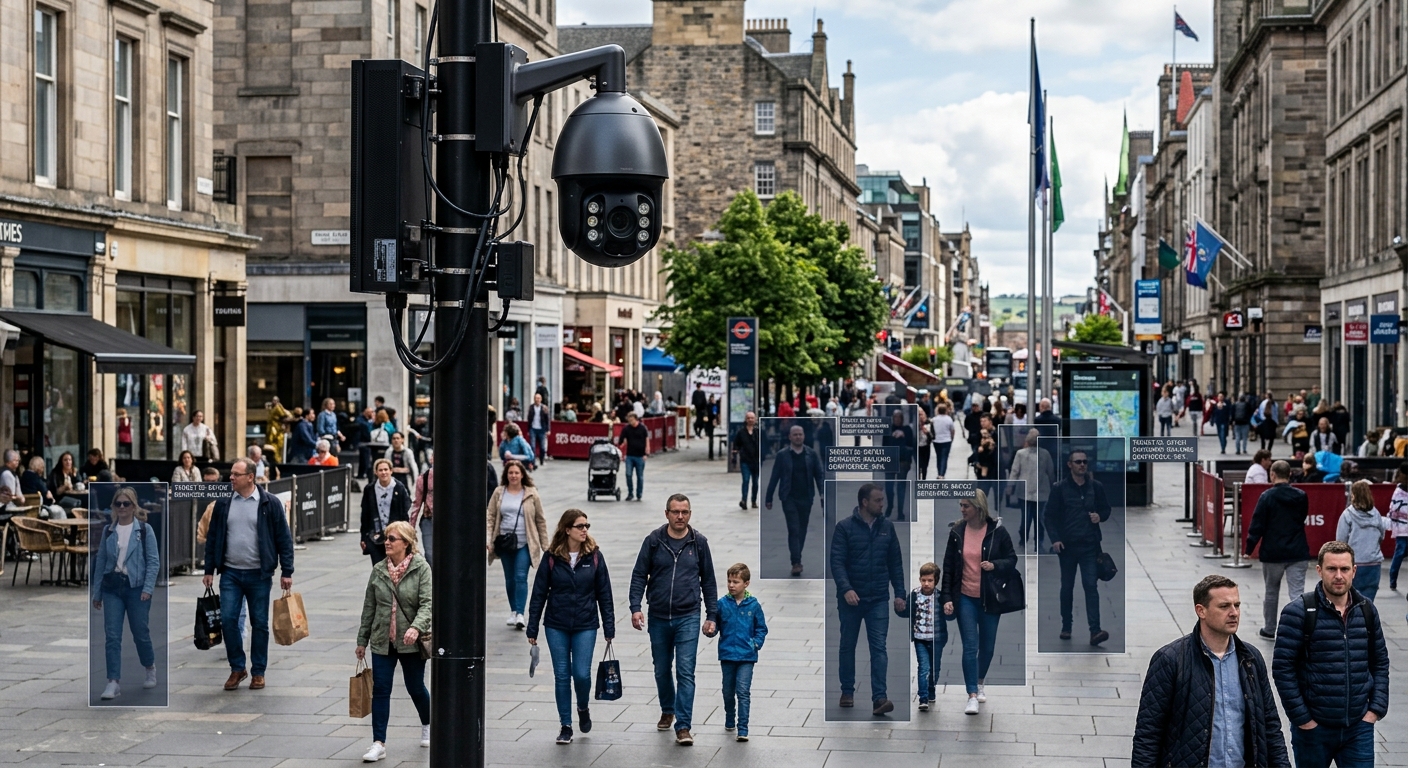
The Creeping Reach of AI Surveillance in Everyday Public Spaces
The modern urban landscape is undergoing a silent but monumental transformation. While citizens go about their daily routines—commuting to work, attending sporting events, or simply enjoying a walk through a local park—an invisible network of technological oversight is rapidly expanding. Historically, the United States has drawn a distinct line between heavily fortified security zones, such as airports and military installations, and the open, accessible nature of everyday civic spaces. However, this line is blurring as federal agencies pivot their focus toward what are known as “soft targets.”
The Department of Homeland Security (DHS) is increasingly investing in advanced artificial intelligence, video analytics, and mass monitoring technologies to secure these vulnerable locations. While the objective of preventing tragedies in crowded spaces is undeniably crucial, the methods being deployed risk subjecting the general public to out-of-control, airport-level surveillance in their most mundane moments. The aggressive integration of automated tracking systems into civic life raises profound questions about privacy, civil liberties, and the foundational principles of a free society. As we march deeper into a digitally monitored era, it is imperative to scrutinize whether securing soft targets necessitates turning every public square into an algorithmic checkpoint.
Redefining “Soft Targets”: The Shift in Security Paradigms
In homeland security parlance, a “soft target” refers to a location that is easily accessible to large numbers of people and lacks the stringent, hardened protective measures found at critical infrastructure sites . Examples of these spaces are virtually endless and include shopping malls, schools, places of worship, surface transportation hubs, and open-air public plazas. Unlike “hard targets”—which employ secure perimeters, metal detectors, and extensive identity verification protocols—soft targets rely on the unhindered flow of foot traffic. This inherent openness, which is essential to commerce, education, and community life, unfortunately also makes these spaces vulnerable to targeted attacks.
In recent years, the threat landscape has shifted, prompting federal entities to reevaluate how they protect civilian populations. The DHS has categorized the protection of soft targets and crowded places as a paramount national security priority. To address these vulnerabilities, the agency has launched multiple initiatives designed to assess security gaps and fund the research and development of new protective technologies. The push is driven by a desire to provide early warning systems and immediate threat mitigation without physically disrupting the flow of society.
However, the strategy of securing soft targets is inherently complicated. Because these spaces encompass almost the entirety of public life, giving a federal security agency a mandate to monitor them essentially creates a mandate to monitor everyday civilian life. When policies and technologies originally designed for border enforcement or international counter-terrorism are redirected toward neighborhood parks and local stadiums, the scope of surveillance expands exponentially. This transition represents a fundamental shift in the American security paradigm. We are moving from a system of localized, incident-based policing to a broader, proactive model of continuous, untargeted monitoring.
The Technological Engines of Modern Public Monitoring
The mechanism driving this new era of surveillance is the rapid advancement and deployment of artificial intelligence. Traditional security relied on human observation—guards watching camera feeds or patrolling physical spaces. This approach was naturally limited by human attention spans and staffing budgets, meaning that most surveillance cameras effectively acted only as forensic tools utilized after an incident occurred. Today, AI eliminates these logistical bottlenecks.
Machine learning algorithms and computer vision technologies can now process thousands of live video feeds simultaneously. The DHS has actively funded both private companies and academic consortiums to develop systems capable of automatically flagging “anomalies” or “suspicious behaviors” in real time. One of the most prominent examples of this initiative is the Soft Target Engineering to Neutralize the Threat Reality (SENTRY) center. Led by a consortium of universities and funded by the DHS Science and Technology Directorate, SENTRY is tasked with creating resources, tools, and virtual frameworks for anticipating and mitigating threats in crowded environments .
The technologies fostered by such programs include advanced video analytics that can track an individual across multiple camera networks, biometric identification systems like facial recognition, and behavioral analysis software designed to measure how far a person deviates from a “normal” baseline. These systems do not require human fatigue limits; they watch tirelessly, classifying, categorizing, and cataloging human movement.
The allure of this technology is obvious for security professionals: it promises to identify a threat before a tragedy unfolds. Yet, the premise of algorithmic suspicion is deeply flawed . Training an artificial intelligence system to recognize a drawn weapon is one thing; training it to define “suspicious” human behavior is quite another. Human behavior in public spaces is infinitely varied, influenced by cultural differences, neurodivergence, physical disabilities, or simply the circumstances of a bad day. When an AI attempts to standardize normalcy, anything outside that narrow algorithmic band becomes an anomaly. This results in the mass processing of innocent individuals, effectively placing the public in a continuous digital lineup where they are constantly judged by a machine’s opaque criteria.
The Erosion of Privacy: Constitutional and Ethical Dilemmas
The creeping expansion of AI-driven surveillance into soft targets poses a direct challenge to the civil liberties guaranteed by the U.S. Constitution. The Fourth Amendment protects citizens from unreasonable searches and seizures, establishing a legal framework where government intrusion requires probable cause or reasonable suspicion. However, current jurisprudence struggles to address the realities of modern digital mass surveillance . Because individuals in public spaces generally have a reduced expectation of physical privacy, security agencies often argue that AI monitoring is merely a technological extension of a police officer observing a street corner.
This comparison, however, blatantly ignores the scale, permanence, and analytical power of artificial intelligence. A human officer on a beat cannot simultaneously track every individual in a city, identify them using remote biometrics, and cross-reference their social media or past travel history in a matter of milliseconds. Pervasive AI surveillance fundamentally alters the power dynamic between the state and the citizen. When people know they are being constantly watched, analyzed, and recorded, their behavior inevitably changes. This phenomenon, known as the “chilling effect,” can suppress lawful assemblies, deter people from seeking controversial medical care or legal advice, and inhibit the free expression of ideas.
Furthermore, algorithmic surveillance systems are notoriously prone to bias. Numerous independent studies have shown that facial recognition and behavioral tracking technologies disproportionately misidentify people of color, women, and non-binary individuals. When these flawed systems are integrated into automated threat detection protocols, the risk of discriminatory outcomes skyrockets. Innocent people may find themselves detained, questioned, or harassed simply because a proprietary algorithm flagged their gait, appearance, or loitering patterns as “anomalous.” Entrusting subjective determinations of suspicion to an algorithmic black box circumvents the transparency and accountability fundamentally required in a democratic society.
Comparing High-Security Zones with Everyday Life
To fully grasp the implications of the DHS’s focus on soft targets, it is helpful to compare the environments where stringent security is traditionally accepted versus the spaces currently being targeted for technological enhancement.
| Feature | Hard Targets (e.g., Airports, Federal Buildings, Military Bases) | Soft Targets (e.g., Parks, Schools, Malls, Mass Transit) |
|---|---|---|
| Access Control | Highly restricted; entry requires tickets, valid ID, or specific clearance. | Completely open to the general public; unrestricted flow of movement. |
| Expectation of Privacy | Low; individuals consent to invasive searches to gain entry. | High for everyday activities; anonymous movement is expected and valued. |
| Security Footprint | Visible and physical (metal detectors, X-ray scanners, armed guards). | Invisible and digital (AI cameras, biometric sensors, data tracking). |
| Behavioral Norms | Highly regulated; deviations from protocol are immediately investigated. | Diverse, erratic, culturally varied, and inherently unpredictable. |
| Consent | Explicit (purchasing a ticket or actively choosing to enter a checkpoint). | Implicit or non-existent; the public is often completely unaware of monitoring. |
Subjecting soft targets to hard-target levels of scrutiny—even if that scrutiny is invisible and algorithmically driven—fundamentally recharacterizes public space. In an airport, travelers accept the burden of a Transportation Security Administration (TSA) pat-down or scanner because it is a localized, temporary infringement directly linked to the specific, catastrophic risk of aviation terrorism. We do not, however, consent to that level of scrutiny when walking our dogs, attending a political rally, or rushing to catch a subway train. Trying to replicate the security envelope of a hard target in a soft target environment forces citizens to trade their daily civic anonymity for the mere illusion of total safety.
Navigating the Balance: Security Without Subjugation
Recognizing the risks associated with unsecured crowded places does not necessitate embracing a dystopian surveillance state. It is entirely possible to enhance public safety without sacrificing civil liberties. Policymakers, venue operators, and security professionals must prioritize strategies that are proportionate to the actual threats and subject to rigorous democratic oversight.
- Community Transparency: Communities must have a decisive say in the deployment of surveillance technologies. Secretive procurements of facial recognition or predictive policing algorithms by local or federal agencies must be replaced with transparent, public legislative processes.
- Independent Auditing: If a technology cannot be independently evaluated for bias, efficacy, and privacy impact by third-party researchers, it should not be deployed in public spaces.
- Environmental Design: Security measures should focus on structural and environmental design rather than individual tracking. Improving emergency response times, designing better egress routes for crowded venues, and utilizing non-intrusive physical safety barriers provide significant safety benefits without compiling behavioral dossiers on innocent citizens.
Ultimately, a free society entails a certain degree of inherent risk. The desire to eliminate all threats through the pervasive, automated monitoring of soft targets is a dangerous and unattainable pursuit. We must refuse the false dichotomy that forces us to choose between public safety and personal privacy. By demanding strict legal guardrails and rejecting the normalization of dragnet AI surveillance, we can protect our public spaces while preserving the constitutional liberties that make those spaces worth visiting in the first place.
Frequently Asked Questions (FAQs)
What exactly is a “soft target” in homeland security terms?
A soft target is an environment that is easily accessible to the general public and typically lacks hardened security measures like metal detectors, vehicle barriers, or strict access controls. Common examples include retail centers, schools, sports stadiums, places of worship, outdoor festivals, and mass transit systems.
How is artificial intelligence used in public surveillance?
Artificial intelligence is used to rapidly process vast amounts of live video and audio feeds that human operators could never monitor effectively. Technologies such as computer vision, facial recognition, and behavioral analytics are trained to identify specific individuals, track their movements across multiple cameras over time, or automatically flag behavior that the software determines to be “suspicious” or anomalous.
What is the SENTRY center?
SENTRY (Soft Target Engineering to Neutralize the Threat Reality) is a Department of Homeland Security Center of Excellence led by Northeastern University. It funds academic and industry research to develop new strategies, frameworks, and technologies—often involving AI and advanced sensors—to secure crowded public places from targeted attacks.
Can local communities push back against federal surveillance programs?
Yes. While federal agencies fund and develop many of these technologies, they are often physically deployed by local law enforcement or private venue operators. Citizens can advocate for local ordinances that ban the use of certain technologies, like facial recognition, or require absolute public transparency and city council approval before any new surveillance equipment is acquired or activated.
References
- Soft Target Engineering to Neutralize the Threat Reality (SENTRY) Fact Sheet — Department of Homeland Security. 2025-03-31. https://www.dhs.gov/science-and-technology/sentry
- DHS Soft Target and Crowded Place Security Enhancement and Coordination Plan — Department of Homeland Security. 2018-05-01. https://www.cisa.gov/securing-public-gatherings
- Privacy at Risk: Analyzing DHS AI Surveillance Investments — LawSci Forum. 2024-11-22. https://lawsciforum.umn.edu/privacy-at-risk-analyzing-dhs-ai-surveillance-investments
- How AI can enable public surveillance — Brookings Institution. 2025-04-15. https://www.brookings.edu/articles/how-ai-can-enable-public-surveillance
Similar Articles








Read full bio of Sneha Tete


