
Youth Curfew Regulations: Laws, Enforcement & Consequences
Understanding juvenile curfew ordinances, their enforcement mechanisms, and legal penalties across jurisdictions.
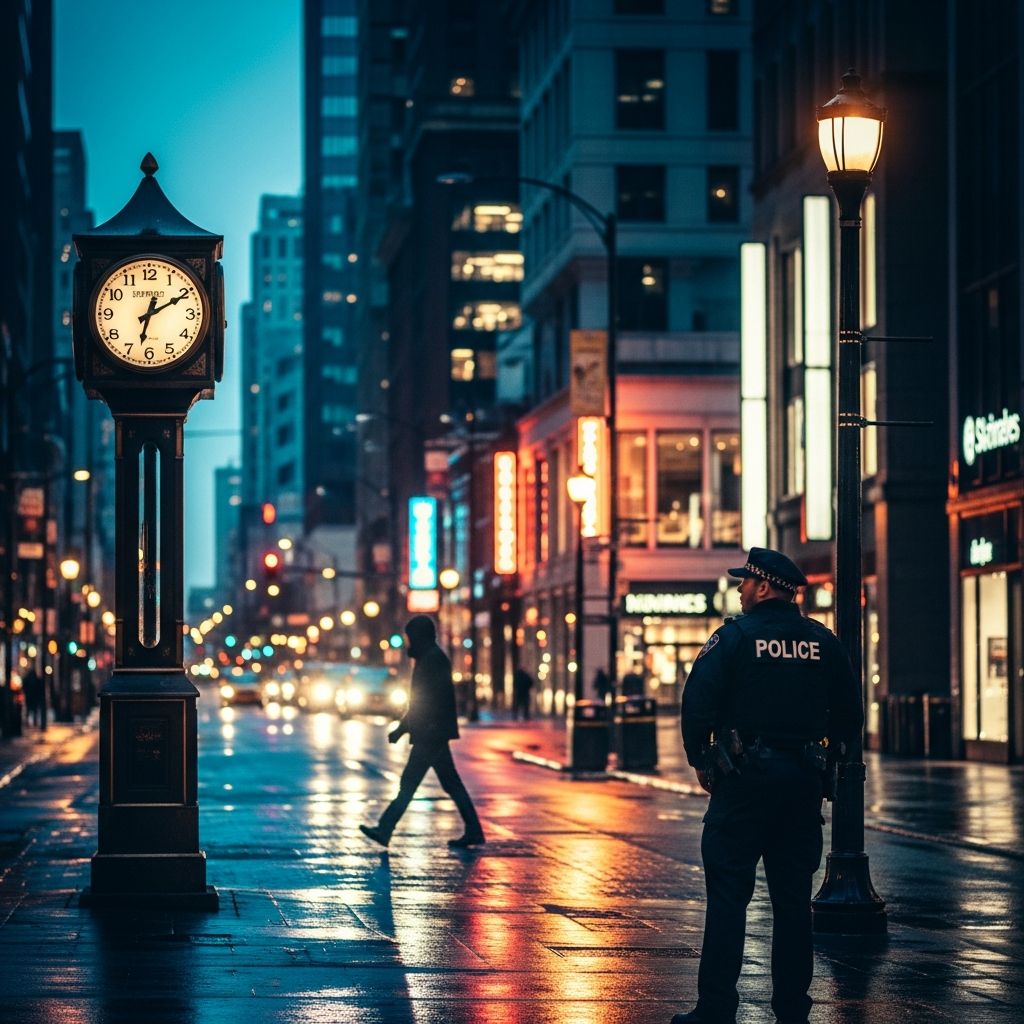
Understanding Juvenile Curfew Legislation
Curfew ordinances represent a significant intersection of public safety concerns and individual liberties. These laws establish specific timeframes during which young people must not be present in public spaces without legitimate supervision or exempted activities. The framework of curfew legislation has evolved considerably, with jurisdictions implementing varying approaches to address juvenile delinquency, crime prevention, and community safety objectives.
The fundamental purpose of curfew laws centers on restricting minors from being in public areas during designated nighttime hours. These restrictions typically apply to individuals under eighteen years of age, though some jurisdictions set different age thresholds. The rationale behind such legislation involves protecting young people from dangerous situations, reducing opportunities for criminal activity, and providing parents with legal enforcement mechanisms to ensure compliance with household rules.
Geographic Variations in Curfew Hours
Curfew timeframes demonstrate considerable variation across different municipalities and states. Rather than adopting a uniform approach, jurisdictions tailor their curfew hours to reflect local circumstances, school schedules, and community needs. This geographic diversity creates a complex legal landscape where specific hours apply only within particular boundaries.
In Washington, DC, the curfew framework implements variable hours depending on the season. During the academic year from September through June, minors under seventeen years of age must not remain in public spaces after eleven o’clock in the evening on weeknights and midnight on weekends. However, during the summer months of July and August, the curfew extends to midnight on all nights of the week. This seasonal adjustment recognizes the different circumstances young people face during school breaks compared to the regular academic calendar.
Baltimore presents another example of localized curfew regulation. Youths between fourteen and seventeen years of age face restrictions prohibiting public presence after ten o’clock on weeknights, extending to eleven o’clock during summer months. Weekend curfew begins at eleven o’clock in the evening. These specifications demonstrate how cities customize their ordinances to address particular community situations and juvenile activity patterns.
Maryland’s statewide approach establishes ten o’clock as the weekday curfew hour, with a midnight extension on weekends. This pattern reflects a common regulatory structure where weekday restrictions prove stricter than weekend limitations, acknowledging school night responsibilities and weekday schedules.
Exemptions and Permitted Activities
Curfew laws recognize that young people engage in legitimate activities requiring evening hours. Rather than imposing blanket restrictions, jurisdictions establish specific exemptions allowing minors to remain in public spaces when engaged in protected or necessary activities.
Common exemptions across multiple jurisdictions include travel to and from employment. Young people working evening or night shifts receive legal protection to commute to and from their workplaces without curfew violations. Similarly, religious observance represents a protected category, allowing minors to attend church services, religious educational events, or faith-based community activities regardless of curfew hours.
Parental accompaniment provides perhaps the broadest exemption. When a minor remains in the company of a parent or legal guardian, curfew restrictions typically do not apply. This exemption recognizes parental authority and family-based decision-making regarding appropriate activities and necessary public presence.
Emergency situations constitute another critical exemption. If a young person needs to access emergency services, respond to medical situations, or address urgent family circumstances, curfew violations do not apply. Additionally, minors running errands for parents or guardians on urgent matters generally receive exemption from curfew restrictions.
Civic and educational activities often qualify for exemption status. School-sanctioned events, athletic competitions, civic organization meetings, and community service activities frequently allow evening participation despite curfew hours. First Amendment activities, including peaceful protest and free speech exercises, sometimes receive explicit exemption protections.
Enforcement Mechanisms and Police Authority
Curfew enforcement operates through multiple mechanisms, with police departments holding primary responsibility for identifying violations and initiating legal processes. Understanding how enforcement functions provides insight into the practical application of these laws beyond their written provisions.
When law enforcement officers encounter minors in public spaces during curfew hours without apparent exemption, police typically have authority to stop and detain the individual. Officers conduct brief investigations to determine whether the young person qualifies for an exemption or is violating the ordinance. This investigative authority creates potential Fourth Amendment concerns regarding reasonable search and seizure, particularly when detention occurs based primarily on age and time.
Standard enforcement procedures generally involve releasing the minor to a parent or legal guardian rather than initiating immediate criminal charges. Police may issue warnings for first offenses, particularly when the violation appears minor or the young person is cooperative. Official documentation of the warning creates a record for future enforcement purposes.
Certain jurisdictions establish escalating enforcement protocols. In Maryland, for example, a young person receives a written warning from the Chief of Police upon first violation. Subsequent violations result in police custody and formal legal proceedings. This graduated approach attempts to balance enforcement with recognition that initial violations may reflect confusion about applicable rules rather than intentional lawbreaking.
Some jurisdictions authorize specialized curfew enforcement zones where enhanced restrictions apply. In Washington, DC, the Chief of Police may establish Extended Juvenile Curfew Zones in areas experiencing particular public safety challenges. Within these designated zones, minors cannot gather in groups of nine or more in public spaces during specified hours, creating location-specific restrictions beyond standard citywide curfew hours.
Penalties for Minor Violations
Young people who violate curfew ordinances face various consequences ranging from community service requirements to financial penalties. The specific sanction imposed depends on the jurisdiction, the severity of the violation, prior offense history, and individual circumstances.
Community service requirements represent a common consequence, particularly for first-time violations or less serious infractions. Washington, DC law permits juveniles to be ordered to complete up to twenty-five hours of community service for curfew violations. This approach aims to provide accountability while keeping young people engaged in productive service to their communities rather than involving them in the criminal justice system.
Financial fines constitute another standard penalty mechanism. Across multiple jurisdictions, maximum fines for individual violations typically reach five hundred dollars. However, actual fines assessed usually prove substantially lower, with first-time violations often resulting in nominal fines or waived financial penalties in favor of community service.
Driver’s license restrictions apply in certain jurisdictions, suspending or delaying driving privileges for young people convicted of curfew violations. This consequence carries particular significance for teenagers who rely on independent transportation. Some jurisdictions prohibit license issuance or suspension existing licenses until curfew compliance is established.
Detention rarely results from curfew violations alone, though multiple repeat violations may lead to juvenile detention. Courts typically reserve institutional placement for more serious offenses or persistent non-compliance with community-based sanctions.
Juvenile courts handling petitioned curfew violation cases retain authority to impose various sanctions including probation, out-of-home placement, or continued supervision. However, recent data demonstrates declining use of formal court adjudication for curfew violations, with many jurisdictions favoring alternative approaches.
Parental Responsibility and Adult Liability
Curfew legislation frequently extends liability to parents and legal guardians who knowingly permit minors to violate ordinances. This parental accountability component reflects the legal theory that guardians bear responsibility for supervising their children’s nighttime activities and ensuring compliance with applicable restrictions.
Parents commit violations when they knowingly permit their children to remain in public during curfew hours. Additionally, insufficient control allowing curfew violations, even without explicit knowledge or permission, can trigger parental liability. This provision creates a standard of reasonable supervision and diligent parental oversight.
Penalties for parental violations typically include fines and community service requirements. Washington, DC law subjects parents or legal guardians to fines not exceeding five hundred dollars or alternative community service sentences. These penalties apply regardless of whether the minor received sanctions, creating dual accountability within households.
The parental liability framework recognizes that effective curfew enforcement requires cooperation from families rather than reliance solely on police enforcement and juvenile sanctions. By imposing consequences on parents, legislation theoretically incentivizes active supervision and household compliance with curfew requirements.
Expanded Restriction Zones and Special Circumstances
Beyond standard citywide curfews, some jurisdictions implement specialized restrictions in designated geographic areas. These expanded zones address public safety concerns in particular neighborhoods or during specific circumstances without imposing restrictions affecting entire communities.
Extended Juvenile Curfew Zones function as targeted enforcement areas where restrictions apply only within specific perimeters. The Chief of Police establishes these zones based on documented public safety needs, crime data, or incident patterns. Within designated zones, enhanced restrictions prevent larger youth gatherings, with groups of nine or more minors prohibited from assembling in public spaces during specified hours.
Emergency curfew authority permits mayoral declaration of temporary restrictions in response to immediate public safety crises. When emergency situations threaten community welfare, mayors can authorize emergency juvenile curfews lasting specific time periods without requiring legislative action. This emergency authority allows rapid response to circumstances like civil unrest, natural disasters, or extraordinary crime spikes.
Probation-based curfews apply to young people under juvenile court supervision. Programs like Operation Night Light impose individualized curfew requirements as conditions of probation. Middle school students participating in such programs may face seven o’clock curfews on weekdays and nine o’clock on weekends, while high school participants receive eight o’clock and eleven o’clock requirements respectively.
Constitutional and Legal Challenges
Curfew ordinances face ongoing constitutional scrutiny regarding their compatibility with fundamental rights and protections. Courts have wrestled with whether public safety interests sufficiently justify restrictions on freedom of movement and parental authority.
Constitutional challenges typically assert that curfews violate minors’ freedom of movement rights and parental rights to raise children without government interference. Litigants argue that blanket restrictions fail to employ narrowly tailored means necessary to achieve public safety objectives and that less restrictive alternatives could accomplish legislative purposes.
Courts apply varying constitutional standards when reviewing curfew ordinances. Some judicial decisions have found curfew laws unconstitutional based on deficient evidence supporting crime reduction claims and excessive breadth capturing lawful conduct. Other decisions have upheld curfews under constitutional review, determining that public safety interests justify reasonable time, place, and manner restrictions on youth activities.
Recent appellate decisions emphasize that curfew ordinances must rest on substantial evidence of public safety problems and demonstrate that restrictions actually address identified concerns. Generalized crime statistics or insufficient local data may prove inadequate to support blanket age-based restrictions affecting entire youth populations.
Effectiveness and Public Policy Debates
Empirical research examining curfew effectiveness produces mixed and contested results. While police officials in jurisdictions implementing curfews frequently report subjective improvements in public safety and reduced juvenile activity, rigorous independent studies present more complicated findings.
Some research suggests that juvenile curfews may increase gun violence by displacing youth activity to times and locations with reduced visibility and police presence. This counterintuitive finding raises questions about whether curfew enforcement inadvertently concentrates youth activity in higher-risk circumstances. Other studies indicate minimal measurable impact on overall crime reduction or juvenile offending rates.
The decline in curfew violation adjudications demonstrates shifting juvenile justice approaches. Between 2005 and 2021, the number of youth adjudicated for status offenses including curfew violations decreased ninety percent nationally. This reduction reflects broader juvenile justice reforms emphasizing diversion from court processing and reduced reliance on formal sanctions for non-criminal status offenses.
Frequently Asked Questions
Q: What constitutes a curfew violation?
A: A minor violates curfew by being present in a public place or establishment premises during designated curfew hours without qualifying for an exemption. The presence alone, without additional conduct, constitutes the violation.
Q: Can parents be arrested for their child’s curfew violation?
A: Yes, parents and legal guardians can face penalties including fines and community service if they knowingly permit or fail to adequately supervise preventing a curfew violation. However, formal arrest and criminal prosecution remain less common than direct sanctions against minors.
Q: Do exemptions include traveling to school or extracurricular activities?
A: School-sanctioned extracurricular activities and civic events generally qualify for exemption. However, ordinary school attendance does not typically justify evening hours since schools do not normally conduct classes during curfew periods.
Q: Can a minor appeal a curfew violation?
A: Yes, minors cited for curfew violations retain the right to contest the citation through juvenile court proceedings. The jurisdiction must prove the violation beyond reasonable doubt, and the minor can present evidence regarding qualifying exemptions.
Q: How are curfew violations recorded?
A: Curfew violations create official police records and may result in juvenile court adjudication. These records can affect future interactions with law enforcement and potentially influence school discipline or other administrative determinations, though the juvenile system generally limits record accessibility.
Q: Do all states enforce identical curfew hours?
A: No, curfew ordinances vary significantly by state, county, and municipality. Some jurisdictions impose no curfews, while others maintain strict restrictions. Hours, age thresholds, and exemptions differ substantially across localities.
References
- Juvenile Curfew Second Emergency Amendment Act of 2025 — Metropolitan Police Department, District of Columbia. 2025. https://mpdc.dc.gov/page/dc-curfew-law
- Curfew Laws and Juvenile Justice — Office of Juvenile Justice and Delinquency Prevention, U.S. Department of Justice. 2024. https://ojjdp.ojp.gov/sites/g/files/xyckuh176/files/pubs/reform2/ch2_c.html
- Youth Curfews: Research, Policy, and Practice — Office of Juvenile Justice and Delinquency Prevention, U.S. Department of Justice. 2024. https://ojjdp.ojp.gov/model-programs-guide/literature-reviews/youth-curfews
- Repealing Juvenile Curfew Laws Could Make Cities Safer — Brookings Institution. 2023. https://www.brookings.edu/articles/repealing-juvenile-curfew-laws-could-make-cities-safer/
- Constitutional Standards for Scrutinizing Juvenile Curfews — Vanderbilt Law Review, 53(2). 2000. https://scholarship.law.vanderbilt.edu/vlr/vol53/iss2/10/
Similar Articles








Read full bio of medha deb


