
Wrongful Death Claims After the Flight 5342 Potomac Collision
How families pursue wrongful death lawsuits after the Flight 5342 mid-air collision and what legal issues will likely shape these cases.
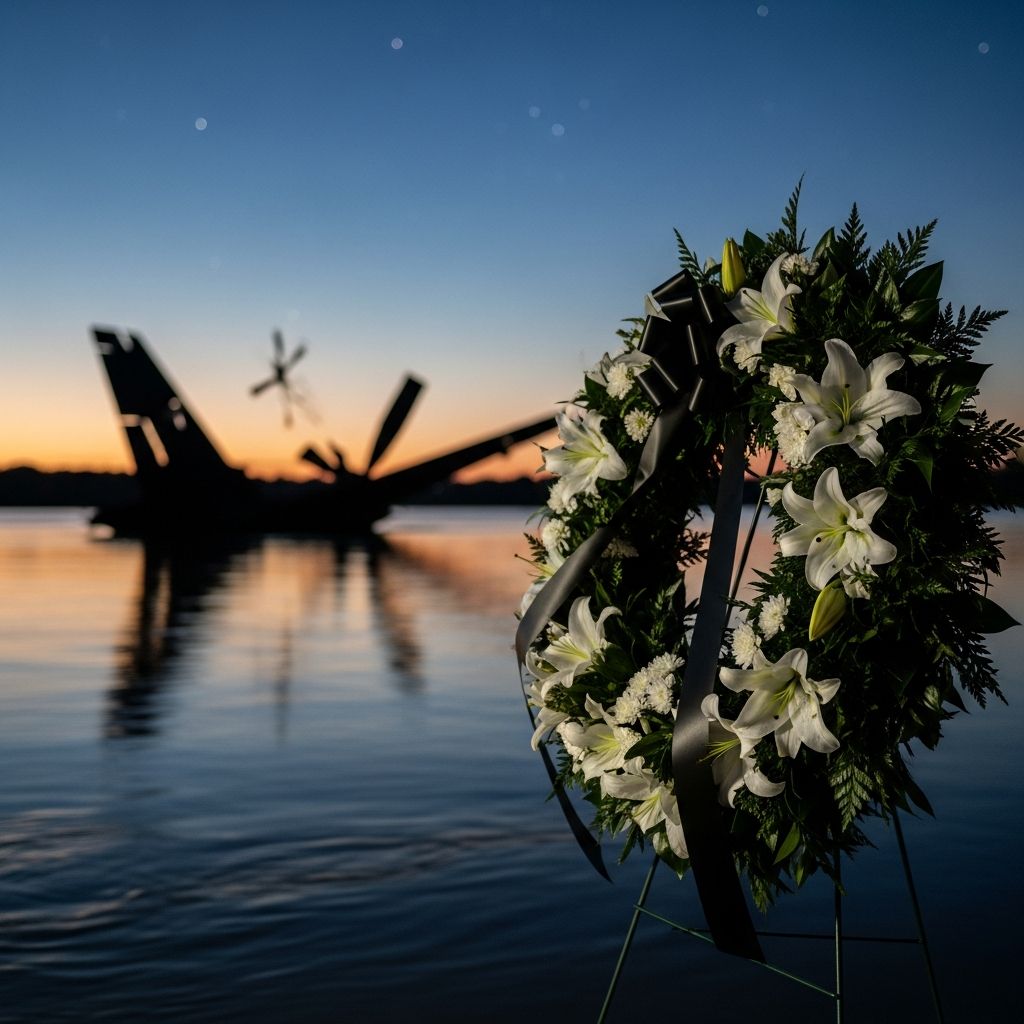
The mid-air collision involving American Eagle Flight 5342 and a U.S. Army Black Hawk helicopter over the Potomac River near Ronald Reagan Washington National Airport (DCA) instantly became one of the most closely watched aviation disasters in recent U.S. history. Families of the 67 people who died now face not only immeasurable loss, but also a complex legal landscape as the first wrongful death lawsuits are filed and many more are anticipated.
This article explains how wrongful death claims work in the wake of a large-scale air disaster like the Flight 5342 collision, who may be legally responsible, and what issues will likely dominate the litigation that follows.
Background: The Flight 5342 Potomac River Collision
On January 29, 2025, a Bombardier CRJ700 operating as American Eagle Flight 5342 collided with a U.S. Army UH960 Black Hawk helicopter over the Potomac River, roughly half a mile from the threshold of runway 33 at Ronald Reagan Washington National Airport. All 67 people aboard both aircraft164 on the regional jet and 3 on the helicopter1 were killed.
According to the National Transportation Safety Board (NTSB) preliminary report and early investigative summaries:
- Flight 5342 was on approach to DCA after being cleared to land on runway 33.
- The Black Hawk helicopter was flying a route along the Potomac River and communicating with the same tower controller.
- A single air traffic controller was handling both the airliner and the helicopter at the time of the collision.
- Radar and cockpit recordings indicate there were missed or partially blocked radio transmissions involving instructions that the helicopter should pass behind the jet.
- The collision occurred at a low altitude of roughly 300 feet above the river, with both aircraft crashing into the Potomac shortly thereafter.
The full causes and contributing factors are still under investigation by the NTSB, which often takes 1224 months to release a final report after a complex accident.
What Is a Wrongful Death Lawsuit in an Aviation Context?
A wrongful death claim is a civil lawsuit filed when a person dies because of the legal faultnegligence, recklessness, or sometimes intentional misconductof another party. In aviation disasters, these claims are frequently brought against airlines, aircraft manufacturers, maintenance providers, air traffic control entities, and, when applicable, governmental or military operators.
Key features of wrongful death litigation after an air crash include:
- Liability-based: Families must prove that one or more defendants breached a legal duty and that the breach caused the death.
- Statutory framework: Who can sue, what damages are recoverable, and applicable time limits are usually defined by state or federal statutes.
- Parallel investigations: Civil suits run alongside NTSB and possibly military or Department of Defense (DoD) investigations, but NTSB reports are limited in how they may be used as evidence in court.
Potential Defendants After the Flight 5342 Accident
The Flight 5342 collision presents an unusually layered question of who may be held responsible. Potentially implicated entities, depending on the facts ultimately established, could include:
- Airline and regional operator (e.g., American Eagle and PSA Airlines operating Flight 5342)
- Aircraft manufacturers (Bombardier for the CRJ700, Sikorsky/Lockheed Martin for the UH960 Black Hawk)
- United States government agencies, such as:
- The Federal Aviation Administration (FAA) for air traffic control operations
- The Department of the Army or U.S. Department of Defense as the military operator of the helicopter
- Contractors responsible for maintenance, navigation equipment, or air traffic systems, if any failures are traced to their work
Any specific defendant’s legal exposure will depend on final findings about the causes of the accident, including whether it resulted from pilot error, ATC coordination failures, equipment issues, or systemic safety lapses.
Key Legal Theories Likely to Be Raised
Wrongful death lawsuits stemming from the Flight 5342 collision are likely to assert several familiar aviation and tort law theories.
1. Negligence and Pilot Decision-Making
Plaintiffs may claim that one or both flight crews failed to exercise reasonable care under the circumstances. Allegations might include:*
- Inadequate see-and-avoid vigilance in visual meteorological conditions
- Failure to respond properly to traffic collision avoidance system (TCAS) advisories
- Improper altitude or airspeed management in a congested approach environment
*These examples are generic negligence theories in air crash litigation; final NTSB conclusions will heavily influence which, if any, are supported by evidence.
2. Air Traffic Control Errors
Evidence that a single tower controller was managing multiple critical duties at the time of the crash, combined with documented missed or partially blocked transmissions, raises clear questions about ATC workload, phraseology, and separation responsibilities. Claims may focus on:
- Allowing conflicting traffic at low altitude without sufficient separation
- Ambiguous or incomplete instructions to the helicopter crew
- Failure to act promptly upon conflict alerts visible on radar systems
3. Product Liability for Aircraft or Avionics
If investigation reveals issues with collision-avoidance systems, communications equipment, or critical instruments, plaintiffs may assert product liability against manufacturers. Typical theories include:
- Design defect (e.g., inadequate warning systems or human-factors shortcomings)
- Manufacturing defect for equipment that did not perform as intended
- Failure to warn of known limitations of avionics in high-density traffic environments
4. Systemic Safety and Training Failures
In large aviation disasters, plaintiff lawyers frequently look beyond individual mistakes to systemic failures, such as:
- Insufficient crew resource management (CRM) training
- Gaps in ATC training, staffing, and procedures
- Inadequate safety oversight by operators or regulators
These theories may be used to argue for institutional negligence and to support claims for punitive damages in some jurisdictions, depending on state law.
Jurisdiction and the Role of Federal Law
The Flight 5342 litigation raises classic questions of where lawsuits can be filed and which body of law applies.
| Issue | Relevance in Flight 5342 Cases |
|---|---|
| State vs. Federal Court | Cases may proceed in state court under state wrongful death statutes, but defendants often remove them to federal court based on federal question or diversity jurisdiction. |
| Federal Tort Claims Act (FTCA) | If plaintiffs sue the United States for ATC or military negligence, they must follow FTCA procedures, including administrative claim requirements and specific venue rules. |
| Choice of Law | Different states’ laws govern damages, beneficiaries, and time limits; courts use choice-of-law tests to decide which law applies. |
| Military Claims | Claims against the Army may trigger specialized defenses and doctrines, including the Feres doctrine for active-duty service members. |
Who Can File a Wrongful Death Claim?
Eligibility to bring a wrongful death action depends on the applicable state statute, but typical claimants include:
- Spouses of deceased passengers or crew
- Minor and adult children
- Parents of unmarried or childless victims
- Sometimes other financial dependents or heirs, depending on state law
Some states require that a personal representative (or executor) of the decedent’s estate file the lawsuit on behalf of all beneficiaries, while others allow certain relatives to file directly.
Types of Damages Sought After the Collision
Families in the Flight 5342 cases are likely to seek both economic and non-economic damages, which may include:
- Economic losses
- Lost future earnings and benefits
- Loss of household services
- Funeral and burial expenses
- Non-economic damages
- Loss of companionship, guidance, and consortium
- Emotional pain and suffering of surviving relatives
- Survival claims (in some jurisdictions)
- Damages for the decedent’s conscious pain and suffering before death
- Medical expenses prior to death
- Punitive damages, where allowed, to punish and deter especially egregious conduct
The availability and scope of each category vary by jurisdiction, and some states apply statutory caps to certain kinds of damages.
Evidence: How Investigations Shape Civil Cases
Wrongful death litigation after a major crash is evidence-intensive. The NTSB’s aviation investigation of the Flight 5342 collision relies on a broad array of data sources:
- Flight data recorders (FDRs) and cockpit voice recorders (CVRs) from both aircraft
- Radar tracks and air traffic control communications recordings
- Maintenance and training records for both the airline and the military helicopter operator
- Interviews with controllers, pilots of nearby aircraft, and other witnesses
- Wreckage examinations and simulations of flight paths
Under federal law, certain portions of NTSB reports—especially statements about probable cause—are restricted in civil litigation, but the underlying factual data often become critical evidence when presented through expert witnesses.
Government Liability: Special Issues for ATC and Military Defendants
Because this accident involved a U.S. military helicopter and federal air traffic control services, claims against the government bring additional complexity.
- Federal Tort Claims Act (FTCA): The primary avenue for suing the United States for negligence by federal employees acting within the scope of their duties. Claimants must file an administrative claim first and are subject to specific deadlines and damage limitations.
- Sovereign immunity exceptions: Certain claims may be barred if they fall within discretionary-function exemptions or other immunity doctrines recognized by courts.
- Military-specific doctrines: For military personnel killed in the crash, the Feres doctrine can restrict or bar suits against the U.S. government for injuries incident to military service.
These rules can lead to different legal outcomes for civilian passengers, airline crew, and military crew members, even though all died in the same event.
Coordination Among Dozens of Cases
In a catastrophe like the Flight 5342 collision, courts often see dozens of nearly identical or closely related lawsuits. To avoid inconsistent outcomes and reduce duplicative effort, cases may be:
- Consolidated in a single state court for pretrial proceedings
- Centralized in federal court using multidistrict litigation (MDL) procedures
- Resolved through global settlements, sometimes with court approval to ensure fairness among many families
This coordination allows for shared discovery of technical evidence and joint presentation of expert testimony, while still preserving individualized assessments of damages for each family.
Practical Steps for Families Considering Legal Action
Families affected by the Flight 5342 tragedy face an overwhelming mix of grief, media attention, and legal complexity. Common early steps include:
- Consulting experienced aviation counsel familiar with federal aviation regulations, NTSB procedures, and wrongful death law.
- Preserving documentation, such as employment records, proof of financial support, and communications from airlines or government agencies.
- Monitoring official updates from NTSB, FAA, the airline, and relevant military agencies, which may release interim factual updates before the final report.
- Being mindful of statutes of limitation, which can vary by jurisdiction and by the type of defendant (private vs. government).
In many major aviation cases, some defendants may approach families with settlement offers before full litigation unfolds. Legal representation helps families evaluate such offers in light of potential long-term needs and the strength of emerging evidence.
Frequently Asked Questions (FAQs)
Q1: Do families have to wait for the final NTSB report before filing a wrongful death lawsuit?
No. Families can file lawsuits before the NTSB issues its final report, and time limits may make it risky to wait. However, many cases proceed in stages so that emerging NTSB findings and factual updates can be incorporated into later pleadings and expert reports.
Q2: Can both the airline and the U.S. government be sued for the same crash?
Yes, it is common in complex aviation accidents to sue multiple defendants simultaneously, including private operators and the federal government, provided each is alleged to have contributed to the crash through separate acts or omissions. Claims against the government must follow FTCA procedures and may face unique defenses.
Q3: Are wrongful death damages the same for every passenger?
No. Although liability issues may be similar across cases, the value of each claim depends on the individual’s age, earning capacity, family situation, health, and other personal factors, as well as the governing state law on damages and caps.
Q4: How does the involvement of a military helicopter affect civilian claims?
Civilian families may still pursue claims against military operators under the FTCA, subject to sovereign immunity limits. The major difference arises for active-duty service members and their families, whose claims against the government may be restricted by doctrines like Feres, even when the same accident killed civilians and military personnel together.
Q5: Will the families of the helicopter crew have the same legal options as airline passengers’ families?
Not necessarily. Their options depend on military status, applicable federal law, and whether any non-government defendants (such as manufacturers) are alleged to be liable. Some claims may proceed under military administrative compensation systems rather than standard civil wrongful death suits.
References
- Aviation Investigation Preliminary Report, DCA25MA108 — National Transportation Safety Board. 2025-02-XX. https://www.ntsb.gov/investigations/Documents/DCA25MA108%20Prelim.pdf
- 2025 Potomac River mid-air collision — Summary of publicly reported facts based on NTSB and official statements. 2025-XX-XX. https://en.wikipedia.org/wiki/2025_Potomac_River_mid-air_collision
- Updating Information on AA Flight 5342 Plane Crash in D.C. — DM Injury Law. 2025-02-XX. https://www.dmlawusa.com/blog/american-airlines-plane-crash-in-dc/
- Information regarding American Eagle Flight 5342 — American Airlines. 2025-01-29. https://news.aa.com/news/news-details/2025/Information-regarding-American-Eagle-Flight-5342/default.aspx
- Updates on the Air Collision at National Airport (DCA) — Office of U.S. Representative Don Beyer. 2025-01-30. https://beyer.house.gov/news/documentsingle.aspx?DocumentID=6349
Similar Articles








Read full bio of medha deb


